
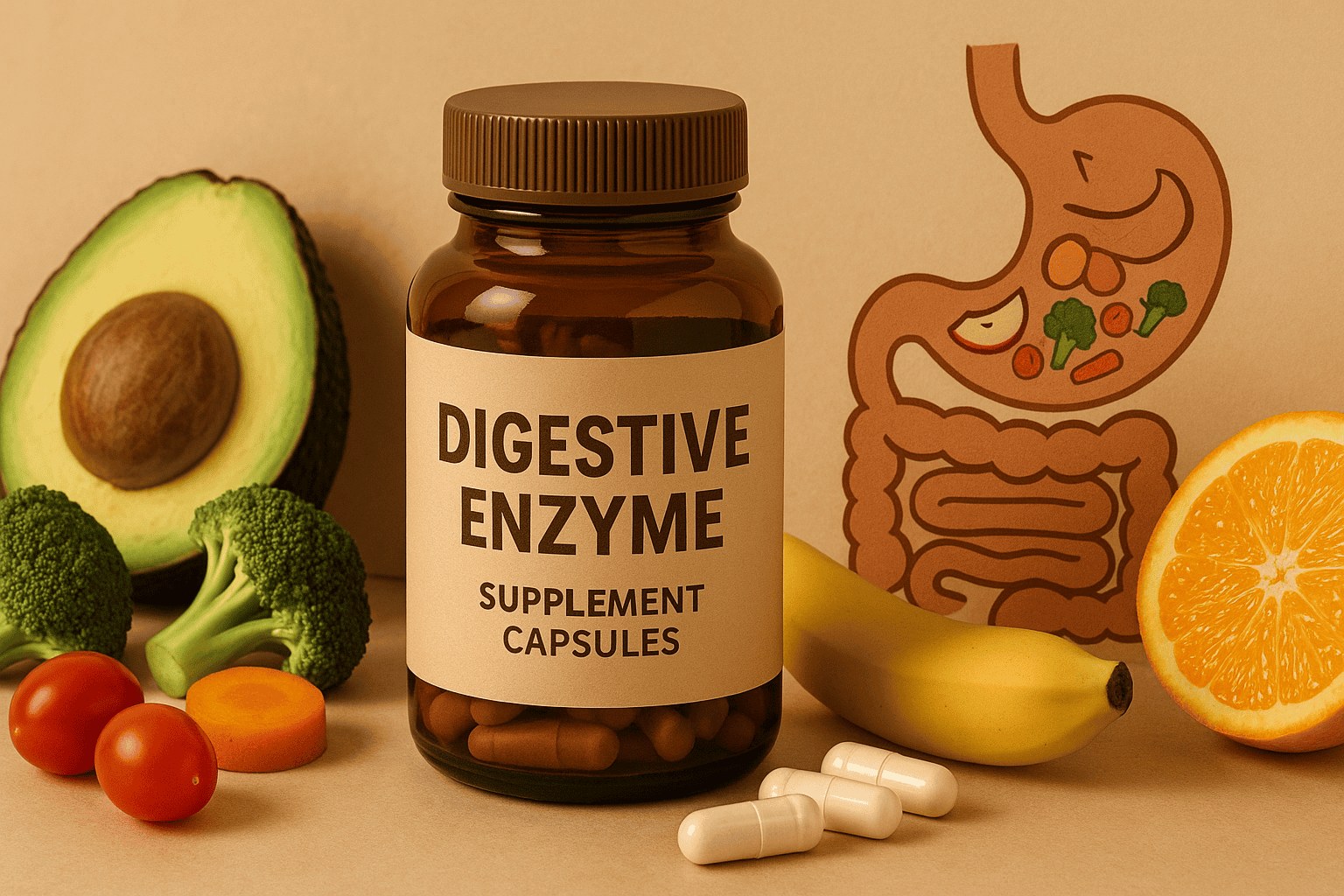
Best Digestive Enzyme Supplements (2026 Guide)
Quick Answer: Digestive enzyme supplements relieve bloating, gas, and malabsorption by supplementing amylase, protease, and lipase. They work best for enzyme insufficiency, post-gallbladder surgery, lactose intolerance, and high-fat diets not as routine wellness for healthy digestion.
Many people wonder whether to start with enzymes or probiotics. Our comparison of digestive enzyme vs probiotic helps you decide which to try first based on your symptoms.
Digestive discomfort is one of the most common complaints people bring to both conventional and functional medicine practitioners. Bloating after meals, food sitting like a rock in the stomach, undigested food in stool, or chronic gas these are all signs that the digestive system may not be breaking down food efficiently.
Digestive enzyme supplements have become a popular solution, and for good reason: they can work remarkably well for specific conditions. But they’re also a category with a lot of marketing fluff. This guide breaks down what the evidence says, which enzymes matter, when ox bile is necessary, and what to look for in a quality product.
How Digestion Works: The Enzyme Perspective
Digestion is fundamentally a process of breaking large molecules into small ones that can be absorbed. Three major classes of macronutrients require different enzymes:
Carbohydrates: Amylase (from salivary glands and pancreas) breaks starch into maltose and glucose. Sucrase, maltase, and lactase (from the small intestinal brush border) handle specific sugars.
Proteins: Pepsin (from the stomach, acid-activated) starts protein breakdown. Pancreatic proteases trypsin, chymotrypsin, elastase, and carboxypeptidases continue the work. Brush border peptidases complete it.
Fats: Lipase (primarily from the pancreas) breaks triglycerides into fatty acids and monoglycerides for absorption. Bile (from the gallbladder, produced by the liver) emulsifies fat to increase lipase’s surface area for action.
When any of these systems are compromised, symptoms follow. The question is whether supplemental enzymes can meaningfully replace or support endogenous enzyme production.
The Main Digestive Enzymes and What They Do
Amylase
Breaks down starches. Deficiency rare in isolation, but reduced pancreatic function reduces amylase output. Some research shows supplemental amylase improves starch digestion and reduces bloating.
Protease (Peptidase)
Breaks proteins into peptides and amino acids. Protease blends often include multiple enzymes (trypsin, chymotrypsin, bromelain, papain) with different pH optima to work throughout the GI tract. Important for protein absorption and potentially for food sensitivity reduction (some large peptides trigger immune responses if not fully digested).
Lipase
Critical for fat digestion. Lipase output decreases significantly with:
- Chronic pancreatitis
- Pancreatic insufficiency (including cystic fibrosis)
- Post-gallbladder removal
- Aging (modestly)
- Proton pump inhibitor use (PPIs reduce the acidic environment needed for optimal lipase activity)
Symptoms of lipase deficiency: steatorrhea (fatty, floating, foul-smelling stools), greasy stools, inability to tolerate fatty foods.
Lactase
Breaks lactose (milk sugar) into glucose and galactose. Lactase deficiency (lactose intolerance) affects roughly 65% of the global adult population after childhood. This is the best-studied and most targeted enzyme supplement. Well-validated clinical trials show lactase supplements effectively prevent symptoms of lactose intolerance when taken with dairy.
Sucrase
Breaks sucrose (table sugar) into glucose and fructose. Congenital sucrase-isomaltase deficiency (CSID) is rare. However, some people have reduced sucrase activity that causes symptoms when consuming high-sugar foods.
Alpha-Galactosidase
Breaks down complex carbohydrates (oligosaccharides) in legumes and cruciferous vegetables the sugars that feed gut bacteria and cause gas. This is the enzyme in Beano. Well-studied and effective for reducing flatulence from beans and certain vegetables.
Cellulase and Hemicellulase
Break down plant cell walls. Humans don’t produce these endogenously gut bacteria handle fermentation of plant fibers instead. Supplemental cellulase may help break down plant cell walls for better access to nutrients, but evidence is limited.
Bromelain and Papain
Proteases derived from pineapple and papaya, respectively. Used in enzyme supplements for their protease activity across a range of pH levels. Also studied for anti-inflammatory properties when taken on an empty stomach (they may be absorbed intact and modulate inflammation systemically).
Ox Bile: When Fat Digestion Needs More Than Lipase
Ox bile (bovine bile) supplements are a separate but related topic. Bile isn’t an enzyme it’s a detergent that emulsifies fats, making them accessible to lipase. Without adequate bile, fat digestion is severely impaired even if lipase is present.
Who needs ox bile?
- Post-cholecystectomy (gallbladder removal): Without a gallbladder, bile drips continuously into the duodenum rather than being released in concentrated boluses with meals. Fat-rich meals are harder to process. Ox bile supplements taken with meals can help replicate the concentrated bile release that’s now absent.
- Bile acid malabsorption: Some people don’t recycle bile acids properly.
- Liver dysfunction: Reduced bile production.
- Fat-soluble vitamin deficiency: Poor fat digestion impairs absorption of vitamins A, D, E, and K.
Signs you might benefit from ox bile:
- Pale, floating, greasy stools
- Nausea or discomfort after fatty meals (especially post-cholecystectomy)
- History of gallbladder removal
- Fat-soluble vitamin deficiency despite supplementation
Typical supplemental doses range from 100–500 mg of ox bile extract per meal. Some people start low (100 mg) and titrate up based on symptom response. Too much ox bile can cause loose stools (it’s a natural laxative at high doses).
Pancreatic Enzyme Insufficiency vs. General Enzyme Support
There’s an important distinction between pancreatic exocrine insufficiency (PEI) and general digestive support:
PEI is a medical condition requiring prescription pancreatic enzyme replacement therapy (PERT) medications like Creon, which contain standardized amounts of pancreatic enzymes. This applies to patients with chronic pancreatitis, cystic fibrosis, post-pancreatitis, and certain post-surgical states.
General digestive support is what most supplement users seek help with bloating, gas, food intolerances, or aging-related decline in enzyme output. OTC digestive enzyme supplements are appropriate here, but they won’t replace prescription PERT for true PEI.
If you suspect significant pancreatic insufficiency (chronic steatorrhea, weight loss, history of pancreatitis), see a gastroenterologist before self-supplementing.
Enzyme Activity Units: Understanding Label Language
Enzyme supplements are dosed in activity units, not weight. This is important because 100 mg of enzyme powder from one brand may have very different potency than 100 mg from another.
Common units:
- FCC units (Food Chemical Codex): The most commonly used standard in the US
- DU (dextrinizing units): Used for amylase
- HUT (hemoglobin units tyrosine): Used for proteases
- FIP units: Used in European pharmaceutical-grade enzymes
- LU (lipase units): Used for lipase specifically
Look for products that list enzyme activity in FCC or equivalent standardized units rather than just milligrams. Brands using standardized enzyme sources (e.g., Tolerase, Bromelain 2400 GDU/g) provide more meaningful dosing information.
What the Research Actually Shows
Lactase supplementation: Strong evidence. Multiple RCTs show effective symptom prevention in lactose intolerance.
Alpha-galactosidase: Good evidence for reducing gas from legumes and vegetables.
Protease blends: Moderate evidence for reducing protein-related digestive discomfort and potentially food sensitivities.
Lipase + ox bile (post-cholecystectomy): Good evidence in this specific population.
Broad-spectrum enzyme blends: Widely used, plausible mechanism, but limited high-quality RCT evidence for mixed digestive complaints in otherwise healthy adults. Many users report benefit. The risk of harm is very low.
PERT for PEI: Excellent evidence in diagnosed patients.
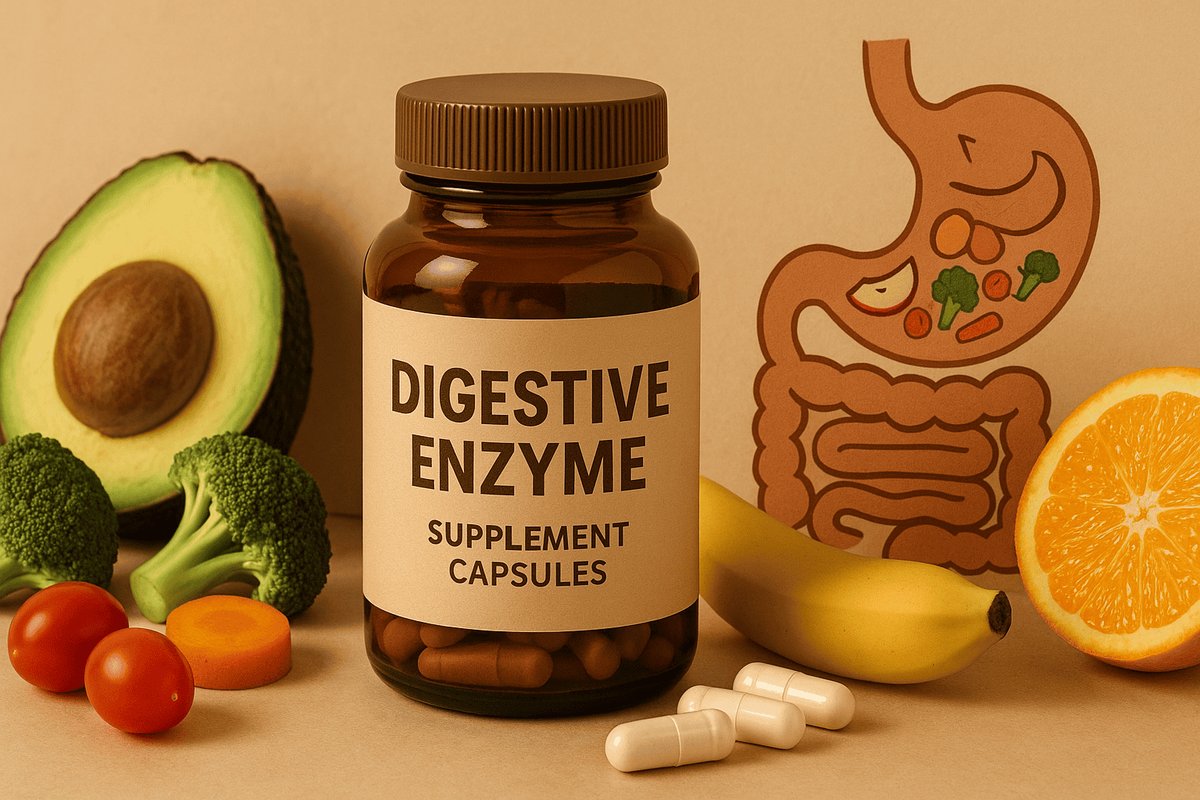
Choosing a Digestive Enzyme Supplement
For lactose intolerance only: A standalone lactase product (Lactaid, etc.) is sufficient and well-validated.
For gas from beans/vegetables: Alpha-galactosidase (Beano).
For post-cholecystectomy fat malabsorption: Look for a product combining lipase + ox bile.
For general bloating/digestive support: A broad-spectrum formula with amylase, protease, lipase, and ideally lactase and alpha-galactosidase.
For higher protein diets: A protease-heavy product or one including bromelain/papain.
Key quality markers:
- Enteric coating or pH-stable enzymes (ensures they survive stomach acid for pancreatic enzyme types)
- Note: For stomach-targeting enzymes like betaine HCl/pepsin, you want activity in the stomach (no enteric coating)
- Standardized activity units listed on label
- Third-party verification preferred
Frequently Asked Questions
Can digestive enzymes cause dependence? Will my body stop producing enzymes if I supplement?
A: This is a common concern but not supported by evidence. Unlike exogenous hormones, enzyme supplementation does not appear to downregulate endogenous enzyme production. Your pancreas doesn’t receive feedback to produce less amylase because you took amylase in a capsule.
Should I take enzymes with every meal?
A: It depends on your symptoms. If bloating is consistent with all meals, yes. If it’s only with specific foods (dairy → lactase; beans → alpha-galactosidase), targeted supplementation is more efficient.
What’s the difference between digestive enzymes and probiotics?
A: Completely different mechanisms. Enzymes break down food; probiotics are live bacteria that colonize the gut and affect the microbiome. They can be complementary poor digestion feeds the wrong bacteria; better digestion plus good bacteria supports the whole system.
I had my gallbladder out 5 years ago and still have digestive issues. Can enzymes help?
A: Yes, ox bile combined with lipase is frequently reported to help post-cholecystectomy patients who continue to have fat maldigestion symptoms. Start with a low dose of ox bile (125–250 mg per meal) and adjust.
Do enzymes help with histamine intolerance?
A: DAO (diamine oxidase) enzyme supplements are specifically used for histamine intolerance a different enzyme than standard digestive enzyme blends. If your symptoms include flushing, headaches, or hives after fermented foods, DAO supplementation is worth exploring.
Are digestive enzymes safe long-term?
A: Digestive enzymes are generally recognized as safe at typical supplement doses. The main risks are allergic reactions (especially in those with latex or pineapple allergies for bromelain) and the risk that symptoms being “managed” by enzymes are actually masking an underlying condition that needs diagnosis.
What’s betaine HCl and how does it fit in?
A: Betaine HCl is not an enzyme it’s a stomach acid supplement. Low stomach acid (hypochlorhydria) impairs protein digestion and enzyme activation. Many people with digestive issues have low stomach acid rather than low enzyme production. Betaine HCl addresses this root cause. It’s often combined with pepsin (a stomach enzyme).
Key Takeaways
- The three core enzymes: lipase (fat), protease (protein), amylase (carbs) a broad-spectrum formula covers all macronutrients.
- Ox bile is critical for fat digestion after gallbladder removal and is often absent from standard enzyme formulas.
- Activity units (FCC, LU, HNPU) matter more than milligrams higher weight does not equal higher potency.
- Take enzyme supplements with the first few bites of a meal, not before or after.
- Most healthy adults with no digestive symptoms don’t need enzyme supplements they are therapeutic tools, not general wellness products.
Conclusion
Digestive enzyme supplements are one of the most genuinely useful categories in the supplement industry when matched to the right problem. Lactase for lactose intolerance, alpha-galactosidase for bean-induced gas, and ox bile + lipase for post-cholecystectomy fat maldigestion are well-supported. Broad-spectrum blends are reasonable for general bloating and mixed digestive complaints.
When shopping, prioritize products listing enzyme activity in standardized units, look for pH-appropriate formulations, and choose brands with transparent sourcing. If symptoms are severe or persistent, a gastroenterology workup is warranted before relying on supplements alone.
Sources
- Roxas M. (2008). The role of enzyme supplementation in digestive disorders. Altern Med Rev, 13(4):307-314.
- Layer P, Keller J. (1999). Pancreatic enzymes: secretion and luminal nutrient digestion in health and disease. J Clin Gastroenterol, 28(1):3-10.
- Ianiro G, et al. (2016). Digestive enzyme supplementation in gastrointestinal diseases. Curr Drug Metab, 17(2):187-193.
- Vujasinovic M, et al. (2017). Prevalence of exocrine pancreatic insufficiency in Crohn’s disease. Nutrients, 9(11):1222.
- Leeds JS, et al. (2011). Some IBS patients may have exocrine pancreatic insufficiency. Clin Gastroenterol Hepatol, 8(5):433-438.
Related Articles
- Best Probiotic Supplements in 2026: Strain Matching and Gut Health Evidence
- Best Fiber Supplements in 2026: Psyllium, Acacia, Prebiotic Fibers
- Best Gut Health Supplements in 2026: Probiotics, Postbiotics and Beyond


Leave a Reply