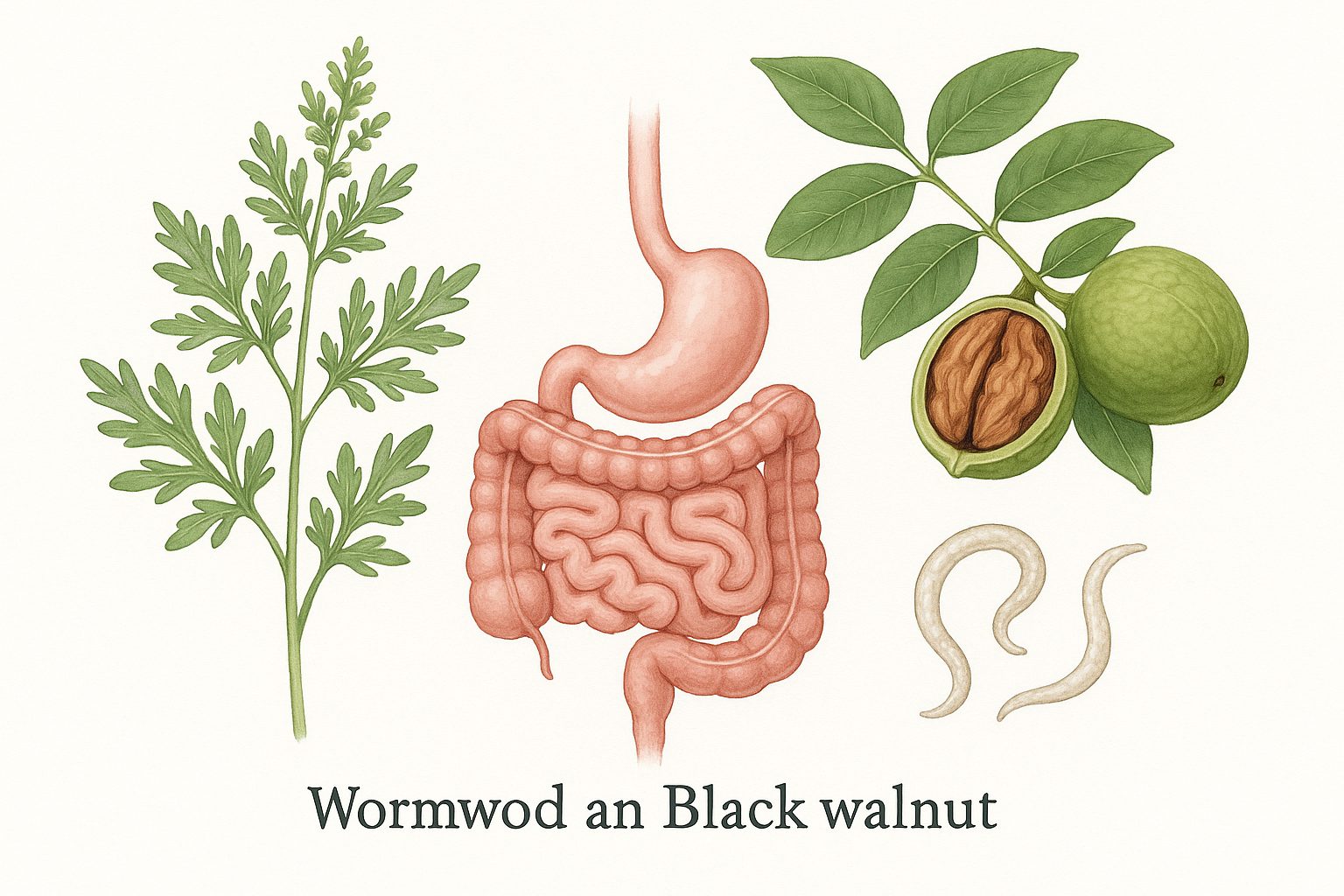
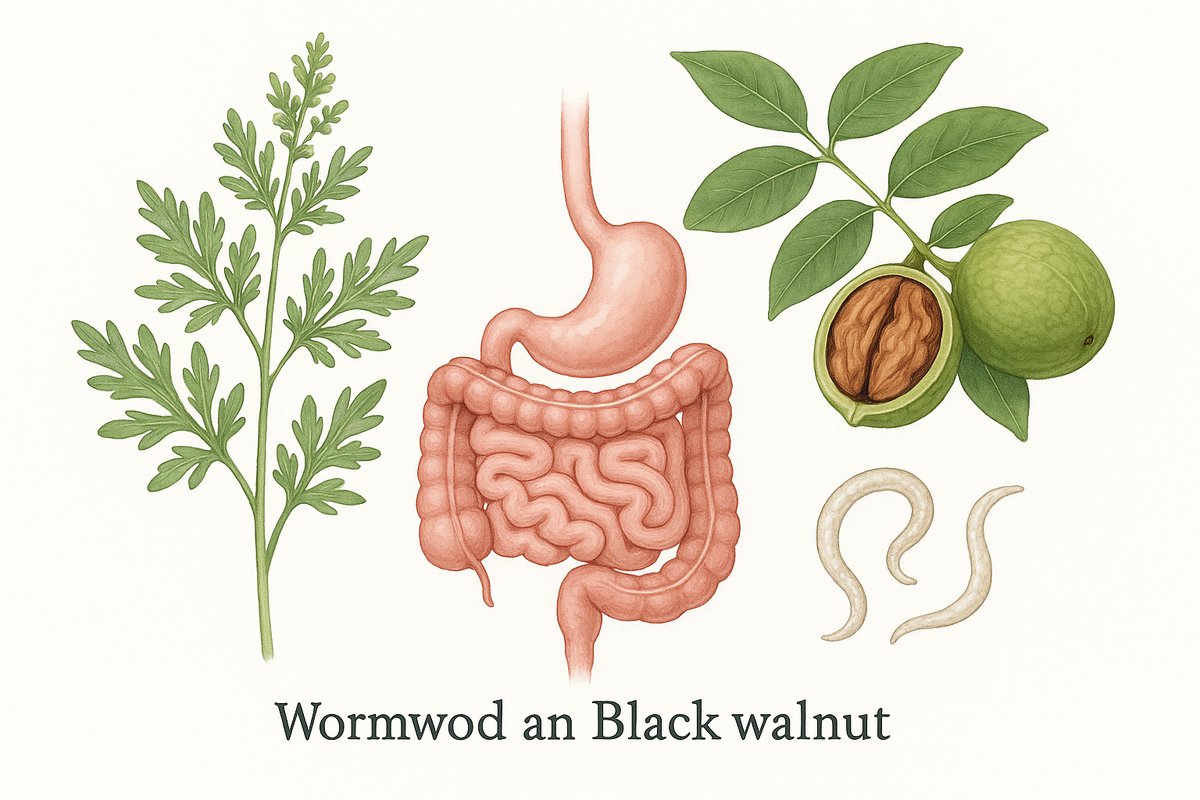
The wormwood-black walnut-clove combination is the most recognizable herbal parasite protocol in the supplement market. Popularized by Hulda Clark in the mid-1990s, it has outlasted Clark’s more extreme claims and become a standalone product category. Here’s what the evidence says about each component and the combination.
The combination of wormwood (Artemisia absinthium), black walnut hull (Juglans nigra), and clove (Syzygium aromaticum) is the most widely used herbal antiparasitic protocol in natural medicine, popularized by Hulda Clark in the 1990s. The proposed mechanism is synergistic: wormwood (absinthin) disrupts parasite membranes, black walnut hull (juglone) damages parasite DNA, and clove (eugenol) kills parasite eggs that other compounds miss. The evidence base is primarily in vitro and traditional – well-controlled human RCTs for this specific combination are lacking. While each ingredient has some documented antiparasitic activity individually, the ‘3-herb combo’ as a complete system lacks clinical validation. It remains a reasonable adjunct protocol for those seeking herbal support, but should not replace medical diagnosis and treatment for confirmed infections.
- Wormwood (Artemisia absinthium) contains absinthin, anabsinthin, and artabsin – sesquiterpene lactones with confirmed antiparasitic and anthelmintic activity. Artemisia is also the plant family source of artemisinin (from A. annua) used in WHO-approved malaria treatment, though A. absinthium has different chemistry and weaker clinical evidence for intestinal parasites.
- Black walnut hull contains juglone (5-hydroxy-1,4-naphthoquinone), a highly reactive compound that damages DNA and mitochondria in sensitive organisms – it has broad-spectrum antimicrobial and antiparasitic activity in vitro but poor water solubility and absorption characteristics that limit clinical extrapolation.
- Clove’s role in the trio is specifically targeting parasite eggs – eugenol reportedly prevents hatching of eggs that survive wormwood and black walnut treatment, completing the lifecycle disruption rationale. This is a logical theoretical framework, but no RCT has confirmed the egg-stage specificity in vivo.
- High-dose wormwood (Artemisia absinthium) carries thujone toxicity risk – thujone is a convulsant compound whose historical over-consumption in absinthe caused neurological effects. Modern supplement formulations are typically thujone-limited, but extended use or high doses of raw wormwood tincture pose a real toxicity risk.
- The protocol typically runs in cycles (e.g., 14-21 days on, break, repeat) without strong evidence for the optimal duration or cycle structure – the cycling rationale is parasite lifecycle-based (targeting adults + larvae + eggs at different stages) but remains theoretical in the absence of human pharmacokinetic studies.
Origins of the protocol
Hulda Clark recommended this trio in The Cure for All Diseases (1995), claiming that all cancers were caused by the intestinal fluke Fasciolopsis buski and that her herbal protocol could cure cancer by eliminating it. These claims were never supported by evidence, and Clark’s clinics were shut down in multiple jurisdictions [1].
However, each herb in the protocol does have some independent pharmacological basis, which is likely why the combination persists even as Clark’s broader claims have been rejected.
Wormwood (Artemisia absinthium)
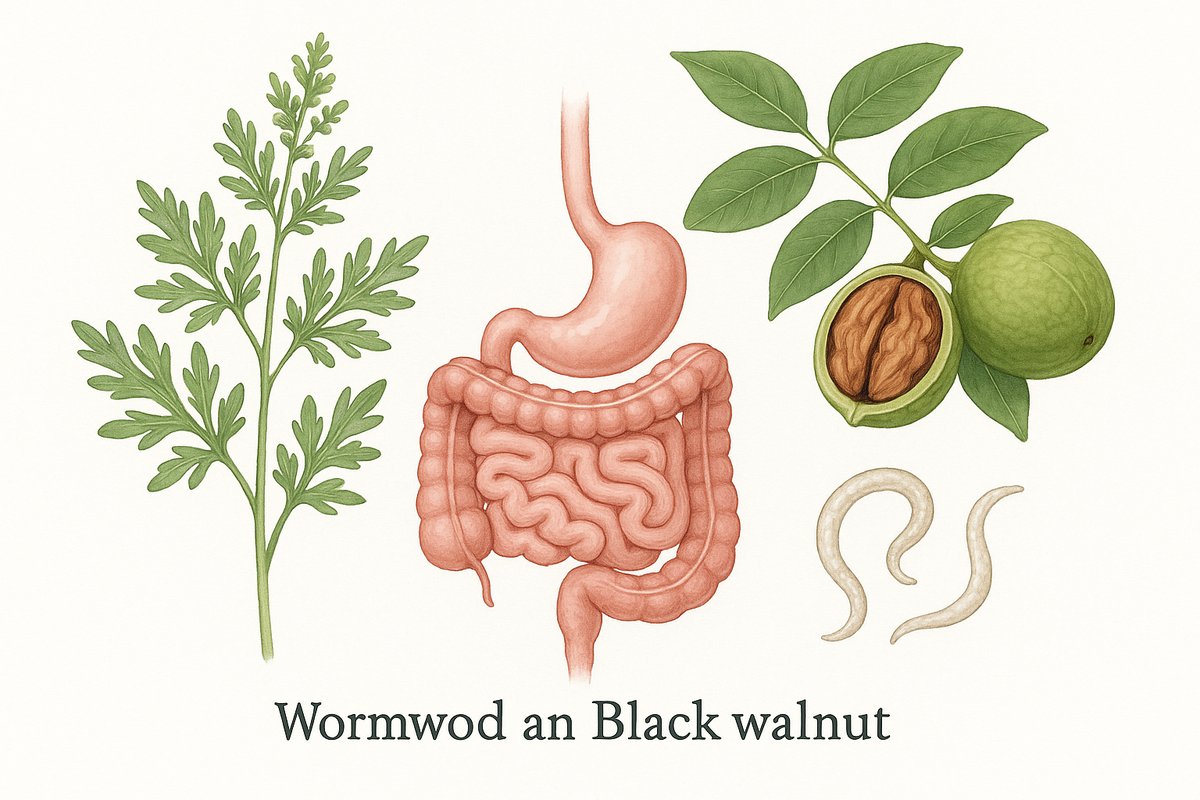
What it contains
- Thujone – a monoterpene ketone with neurotoxic properties at high doses
- Artemisinin – in low, variable amounts (much less than A. annua)
- Absinthin – a bitter sesquiterpene lactone
- Various flavonoids and phenolic acids
Evidence for antiparasitic activity
Artemisia species have the strongest pharmacological pedigree of the three. Artemisinin from A. annua (sweet wormwood) is a Nobel Prize-winning antimalarial [2]. Common wormwood (A. absinthium) contains less artemisinin but has shown:
- Activity against Hymenolepis nana in a small human study (n=15) [3]
- In vitro activity against Plasmodium falciparum, Leishmania, and various helminths [4]
- Traditional use as a vermifuge in European herbal medicine for centuries
Safety
Thujone is the main safety concern. The EU limits thujone in food/beverages to 0.5-35 mg/kg depending on product category. Chronic high-dose wormwood consumption can cause seizures and kidney damage. Supplement protocols typically use 200-500 mg of dried herb, which is generally within safe limits for short courses (2-4 weeks) [5].
Black walnut hull (Juglans nigra)
What it contains
- Juglone (5-hydroxy-1,4-naphthoquinone) – the primary bioactive
- Tannins – astringent compounds
- Plumbagin – a related naphthoquinone
Evidence for antiparasitic activity
- Juglone showed activity against Schistosoma mansoni larvae in vitro [6]
- Juglone has demonstrated broad antimicrobial activity against bacteria, fungi, and some protozoa in vitro [7]
- No human clinical trials exist for black walnut hull against any parasitic infection
Safety
Juglone is cytotoxic – that’s partly why it has antimicrobial activity, but it also means high doses can damage human cells. Black walnut hull supplements at typical doses (500-1000 mg) appear well tolerated short-term, but liver toxicity has been reported with concentrated extracts [8].
Clove (Syzygium aromaticum)
Covered in detail in our dedicated clove article. In brief: eugenol has in vitro antiparasitic activity against multiple organisms, some supportive animal data, but no human clinical trials for parasite elimination.
The combination: any synergy?
Clark claimed the three herbs work synergistically – wormwood kills adult parasites, clove kills eggs, and black walnut kills larvae. This is a neat narrative, but:
- No study has tested this combination in humans
- No study has demonstrated the claimed mechanism of differential action on lifecycle stages
- The “kills eggs” claim for clove is not supported by published evidence
A 2019 survey of commercial “parasite cleanse” products found the wormwood/black walnut/clove trio in 68% of formulas, but none referenced clinical evidence for the combination [9].
Other traditional herbal antiparasitics
For context, several other herbs have comparable or stronger evidence:
- Papaya seeds – actual human RCT data for Ascaris
- Berberine – demonstrated antigiardial activity in multiple human studies [10]
- Pumpkin seeds – historical use for tapeworms, some animal data
- Neem – in vitro activity against multiple parasites
Bottom line
Each herb in the classic trio has some pharmacological basis, but the evidence is almost entirely preclinical. The combination itself has never been tested in humans. If you use these herbs, treat them as what they are – herbal supplements with some antimicrobial properties – not as proven antiparasitic treatments.
FAQ
Does the wormwood, black walnut, and clove combination work?
Each ingredient has documented antiparasitic activity in laboratory tests, and the combination has rational theoretical synergy. However, controlled human clinical trials specifically testing this three-herb combination are lacking. It is a reasonable herbal support protocol for those preferring natural approaches, but results are not guaranteed, and confirmed parasitic infections require medical diagnosis and treatment.
Is wormwood safe to take as a supplement?
Standardized wormwood supplements (standardized to contain low or no thujone) are generally safe for short-term use (2-4 weeks) at label-recommended doses. Raw wormwood tinctures, absinthe, or high-dose preparations carry thujone toxicity risk including seizures and neurotoxicity. Avoid wormwood during pregnancy (uterotonic properties) and in people with epilepsy or kidney/liver disease.
How long do you take the parasite trio protocol?
Most protocols run 2-6 weeks. Some extended programs cycle on/off over 3 months. There is no clinical consensus on optimal duration because robust trial data is absent. Shorter protocols (2-3 weeks) minimize toxicity risk. If you don’t see improvement after 4-6 weeks, stool testing and medical evaluation are the appropriate next step.
Can you do a parasite cleanse while on other medications?
Caution is warranted. Black walnut and wormwood inhibit certain liver enzymes (CYP450 pathways), potentially affecting drug metabolism. Clove/eugenol has anticoagulant properties that can amplify warfarin effects. Berberine-containing herbs lower blood sugar, relevant for diabetes medications. Discuss any herbal antiparasitic protocol with your prescriber if you take prescription medications.
References
- Tu Y. The discovery of artemisinin. Nobel Lecture. 2015.
- Bora KS, Sharma A. Artemisia absinthium: a comprehensive review. Pharmaceutical Biology. 2011.
- Lachenmeier DW, Nathan-Maister D, Breaux A, Sohnius EM. Safety evaluation of thujone-containing preparations. Regul Toxicol Pharmacol. 2010.
- de Moraes J, et al. Experimental parasitology work on helminth-active plant compounds. Exp Parasitol. 2016;162:37-43.
- Ahmad T, Suzuki YJ. Juglone: a comprehensive review of chemistry and biological activity. Phytochemistry Reviews. 2020.
Related Articles
- Signs of Parasites: Symptoms, Testing, and Next Steps
- Parasite Cleanse Supplements: Ingredients and Doses
- Clove Oil and Parasites: What the Research Shows
- Parasite Cleanse Supplements in 2026
- Benefits of Clove Oil and Clove Supplements in 2026
Sources
- Reviews on wormwood and proposed anthelmintic activity. PubMed search.
- Reviews on black walnut hull and antiparasitic claims. PubMed search.
- Centers for Disease Control and Prevention. Parasites overview and guidance.
- Reviews on herbal anthelmintics and safety concerns. PubMed search.
- Reviews on wormwood toxicity and thujone-related safety concerns. PubMed search.