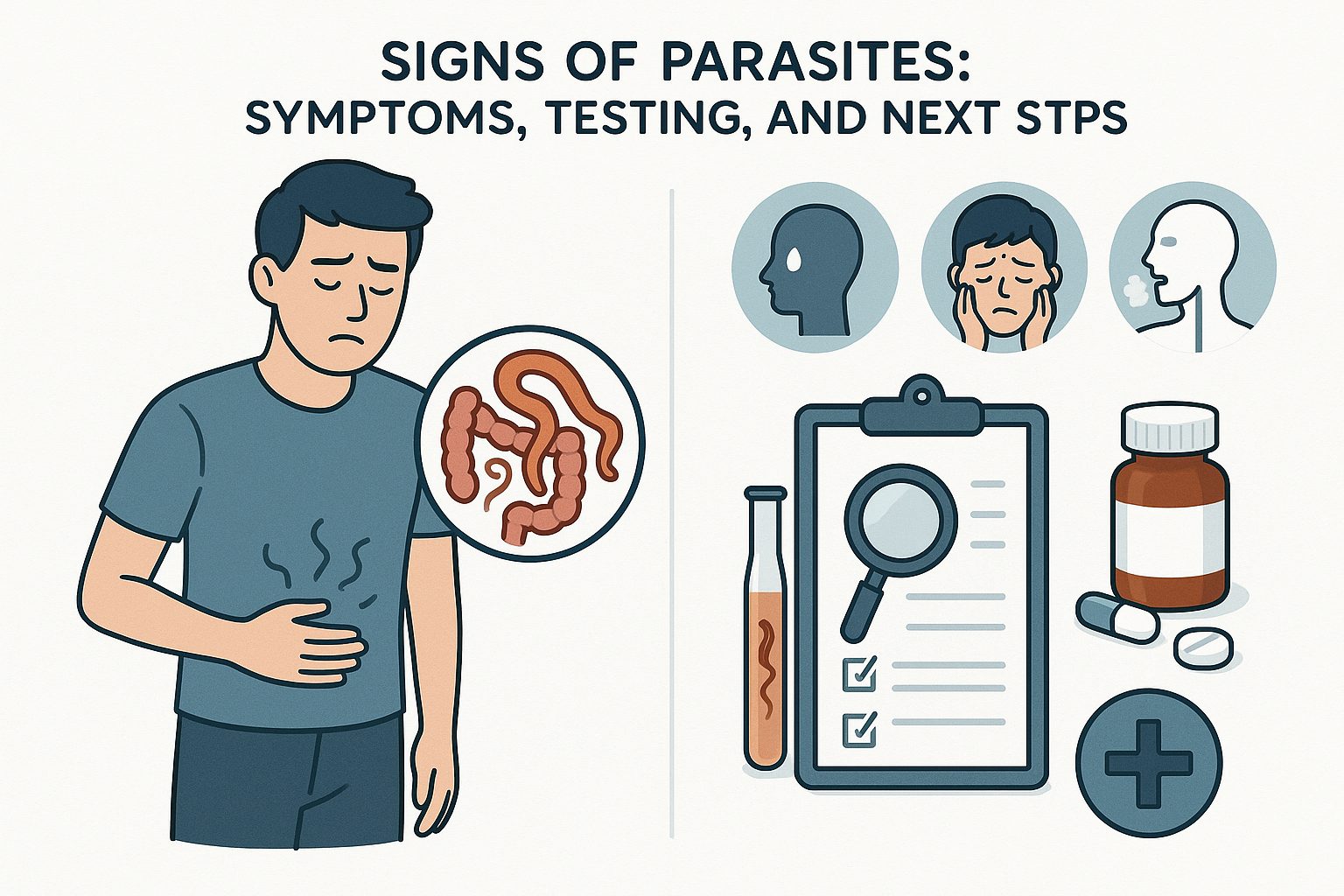

Social media has created a cottage industry of “signs you have parasites” content – teeth grinding, sugar cravings, fatigue, bloating. The problem: these symptoms overlap with dozens of common, non-parasitic conditions. Here’s how to think about parasitic infections rationally.
Parasitic infections in adults produce symptoms that range from none at all (asymptomatic carriage is common) to significant GI, systemic, and nutritional effects depending on the organism, burden, and host immune status. The most common intestinal parasites in the U.S. and developed world – Giardia, Blastocystis, pinworm, and Dientamoeba fragilis – typically cause GI symptoms: diarrhea (sometimes cyclical), bloating, cramping, excessive gas, nausea, and fatigue. However, these symptoms overlap substantially with IBS, SIBO, lactose intolerance, and food sensitivities. The only reliable way to distinguish parasitic infection from other causes is stool testing – not symptom patterns or supplement response.
- Giardia intestinalis is the most commonly diagnosed intestinal parasite in the U.S. – causing watery or greasy diarrhea, bloating, and weight loss, often 1-3 weeks after exposure from contaminated water or food. Chronic low-grade Giardia can persist for months and mimic IBS.
- Pinworm (Enterobius vermicularis) is the most prevalent helminth (worm) infection in the U.S., particularly in children but also adults – its hallmark symptom is perianal itching, especially at night when female worms migrate to lay eggs. The scotch tape test can confirm it at home.
- Fatigue and nutritional deficiencies can accompany heavy parasite loads – Giardia causes malabsorption of fats and fat-soluble vitamins; tapeworm (B12 absorbing); hookworm causes iron-deficiency anemia via intestinal blood loss. But these effects require significant parasite burden and are not universal.
- Many ‘parasite symptoms’ attributed to widespread parasite prevalence in alternative health contexts – brain fog, skin rashes, joint pain, mood disorders, chronic fatigue – have weak or no direct causative evidence for common intestinal parasites in immunocompetent adults in high-income countries.
- Stool antigen tests (Giardia/Cryptosporidium EIA) and comprehensive stool pathogen panels (PCR-based like GI-MAP or Genova GI Effects) are far more sensitive than traditional ova-and-parasite (O&P) microscopy and are the appropriate diagnostic tools when parasitic infection is suspected.
Actual symptoms of parasitic infections
Different parasites cause different symptoms. The most common presentations:
Intestinal parasites (helminths)
- Pinworms (Enterobius vermicularis): Intense perianal itching, especially at night. Most common helminth in the US, primarily in children [1].
- Roundworms (Ascaris lumbricoides): Often asymptomatic at low worm burden. Heavy infections cause abdominal pain, nausea, and intestinal obstruction [2].
- Hookworms: Iron deficiency anemia, fatigue, abdominal pain. Entry through skin (feet) can cause a characteristic rash [3].
- Tapeworms: Often asymptomatic. Segments may be visible in stool. Taenia solium can cause cysticercosis if eggs are ingested [4].
Intestinal protozoa
- Giardia: Watery, foul-smelling diarrhea, bloating, nausea, weight loss. Classic traveler’s infection from contaminated water [5].
- Cryptosporidium: Watery diarrhea, can be severe in immunocompromised patients [6].
- Entamoeba histolytica: Bloody diarrhea, abdominal pain, liver abscess in severe cases [7].
Tissue/blood parasites
- Malaria (Plasmodium): Cyclical fever, chills, sweating, anemia. Life-threatening.
- Toxoplasma: Usually asymptomatic in healthy adults. Dangerous in pregnancy and immunocompromised.
Symptoms that are NOT reliable indicators
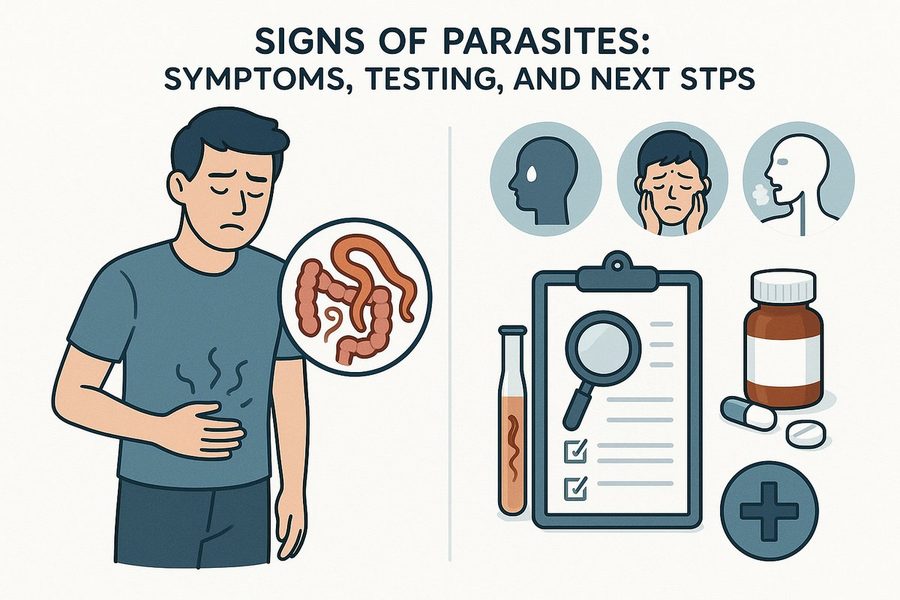
The following symptoms are frequently attributed to parasites on social media but are not specific or reliable indicators:
- Sugar cravings – no established mechanism linking parasites to sugar cravings
- Teeth grinding (bruxism) – a 2013 systematic review in Journal of Oral Rehabilitation found no consistent association between bruxism and parasitic infections [8]
- General fatigue – too nonspecific; hundreds of causes
- Skin breakouts – not a primary feature of most parasitic infections (except specific parasites like Leishmania skin lesions or hookworm-related cutaneous larva migrans)
- Brain fog – not a recognized symptom of common intestinal parasites
- Weight gain – parasitic infections more commonly cause weight loss
How parasitic infections are actually diagnosed
Stool tests
- Ova and parasite (O&P) exam: Microscopic examination of stool for eggs, larvae, cysts, or trophozoites. Gold standard but requires 3 samples collected on different days (parasites shed intermittently) [9].
- Stool antigen tests: Available for Giardia, Cryptosporidium, and E. histolytica. More sensitive than single O&P.
- PCR-based panels: Multiplex PCR panels (e.g., BioFire GI Panel) can detect multiple parasites from a single sample with high sensitivity.
Blood tests
- Eosinophil count: Elevated eosinophils suggest helminth infection (not protozoa). Not specific – allergies and other conditions also raise eosinophils.
- Serology: Antibody tests for specific parasites (Toxoplasma, Strongyloides, Schistosoma, etc.).
- Blood smear: For malaria and other blood parasites.
Important note about “parasite testing” companies
Some direct-to-consumer companies offer “comprehensive parasite panels” that test for IgG antibodies to large panels of organisms. These tests have high false-positive rates because IgG indicates past exposure, not necessarily active infection. Stick with physician-ordered testing from accredited labs [10].
When to actually see a doctor
See a doctor if you have:
- Persistent diarrhea lasting >2 weeks, especially after international travel
- Blood or mucus in stool
- Visible worms or worm segments in stool
- Unexplained weight loss with GI symptoms
- High eosinophil count on routine bloodwork
- Fever after travel to malaria-endemic areas (medical emergency)
- Symptoms after consuming raw/undercooked meat or fish, or untreated water
Don’t assume parasites if you have:
- Vague fatigue, bloating, or digestive discomfort without risk factors
- Symptoms that started after seeing parasite content on social media (confirmation bias is powerful)
- “Positive” results from unvalidated at-home tests
The bottom line
Parasitic infections are real medical conditions that deserve real medical diagnosis. If you have genuine risk factors and concerning symptoms, get proper testing through a physician. Don’t self-diagnose based on social media symptom checklists, and don’t self-treat with supplement protocols when proven prescription medications exist.
FAQ
What are the most common signs of parasites in adults?
The most common signs depend on the parasite. Giardia typically causes watery or greasy diarrhea, bloating, and fatigue. Pinworm causes perianal itching at night. Cryptosporidium causes watery diarrhea. Heavy hookworm burden causes iron-deficiency anemia and fatigue. Many infections in healthy adults are asymptomatic. Symptom patterns alone cannot reliably diagnose a specific parasite – stool testing is required.
Can parasites cause fatigue and brain fog?
Heavy parasitic infection (significant Giardia, hookworm with anemia, tapeworm with B12 depletion) can cause fatigue and cognitive effects via nutritional depletion or systemic inflammation. However, light-load or asymptomatic parasite carriage does not cause fatigue. The widespread claim in alternative health that ‘most fatigue is parasites’ is not supported by medical evidence – far more common causes of fatigue include sleep disorders, thyroid dysfunction, anemia, depression, and metabolic conditions.
How do you test for parasites?
Standard medical testing: stool ova-and-parasite (O&P) microscopy (low sensitivity), stool antigen tests for Giardia and Cryptosporidium (high sensitivity), or PCR-based comprehensive stool pathogen panels. Functional medicine labs offer GI-MAP (PCR for 25+ pathogens) and Genova GI Effects (culture + sensitivity + parasitology). Blood testing for certain parasites (Toxocara, Strongyloides, Trichinella) requires serological tests. Ask your doctor about the most appropriate test based on your exposure history.
Is IBS the same as having parasites?
IBS (irritable bowel syndrome) and parasitic infection share overlapping symptoms but are not the same. Giardia and some other parasites can trigger post-infectious IBS that persists after the infection is cleared – the parasite changes gut microbiome and mucosal sensitivity. However, most IBS is not caused by active parasitic infection. If IBS symptoms developed after travel, water exposure, or food poisoning, post-infectious IBS or an uncleared parasitic infection is worth investigating with stool testing.
References
- CDC. Pinworm (Enterobiasis) information page.
- Bethony J, Brooker S, Albonico M, et al. Soil-transmitted helminth infections. Lancet. 2006;367(9521):1521-1532.
- Einarsson E, Ma’ayeh S, Svärd SG. Giardia lamblia and intestinal infection. Curr Opin Microbiol. 2016.
- Checkley W, White AC Jr, Jaganath D, et al. A review of Cryptosporidium and cryptosporidiosis. Clin Microbiol Rev. 2015;28(1):115-156.
- Pritt BS, et al. Challenges in laboratory diagnosis of parasitic infections. J Clin Microbiol. 2019.
Related Articles
- Wormwood and Black Walnut: Herbal Parasite Evidence
- Parasite Cleanse Supplements: Ingredients and Doses
- Clove Oil and Parasites: What the Research Shows
- Parasite Cleanse Supplements in 2026
- Benefits of Clove Oil and Clove Supplements in 2026
Sources
- Centers for Disease Control and Prevention. Parasite diagnosis and testing resources.
- Reviews on diagnosis of intestinal parasitic infections. PubMed search.
- Reviews on stool ova-and-parasite testing sensitivity and limitations. PubMed search.
- Reviews on parasite symptoms, eosinophilia, and when to pursue workup. PubMed search.
- World Health Organization. Soil-transmitted helminth infections fact sheet.
📚 Part of our Parasite Cleanse Supplements Guide hub. Explore all our parasite cleanse evidence reviews.