
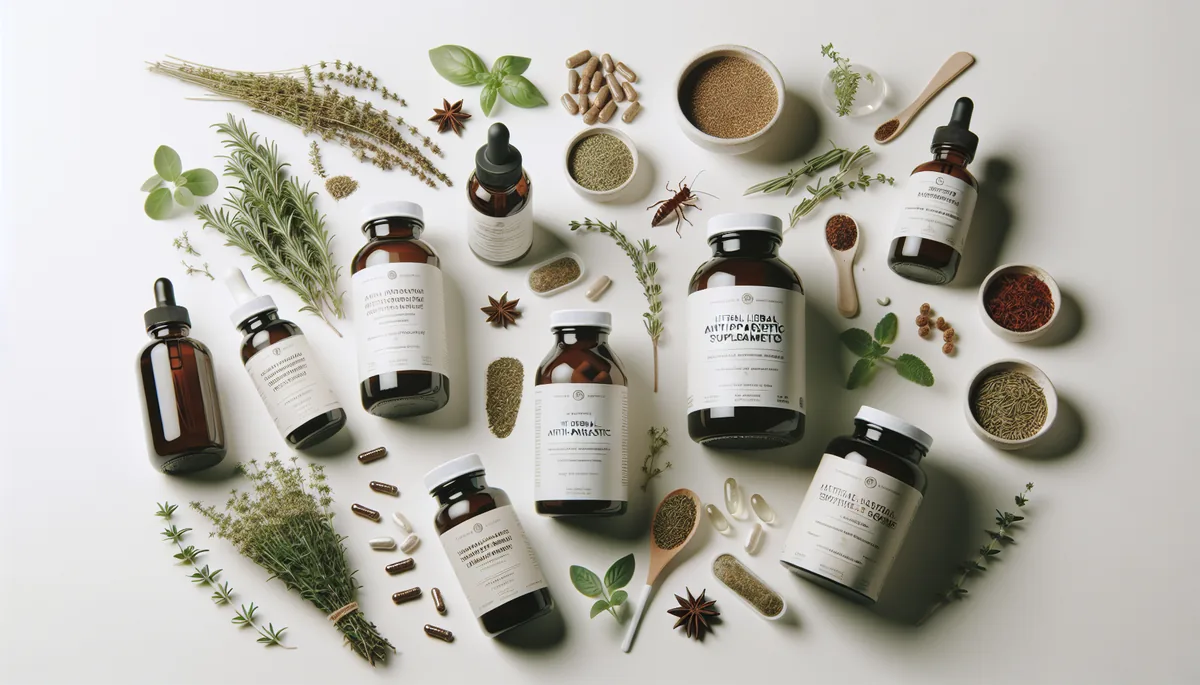
If you’ve decided to try a parasite cleanse supplement despite the limited evidence (and we recommend reading our pillar article first), here’s what to know about common ingredients, typical dosing, and realistic expectations.

Parasite cleanse supplement protocols are popular but mostly lack robust clinical trial evidence for treating confirmed parasitic infections. The most evidence-supported herbal antiparasitics are: berberine-containing herbs (Oregon grape, goldenseal) with confirmed Giardia activity in RCTs; artemisinin (sweet wormwood) with well-established antiparasitic and antimalarial activity; and the classic trio of black walnut hull, wormwood, and clove which has traditional use and limited human trial support. These are best understood as adjuncts to – not replacements for – pharmaceutical antiparasitics (metronidazole, albendazole, ivermectin) for confirmed infections. Unconfirmed ‘do I have parasites?’ self-treatment based on symptoms is problematic because most claimed parasite symptoms have other explanations.
For a closer look at individual herbs used in these protocols, see our evidence review of wormwood, black walnut, and herbal parasite remedies.
- Berberine (from goldenseal, barberry, Oregon grape) has the strongest clinical evidence among herbal antiparasitics: a 1997 RCT found berberine as effective as metronidazole for Giardia clearance in children (63% vs. 68% cure rate) – this is one of the few direct pharmaceutical comparisons for an herbal compound in confirmed parasitic infection.
- Artemisinin (from Artemisia annua, sweet wormwood) is the basis of artemisinin-combination therapy (ACT) – WHO’s first-line malaria treatment – giving it the strongest evidence base of any plant-derived antiparasitic, though its supplement-dose evidence for intestinal parasites specifically is thinner.
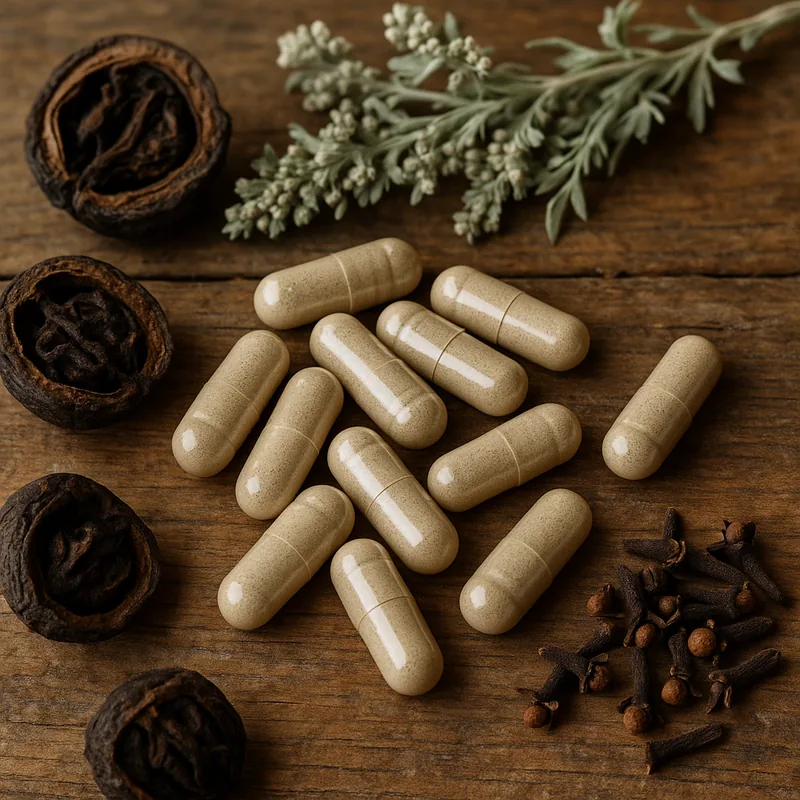
- The black walnut hull + wormwood (Artemisia absinthium) + clove combination is frequently recommended but has no well-controlled RCT evidence – the trifecta works through claimed synergistic mechanisms (juglone, absinthin, eugenol) with evidence primarily from traditional use and preliminary in vitro work.
- Parasite cleanses can produce false symptom attribution: gastrointestinal symptoms during a cleanse (bloating, cramping, changes in stool) are often caused by the herbs themselves or by dietary changes in the protocol (elimination diets, fasting) rather than parasite die-off.
- Diagnosis-first matters for safety: pharmaceutical antiparasitics are specific (metronidazole for Giardia, albendazole for roundworm/pinworm, praziquantel for tapeworm, ivermectin for strongyloides) – broad-spectrum herbal cleanses without stool testing may miss specific pathogens or treat the wrong organism entirely.
Common ingredients ranked by evidence strength
Tier 1: Some human evidence
- Papaya seeds – The strongest evidence of any herbal antiparasitic. A 2007 RCT showed 71.4% Ascaris egg clearance in children in Kenya at a dose of 20g dried papaya seed porridge daily for 7 days [1]. Replicated in a 2012 study. Most relevant for roundworm in endemic areas.
- Artemisinin/Artemisia – Artemisinin is a proven antimalarial drug (Nobel Prize, 2015). Artemisia annua tea showed partial activity against Schistosoma in a small pilot study [2]. Supplement-grade wormwood (A. absinthium) has less evidence but showed some effect on dwarf tapeworm in one small trial [3].
Tier 2: Animal/in vitro evidence only
- Clove/eugenol – Strong in vitro activity against several parasites. Some supportive animal data. No human trials. See our detailed clove article.
- Black walnut hull (juglone) – In vitro activity against Schistosoma larvae. No human trials [4].
- Oregano oil (carvacrol) – Antibacterial and antiparasitic in vitro. One small human study (14 patients) showed Blastocystis hominis clearance, but Blastocystis is debated as a true pathogen [5].
- Garlic (allicin) – Some in vitro antiparasitic activity. A small trial showed partial activity against Giardia symptoms, but methodological quality was poor [6].
Tier 3: Minimal/no evidence
- Diatomaceous earth – No human evidence. Poultry data only.
- Pumpkin seeds (cucurbitin) – Historical use for tapeworms. A few animal studies. No modern human trials.
- Neem – In vitro activity. No human parasite trials.
Typical dosing in commercial products
| Ingredient | Typical supplement dose | Notes |
|---|---|---|
| Wormwood extract | 200-500 mg/day | Limit to 2-4 weeks; thujone toxicity concern |
| Black walnut hull | 500-1000 mg/day | Hull extract, not kernel |
| Clove powder/oil | 500-1500 mg powder or 100-250 mg oil/day | Standardized to eugenol content |
| Oregano oil | 150-600 mg/day | Look for >60% carvacrol content |
| Papaya seed | 5-20g dried seed powder/day | Can grind whole seeds; bitter taste |
What to actually expect
If you don’t have parasites (most likely): You may experience some digestive changes – loose stools, increased gas, mild cramping – from the herbal ingredients themselves. Some people report “feeling better” which may be due to the antimicrobial effects on gut bacteria, placebo effect, or the dietary changes that usually accompany a cleanse protocol.
If you have parasites: Herbal products are unlikely to fully clear a confirmed parasitic infection. Prescription antiparasitics (albendazole, mebendazole, praziquantel, ivermectin, nitazoxanide) have >90% cure rates for most common infections [7]. Herbal alternatives have not demonstrated comparable efficacy in any well-designed trial.
Product selection tips
If you choose to use a parasite cleanse product:
- Choose single-ingredient products over proprietary blends – you can control dosing and identify what’s working (or causing side effects)
- Look for standardized extracts – e.g., wormwood standardized to artemisinin content, clove standardized to eugenol
- Check for third-party testing – heavy metals and pesticide contamination are real concerns with herbal products
- Limit duration – most protocols run 2-4 weeks. There’s no evidence that longer cleanses are more effective, and toxicity risk increases
- Don’t stack with blood thinners – several of these herbs (clove, garlic) have antiplatelet effects
The honest recommendation
If you suspect a parasitic infection, get tested first. If positive, use prescription treatment. If you want to explore herbal antiparasitics for general digestive support, the ingredients above are generally safe at recommended doses for short periods – just calibrate your expectations accordingly.
FAQ
Do parasite cleanse supplements actually work?
Some have evidence for specific parasites – berberine has RCT support for Giardia, artemisinin has strong malaria evidence. The popular black walnut/wormwood/clove combination has limited human trial evidence. For confirmed parasitic infection, pharmaceutical treatment is more reliable. For general gut health optimization without a confirmed infection, herbal protocols carry more uncertain benefit.
How long should a parasite cleanse last?
Most herbal parasite cleanse protocols run 2-4 weeks, with some extending to 3 months. There is no clinical consensus on optimal duration because the evidence base is thin. Pharmaceutical antiparasitic treatment durations (3-7 days for Giardia, 3 days for pinworm) are much shorter. Longer is not automatically more effective, and extended use of herbal antiparasitics increases herb-drug interaction and hepatotoxicity risk.
What are the side effects of parasite cleanse supplements?
Common effects include GI upset, nausea, cramping, and changes in bowel habits – often attributed to ‘die-off’ but frequently caused by the herbs themselves. Wormwood (high-dose absinthium) can cause seizures at very high doses. Clove oil is hepatotoxic in high amounts. Berberine can lower blood sugar. Most standardized supplement-dose products are safe short-term, but undiluted herb concentrates and extended protocols carry more risk.
Should I do a parasite cleanse if I have no symptoms?
Prophylactic parasite cleansing without suspected exposure is not supported by evidence or mainstream medical guidelines. If you’ve traveled to regions with higher parasite risk (tropical countries, areas with questionable water sanitation), had contact with animals, or consumed undercooked meat or untreated water, a stool test from your doctor is more informative than a precautionary cleanse.
References
- Okeniyi JA, et al. Journal of Medicinal Food study on herbal anti-parasitic ingredients. J Med Food. 2007;10(1):194-196.
- Mueller MS, et al. Artemisia annua tea preparation and antiparasitic activity. Trans R Soc Trop Med Hyg. 2004.
- de Moraes J, et al. Experimental parasitology work on plant-derived compounds. Exp Parasitol. 2016;162:37-43.
- Force M, Sparks WS, Ronzio RA. Inhibition of enteric parasites by emulsified oil of oregano. Phytother Res. 2000;14(3):213-214.
- Soffar SA, Mokhtar GM, Abdel-Aziz SS. Garlic in experimental giardiasis. J Egypt Soc Parasitol. 1991.
Related Articles
- Wormwood and Black Walnut: Herbal Parasite Evidence
- Signs of Parasites: Symptoms, Testing, and Next Steps
- Clove Oil and Parasites: What the Research Shows
- Parasite Cleanse Supplements in 2026
- Benefits of Clove Oil and Clove Supplements in 2026
Sources
- Centers for Disease Control and Prevention. Parasites overview and evidence-based treatment guidance.
- Reviews on herbal anthelmintics and claimed parasite-cleanse ingredients. PubMed search.
- Reviews on wormwood and proposed anthelmintic activity. PubMed search.
- Reviews on black walnut hull and antiparasitic claims. PubMed search.
- Reviews on clove/eugenol and antiparasitic claims. PubMed search.



Leave a Reply