
Spermidine vs Resveratrol: Which Longevity Supplement?
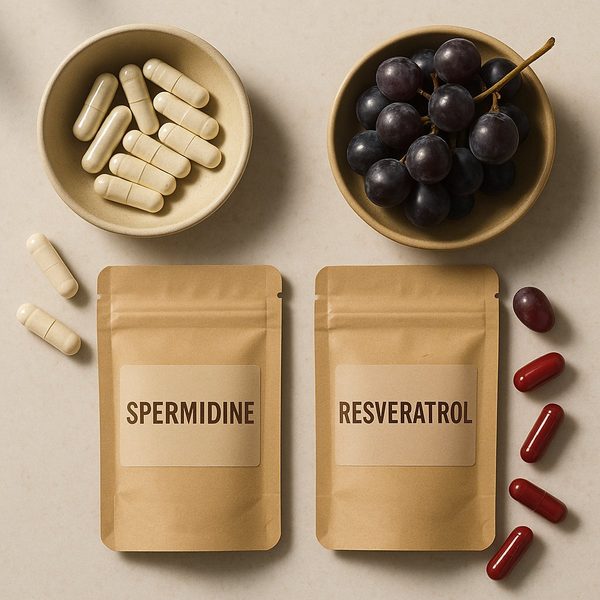
Spermidine and resveratrol both target longevity-associated pathways but via distinct mechanisms: spermidine primarily induces autophagy by inhibiting EP300, while resveratrol activates SIRT1 and AMPK signaling. Both have cross-species lifespan extension evidence in preclinical models. Human evidence for spermidine is limited to cognitive aging trials (modest but real signals); resveratrol’s human evidence is broader in scope but has largely disappointed in RCTs targeting metabolic and cardiovascular outcomes. For healthy adults interested in longevity, spermidine has a more coherent and recent evidence trajectory; resveratrol’s clinical utility is narrower than its initial hype suggested. Combining them is theoretically additive, not studied in humans.
- Spermidine acts primarily via EP300 inhibition → autophagy induction. Resveratrol activates SIRT1 (a NAD+-dependent deacetylase) and AMPK, mimicking aspects of caloric restriction signaling. These are complementary rather than competing mechanisms — they target different but overlapping longevity pathways.
- Resveratrol’s human clinical trial record has been disappointing: multiple RCTs in metabolic syndrome, cardiovascular disease, and inflammation have not confirmed the dramatic preclinical effects. High-dose resveratrol (≥500 mg/day) has shown some metabolic signals, but benefit-risk for high doses is less clear.
- Spermidine has a smaller but more recent and arguably more coherent human RCT base: the 2018 Wirth et al. trial and 2021 SMARTER trial both found modest cognitive benefits in older adults with subjective cognitive decline. The mechanism-to-human-outcome translation is more direct.
- Resveratrol bioavailability is poor: >70% of oral resveratrol is rapidly metabolized in the gut and liver before reaching systemic circulation. This drove interest in pterostilbene, trans-resveratrol, and liposomal formulations — all attempting to solve the same bioavailability problem.
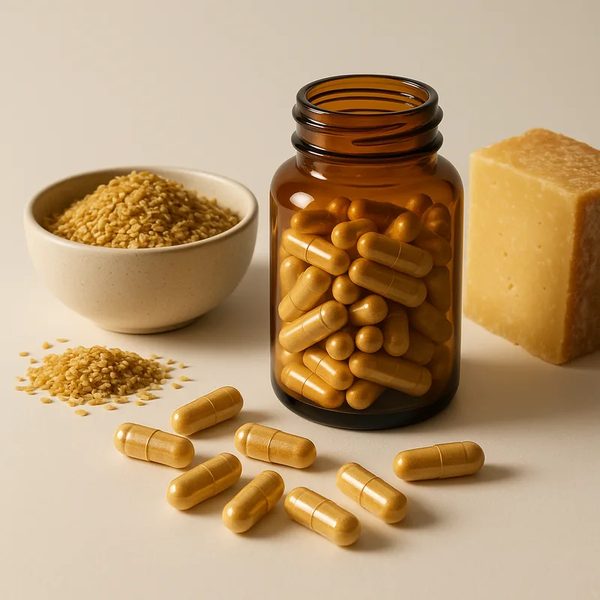
- Cost and food source comparison: spermidine is available from wheat germ and common fermented foods; resveratrol is found in red wine and grapes but in amounts far too small to match supplement doses. Supplement costs are broadly comparable, with both in the $30–80/month range for quality products.
- Both are “early adopter” supplements. Neither has the clinical evidence weight of creatine, omega-3s, or vitamin D. Both are reasonable for people who understand they are exploring promising but unproven territory.
Spermidine and resveratrol are two of the most discussed compounds in the longevity supplement space. Both come with genuine scientific interest and genuine hype. The question for a consumer is straightforward: are they interchangeable, do you need both, or does one make more sense than the other?
The answer depends on which mechanisms matter most to you — and how honestly you assess the human evidence for each.
How Each One Works
Spermidine: autophagy via EP300 inhibition
Spermidine is a naturally occurring polyamine. Its primary longevity mechanism is the inhibition of EP300, an acetyltransferase that deactivates proteins needed to initiate autophagy. By blocking EP300, spermidine effectively dials up autophagic activity — promoting the cellular recycling process that clears damaged proteins and organelles.
Autophagy declines with age. Supporting autophagy flux is theoretically valuable for slowing that decline. This mechanism is well characterized in preclinical models and plausible in humans, even if the human evidence is still early.
Resveratrol: caloric restriction mimicry via SIRT1 and AMPK
Resveratrol is a polyphenol found in grapes, red wine, and berries. Its proposed longevity mechanisms center on SIRT1 activation (a NAD+-dependent deacetylase that regulates metabolic homeostasis and stress resistance) and AMPK activation (an energy-sensing enzyme that promotes mitochondrial biogenesis and suppresses mTOR).
Together, these actions are said to mimic aspects of caloric restriction signaling — the most reproducible longevity intervention across species. The preclinical evidence for resveratrol is extensive: lifespan extension in yeast, worms, flies, and obese mice on high-fat diets.
How the Human Evidence Compares
Resveratrol’s human record: mixed to disappointing
After enormous preclinical excitement in the 2000s and 2010s, resveratrol’s clinical trials have mostly been underwhelming:
- Cardiovascular outcomes: Multiple RCTs in cardiovascular risk populations have not confirmed benefit.
- Metabolic syndrome and type 2 diabetes: Results are inconsistent; some smaller trials showed improvements in insulin sensitivity, but larger trials have not confirmed clinically meaningful effects.
- Cancer: Early-phase trials suggest some mechanistic activity, but no outcomes data confirm clinical benefit.
- A notable negative: A 2014 study in a calorie-restricted elderly cohort found higher resveratrol metabolites were associated with worse cardiovascular outcomes, raising questions about antioxidant paradoxes at high doses.
High-dose resveratrol (≥500 mg/day, far more than found in food) has shown some metabolic effects in specific populations, but this is far removed from moderate supplementation.
Spermidine’s human record: smaller but more consistent
Spermidine has a smaller clinical trial base, but the signals are more consistent with the proposed mechanism:
- The Wirth et al. 2018 RCT found cognitive benefit in older adults with subjective cognitive decline
- The SMARTER trial (2021, n=100) replicated this mnemonic improvement signal
- The ASPIS cohort linked dietary spermidine to lower all-cause mortality and dementia
None of these are definitive, but they form a more coherent narrative than resveratrol’s clinical history.
Bioavailability: A Key Difference
One of resveratrol’s fundamental problems is poor bioavailability. Over 70% of oral resveratrol is conjugated and metabolized by gut bacteria and liver enzymes before reaching systemic circulation. This drove years of effort to develop better-absorbed forms (pterostilbene, micronized trans-resveratrol, liposomal formulations).
Spermidine has its own bioavailability questions — how much supplemental spermidine is converted versus broken down in the gut is not fully characterized — but the dietary intake data suggesting benefit occurs at gram-food-quantity exposure implies some systemic availability.
Side Effect Profiles
Both are generally well tolerated at normal supplement doses:
- Spermidine: Mild GI discomfort at higher doses, especially from wheat germ extract formulations. No serious adverse events in short-term trials.
- Resveratrol: At doses up to ~1000 mg/day, usually well tolerated. At very high doses (≥2.5 g/day), GI side effects become more common. Drug interactions are possible via CYP2C9 inhibition (affects warfarin, some statins).
Resveratrol’s CYP interaction potential is worth noting: people on anticoagulants (warfarin, apixaban), certain statins, or other CYP2C9-metabolized drugs should discuss with a pharmacist before adding high-dose resveratrol.
Can You Take Both?
Theoretically, spermidine and resveratrol could be complementary — they act on different autophagy and longevity pathways (EP300/autophagy vs. SIRT1/AMPK). There is no human clinical data on the combination, and combining them makes sense only if you have a clear rationale and budget for each separately.
A more evidence-grounded stack would prioritize proven basics first: vitamin D, omega-3s, magnesium (where you have deficiency), and creatine (for older adults) before adding either spermidine or resveratrol.
Which Makes More Sense for Most People?
If you can only choose one and your primary interest is healthy brain aging and autophagy support: spermidine has a more coherent and recent human evidence trajectory.
If your primary interest is broad metabolic support, SIRT1/NAD+ biology, or you are already taking an NMN/NR supplement: low-to-moderate dose resveratrol (150–500 mg/day) is still a reasonable complement, with manageable side effects.
If your interest is cardiovascular risk reduction: neither is well supported for this specific outcome in isolation. Omega-3s, berberine, and lifestyle interventions have a stronger evidence base.
FAQ
Is spermidine or resveratrol better for longevity?
“Better” depends on mechanism preference and how you weight early vs. established evidence. Spermidine has a more recent and consistent human RCT record specifically for cognitive aging. Resveratrol has broader preclinical evidence but has largely underperformed in human cardiovascular and metabolic trials. Neither is proven to extend human lifespan.
Can I stack spermidine and resveratrol?
Theoretically they complement each other (different pathways). There is no human data on combining them. If you want to try both, introduce them separately so you can assess tolerability of each.
Does resveratrol actually work in humans?
It depends what you are asking. At high doses, some metabolic effects (insulin sensitivity, some inflammatory markers) have been seen in smaller trials. Major RCTs for cardiovascular outcomes have not confirmed benefit. It is not useless, but the gap between preclinical promise and clinical delivery is larger than early research suggested.
What is the difference between resveratrol and pterostilbene?
Pterostilbene is a methylated analog of resveratrol with improved bioavailability and longer half-life. It activates similar pathways (SIRT1, AMPK, Nrf2) and may have better brain penetration. Some longevity researchers prefer pterostilbene over resveratrol for this reason. Human trial data for pterostilbene is more limited than for resveratrol.
Who should not take resveratrol?
People on warfarin or other anticoagulants, certain statins, or medications metabolized by CYP2C9 should consult a pharmacist before adding high-dose resveratrol. Pregnant or breastfeeding women should avoid supplemental resveratrol.
References
- Madeo F, Eisenberg T, Pietrocola F, Kroemer G. Spermidine in health and disease. Science. 2018.
- Baur JA, Sinclair DA. Therapeutic potential of resveratrol: the in vivo evidence. Nat Rev Drug Discov. 2006.
- Wirth M, et al. Spermidine and memory performance in older adults at risk for dementia. Cortex. 2018.
- Timmers S, et al. Resveratrol supplementation and energy metabolism in obese humans. Cell Metab. 2011.
- Reviews and trials on resveratrol for aging and metabolic health. PubMed search.
This article is for informational purposes only and does not constitute medical advice. Discuss new supplements with your healthcare provider, especially if you have chronic conditions or take prescription medications.
Related Articles
- Spermidine Supplement Guide: Benefits, Evidence, Dosage, and What to Expect
- Spermidine for Autophagy Support: What the Science Says and What It Does Not
- Spermidine Side Effects and Dosing: What a Cautious Beginner Should Know
- Is Spermidine Worth Taking After 50? A Practical, Evidence-Based Answer
- Urolithin A vs NMN: Which Longevity Supplement Does What?
Sources
- Review literature on spermidine and autophagy.
- Human studies on spermidine and healthy aging outcomes.
- Human studies on resveratrol and healthy aging outcomes.
- Systematic reviews on resveratrol supplementation in older adults.
- Comparative review literature touching spermidine, resveratrol, and longevity pathways.
📚 Part of our Longevity Supplements Guide hub. Explore all our longevity supplement evidence reviews.
Leave a Reply