
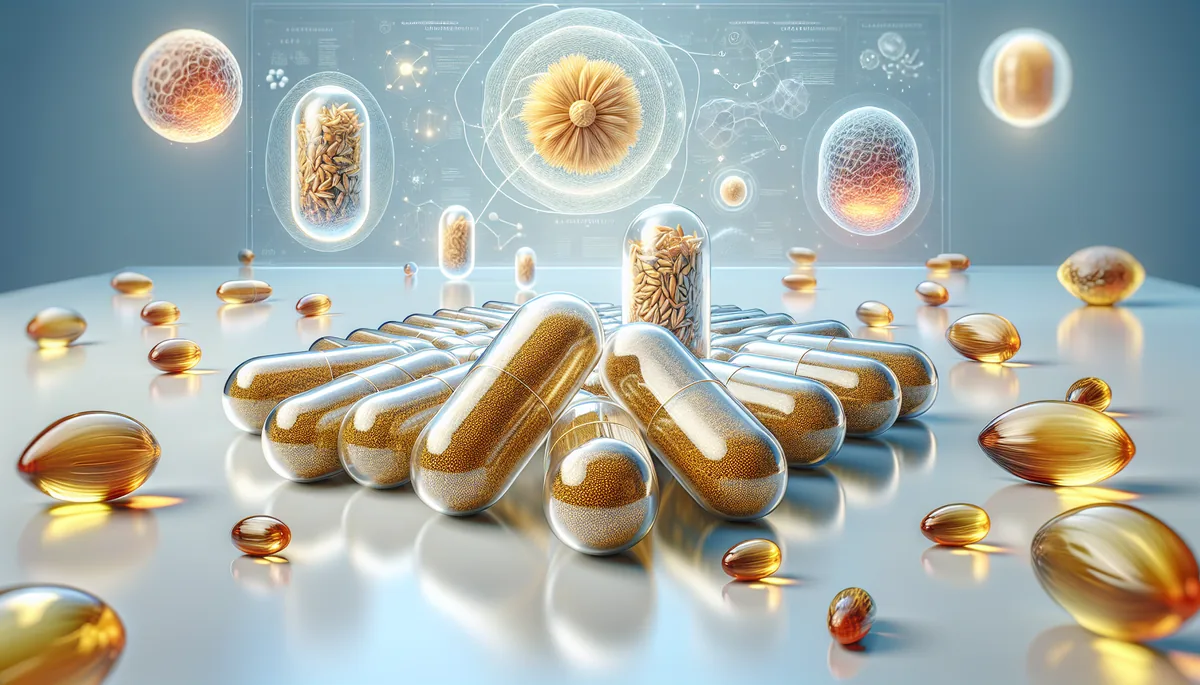
Spermidine induces autophagy by inhibiting the acetyltransferase EP300, which normally deactivates key autophagy-initiating proteins. This mechanism is well established in preclinical models across yeast, worms, flies, and mice, where spermidine supplementation extended lifespan. Human evidence is more limited: one small RCT found modest cognitive benefit in older adults with subjective cognitive decline, and epidemiological data link higher dietary spermidine intake to lower all-cause mortality. What spermidine does not do: it is not a proven treatment for any disease, does not directly slow measurable aging biomarkers in controlled human trials, and its long-term human safety profile is still accumulating.
- Spermidine inhibits EP300, an acetyltransferase that blocks autophagy initiation. By releasing this brake, spermidine allows the ULK1/Beclin-1 autophagy cascade to proceed more readily. This mechanism is confirmed in cell culture and multiple animal species.
- Autophagy is a cellular quality-control process: damaged proteins, aggregated organelles, and dysfunctional mitochondria are packaged into autophagosomes and digested. Autophagy flux declines with age, and this decline contributes to protein aggregation diseases, metabolic dysfunction, and accumulation of senescent cells.
- Lifespan extension with spermidine supplementation has been replicated in yeast, C. elegans, Drosophila, and mice — making it one of the few compounds with cross-species longevity evidence. Whether the mechanism translates to meaningful human aging outcomes is still unknown.
- The ASPIS cohort (n=800+ older adults, 20-year follow-up) linked the highest tertile of dietary spermidine intake to ~40% lower all-cause mortality. Confounding from overall diet quality is a legitimate concern; wheat germ and fermented food consumers tend to eat healthier diets broadly.
- The strongest human RCT evidence is for cognition in older adults with subjective cognitive decline: Wirth et al. (2018) found spermidine-rich plant extract improved memory performance vs. placebo over 3 months. Effect sizes were modest, and the study was small (n=30).
- What spermidine does not do — at current evidence levels: it does not reverse aging, cure neurodegenerative disease, replace proven lifestyle interventions, or substitute for treatment of underlying conditions.
Spermidine is one of the more scientifically grounded compounds in the longevity supplement space — but that does not mean the science is settled.
The core claim is this: spermidine supports autophagy, the cellular housekeeping process that clears damaged material. As autophagy declines with age, that decline is thought to contribute to many features of aging. If spermidine can counter that decline, the argument goes, it might support healthier aging.
Here is what the evidence actually shows — and where it runs out.

What Is Autophagy and Why Does It Matter?
Autophagy (from the Greek for “self-eating”) is a regulated recycling system inside cells. When a cell encounters damaged proteins, dysfunctional mitochondria, or other cellular debris, it can package that material into structures called autophagosomes and send it for degradation and reuse.
This is not a minor housekeeping function. Autophagy is essential for:
- Clearing protein aggregates that contribute to neurodegenerative diseases like Alzheimer’s and Parkinson’s
- Maintaining mitochondrial quality by removing damaged mitochondria (mitophagy)
- Immune function via removal of intracellular pathogens
- Metabolic homeostasis during fasting or nutrient stress
Critically, autophagy declines with age. This decline is believed to contribute to the accumulation of cellular damage that underlies aging-associated diseases. Anything that restores or supports autophagy flux is therefore theoretically relevant to healthy aging.
How Spermidine Affects Autophagy
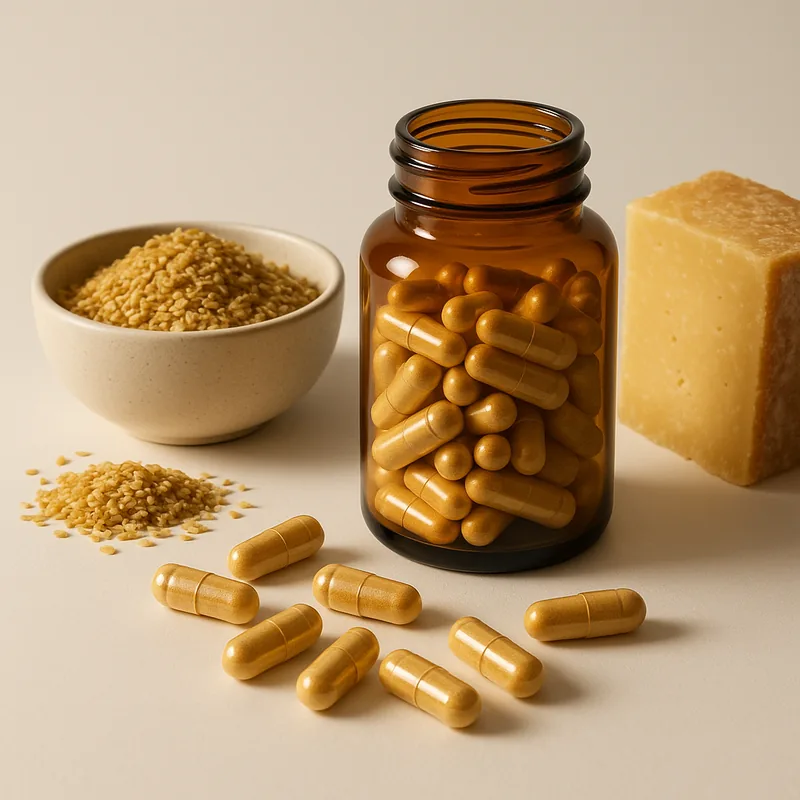
Spermidine is a naturally occurring polyamine found in foods including wheat germ, soybeans, aged cheese, and mushrooms. At the molecular level, its connection to autophagy runs through an enzyme called EP300, an acetyltransferase that, when active, acetylates and inhibits several autophagy-initiating proteins (including ATG proteins and p53).
Spermidine inhibits EP300. With EP300 suppressed, the brake on the autophagy machinery is released, allowing the ULK1-Beclin-1 cascade to proceed — effectively dialing up autophagic activity.
This mechanism has been confirmed in:
- Yeast (Saccharomyces cerevisiae): lifespan extended significantly
- C. elegans (nematode worms): lifespan and healthspan extended
- Drosophila (fruit flies): increased longevity via cardiac autophagy
- Mice: reduced age-related cardiac and cognitive decline in several studies
The cross-species consistency is genuinely notable — it is one reason spermidine gets more serious research attention than most polyamine compounds.
What Human Evidence Actually Shows
Cognitive aging: the strongest human signal
The most cited human RCT on spermidine is Wirth et al. (2018), which tested a spermidine-rich plant extract in 30 older adults with subjective cognitive decline. Participants receiving the supplement showed improvements on memory tasks vs. placebo over 3 months.
Important caveats: the sample was small, the study was short, and the extract used contained multiple compounds beyond spermidine itself. A follow-up trial (SMARTER, n=100) completed in 2021 found the same spermidine-rich extract improved mnemonic discrimination performance, adding some weight to the signal.
This is interesting, but not proof of a brain-protecting supplement — it is a signal that warrants further investigation.
Epidemiological data: dietary intake and mortality
The ASPIS cohort study followed over 800 older adults for 20 years and found that higher dietary spermidine intake was associated with substantially lower all-cause mortality and reduced dementia incidence. The top tertile of intake had roughly 40% lower mortality than the bottom.
These are observational findings. People eating more wheat germ, fermented foods, and plant-rich diets tend to have healthier lifestyles broadly. Confounding is real, and correlation is not causation. But the biological plausibility makes the data more interesting than a typical nutritional observation.
What Spermidine Does Not Do
The preclinical excitement around spermidine sometimes outruns what supplement capsules can actually deliver. To be clear about the limits:
- It is not proven to extend human lifespan. Animal data do not translate automatically to humans, and no human longevity trials exist.
- It does not treat neurodegeneration. The RCTs studied people with subjective cognitive decline, not Alzheimer’s disease. Spermidine is not a treatment for any diagnosed condition.
- It does not replace lifestyle interventions. Exercise, caloric restriction, and fasting independently upregulate autophagy with far stronger human evidence than any supplement.
- Supplement vs. food source comparisons are not well established. Whether capsule-delivered spermidine reaches the same tissue concentrations as dietary sources is unclear.
Dietary Sources vs. Supplements
If you want to increase spermidine intake without capsules, the main dietary sources are:
- Wheat germ: richest source (~3–5 mg per 100g)
- Soybeans and natto
- Aged cheeses (especially aged hard cheeses)
- Shiitake and other mushrooms
- Legumes and whole grains
Most commercial supplements provide 1–6 mg of spermidine per day, often via wheat germ extract standardized to a specific spermidine content. For those avoiding gluten, wheat germ extracts may be problematic; some manufacturers offer alternatives.
Who Might Consider Spermidine Supplements?
Spermidine is a reasonable consideration for people who:
- Are already handling core health fundamentals (sleep, exercise, diet quality)
- Are interested in longevity research and comfortable with early-stage evidence
- Want a supplement with biological plausibility beyond pure marketing claims
- Have realistic expectations — you are not buying proven anti-aging, you are exploring a promising area
It is not the first supplement most people should buy. Creatine, omega-3s, vitamin D, and magnesium all have stronger human evidence bases for most common goals.
FAQ
Does spermidine really increase autophagy?
In preclinical models, yes — the EP300 inhibition mechanism is well characterized. In living humans, direct measurement of autophagy flux from supplement use is technically difficult, and the degree of real-world induction from supplemental doses is not established.
Is spermidine good for the brain?
Early human RCT data suggest possible benefits for memory in older adults with subjective cognitive decline. The evidence is promising but limited — small trials, short durations, and mixed extracts rather than pure spermidine. It is not a proven treatment for cognitive disease.
Can I get enough spermidine from food?
Yes, if you regularly consume wheat germ, natto, legumes, aged cheese, and mushrooms. A dietary approach aligns with the observational epidemiology. Supplements are an option for those who prefer not to adjust diet or want a standardized intake.
How long does spermidine take to show effects?
The human trials reporting cognitive effects ran 3 months. If spermidine benefits are real, they are likely gradual — operating through slow cellular-quality improvements. Do not expect noticeable effects in weeks.
Is spermidine safe?
Short-term safety data from human trials have been reassuring — no significant adverse events were reported in published RCTs. Long-term safety data in humans are limited. Standard caution applies: discuss with a healthcare provider if you have chronic conditions.
References
- Madeo F, Eisenberg T, Pietrocola F, Kroemer G. Spermidine in health and disease. Science. 2018.
- Kiechl S, Pechlaner R, Willeit P, et al. Higher spermidine intake is linked to lower mortality. Am J Clin Nutr. 2018.
- Eisenberg T, Abdellatif M, Schroeder S, et al. Cardioprotection and lifespan extension by spermidine. Nat Med. 2016.
- Wirth M, Benson G, Schwarz C, et al. Spermidine and memory performance in older adults. Cortex. 2018.
- Reviews on spermidine and autophagy support. PubMed search.
This article is for informational purposes only and does not constitute medical advice. Discuss new supplements with your healthcare provider, especially if you have chronic conditions or take prescription medications.
Related Articles
- Spermidine Supplement Guide: Benefits, Evidence, Dosage, and What to Expect
- Best Spermidine Supplements From Wheat Germ: What to Look For Before You Buy
- Is Spermidine Worth Taking After 50? A Practical, Evidence-Based Answer
- Spermidine Side Effects and Dosing: What a Cautious Beginner Should Know
- Spermidine vs Resveratrol: Which Longevity Supplement Makes More Sense?