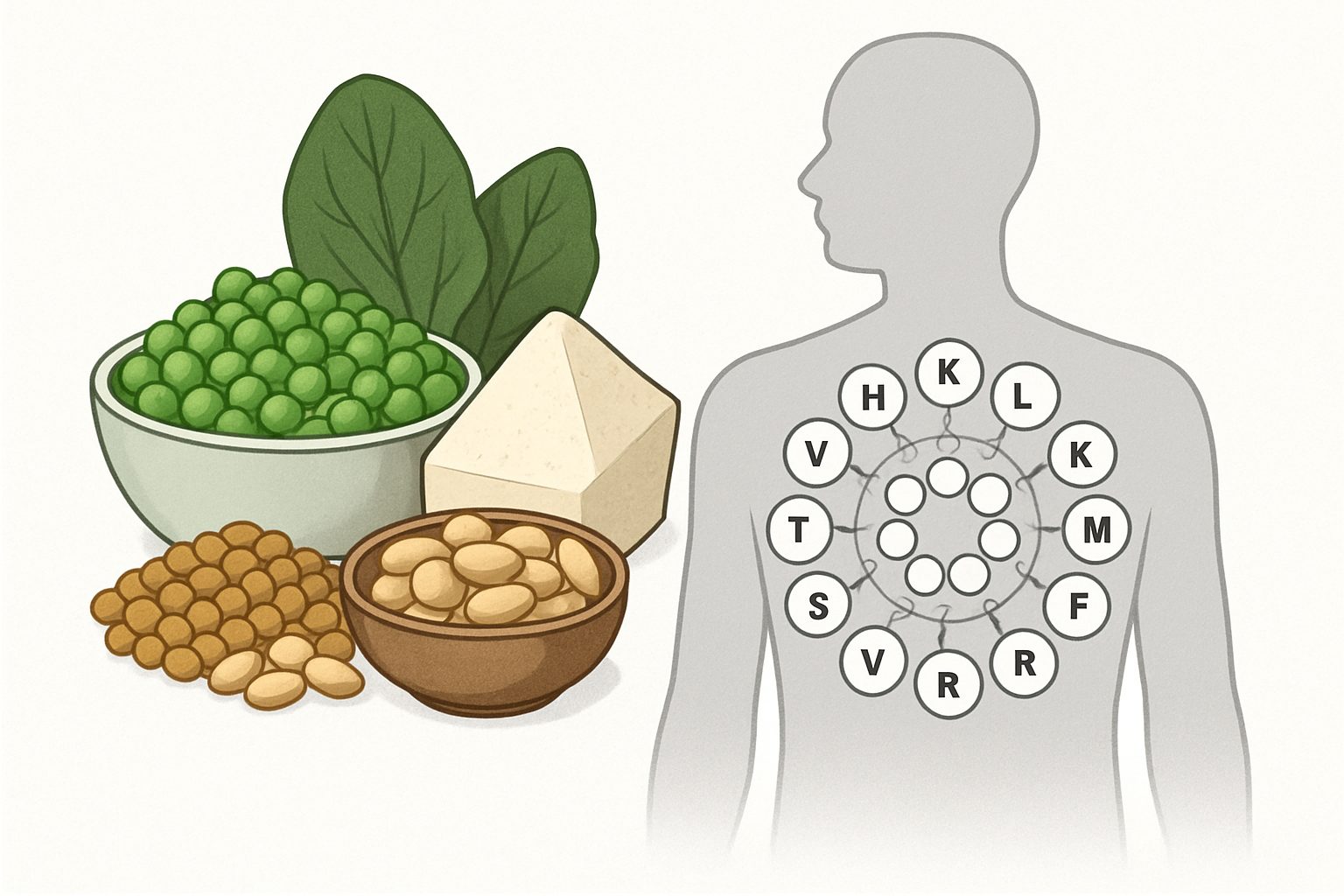
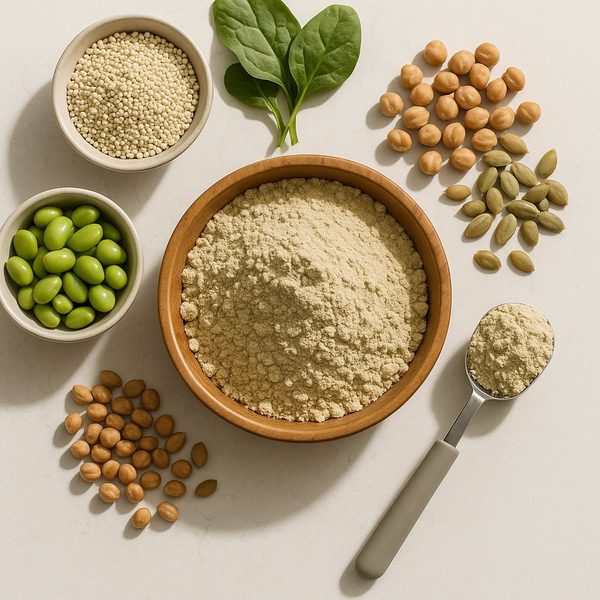
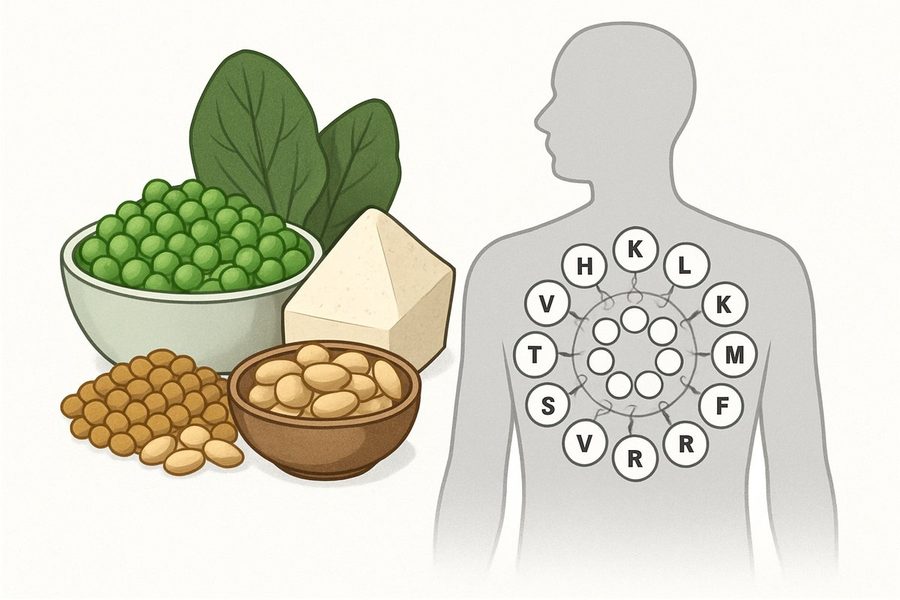
A ‘complete protein’ contains all nine essential amino acids (EAAs) — histidine, isoleucine, leucine, lysine, methionine, phenylalanine, threonine, tryptophan, and valine — in sufficient amounts to support protein synthesis without requiring complementary sources. Most plant proteins are technically complete but have one or more limiting amino acids (low in specific EAAs relative to human needs). Soy protein is the most complete plant protein by amino acid scoring (DIAAS ~0.91). Pea+rice blends achieve near-complete profiles through complementarity. Hemp and spirulina are technically complete but at lower protein density. Quinoa is a complete whole-food protein. The practical implication: eating varied plant proteins across the day achieves full EAA coverage even if individual sources are limited.
- DIAAS (Digestible Indispensable Amino Acid Score) is the modern standard for protein quality: scores above 1.0 indicate complete or surplus supply of all EAAs; scores below 1.0 indicate at least one limiting EAA. Soy isolate: ~0.91-1.0 (near-complete); pea isolate: ~0.82 (good); rice isolate: ~0.59 (moderate); hemp: ~0.63 (moderate).
- Lysine is the most commonly limiting amino acid in grain-based plant proteins (wheat, corn, rice) — this is why grains + legumes (lysine-rich) is a natural complementarity that appears across traditional food cultures worldwide: rice + beans, corn tortilla + black beans, wheat bread + lentil soup.
- Methionine is the limiting amino acid in legume-based proteins (pea, soy, lentil) — rice protein, which is methionine-rich, perfectly complements pea protein’s methionine deficiency. This is why pea+rice protein blends have essentially the same EAA ratios as whey protein when combined in a 70:30 ratio.
- Leucine specifically (not just total protein) drives MPS signaling: among plant proteins, soy and pea have the highest leucine content (~7-8 g leucine per 100 g protein), making them the most MPS-competent plant options. Hemp and rice are lower in leucine (5-6 g/100 g protein) and therefore require higher doses to trigger the leucine threshold for MPS.
- The ‘incomplete plant protein’ concern is nutritionally overstated for people eating varied diets — as long as total protein and EAA intake is adequate across the day, complementing individual proteins within each meal is not required. The concern is relevant only for people eating a very limited range of plant foods or relying heavily on a single plant protein source.
“Complete protein” is one of the most overused phrases in supplement marketing. It sounds simple, but in practice people usually mean one of three things:
- the protein contains all nine essential amino acids
- the amino acids are present in useful amounts
- the protein is digestible enough for the body to use well
A product can technically contain all essential amino acids and still be a mediocre choice if the amounts are low or the serving size is too small. That is why the better question is not just, Is it complete? It is, Is it complete enough to be useful for my goals?
What Is a Complete Plant Protein?
A complete protein provides all nine essential amino acids that your body cannot make on its own. Soy is the classic example of a complete plant protein. Quinoa, buckwheat, and hemp also contain all essential amino acids, though that does not mean they all deliver the same muscle-building value gram for gram.[1][2]
In supplement form, the most practical complete or near-complete options are:
- soy protein isolate
- pea + rice blends
- multi-source blends designed to cover limiting amino acids
Why Single-Source Plant Proteins Can Fall Short
Many plant proteins are limited in one or more essential amino acids.
Pea protein
Good in lysine, lower in methionine.
Rice protein
Better in methionine, lower in lysine.
Hemp protein
Contains all essential amino acids, but often at lower concentrations and lower total protein density.
That is why blending works so well. Pea plus rice is popular because each helps offset the other’s weak points.[1][2]
Complete vs “Good Enough” for Muscle
From a sports nutrition perspective, the biggest issue is not only completeness. It is whether the serving provides enough essential amino acids and enough leucine to stimulate muscle protein synthesis.[3]
That means a complete plant protein powder should ideally provide:
- 20 to 30 grams of protein per serving
- a meaningful leucine dose or a serving size large enough to compensate
- good digestibility
- consistent third-party quality standards
Best Plant Proteins for a Complete Amino Acid Profile
Soy protein isolate
This is still one of the strongest stand-alone choices. It is complete, efficient, and well studied.[1][4]
Pea + rice blends
These are often the best non-soy option for people who want a more balanced amino acid profile without dairy.
Multi-source blends
Products that combine pea, rice, pumpkin seed, sunflower seed, or chia can also work, though the label should still show a meaningful protein dose.
Do You Need to Combine Proteins at the Same Meal?
Not necessarily. The older idea that plant eaters must combine proteins in the same sitting is outdated. Over the course of a normal day, varied protein intake can cover amino acid needs well.[2][4]
But in protein powder form, blends are still useful because they make each serving more robust on its own.
Who Should Care Most About Amino Acid Completeness?
Active adults
If you are training regularly, better amino acid quality makes it easier to support recovery.
Older adults
With age, protein efficiency declines, so protein quality matters more.[3]
People who rely on shakes often
If your powder is a daily staple, it should do real nutritional work.
Vegans with low total protein intake
A stronger powder can help close the gap.
FAQ
Is pea protein a complete protein?
Not usually in the strict sense people mean for supplements. It is a strong protein, but it is lower in methionine, which is why blending with rice is common.
Is soy the best complete plant protein?
For many people, yes. It is one of the best-researched and most efficient plant proteins.
Is hemp protein complete?
Hemp contains all essential amino acids, but the lower protein concentration and lower leucine density make it less efficient for muscle support.
Are complete amino acids enough by themselves?
No. Total protein, digestibility, and serving size still matter.
- FAO report on dietary protein quality evaluation in human nutrition.
- Academy of Nutrition and Dietetics position paper on vegetarian diets.
- International Society of Sports Nutrition position stand: protein and exercise.
- NIH Office of Dietary Supplements: Exercise and Athletic Performance fact sheet — https://ods.od.nih.gov/factsheets/ExerciseAndAthleticPerformance-HealthProfessional/
—
This article is for educational purposes only and is not a substitute for medical advice.
Related Articles
- Plant Protein for Women Over 40: What Matters Most
- Pea vs Rice vs Hemp Protein: Which Is Best?
- High-Protein Vegan Shakes for Weight Loss
- Plant Protein Powders Without Chalky Taste: What to Buy
- Tart Cherry for Soreness and Sleep: Does It Work?
Sources
- Gorissen SHM, Witard OC. Characterising the protein content and amino acid composition of commercially available plant-based protein isolates. Amino Acids.
- van Vliet S, Burd NA, van Loon LJC. The skeletal muscle anabolic response to plant- versus animal-based protein consumption. J Nutr.
- Joy JM, Lowery RP, Wilson JM, et al. Rice protein versus whey protein during resistance training adaptations. Nutr J.
- Babault N, Païzis C, Deley G, et al. Pea protein oral supplementation promotes muscle thickness gains during resistance training. J Int Soc Sports Nutr.
- Reviews on protein digestibility and amino-acid quality scoring in plant proteins. PubMed search.