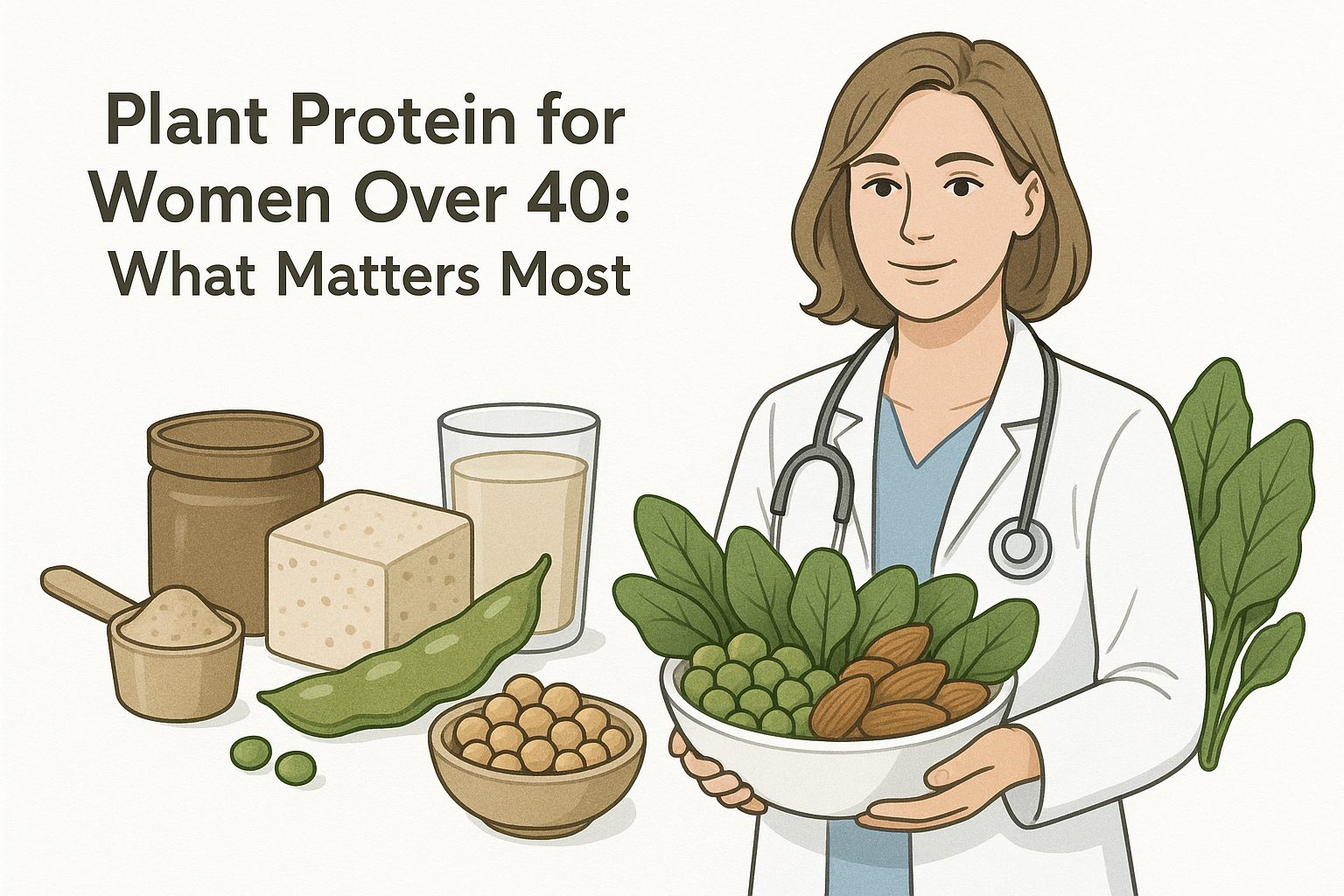
Women over 40 face accelerating age-related muscle loss (sarcopenia) and bone density decline, particularly around menopause when estrogen withdrawal dramatically accelerates both processes. Plant protein can fully support muscle maintenance and healthy aging, but several factors are important: total protein intake should be 1.6-2 g/kg/day (higher than the RDA of 0.8 g/kg), with leucine-rich sources per meal to maintain MPS threshold; calcium and vitamin D from diet and supplementation support bone health that protein cannot address alone; and weight-bearing exercise is non-negotiable for preserving bone and muscle at this life stage. Pea+rice blends provide excellent leucine density and complementary amino acids for post-40 women seeking plant-based protein.
If you are considering animal-based options, our deep dive on colostrum versus whey protein for athletes breaks down what the research actually shows.
- Women lose approximately 1-3% of muscle mass per year after 40 (accelerating to 3-5%/year post-menopause) and 1-2% of bone density per year post-menopause — adequate protein intake (1.6-2 g/kg/day) and resistance training are the two most evidence-backed lifestyle interventions for slowing both processes.
- The MPS leucine threshold per meal is 2.5-3 g leucine for women over 40 (as it is for older adults generally) — this means plant protein sources need to be dosed at 30-40 g per meal to provide sufficient leucine, as pea protein has ~3 g leucine per 30 g serving.
- Phytoestrogens in soy protein (isoflavones) have been proposed as beneficial for peri- and post-menopausal women — a 2019 meta-analysis found soy isoflavone supplementation mildly reduced hot flash frequency and severity. Soy protein is the most complete plant protein (DIAAS ~0.91) and may provide modest estrogenic support alongside its nutritional protein role.
- Bone health in women over 40 requires a multi-nutrient approach beyond protein: calcium (1,000-1,200 mg/day from diet + supplement), vitamin D (1,500-2,000 IU/day for most women over 50), vitamin K2 (100 mcg MK-7) for calcium routing to bone, and magnesium (300-400 mg/day) for bone matrix support. Plant protein alone does not cover these micronutrient bases.
- Digestibility and GI comfort of plant protein matter more to consistent intake than marginal differences in amino acid profiles — a plant protein a woman will use consistently (good taste, comfortable digestion, practical format) beats a theoretically superior product she abandons due to GI issues or palatability.
After 40, protein becomes more important, not less. Muscle mass, bone health, body composition, and recovery all become harder to maintain with age, especially during perimenopause and after menopause. That does not mean women need extreme bodybuilding nutrition. It does mean under-eating protein gets more expensive.
Plant protein can absolutely work here, but it should be chosen more strategically than the average influencer smoothie blend.
Why Protein Needs Change After 40
As women age, the body becomes less responsive to small protein doses. Researchers often call this anabolic resistance. In plain English, the body may need more protein per meal to stimulate muscle protein synthesis effectively.[1][2]
That matters because muscle is tied to:
- strength and mobility
- insulin sensitivity
- healthy body composition
- fall prevention with aging
- overall metabolic health
During perimenopause and menopause, shifts in estrogen can also affect fat distribution, bone turnover, and recovery from exercise. Protein becomes part of the foundation, not just a fitness extra.[2][3]
Can Plant Protein Be Good Enough?
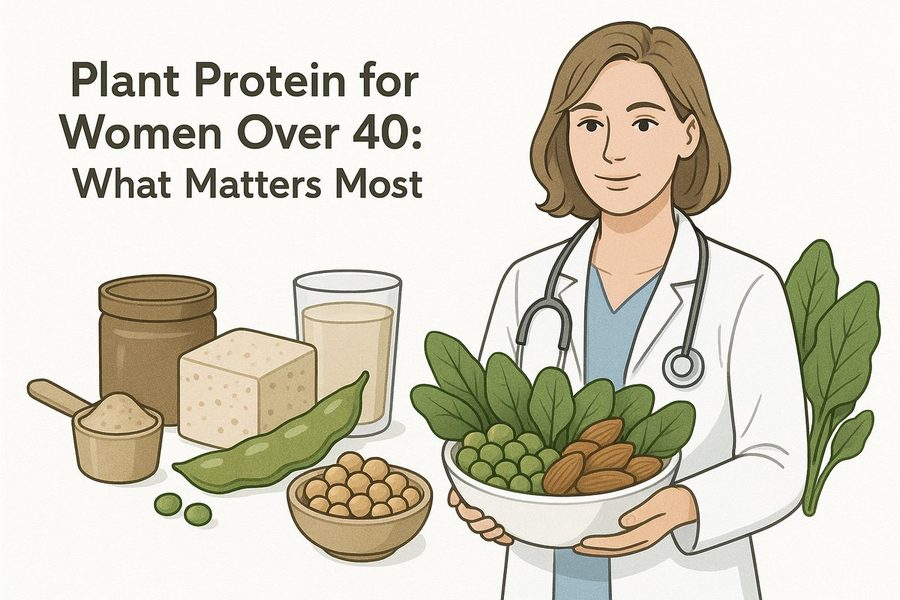
Yes, but quality and dose matter.
Plant proteins can support muscle and healthy aging when total intake is adequate and the amino acid profile is strong enough.[1][4] The easiest way to get there is to use:
- soy isolate, or
- a pea-plus-rice blend, or
- a multi-source blend designed for essential amino acid coverage
Single-source hemp or low-dose “wellness” powders often do not deliver enough protein per serving for women trying to preserve muscle.
What Women Over 40 Should Look For
1. At least 20 to 30 grams of protein per serving
A tiny 12-gram scoop is usually not enough to move the needle.
2. Strong leucine content
Leucine is the amino acid that helps trigger muscle protein synthesis. Plant proteins generally contain less leucine than whey, so serving size matters.[1]
3. Good digestibility
A powder you avoid because it bloats you is not a good supplement. Look for blends that mix well and skip excess gums or sugar alcohols.
4. Added calcium, vitamin D, or iron only when useful
Some fortified products are helpful, but more ingredients are not always better. If you already use a multivitamin, you may not need a heavily fortified shake.
Best Times to Use Plant Protein
Breakfast
Many women under-eat protein early in the day. A plant-protein breakfast shake can raise total daily intake quickly.
Post-workout
This is especially useful after resistance training, which is one of the best tools for protecting muscle and bone with age.[2]
As a strategic snack
A protein-forward snack is usually better than a high-carb grab-and-go option if your goal is body composition or appetite control.
Protein and Bone Health
Protein is not only about muscle. Bone health depends on adequate protein too, especially when paired with sufficient calcium, vitamin D, and resistance exercise.[3][5] Very low protein intake can work against bone maintenance.
This is one reason women over 40 should stop thinking of protein powder as a niche gym product. It is often a convenient nutrition tool.
Best Plant Protein Types for Women Over 40
Soy protein
A complete protein with strong research support. It is smooth, effective, and efficient.
Pea + rice blend
Great for women avoiding soy. It offers strong protein quality when the dose is high enough.
Multi-source blends
Can work well if they reach a real protein dose and are not padded with cheap fillers.
FAQ
How much protein should a woman over 40 aim for?
It depends on body size and activity, but many active adults do well around 1.2 to 2.0 grams per kilogram of body weight per day, with higher amounts often used during fat loss or regular training.[1][2]
Is plant protein enough to maintain muscle after menopause?
Yes, if total daily protein, meal distribution, and resistance training are all in place.
Is soy protein safe for most women?
For most women, whole soy foods and soy protein are considered safe and can be part of a healthy diet. Individual medical history still matters.
Should women over 40 use collagen instead?
Collagen may support skin or joints, but it is not a complete protein and should not replace a higher-quality protein source for muscle maintenance.
- International Society of Sports Nutrition position stand: protein and exercise.
- PROT-AGE Study Group recommendations on protein intake in older adults.
- North American Menopause Society resources on healthy aging and midlife health.
- Academy of Nutrition and Dietetics position paper on vegetarian diets.
- NIH Office of Dietary Supplements: Calcium and Vitamin D fact sheets — https://ods.od.nih.gov/factsheets/
—
This article is for informational purposes only and does not replace medical advice.
Related Articles
- Plant Protein With Complete Amino Acids
- Pea vs Rice vs Hemp Protein: Which Is Best?
- High-Protein Vegan Shakes for Weight Loss
- Plant Protein Powders Without Chalky Taste: What to Buy
- Tart Cherry for Soreness and Sleep: Does It Work?
Sources
- Reviews on plant-protein intake, muscle maintenance, and healthy aging in midlife and older women. PubMed search.
- Messina M. Soy protein, isoflavones, and health outcomes: a review of the clinical and epidemiologic literature. Nutrients.
- van Vliet S, Burd NA, van Loon LJC. The skeletal muscle anabolic response to plant- versus animal-based protein consumption. J Nutr.
- Reviews on soy/isoflavones, bone health, and postmenopausal women. PubMed search.
- Reviews on protein requirements in older adults and healthy aging. PubMed search.
📚 Part of our Best Plant-Based Protein Powders hub. Explore all our plant protein guides.