
Each plant protein has distinct advantages: pea protein is the leader for muscle-building evidence (high leucine, ~3 g/30 g serving; multiple RCTs showing non-inferiority to whey for hypertrophy); rice protein is smoother-textured with slightly inferior leucine content but good digestibility (DIAAS ~0.59); hemp protein is lowest in protein density (~50% protein by weight) but richest in fiber, omega-3, and minerals, making it the best whole-food choice. For muscle specifically, pea is the clear winner. For digestibility, rice and hemp are gentler. For daily nutritional completeness, hemp or a pea+hemp blend provides the broadest nutrient profile. Combining pea + rice addresses the complementary limiting amino acids (methionine in pea, lysine in rice) for a more complete profile.
- Pea protein has the strongest direct muscle-building evidence: a 2015 double-blind RCT (Babault et al.) found 25 g pea protein twice daily produced equivalent bicep muscle thickness gains as 25 g whey protein over 12 weeks of resistance training in young men – the strongest plant protein head-to-head comparison to whey.
- DIAAS (Digestible Indispensable Amino Acid Score) measures protein quality more accurately than PDCAAS: pea protein DIAAS is ~0.82 (good); rice protein ~0.59 (moderate); hemp ~0.63 (moderate). Whey is ~1.09 for comparison. Combining pea + rice raises the combined DIAAS toward pea protein levels while improving texture.
- Hemp protein is lower in protein density (45-50% protein vs. 80-90% for pea/rice isolates) but uniquely provides both omega-3 (ALA), omega-6 in an ideal 3:1 ratio, and 10-15 g fiber per serving – making it a nutritional whole-food supplement rather than a pure protein concentrate.
- Digestibility varies: rice protein is consistently the gentlest on digestion in user reports and some clinical observations – it lacks some of the lectins and antinutrients present in raw legumes (pea) and the fibrous complexity of hemp. This makes rice protein a practical choice for those with IBS, legume sensitivity, or acute GI issues.
- Sulfur amino acids (methionine, cysteine) are the main limiting factor in pea protein – blending with rice (higher methionine content) or adding organic plant foods rich in sulfur (broccoli sprouts, garlic) complements pea protein’s amino acid gaps without requiring animal protein.
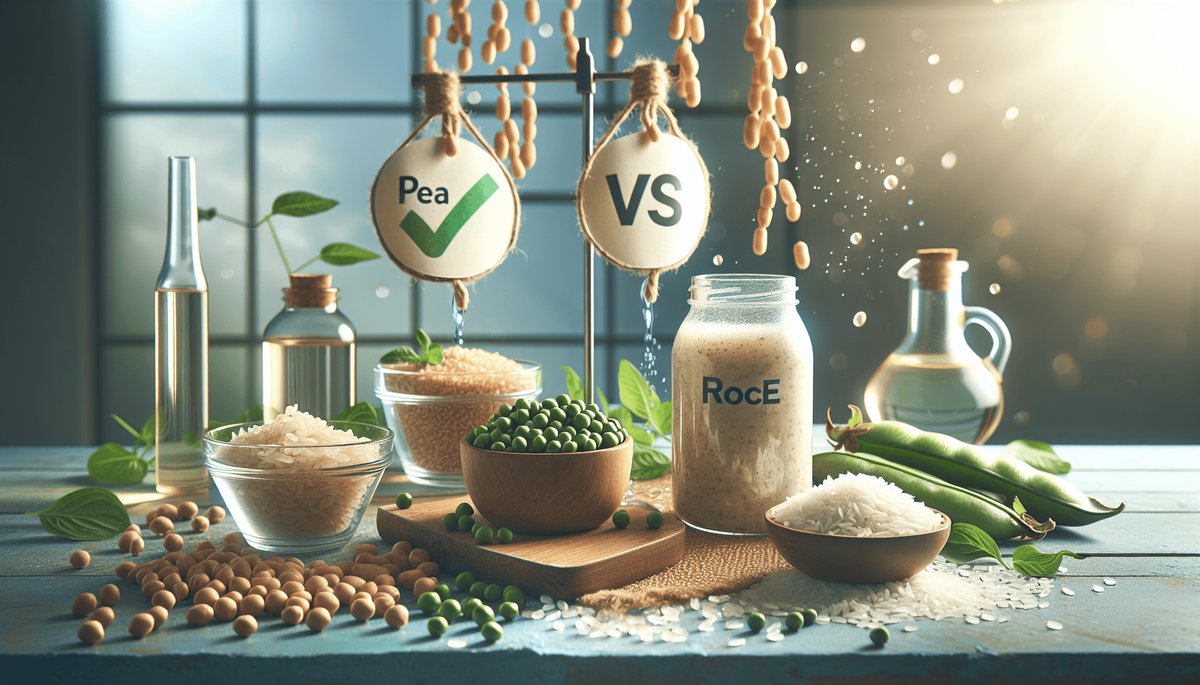
Pea, rice, and hemp are three of the most common plant proteins on the market, but they are not interchangeable. Each has different strengths in amino acid profile, texture, digestibility, and overall usefulness.
If you want a short answer, here it is: pea protein is usually the best all-around single-source option, rice protein is a helpful partner in blends, and hemp is more of a whole-food nutrition play than a pure muscle-building protein.
Pea Protein: The Practical All-Rounder
Pea protein isolate is popular for good reason. It is soy-free, dairy-free, usually easy to digest, and relatively high in protein per scoop. It is especially strong in lysine, an amino acid that some other plant proteins lack.
Pros of pea protein
- good protein density
- often 20 to 27 grams per serving
- generally allergy friendly
- useful for muscle support when dosed adequately
Limits of pea protein
Pea protein is lower in methionine than animal proteins, which is one reason many companies combine it with rice protein.[1][2]
Rice Protein: Better in a Blend Than Alone
Brown rice protein is often marketed as gentle and clean, and many people tolerate it well. Its biggest advantage is that it complements pea protein nutritionally by bringing more sulfur-containing amino acids such as methionine.
Pros of rice protein
- useful amino acid complement to pea
- often easier to flavor than hemp
- works well in vegan blends
Limits of rice protein
On its own, rice protein is lower in lysine. Some rice-based powders can also feel sandy or gritty. Another practical issue is that rice ingredients may require more careful quality screening for heavy metals, depending on sourcing.
Hemp Protein: Nutritious but Less Concentrated
Hemp protein has a loyal following because it feels less processed and brings fiber, fats, and phytonutrients along with protein. It also contains all essential amino acids, but the total protein concentration and leucine density are usually lower than pea or soy isolate.[2][3]
Pros of hemp protein
- more whole-food character
- naturally contains fiber and some healthy fats
- earthy flavor works in some recipes
Limits of hemp protein
- usually lower protein per scoop
- more fibrous texture
- less ideal for people who need a concentrated post-workout protein
Which Has the Best Amino Acid Profile?
Best single-source choice for most people: pea
Pea protein is usually the most practical choice if you want a straightforward, effective powder.
Best combination: pea + rice
This blend covers each other’s weak spots and creates a more balanced essential amino acid profile.[1][2]
Best for whole-food nutrition: hemp
If your priority is not maximum protein efficiency but a broader whole-food feel, hemp can fit.
Research from sports nutrition organizations suggests plant proteins can support muscle gains well when total protein intake is high enough and essential amino acids are sufficient.[1] That is why blends matter.
Which Is Best for Muscle Building?
For muscle support, the ranking usually goes:
- pea plus rice blend
- pea protein isolate
- rice protein isolate
- hemp protein
The key issue is leucine and total essential amino acids. To stimulate muscle protein synthesis effectively, plant proteins often need slightly larger servings than whey.[1][4]
Which Is Best for Digestion?
This depends on the user.
Pea protein
Often well tolerated, though some people notice bloating if the formula includes gums or sugar alcohols.
Rice protein
Usually simple and gentle, but texture can be less pleasant.
Hemp protein
Can work well for some, but the extra fiber may be too much for others, especially around workouts.
Which Tastes Best?
Most people prefer pea-plus-rice blends over pure hemp. Hemp is earthy and grainy. Rice can taste neutral but sandy. Pea can taste dry by itself, though modern flavoring helps a lot.
Best Use by Goal
Choose pea protein if:
- you want the best all-around value
- you want higher protein per serving
- you want a flexible daily shake
Choose rice protein if:
- you want to blend it with pea
- you prefer a lighter flavor profile
Choose hemp protein if:
- you want a less refined product
- you value fiber and seeds-based nutrition
- you do not mind a heavier texture
FAQ
Is hemp protein complete?
Yes, hemp contains all essential amino acids, but that does not automatically make it the best muscle-building option because the amount and digestibility still matter.
Is pea protein better than rice protein?
Usually yes as a stand-alone powder. Rice is more useful as a complementary protein.
What is the best plant protein blend?
For most active adults, pea plus rice remains the most practical and evidence-aligned combination.
Which is best for weight loss?
Pea or a pea-plus-rice blend usually works best because it provides more protein per calorie and better satiety.
- International Society of Sports Nutrition position stand: protein and exercise.
- FAO report on dietary protein quality evaluation in human nutrition.
- Academy of Nutrition and Dietetics position paper on vegetarian diets.
- NIH Office of Dietary Supplements: Exercise and Athletic Performance fact sheet – https://ods.od.nih.gov/factsheets/ExerciseAndAthleticPerformance-HealthProfessional/
—
This article is for educational purposes only and is not medical advice.
Related Articles
- Plant Protein With Complete Amino Acids
- Plant Protein for Women Over 40: What Matters Most
- High-Protein Vegan Shakes for Weight Loss
- Plant Protein Powders Without Chalky Taste: What to Buy
- Tart Cherry for Soreness and Sleep: Does It Work?
Sources
- Gorissen SHM, Witard OC. Characterising the protein content and amino acid composition of commercially available plant-based protein isolates. Amino Acids.
- Joy JM, Lowery RP, Wilson JM, et al. Rice protein versus whey protein during resistance training adaptations. Nutr J.
- Babault N, Païzis C, Deley G, et al. Pea protein oral supplementation promotes muscle thickness gains during resistance training. J Int Soc Sports Nutr.
- Reviews on hemp protein digestibility and amino-acid composition. PubMed search.
- Reviews on protein digestibility and amino-acid quality scoring in plant proteins. PubMed search.

Leave a Reply