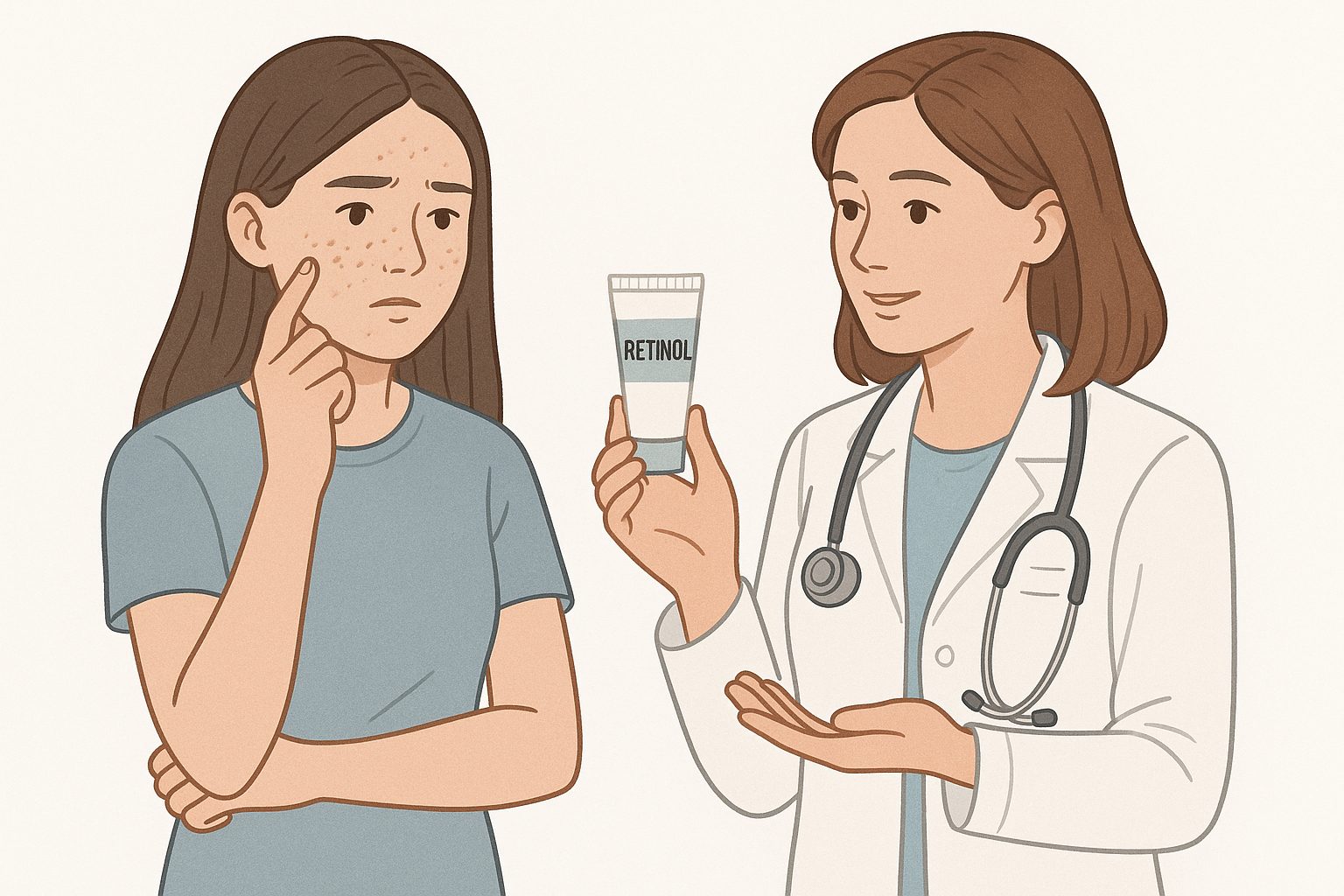
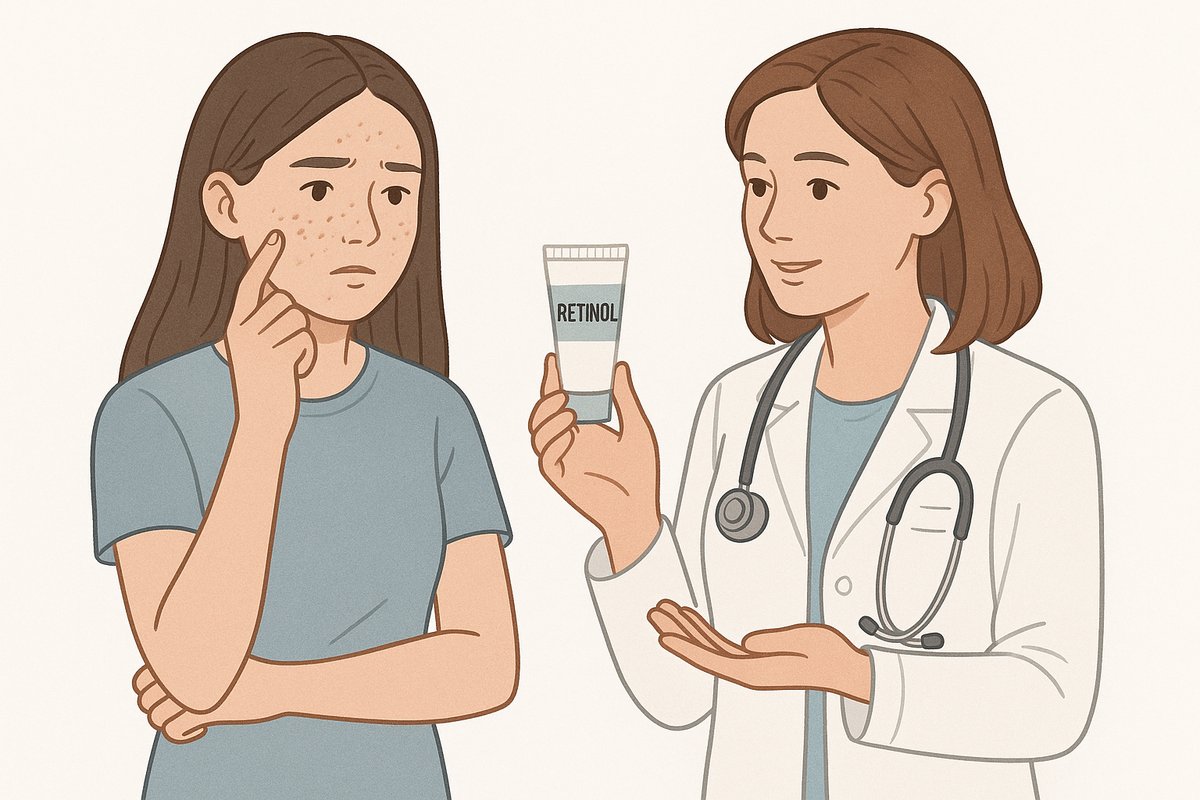
Retinol for teenagers is not appropriate as a routine anti-aging intervention — teenage skin has high cellular turnover, naturally high collagen production, and doesn’t have the structural aging concerns that retinoids address. Where low-dose retinol or adapalene (a prescription-level retinoid available OTC in many countries) is appropriate for teens is acne treatment: adapalene 0.1% gel has strong clinical evidence for reducing inflammatory acne, preventing new lesion formation by normalizing follicular keratinization, and is now available without prescription in the US. Anti-aging retinol use before age 25 is unnecessary and risks overexposure; acne-focused adapalene is clinically supported and age-appropriate.
- The difference between anti-aging retinol and acne adapalene is mechanism and strength — anti-aging use relies on retinol → retinaldehyde → tretinoin conversion to stimulate collagen via RAR-γ; adapalene is a synthetic retinoid that specifically normalizes keratinocyte differentiation in hair follicles, preventing the hyperkeratinization that blocks follicles and causes acne.
- Adapalene 0.1% (Differin Gel, available OTC in the US since 2016) is the most appropriate retinoid for teens with acne: multiple large RCTs show 40–50% reduction in inflammatory lesions over 12 weeks; it has less irritation than tretinoin and is specifically indicated for facial acne in patients 12+.
- Teenage skin already has high retinol activity — natural retinoid signaling is robust in young skin, which is why it heals quickly, produces collagen effectively, and has brisk cellular turnover; adding anti-aging retinol to this environment provides no collagen benefit and increases irritation risk without upside.
- Retinol in commercial teen skincare products is often a marketing move — brands that include low concentrations of retinol in products marketed to teens are responding to ingredient trend awareness, not to a clinical gap; the ingredients actually beneficial for teen skin are salicylic acid, benzoyl peroxide, niacinamide, and adapalene (for acne).
- SPF is far more appropriate for teens than retinol for anti-aging purposes: daily SPF use beginning in adolescence provides cumulative UV protection that prevents the damage that retinol later addresses; teaching teens consistent SPF use is a higher-value intervention than any anti-aging active.
Retinol has become the default “smart skincare” product online, which is strange because many teenagers do not need anti-aging products at all. If the question is do teenagers really need retinol? the honest answer is usually no.
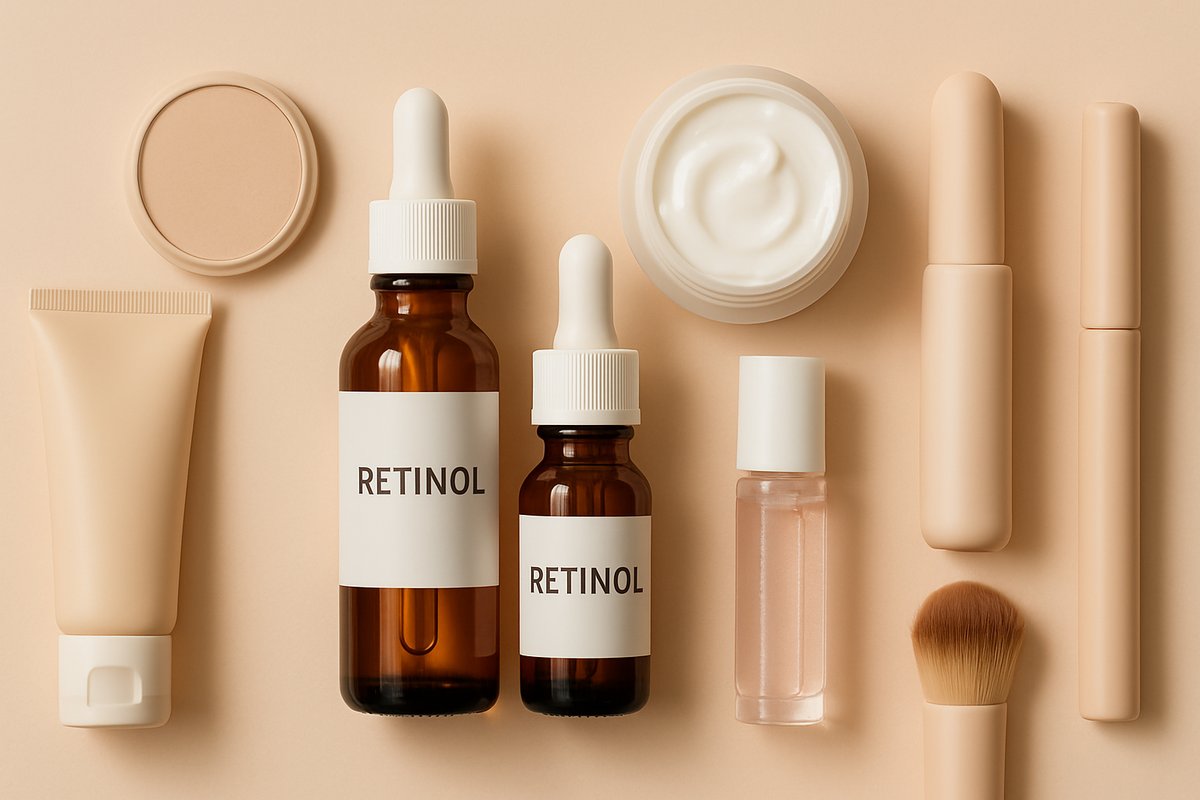
Healthy teenage skin does not need a wrinkle-prevention routine built around retinol. What most teens actually need is a simple skincare routine, daily sunscreen, and acne treatment if acne is present. There is one important exception, though: retinoids can be genuinely useful for teens with acne.
So the real answer depends on the reason a teen wants it.
The Short Answer
Teens usually do not need retinol for anti-aging
Most teenagers are nowhere near the point where retinol is necessary for photoaging concerns. Starting strong actives too early can create irritation without much benefit.
Teens may benefit from retinoids for acne
Topical retinoids are strongly recommended in the 2024 AAD acne guidelines for acne management in adolescents and preadolescents aged 9 and older. That is not because teens need “prejuvenation.” It is because retinoids help target clogged pores and early acne lesions.
Retinol vs Retinoids: The Difference Matters
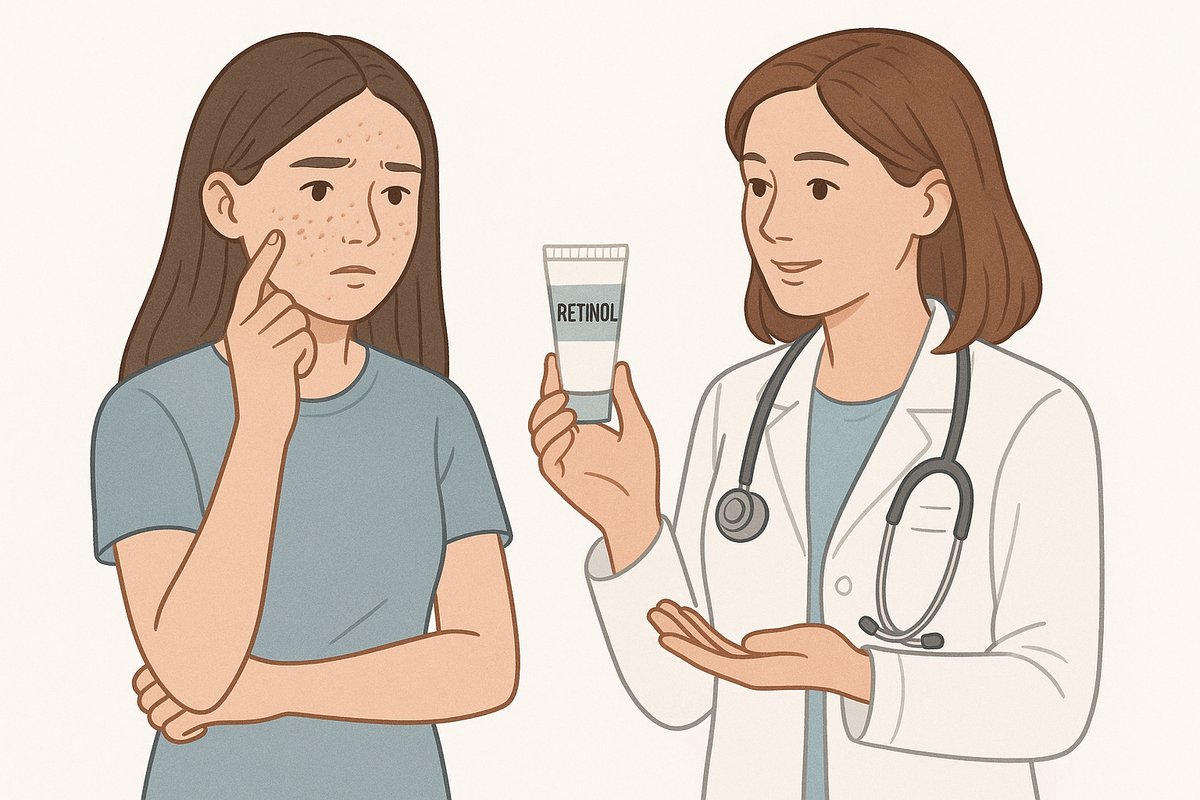
People say “retinol” when they often mean any vitamin A product. Dermatologically, that is too vague.
Retinol
– over-the-counter cosmetic ingredient
– often marketed for fine lines and texture
– not usually the most logical first choice for teen acne
Retinoids
– broader group that includes adapalene, tretinoin, and tazarotene
– used medically for acne
– much more relevant for teenagers with breakouts
For teens, adapalene is the retinoid that most often makes practical sense.
When Teenagers Might Need a Retinoid
Persistent comedonal acne
If a teen has blackheads, whiteheads, or clogged pores that keep coming back, a retinoid may help more than random “pore serums.”
Maintenance acne treatment
Retinoids are first-line acne therapy because they target microcomedones, the precursor lesions behind acne formation. Studies on adapalene have shown benefit in controlling microcomedone formation during maintenance treatment.
A dermatologist recommends it
That is the clearest green light. If acne, scarring risk, or another diagnosed skin issue is involved, dermatology advice beats social media advice.
When Teenagers Probably Do Not Need Retinol
They only want it because social media says to start early
This is the weakest reason. Teens are not in a race against wrinkles at 15.
Their skin is already easily irritated
Retinoids can cause dryness, flaking, redness, and burning, especially when introduced badly.
They do not even have a basic routine yet
If someone is not cleansing consistently or wearing sunscreen, retinol is not the first fix.
Why Sunscreen Matters More Than Retinol for Most Teens
If the goal is preventing early visible aging, sunscreen is the smarter starting point. In a randomized trial, consistent sunscreen use measurably slowed photoaging. That is a more relevant prevention habit for teens than jumping into a retinol serum.
This is the part skincare marketing skips: you do not out-serum UV exposure.
If a Teen Does Need a Retinoid, Which One Makes Sense?
Adapalene is usually the best starting point
Adapalene 0.1% is available over the counter and widely used for acne. Compared with older retinoids, it is generally considered one of the more tolerable options. Systematic review data suggest adapalene often has a better tolerability profile than tretinoin or tazarotene.
Cosmetic retinol is often the less logical choice
If acne is the reason for treatment, cosmetic retinol is usually less targeted than adapalene. If anti-aging is the reason, most teens still do not need either one.
How Teens Should Use a Retinoid If They Truly Need One
Start slowly
– use two to three nights per week at first
– apply a pea-sized amount for the whole face
– moisturize well
– avoid stacking it with scrubs and acids
Expect an adjustment period
Mild dryness can happen early. Severe burning is a sign to back off.
Wear sunscreen every day
This should be standard when using retinoids.
Final Verdict
Do teenagers really need retinol? Usually not for anti-aging. Most teens are better off with cleanser, moisturizer, sunscreen, and a simple acne plan if needed.
But do some teenagers need a retinoid? Yes—especially for acne. In that case, adapalene usually makes more sense than buying a cosmetic retinol just because it is trending.
FAQ
Should a 13-year-old use retinol?
Usually not for anti-aging. If acne is present, a parent-supervised adapalene routine or dermatologist guidance makes more sense.
Is adapalene the same as retinol?
No. Adapalene is a retinoid used for acne. Retinol is a different vitamin A derivative commonly sold in cosmetic products.
Can retinol irritate teenage skin?
Yes. It can cause dryness, redness, and peeling if used unnecessarily or too aggressively.
What should teens use instead of retinol for prevention?
Daily sunscreen is the most useful preventive skincare habit for most teens.
References
- Reynolds RV, Yeung H, Cheng CE, et al. Guidelines of care for the management of acne vulgaris. J Am Acad Dermatol. 2024;90(5):
- doi:
- Tolaymat L, Dearborn H, Zito PM. Topical retinoids in acne vulgaris: a systematic review. Am J Clin Dermatol. 2019;20(3):345-
- doi:
- Thielitz A, Abdel-Naser MB, Fluhr JW, Zouboulis CC, Gollnick H. Control of microcomedone formation throughout a maintenance treatment with adapalene gel,
- doi:
- Hughes MCB, Williams GM, Baker P, Green AC. Sunscreen and prevention of skin aging: a randomized trial. Ann Intern Med. 2013;158(11):781-
- doi:
Related Articles
- Best Acne-Safe Moisturizers for Gen Z
- Best Teen Skincare Routines and Products
- Minimalist Skincare Routine Under 5 Products
- Sunscreen Habits That Prevent Early Aging
- Best Ceramide Creams for Barrier Repair