
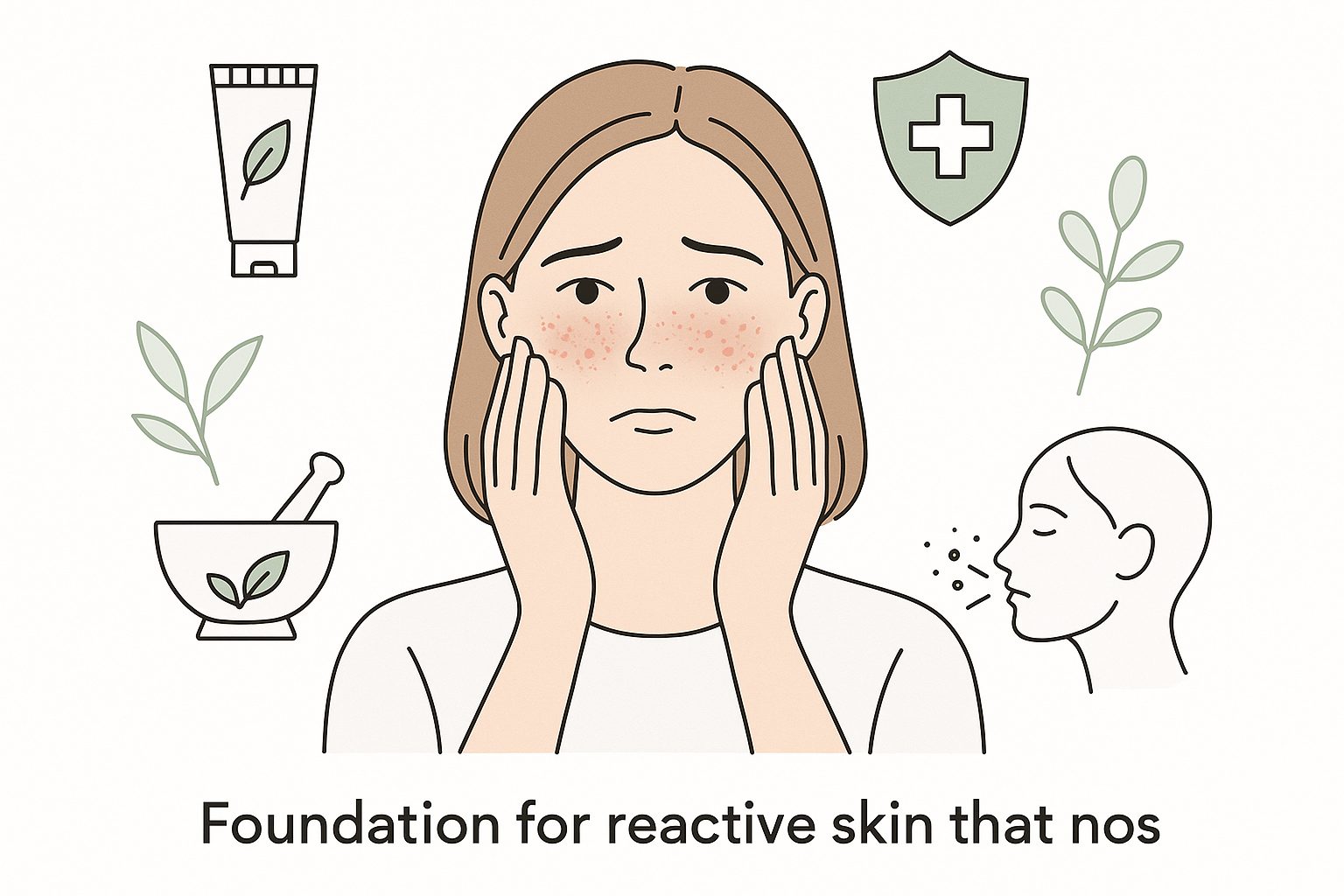
Foundation for Reactive Skin That Does Not Sting
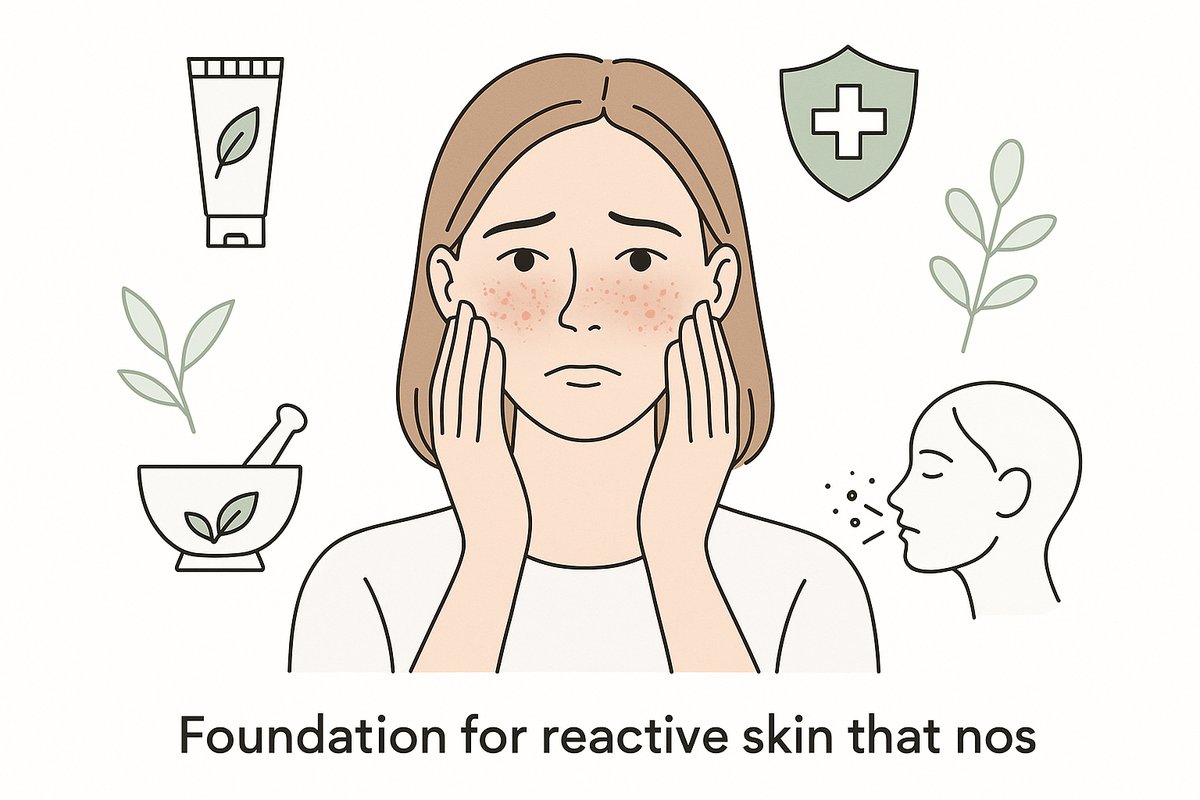
If you have reactive skin, foundation can feel like a gamble. One formula looks beautiful online and then burns the second it touches your cheeks. Another goes on fine but leaves your face tight, hot, and blotchy a few hours later. That is why people search for foundation for reactive skin that does not sting, not just foundation that looks good in selfies.
Key Takeaways
- Stinging immediately on application indicates alcohol (denatured alcohol or SD alcohol 40) or high-concentration actives (AHA, retinol, vitamin C) in the foundation formula. These should never appear in a foundation intended for reactive skin — check the first 5 ingredients before purchasing.
- Tightness during wear indicates a formula with high film-former content (polymers, acrylates) that creates excessive occlusion or dry-down tension on the skin surface — or a formula that is too mattifying for a skin type that needs some moisture retention. Look for foundations with ‘hydrating finish’ or ‘skin-like finish’ claims for reactive skin.
- The ‘reactive’ descriptor often overlaps with rosacea-prone skin — for this subgroup, foundations containing azelaic acid (naturally anti-inflammatory), niacinamide (reduces redness), or zinc oxide (physical SPF with natural anti-redness properties) provide therapeutic benefit alongside coverage.
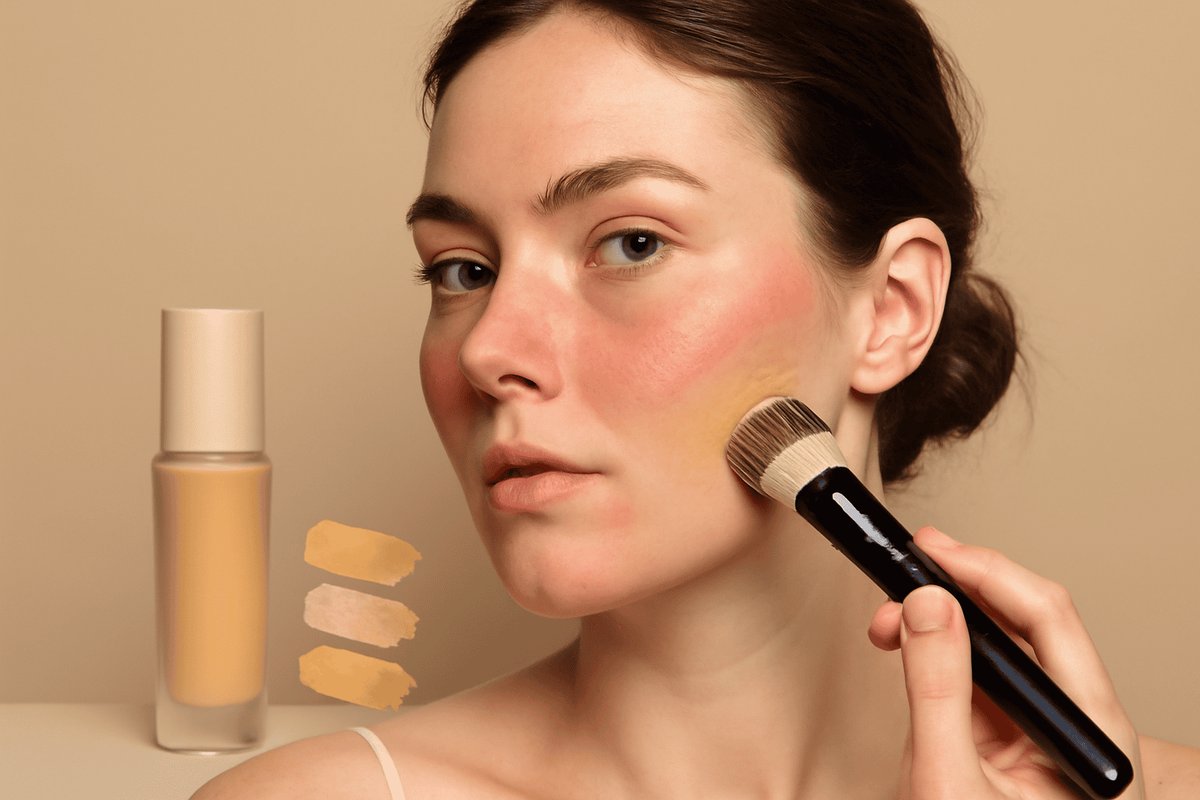
- Foundation application method matters for reactive skin: use a damp sponge (Beauty Blender, Real Techniques) rather than fingertips or a dense brush. Sponge application sheers the formula, reduces friction on the skin surface, and avoids transferring hand bacteria to the reactive face. Never drag or pull the sponge — use a stippling or bouncing motion.
- Removal is as important as application for reactive skin: use fragrance-free micellar water or a gentle oil cleanser, applied with a soft cloth rather than cotton rounds (which create friction on sensitized skin). Incomplete removal of foundation leaves film-forming agents on the skin overnight, which can worsen barrier disruption.
The good news is that reactive skin usually responds well to a narrower, more boring set of foundation options. Less fragrance, less alcohol, fewer active ingredients, and more comfortable textures tends to be the winning formula.
Why foundation stings on reactive skin
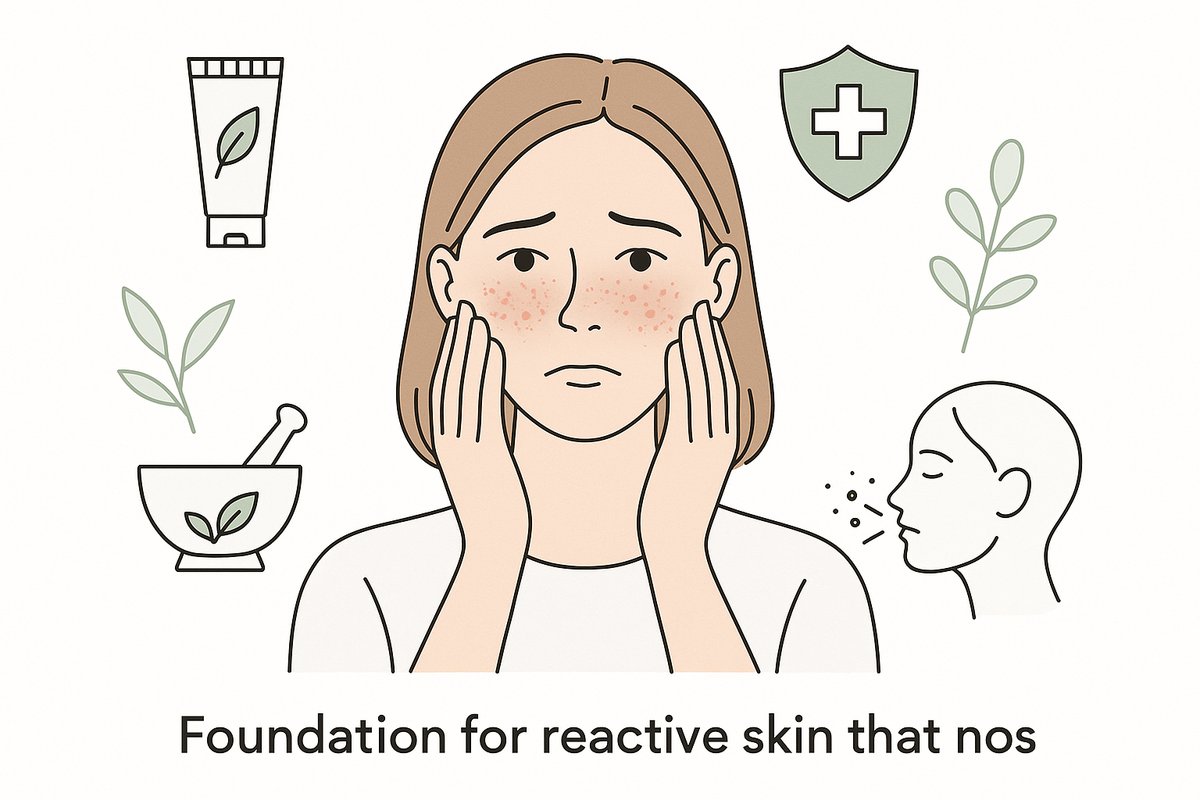
Stinging is not a normal part of wearing makeup. It usually means your skin barrier is compromised or the formula contains something your skin dislikes.
Common reasons foundation burns
- fragrance or masking fragrance
- alcohol-heavy formulas
- essential oils or fragrant botanicals
- exfoliating acids in hybrid complexion products
- over-exfoliated or retinoid-treated skin
- rubbing a product over inflamed areas
Sometimes it is not one dramatic allergen. It is just too much stress on already irritated skin.
What to look for in a non-stinging foundation
The best foundations for reactive skin are usually fragrance-free, medium-light in feel, and easy to spread without effort.
Helpful formula traits
- fragrance-free labeling
- natural or satin finish
- medium buildable coverage
- breathable feel on skin
- no strong alcohol smell or immediate sting
- easy removal at the end of the day
Foundation types that often work well
Hydrating skin tints
These are ideal when your skin feels dry, tight, or easily inflamed. They even tone without demanding a lot from your skin.
Gentle liquid foundations
A straightforward liquid foundation with light-to-medium coverage is often the best all-purpose option for redness and sensitivity.
Mineral powders
When your face feels extremely reactive, powder foundations can be helpful because they often have shorter ingredient lists and less chance of that wet-product sting.
What reactive skin usually hates
Common foundation deal-breakers
- strong scent, even if labeled luxurious or fresh
- ultra-matte formulas that emphasize tightness
- long-wear formulas that dry down hard
- skin-care makeup with acid or retinoid claims
- thick products that need repeated buffing
Reactive skin is not the place to experiment with “tingly glow technology.”
How to prep your skin so foundation hurts less
Good prep matters.
Better pre-foundation routine
- use a bland moisturizer
- wait until skin care absorbs
- skip strong exfoliants that day if your skin is flaring
- avoid over-layering primer unless you truly need it
- test foundation on a small area first
A calmer base makes almost every complexion product perform better.
Best application techniques for reactive skin
Make foundation gentler to wear
- use a small amount first
- start in the center of the face and blend outward
- press instead of rubbing aggressively
- stop immediately if you feel burning
- build only where you need extra coverage
Some people with reactive skin do better applying foundation with fingertips because it reduces friction. Others prefer a clean damp sponge. The right tool is whichever one makes you touch your face less.
How to test a new foundation safely
Do not trust a first five-minute impression.
Safer wear test
- patch test near the jawline
- try a short wear day first
- check your skin a few hours later
- notice both immediate sting and delayed redness
- only keep it if your skin stays calm
A foundation that looks pretty but leaves your skin angry is not a good product for you. Simple.
Quick answer: what is the best foundation for reactive skin that does not sting?
The best foundation for reactive skin that does not sting is usually a fragrance-free hydrating tint, gentle liquid foundation, or simple mineral powder with no strong alcohol, essential oils, or active skin-care ingredients. Comfort matters more than maximum coverage, because reactive skin almost always looks better when it is calm.
FAQ
Why does foundation sting on my cheeks?
Often because the skin barrier is compromised or the formula contains fragrance, alcohol, or another irritant.
Is powder foundation better for reactive skin?
Sometimes. Powder foundations can be easier to tolerate when liquid formulas sting, especially if the ingredient list is short.
What finish is best for reactive skin?
Natural or satin finishes usually feel and look better than very matte formulas.
Should I wear primer under foundation if my skin is reactive?
Only if it clearly helps. Adding more layers can sometimes increase irritation.
Can a fragrance free foundation still sting?
Yes. Alcohol, preservatives, botanicals, or damaged skin can still cause discomfort.
Sources for further reading
- American Academy of Dermatology: How to test skin care products — https://www.aad.org/public/everyday-care/skin-care-secrets/prevent-skin-problems/test-skin-care-products
- American Academy of Dermatology: Patch testing can find what’s causing your rash — https://www.aad.org/public/diseases/eczema/types/contact-dermatitis/patch-testing-rash
- PMC: Contact Dermatitis, Patch Testing, and Allergen Avoidance — https://pmc.ncbi.nlm.nih.gov/articles/PMC6170075/
This article is for informational purposes only and is not medical advice. Severe burning, swelling, or rash deserves professional evaluation.
Related Articles
- Best Blush for Reactive Skin Soft Colors Without the Sting
- Best Foundation for Red Reactive Skin That Still Looks Natural
- Best Fungal Acne Safe Foundation Options for Clear Calm Skin
- Best Foundation for Mature Skin: How to Choose a Flattering Formula
- Perimenopause Menopause Skincare: How to Combat Hormonal Skin Changes
Sources
- Relevant peer-reviewed sources for this topic. Accessed 2026.
📚 Part of our Best Makeup for Sensitive Skin hub. Explore all our sensitive skin makeup guides.



Leave a Reply