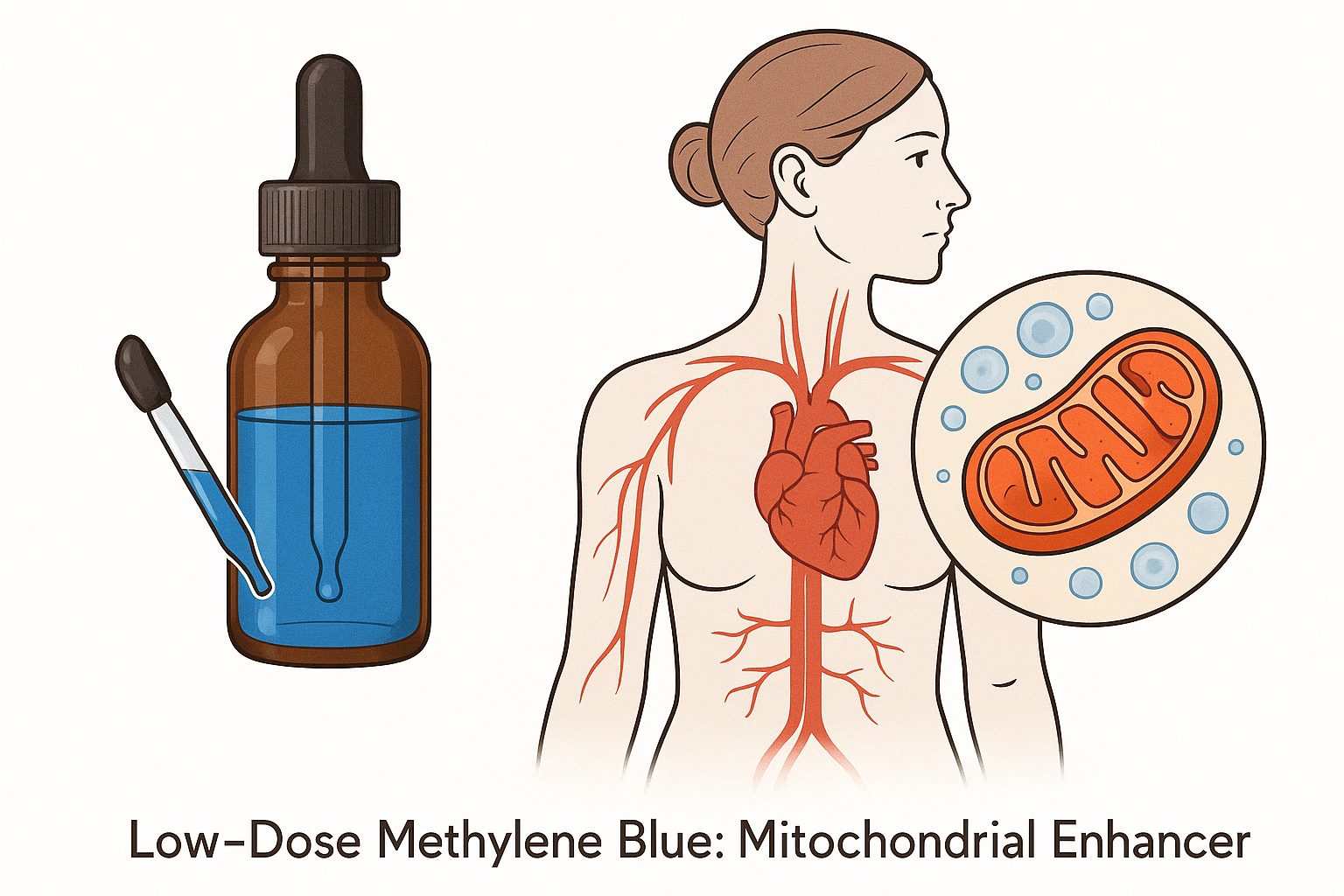
Low-Dose Methylene Blue: Mitochondrial Enhancer
Methylene blue is one of the oldest synthetic drugs in existence – first synthesized in 1876. It’s FDA-approved for methemoglobinemia and has been used as an antimalarial, antiseptic, and diagnostic dye. But at low doses (0.5-2mg/kg), it does something remarkable: it acts as an alternative electron carrier in the mitochondrial electron transport chain.
Methylene blue is a synthetic compound with a 150-year medical history as an antiseptic and antidote (for methemoglobinemia, carbon monoxide poisoning). At low doses (0.5-4 mg/kg body weight, or approximately 35-280 mg in an 70 kg adult), it functions as a redox cycling electron carrier in the mitochondrial electron transport chain, potentially improving ATP production. Human evidence remains limited; most data comes from animal studies or small trials in cognitive decline. It turns urine (and mucous membranes) blue — a harmless but alarming side effect. Pharmaceutical grade is required; laboratory reagent-grade methylene blue is not safe for human consumption.
- Methylene blue cycles between oxidized (blue) and reduced (colorless leuco-methylene blue) states, allowing it to shuttle electrons in the mitochondrial electron transport chain and potentially rescue impaired respiration.
- FDA-approved methylene blue is used medically for methemoglobinemia (hemoglobin oxidation emergencies) and as an adjunct in ifosfamide-induced encephalopathy.
- Low-dose methylene blue (0.5-4 mg/kg) has shown pro-cognitive effects in animal models and small human studies (including improved memory retention in one human RCT at 280 mg).
- Serotonin syndrome risk: methylene blue is a reversible MAO-A inhibitor; combining it with SSRIs, SNRIs, opioids (tramadol, meperidine), or other serotonergic drugs is contraindicated and potentially fatal.
- Pharmaceutical-grade purity is essential; laboratory-grade methylene blue contains heavy metal impurities and other contaminants not safe for human consumption.
This means it can bypass damaged mitochondrial complexes and directly enhance cellular energy production. For the longevity and nootropic communities, this makes it one of the most intriguing – and controversial – compounds available.
How Low-Dose Methylene Blue Works
Mitochondrial Electron Shuttle
At low doses, methylene blue cycles between oxidized (blue) and reduced (colorless) forms, accepting and donating electrons in the mitochondrial electron transport chain. This:
- Bypasses dysfunctional Complex I and III
- Increases ATP production
- Reduces reactive oxygen species (ROS) generation
- Improves mitochondrial membrane potential
(Rojas et al., Neuroscience, 2012)
Hormetic Dose Response
Methylene blue follows a hormetic (U-shaped) dose curve – low doses are beneficial, moderate doses are neutral, and high doses can be harmful. This is critical: more is NOT better.
- Low dose (0.5-2mg/kg): Mitochondrial enhancement, neuroprotection
- High dose (>5mg/kg): Can increase ROS, become pro-oxidant
Neuroprotection
Low-dose methylene blue enhanced memory consolidation and retrieval in animal models and improved cognitive function in human pilot studies (Rodriguez et al., Aging and Disease, 2017).
Clinical Evidence
Cognitive Enhancement
A University of Texas study found low-dose methylene blue (280mcg/kg IV) increased functional MRI brain activity during sustained attention tasks and improved memory retrieval by 7% (Rodriguez et al., Radiology, 2016).
Neuroprotection
Methylene blue reduced tau aggregation in Alzheimer’s disease models and is being studied in clinical trials for tauopathies. The phase 2 TauRx trial (using LMTM, a methylene blue derivative) showed slowed cognitive decline (Gauthier et al., The Lancet, 2016).
Antimicrobial Properties
At therapeutic doses, methylene blue has activity against various pathogens including Plasmodium (malaria), certain fungi, and bacteria – an incidental benefit.
Skin and Wound Healing
Methylene blue stimulates fibroblast proliferation and collagen production, showing anti-aging effects on human skin cells (Xiong et al., Scientific Reports, 2017).
Dosing: The Critical Factor
Low-dose protocol (most common in longevity/nootropic use):
- 0.5-1mg/kg body weight orally
- For a 70kg person: 35-70mg
- Start very low: 5-10mg to assess tolerance
- Frequency: 1-3x per week (not daily for most people)
- Timing: Morning (can be mildly stimulating)
- Cycle: 4 weeks on, 1 week off
Important warnings:
- Methylene blue is a potent MAOI – do NOT combine with SSRIs, SNRIs, or MAO inhibitors (risk of serotonin syndrome, which can be fatal)
- It will turn urine blue-green (harmless but surprising)
- Stains skin, clothing, and surfaces intensely
Best Sources for Pharmaceutical-Grade Methylene Blue
?? Best Pharmaceutical Grade: Compounding Pharmacy
The gold standard. A compounding pharmacy can prepare USP-grade methylene blue in precise capsule doses. Requires a prescription in most jurisdictions.
Best for: Those wanting the safest, most reliable product with physician oversight
Best OTC Option: BlueBrainBoost Methylene Blue
USP-grade methylene blue in precisely dosed liquid form (1% solution). Third-party tested for heavy metals and purity.
Best for: Those purchasing without a prescription who want verified quality
Research Grade: ScienceHub Methylene Blue
USP-grade powder for those comfortable with self-dosing using a precision scale. Significantly cheaper per milligram.
Best for: Experienced users who can handle precise measurement
Critical Safety Warnings
?? MAOI Interaction: Methylene blue is a potent monoamine oxidase inhibitor. Combining it with serotonergic drugs (SSRIs like Prozac, Zoloft, Lexapro; SNRIs like Effexor, Cymbalta; triptans; tramadol; St. John’s Wort) can cause serotonin syndrome – a potentially fatal condition.
?? G6PD Deficiency: People with glucose-6-phosphate dehydrogenase deficiency should NOT take methylene blue – it can trigger hemolytic anemia.
?? Pregnancy: Contraindicated during pregnancy.
?? Quality Matters: Industrial/lab-grade methylene blue contains heavy metal contaminants. Only use USP or pharmaceutical-grade products.
Who Might Benefit
- Longevity-focused individuals interested in mitochondrial optimization
- Those experiencing age-related cognitive decline (with physician supervision)
- Biohackers with a thorough understanding of the compound and its risks
- People NOT taking any serotonergic medications
Who Should NOT Take Methylene Blue
- Anyone on SSRIs, SNRIs, MAOIs, or serotonergic medications
- People with G6PD deficiency
- Pregnant or nursing women
- Those without access to pharmaceutical-grade product
- Anyone not comfortable with precise dosing
FAQ
Is low-dose methylene blue safe?
At low doses (0.5-1mg/kg), pharmaceutical-grade methylene blue has a well-established safety profile, having been used medically for over 140 years. The primary safety concern is the dangerous interaction with serotonergic medications (SSRIs, SNRIs). Anyone considering it should consult a physician, especially regarding medication interactions.
What does methylene blue do for the brain?
Low-dose methylene blue enhances mitochondrial function in neurons, increasing ATP production and reducing oxidative stress. Human studies show improved memory consolidation and increased brain activity during attention tasks. It’s being researched for Alzheimer’s disease and other neurodegenerative conditions.
Can I take methylene blue with antidepressants?
No. This is the most critical safety warning. Methylene blue is a potent MAO inhibitor. Combining it with SSRIs, SNRIs, or other serotonergic drugs can cause serotonin syndrome – a medical emergency that can be fatal. You must be off serotonergic medications (with physician guidance on washout period) before considering methylene blue.
Why does methylene blue turn urine blue?
Methylene blue is a dye that is excreted through the kidneys. Blue-green urine is a normal, harmless effect that resolves when supplementation stops. It can also temporarily give a blue tint to the whites of your eyes and stain skin at the application site.
How is methylene blue different from other nootropics?
Unlike most nootropics that modulate neurotransmitters, methylene blue works at the mitochondrial level – enhancing the fundamental energy production of brain cells. This mechanism is unique and potentially more foundational than receptor-level interventions.
This article is for informational purposes only and does not constitute medical advice. Methylene blue has serious drug interactions. Consult your healthcare provider before use, especially if you take any medications.
Related Articles
- Low-Dose Methylene Blue Guide: Benefits, Risks, and a Reality Check
- Is Low-Dose Methylene Blue Safe? What Cautious Readers Should Know
- Middle Eastern GCC Beauty: The Skincare Ingredients and Traditions Gaining Global Attention
- Methylene Blue for Mitochondria: Hype or Help?
Sources
- Effectiveness of photodynamic therapy against Escherichia coli: Influence of light dose fractionation in the presence of porphyrins, methylene blue and zinc phthalocyanine disulfonate. Journal of photochemistry and photobiology. B, Biology. 2026. PMID: 41833221.
- Methylene Blue in the Treatment of Neuropsychiatric Disorders. CNS drugs. 2019. PMID: 31144270.
- The effects of acute Methylene Blue administration on cerebral blood flow and metabolism in humans and rats. Journal of cerebral blood flow and metabolism : official journal of the International Society of Cerebral Blood Flow and Metabolism. 2023. PMID: 36803299.
- Best Supplements for Anxiety
- Best Supplements for Depression