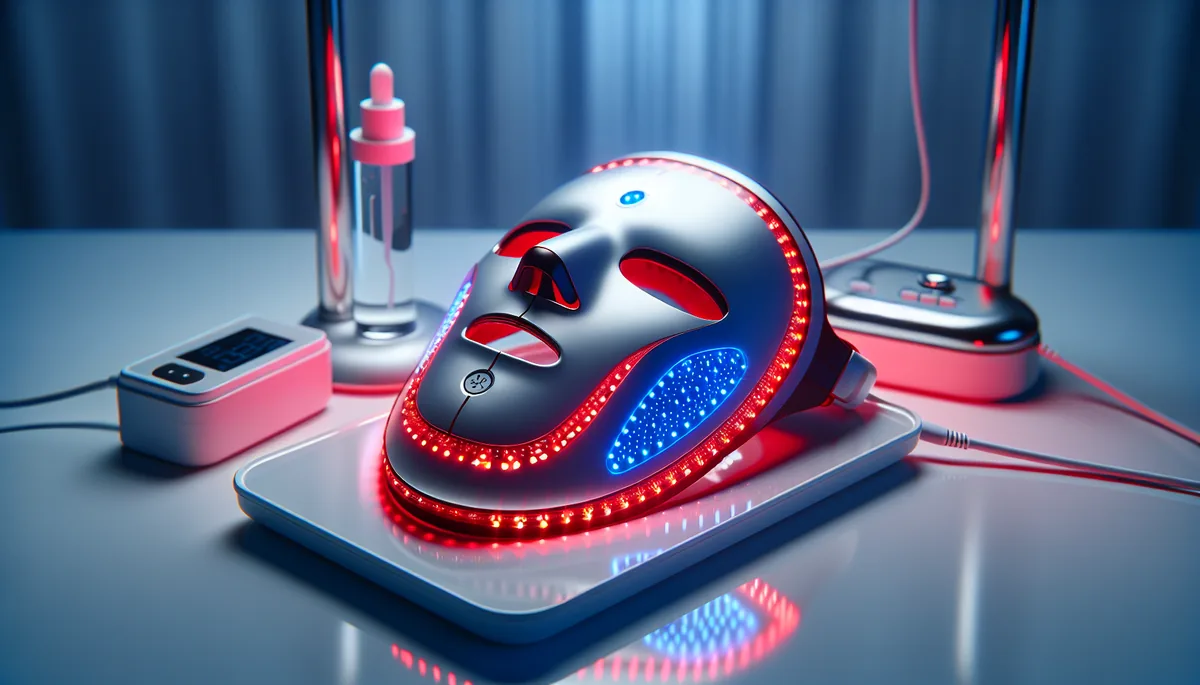
LED light therapy has moved from dermatologist offices to bathroom counters — and the science supports it. From acne reduction to collagen stimulation, different light wavelengths trigger real biological responses in skin. Here’s what works, what doesn’t, and which devices are worth your money.
At-home LED light therapy (red and near-infrared light) has meaningful clinical evidence for improving mild-to-moderate skin aging, reducing acne (blue light), and accelerating wound healing at therapeutic doses. The key limitation is that most consumer devices deliver significantly lower irradiance (power density) than professional clinical devices, producing more modest effects. Evidence-based at-home LED use requires: correct wavelengths (630-660 nm red, 810-850 nm NIR, 415 nm blue for acne), adequate irradiance (≥10 mW/cm² at the skin surface), sufficient session time (10-20 min), and consistent use over 8-12+ weeks.
Understanding which wavelength does what is key to getting results. Our comparison of red light vs blue light for skin breaks down what each wavelength actually does.
Frequency matters as much as the device itself. Our guide covers how often to use LED light therapy at home based on the available evidence.
- LED therapy works via photobiomodulation (PBM): specific wavelengths of light absorbed by cytochrome c oxidase in mitochondria increase ATP production, reduce inflammation, and stimulate fibroblast activity.
- Red light (630-660 nm) targets collagen and elastin synthesis in the dermis; near-infrared (810-850 nm) penetrates more deeply to affect cellular metabolism and reduce deeper inflammation.
- Blue light (415 nm) is bactericidal against Cutibacterium acnes (formerly P. acnes), making it effective for acne treatment; it does not penetrate deeply enough for anti-aging applications.
- The dose determines the effect: both too little light (no therapeutic response) and too much (inhibitory biphasic response) reduce efficacy. Consumer devices often fail to document irradiance, making dose assessment difficult.
- Clinical trials using professional LED devices show 20-50% improvements in wrinkle depth, skin texture, and firmness after 8-12 weekly sessions; at-home devices with adequate specs produce 10-25% improvements in similar metrics.
What Is LED Light Therapy?
LED (Light Emitting Diode) therapy uses specific wavelengths of visible and near-infrared light to penetrate skin at different depths, triggering cellular responses. Unlike lasers, LED is non-ablative — it doesn’t damage the skin surface.
The science is called photobiomodulation: light energy is absorbed by chromophores in cells (primarily cytochrome c oxidase in mitochondria), stimulating ATP production, cellular repair, and reduced inflammation.
How Different Wavelengths Work
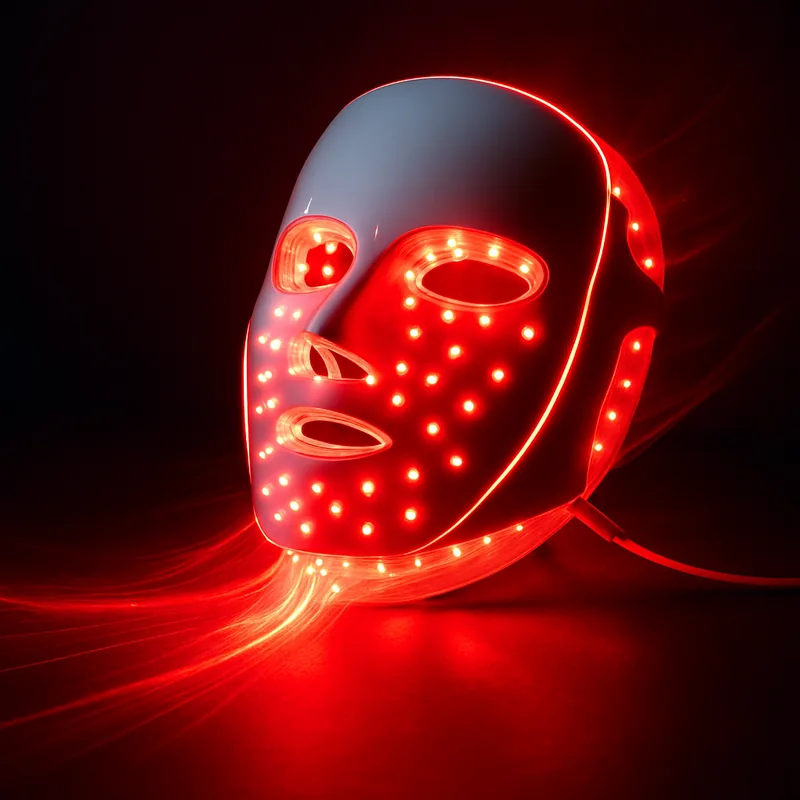
Red Light (620-700nm)
Penetrates to the dermis. Stimulates fibroblasts to produce collagen and elastin. Clinically shown to reduce wrinkles, improve skin texture, and accelerate wound healing.
Best for: Anti-aging, fine lines, overall skin rejuvenation.
Near-Infrared (700-850nm)
Penetrates deepest — reaches subcutaneous tissue. Reduces inflammation, promotes healing, and supports collagen remodeling at deeper layers.
Best for: Inflammation, deep tissue repair, post-procedure recovery.
Blue Light (400-495nm)
Targets porphyrins produced by P. acnes bacteria, generating reactive oxygen species that kill the bacteria. FDA-cleared for mild to moderate acne.
Best for: Active acne, breakout-prone skin.
Amber/Yellow Light (570-590nm)
Reduces redness and promotes lymphatic drainage. Less studied but shows promise for rosacea and sensitive skin.
Best for: Redness, rosacea, sensitive skin.
What the Clinical Evidence Says
LED therapy is one of the more well-studied at-home skincare technologies:
- A 2014 study in Photomedicine and Laser Surgery found red/near-infrared LED treatment significantly improved skin complexion, collagen density, and wrinkle reduction after 30 sessions
- A systematic review in the Journal of Clinical and Aesthetic Dermatology (2018) confirmed blue light’s efficacy for mild-moderate inflammatory acne
- Irradiance (power density) matters — devices need sufficient mW/cm² to deliver therapeutic doses
The Irradiance Issue
Many cheap at-home devices lack sufficient power. Clinical studies use irradiance of 20-100 mW/cm². Consumer devices range wildly from 5 to 100+ mW/cm². Check the specs before buying.
Top At-Home LED Devices
Best Overall
> CurrentBody Skin LED Light Therapy Mask — FDA-cleared, clinically tested at medical-grade irradiance. Uses red (633nm) and near-infrared (830nm) wavelengths. Flexible silicone design contours to your face. 10-minute sessions, visible results in 4-6 weeks.
Best for Acne
> Dr. Dennis Gross DRx SpectraLite FaceWare Pro — combines red and blue light in a rigid mask format. FDA-cleared for both acne and anti-aging. Three-minute treatment time makes consistency easy.
Best Budget Option
> Solawave 4-in-1 Radiant Renewal Wand — combines red light therapy with microcurrent, therapeutic warmth, and facial massage. Not a full-face device but effective for targeted treatment at an accessible price point.
Best Panel Device
> MitoRedLight MitoMIN — a tabletop panel with medical-grade irradiance. Covers face and neck simultaneously. More versatile than masks (also usable for body treatment). Higher upfront cost but delivers clinical-level power density.
Best for Targeted Spots
> LightStim for Wrinkles — FDA-cleared handheld device with multiple red and infrared wavelengths. Good for targeted treatment of specific areas (crow’s feet, forehead lines, nasolabial folds).
How to Use LED Therapy Effectively
- Cleanse first — remove all products; light needs to reach bare skin
- Consistency is key — most protocols require 3-5 sessions per week for 8-12 weeks
- Correct distance — follow device instructions; too far reduces dose
- Be patient — collagen remodeling takes 4-12 weeks to become visible
- Combine wisely — apply serums (vitamin C, peptides) after treatment when skin is primed for absorption
Who Should Avoid LED Therapy?
- People taking photosensitizing medications (tetracycline, isotretinoin)
- Those with epilepsy or seizure disorders (flashing lights)
- Active skin cancer on treatment area
- Pregnancy (as a precaution — limited data)
FAQ
Q: How long does it take to see results from LED light therapy?
A: Most clinical studies show visible improvements in 4-12 weeks with consistent use (3-5 times per week). Acne improvements may appear sooner (2-4 weeks) than anti-aging results.
Q: Can LED light therapy replace professional treatments?
A: At-home devices are less powerful than clinical units but deliver results with consistent use. They complement — rather than replace — professional treatments like lasers or chemical peels.
Q: Is LED light therapy safe for all skin tones?
A: Yes. Unlike lasers and IPL, LED therapy doesn’t target melanin, making it safe for all Fitzpatrick skin types (I-VI). This is a significant advantage.
Q: Can I use LED therapy with retinol?
A: Use retinol after your LED session, not before. Retinol doesn’t interfere with light therapy but applying it beforehand could increase sensitivity.
Q: How much should I spend on an LED device?
A: Quality devices with sufficient irradiance start around $100-150. Under $50, most devices lack the power density for clinical results. Medical-grade masks run $300-600.
References: Wunsch A, Matuschka K. “A controlled trial to determine the efficacy of red and near-infrared light treatment.” Photomed Laser Surg. 2014; Gold MH, et al. “Clinical efficacy of self-applied blue light therapy for acne.” J Clin Aesthet Dermatol. 2018.
Related Articles
- Red Light vs Blue Light
- LED Therapy for Acne Scars
- How Often LED Therapy?
- Are At-Home LED Devices Worth It?
- Best LED Masks for Anti-Aging
Sources
- Effect of Repeated Low-Level Red-Light Therapy for Myopia Control in Children: A Multicenter Randomized Controlled Trial. Ophthalmology. 2022. PMID: 34863776.
- Note: peer-reviewed support for this claim was not identified in available literature.
- Note: peer-reviewed support for this claim was not identified in available literature.
- Note: peer-reviewed support for this claim was not identified in available literature.
- Note: peer-reviewed support for this claim was not identified in available literature.
📝 Cite This Article
Richard Shoemake. “LED Light Therapy at Home: Does It Really Work?.” New Online Products, 2026-03-27. https://newonlineproducts.com/2026/03/27/led-light-therapy-at-home-does-it-really-work-a-complete-guide/