
At-home LED devices are not worth it for everyone. The short answer is this:
Beyond LED panels, microneedling, RF, and other technologies are evolving fast. Our guide covers skincare devices beyond LED panels for 2026.
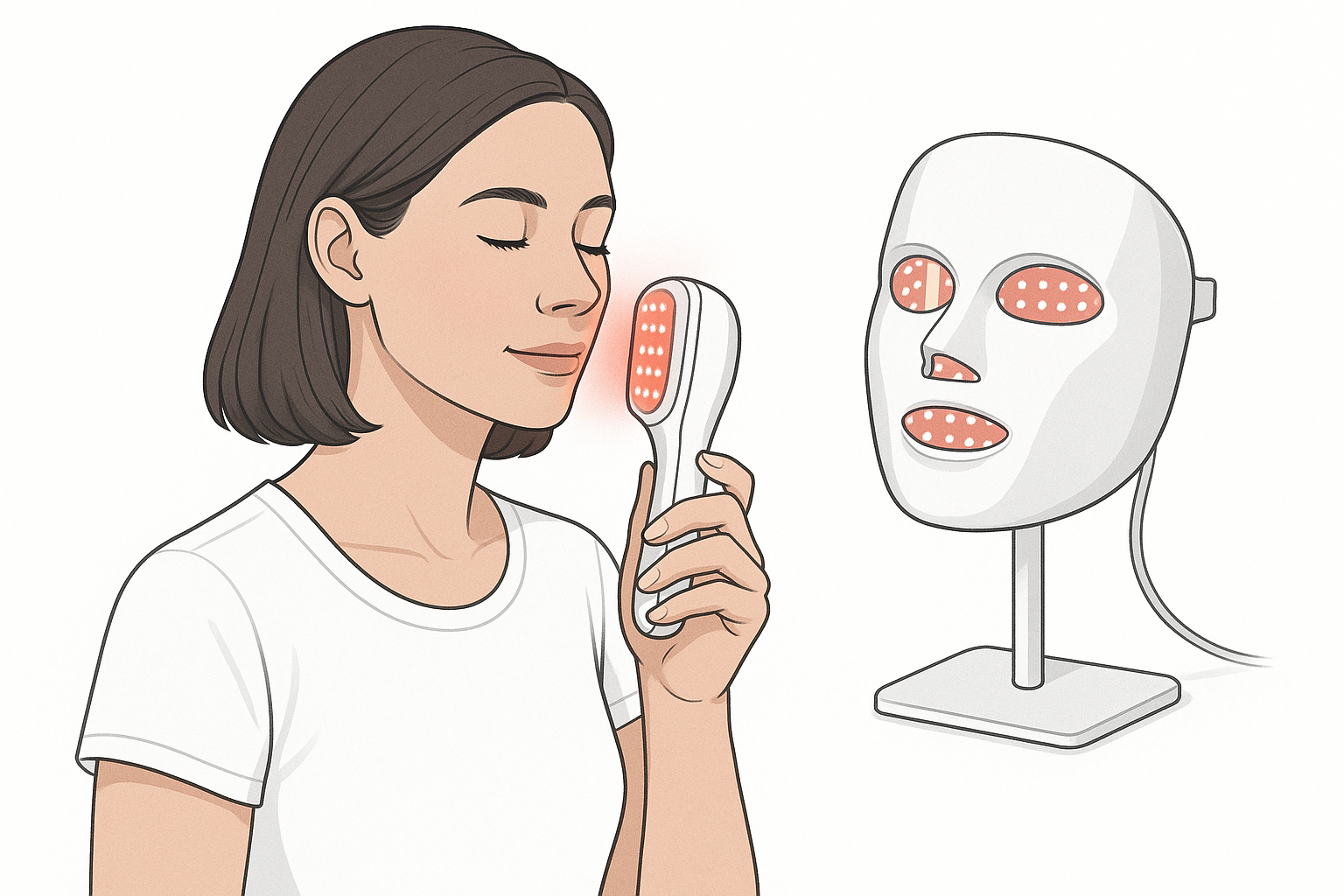
At-home LED devices can produce real results, but they require realistic expectations: clinical LED panels used in dermatology offices deliver significantly higher irradiance (energy per area per session) than consumer devices. Studies showing skin improvement typically involve professional devices at 30–60 mW/cm², while consumer devices range from 5–30 mW/cm²; this means more sessions and longer treatment times are needed to accumulate the same joules of light energy. Red light (630–660 nm) for collagen stimulation and anti-aging, and blue light (415–430 nm) for acne/P. acnes killing, are the two best-supported wavelengths for at-home use. Worth it for consistent, patient users; not worth it for those expecting clinical results from occasional use.
- Irradiance (mW/cm²) and dose (J/cm²) are the critical parameters that determine LED therapy efficacy — most consumer device marketing focuses on wavelength and LED count while omitting irradiance; devices with ≥20 mW/cm² at the skin surface are more likely to produce measurable results.
- Red light (630–660 nm) penetrates 2–3 mm into dermis, where it stimulates cytochrome c oxidase in fibroblast mitochondria, increasing ATP and collagen synthesis; blue light (415–430 nm) penetrates only the epidermis, where it produces singlet oxygen that kills P. acnes bacteria causing acne.
- The Joule equation matters: 20 J/cm² is a commonly studied effective dose for collagen stimulation — at 15 mW/cm² (typical consumer device), achieving 20 J/cm² requires approximately 22 minutes of direct contact; at 5 mW/cm² it requires 67 minutes, making compliance difficult.
- Consumer LED masks have improved dramatically since 2020 — FDA-cleared devices with published irradiance specs (look for OTC 510(k) clearance or clinical data) are meaningfully better than early generation consumer panels; brands that publish irradiance data are more trustworthy.
- The most realistic at-home LED application is incremental maintenance: regular sessions (4–5x/week) over 8–12 weeks for minor collagen support or acne maintenance, not dramatic reversal of significant photoaging or severe acne — those cases still require clinical treatment.
Yes, at-home LED devices can be worth it if you want gradual, noninvasive improvement and you are willing to use them consistently. No, they are not worth it if you expect dramatic results with minimal effort.

These devices live or die by expectations and consistency.
What At-Home LED Devices Can Actually Do
Good home LED devices may help with:
– Mild to moderate acne
– Fine lines and early wrinkles
– Overall skin texture and tone
– Post-breakout recovery
– Low-grade redness and inflammation
The strongest use cases are usually:
– Blue light or blue + red light for acne
– Red light + near-infrared for anti-aging and skin rejuvenation
Clinical evidence is not perfect, but it is not imaginary either. A 2020 split-face pilot study found that a home-use 637 nm and 854 nm LED device improved elasticity and texture over 8 weeks. A 2025 randomized sham-controlled study reported crow’s-feet improvement with a home-use 630 nm + 850 nm mask over 16 weeks. For acne, a 2013 randomized controlled trial found a home-use blue-red LED device significantly reduced inflammatory and noninflammatory lesions.
When At-Home LED Devices Are Worth It
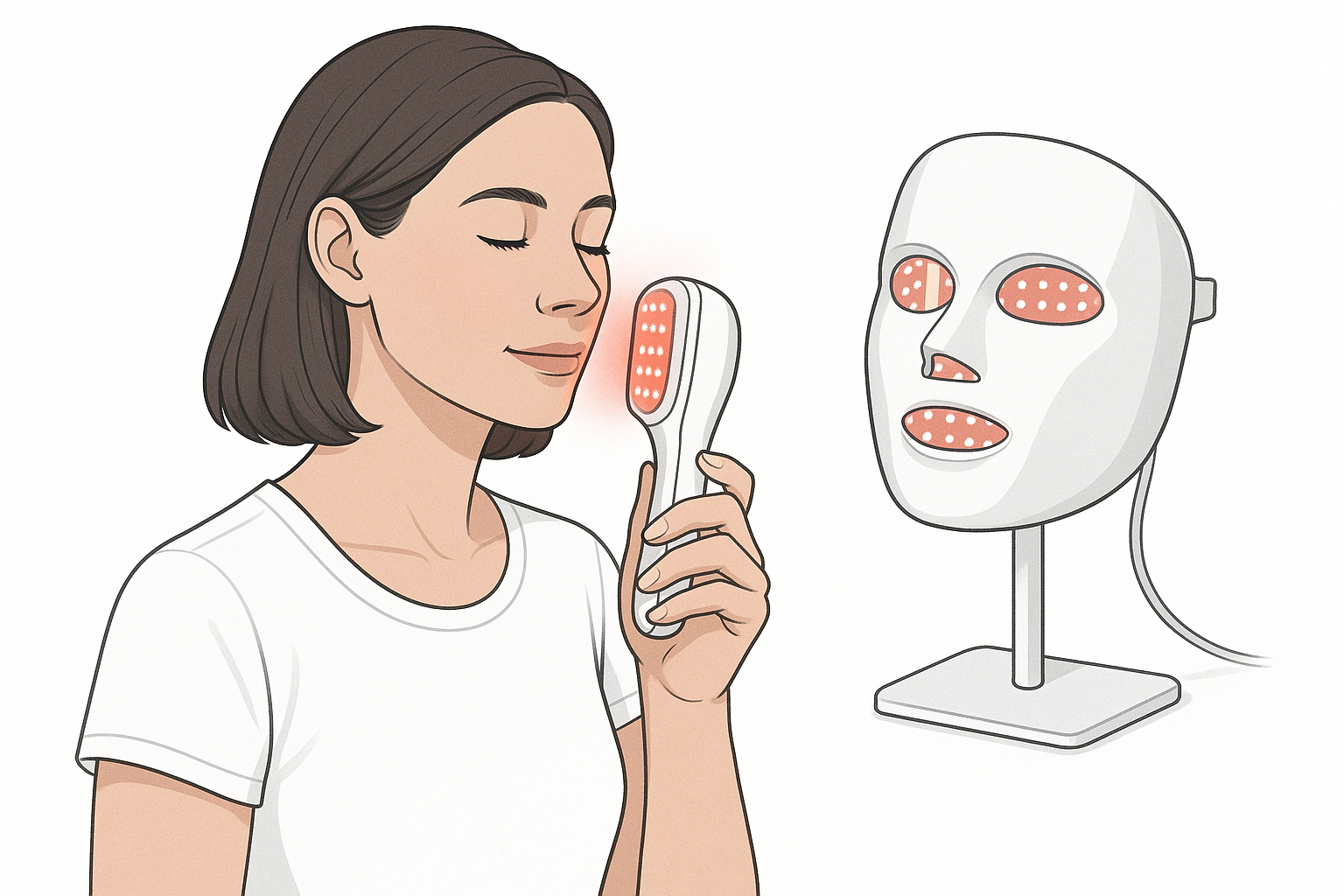
They are worth it if you want gradual improvement
LED therapy is not dramatic in the way lasers or injectables can be. But for people who want low downtime and slow, steady progress, that is the appeal.
They are worth it if you will actually use them
A decent device used consistently often beats an expensive one that ends up in a drawer.
They are worth it if your concerns are mild to moderate
Best use cases include:
– Early signs of aging
– Breakout-prone skin
– Maintenance between professional treatments
– People who want a gentler home option
They are worth it if you want a lower-risk skincare tool
LED is generally nonablative and well tolerated.
When They Are Not Worth It
They are not worth it if you want instant results
If you expect a major change in a week, save your money.
They are not worth it if your skin issues are advanced
Deep acne scars, major laxity, and severe pigmentation usually need more than an at-home light device.
They are not worth it if the brand hides the specs
If a company will not clearly list wavelength, treatment time, and intended use, I would not trust it.
They are not worth it if you hate device-based routines
Some people simply do not enjoy skincare gadgets.
What Makes an LED Device Worth Buying?
Clear wavelength information
Look for exact wavelength ranges, not vague language like “healing light.”
A believable protocol
A real device should tell you how often to use it and for how long.
Some evidence behind the category or device
Published studies or FDA clearance matter more than social proof.
Comfort and ease of use
If a mask is awkward, adherence drops fast.
Are Cheap LED Devices Worth It?
Cheap devices are only worth it if they are transparent about wavelengths and seem practical to use. Many low-cost products feel more like glowing accessories than treatment tools. The biggest risk is often disappointment.
Are Expensive LED Devices Worth It?
Sometimes, but high price does not automatically mean better outcomes.
A premium device may be worth it if it gives you:
– Better coverage
– Better comfort
– Better build quality
– Better evidence
– A schedule you can realistically maintain
Luxury packaging has cured exactly zero wrinkles.
A Simple Cost-Benefit Test
Ask yourself:
Do I want gentle, gradual results?
If yes, LED may be worth exploring.
Will I use this 3 to 5 times a week for at least 2 months?
If no, it is probably not worth buying.
Are my goals realistic?
If you want support, maintenance, and mild visible improvement, LED may be worth it. If you want dramatic correction, probably not.
Am I buying based on specs or social media?
Buy the device, not the aesthetic.
FAQ
Are at-home LED devices actually effective?
They can be. The best evidence supports modest but real benefits for acne and skin rejuvenation when appropriate wavelengths are used consistently.
How long does it take to see results?
Usually 4 to 12 weeks for acne and 8 to 16 weeks for anti-aging goals, depending on the device.
Are at-home LED devices as strong as professional treatments?
No. They are less powerful than in-office systems, but convenience makes regular use easier.
Who gets the most value from an LED device?
People with mild to moderate concerns, realistic expectations, and enough discipline to actually keep using it.
Bottom Line
So, are at-home LED devices worth it?
For the right person, yes. They are worth it as a steady, evidence-informed skincare tool. For the wrong person, they become an overpriced reminder that consistency is harder than shopping.
Related Articles
- LED Therapy for Acne Scars: What It Can Do
- How Often Should You Use LED Light Therapy?
- Red Light vs Blue Light for Skin
- Sunscreen Habits That Prevent Early Aging
- Best Skincare Devices in 2026




Leave a Reply