
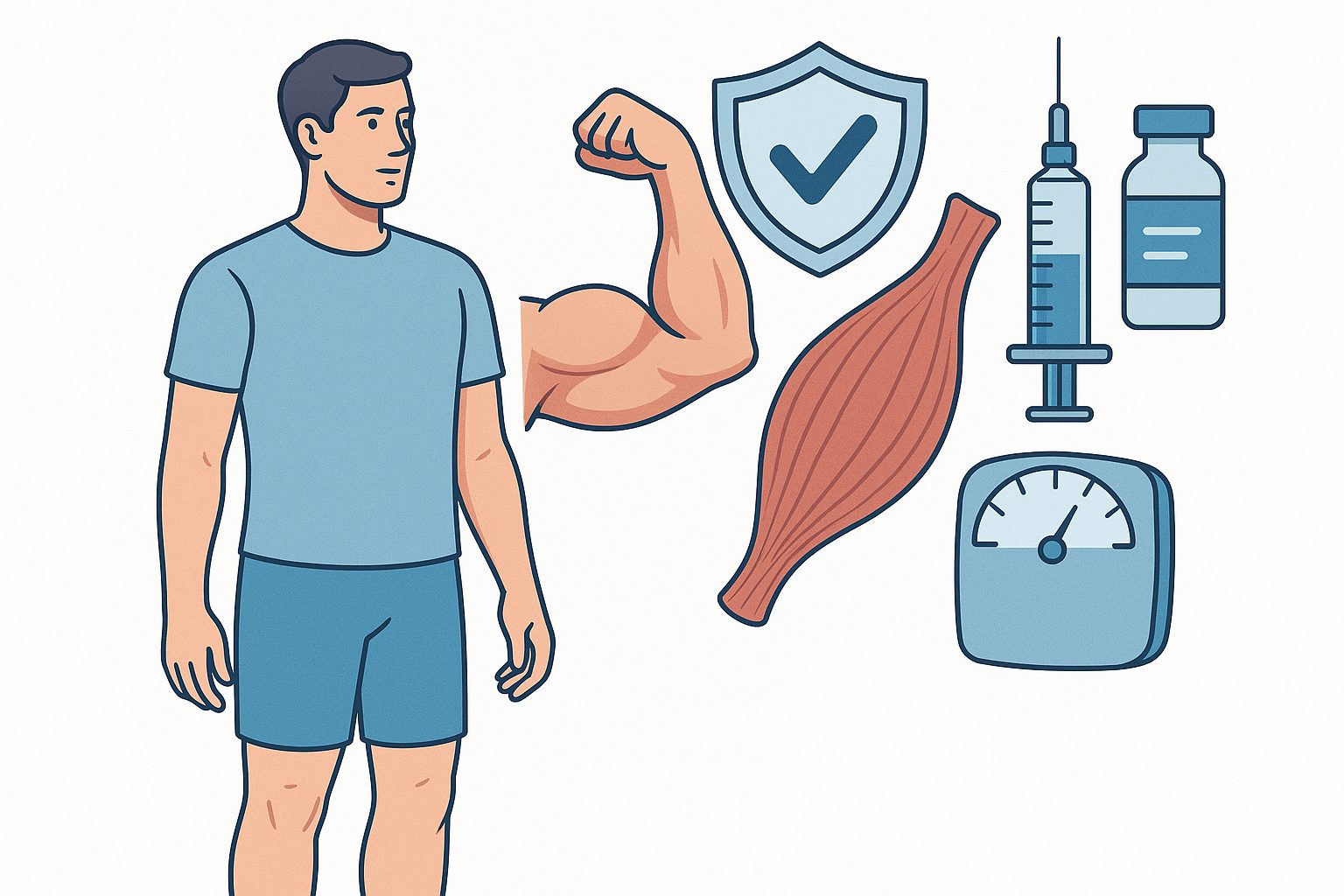

Semaglutide can be excellent for fat loss, but it does not automatically know the difference between tissue you want to lose and tissue you want to keep. If calories fall hard and protein intake is weak, some of the weight lost can come from lean mass, not just fat.
Quick Answer
Semaglutide (Ozempic, Wegovy) and tirzepatide produce substantial weight loss, but approximately 25-40% of weight lost on these medications is lean mass (muscle), not just fat – a ratio significantly worse than ideal weight loss targets of <10% lean mass. Preserving muscle during GLP-1 therapy requires a deliberate strategy: high protein intake (1.2-1.6 g/kg IBW), resistance training 2-3x per week, leucine or essential amino acid supplementation, and creatine monohydrate. Without these countermeasures, GLP-1-induced weight loss can worsen body composition even while improving scale weight.
Key Takeaways
- STEP and SURMOUNT trial data show that 25-40% of total weight lost on semaglutide and tirzepatide is lean mass – this is consistent with most caloric-restriction-based weight loss, but the rapid pace and appetite suppression on GLP-1s makes the problem more acute.
- Leucine is the key mTOR-activating amino acid that triggers muscle protein synthesis – consuming at least 3 g of leucine per meal (achievable with 25-30 g of whey protein) is the most reliable stimulus for maintaining positive muscle protein balance during caloric restriction.
- Creatine monohydrate (3-5 g/day, no loading protocol required) is the most evidence-supported supplement for maintaining lean mass during caloric restriction – it supports ATP regeneration in muscle, reduces fatigue-mediated training quality decline, and has an extremely favorable safety and cost profile.
- Resistance training creates a potent anabolic signal that synergizes with protein intake – even 2 sessions per week of compound movements (squats, rows, presses) at moderate-to-high intensity (70-80% 1RM) significantly reduces lean mass loss during caloric deficit compared to cardio-only exercise.
- GLP-1-related appetite suppression makes adequate protein intake psychologically difficult – prioritizing high-protein foods at each eating opportunity (eggs, Greek yogurt, poultry, cottage cheese, whey shakes) before filling up on lower-protein foods is a practical first-food-first strategy.
That is why lean mass support matters so much while taking semaglutide. The real goal is not to become a smaller version of underfed. It is to become leaner while staying strong, functional, and metabolically healthier.
The most effective plan is not complicated: adequate protein, creatine monohydrate, resistance training, and enough total nutrition to recover.
Why lean mass loss happens during semaglutide treatment
Weight loss almost always includes some loss of fat-free mass. In the STEP 1 semaglutide trial, participants lost substantial body weight, and lean mass declined along with fat mass (Wilding et al., N Engl J Med, 2021). That is not unique to semaglutide. It is a normal risk during aggressive weight loss.
The problem gets worse when people:
– Eat too little protein
– Stop lifting weights
– Undereat for long stretches
– Rely only on the medication to do the work
The best lean mass support stack while taking semaglutide
1. Protein is non-negotiable
This is the single most important nutrition layer.
Best use
– Build each meal around protein
– Use shakes when appetite is too low for full meals
– Prioritize consistent intake over perfection
Why it matters
Higher protein intake during weight loss helps support muscle retention, satiety, and recovery. If appetite is low, liquid protein is often the easiest compliance tool.
2. Creatine monohydrate
Creatine is one of the best-studied performance and body-composition supplements available. The International Society of Sports Nutrition continues to support its safety and effectiveness for most healthy users when taken appropriately (Kreider et al., JISSN, 2022).
Best use
– 3 to 5 grams daily
– Take consistently rather than overthinking timing
Why it matters
Creatine helps support training quality, strength, and lean mass retention. On semaglutide, where low intake can quietly chip away at performance, that matters a lot.
3. Electrolytes and hydration
Low food intake often means low electrolyte intake. That can reduce training quality and recovery.
Best use
– Sodium and potassium support during low-intake phases
– Extra hydration around workouts
Why it matters
If you feel flat, crampy, lightheaded, or weak, the problem may not be motivation. It may be hydration and electrolyte status.
4. Vitamin D and magnesium when needed
These are not direct muscle-building supplements, but they help support the bigger picture.
Best use
– Vitamin D if low
– Magnesium if intake is low or cramps are common
The part supplements cannot replace: resistance training
Supplements matter, but lifting matters more.
Best strategy
– Two to four resistance sessions per week
– Keep a progression plan
– Focus on basic compound lifts or machine patterns you can recover from
Why it matters
Muscle is maintained when the body has a reason to keep it. Resistance training provides that reason.
A practical daily plan
Morning
– Protein-rich breakfast or shake
– Creatine monohydrate
Around training
– Electrolytes and water
– A second protein feeding if total intake is low
Evening
– Another protein-centered meal
– Magnesium if needed
Mistakes that cost muscle on semaglutide
1. Letting appetite decide protein intake
Appetite is not a reliable coach here.
2. Doing only cardio
Cardio is fine, but without resistance training, you make it easier to lose muscle.
3. Eating too little for too long
The medication helps create a calorie deficit, but severe under-eating is not the goal.
4. Ignoring recovery
Sleep, hydration, and consistent meals still matter.
Who may need extra caution?
If you are older, already have low muscle mass, or are very sedentary, preserving lean mass becomes even more important. Sarcopenia risk and frailty risk do not care that the scale is moving in the right direction.
Bottom line
The best lean mass support while taking semaglutide comes from combining:
– Protein
– Creatine monohydrate
– Resistance training
– Hydration and electrolytes
– Enough overall nutrition to recover
If you get those right, semaglutide becomes a much better fat-loss tool and a much worse muscle-loss trap.
FAQ
Can you lose muscle on semaglutide?
Yes. Some lean mass loss can happen during weight loss, especially if protein intake and resistance training are poor.
What is the best supplement to preserve muscle on semaglutide?
Protein is the foundation, and creatine monohydrate is the best-supported add-on for training performance and lean mass support.
Should GLP-1 users lift weights?
Yes, if medically appropriate. Resistance training is one of the most important ways to preserve muscle during weight loss.
How much protein do semaglutide users need?
It depends on body size, activity, age, and goals, but most need more intentional protein intake than they are currently getting when appetite is low.
Related Articles
- Best GLP-1 Companion Supplements
- Fiber Support While on GLP-1 Medications: Complete Guide
- Hair Loss Support While on GLP-1 Meds
- Best Supplements to Take While on GLP-1 Meds
- Constipation Support While on GLP-1 Medications: Complete Guide
Sources
- Wilding JPH, Batterham RL, Calanna S, et al. Once-weekly semaglutide in adults with overweight or obesity. N Engl J Med. 2021;384(11):989-1002.
- Clinical and review literature on semaglutide, body composition, and lean-mass preservation. PubMed search.
- Systematic reviews on dietary protein intake and lean-mass retention during weight loss. PubMed search.
- Systematic reviews on resistance training and lean-mass retention during weight loss. PubMed search.
- National Institutes of Health. Body weight, lean mass, and protein considerations during caloric restriction. NCBI Bookshelf.
📚 Part of our Best GLP-1 Companion Supplements hub. Explore all our GLP-1 supplement guides.


Leave a Reply