
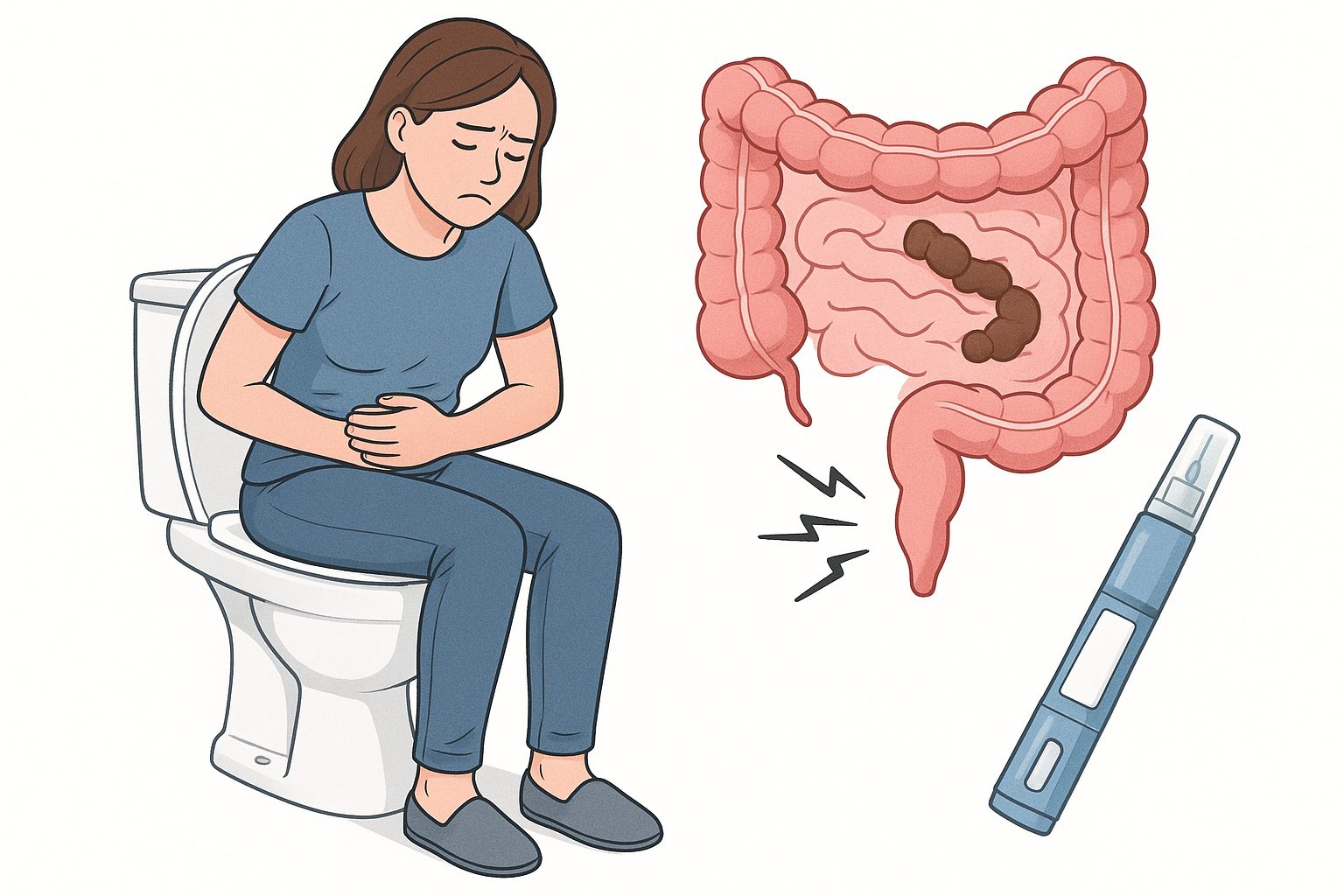

Constipation is one of the most common and most annoying side effects of GLP-1 medications. Appetite falls, gastric emptying slows, food volume drops, hydration often slips, and suddenly people who never thought about bowel regularity are counting days.
Quick Answer
Constipation is one of the most common and persistent side effects of GLP-1 receptor agonists (semaglutide, tirzepatide, liraglutide) — occurring in 24-30% of users across clinical trials. GLP-1 receptor activation dramatically slows gastric emptying and reduces GI motility, which while beneficial for weight loss and blood glucose control also produces slower transit time and harder stools. Effective constipation management for GLP-1 users centers on: soluble fiber supplementation, magnesium (particularly magnesium citrate or oxide), adequate hydration, and gentle motility stimulation — with particular attention to the timing of fiber relative to GLP-1 injection peaks.
Key Takeaways
- GLP-1 receptor agonists slow gastric emptying (pharmacologically desired for glycemia management) — this same mechanism reduces colonic motility, increasing water reabsorption from stool and prolonging transit time. The constipation is mechanistic, not incidental.
- Soluble fiber (psyllium husk 5-10 g/day with 8 oz water per dose) is first-line non-pharmacological management — it bulks stool, holds water to maintain softness, and provides fermentation substrate for microbiome health without the cramping risk of stimulant laxatives.
- Magnesium citrate (300-400 mg elemental) or magnesium glycinate acts as an osmotic agent — drawing water into the colon to soften stool and trigger peristalsis. This is particularly useful during GLP-1 dose escalation periods when constipation is most severe.
- Hydration is frequently overlooked: GLP-1-related appetite reduction often leads to reduced food and fluid intake simultaneously. Targeting 8-10 cups of water daily helps maintain stool water content independent of fiber supplementation.
- If dietary fiber and magnesium are insufficient, polyethylene glycol (MiraLax, an osmotic laxative) is the evidence-preferred pharmacological option for GLP-1-related constipation — it is safe for prolonged daily use and has no dependency or tolerance issues unlike stimulant laxatives.
The good news is that constipation support for GLP-1 users is usually straightforward when you address the real causes instead of buying random “detox” supplements.
For most people, the best stack is simple: water, electrolytes, walking, soluble fiber, and magnesium if needed.
`r`n`r`n
Why GLP-1 medications can cause constipation
GLP-1 receptor agonists such as semaglutide and tirzepatide commonly slow gastric emptying and reduce overall food intake. That is useful for satiety, but it can also reduce stool bulk, lower fluid intake, and slow gut transit enough to create constipation.
Common contributors include:
– Eating much less overall
– Low fiber intake
– Dehydration
– Reduced sodium and potassium intake
– Less movement because of fatigue or nausea
`r`n`r`n
What works best for constipation support on GLP-1s
1. Hydration first
This sounds boring because it is boring, but it matters more than most supplements.
`r`n`r`n
Best approach
– Drink regularly, not just when thirsty
– Increase fluids around fiber intake
– Use electrolytes if appetite and food volume are low
`r`n`r`n
Why it matters
Fiber without enough fluid can make constipation worse. Many GLP-1 users are mildly underhydrated and do not realize it.
`r`n`r`n
2. Soluble fiber
Fiber is usually the supplement people need, but the type and dose matter.
`r`n`r`n
Best options
– Psyllium husk
– Partially hydrolyzed guar gum, often called PHGG
Psyllium has strong evidence for improving stool frequency and consistency and is one of the most useful evidence-based fiber supplements available (McRorie, Nutrition Today, 2015).
`r`n`r`n
How to use it
– Start low
– Increase slowly
– Take with plenty of water
Going from almost no fiber to a giant scoop overnight is a classic mistake.
`r`n`r`n
3. Magnesium support
Magnesium can help some GLP-1 users, but the form matters.
`r`n`r`n
Best choices
– Magnesium citrate if the main goal is bowel support
– Magnesium glycinate if the main goal is repletion and gentler daily use
`r`n`r`n
Why it matters
Low intake is common during reduced-calorie eating, and some magnesium forms may support easier bowel movements.
`r`n`r`n
4. Food strategies that still work
Supplements help, but so do tolerated whole foods.
`r`n`r`n
Useful options
– Kiwi
– Chia pudding
– Berries
– Cooked vegetables
– Oats if tolerated
The key is choosing foods you can actually eat during lower-appetite phases.
`r`n`r`n
5. Walking after meals
This is the most underrated non-supplement intervention. Even a short walk after eating can help gut motility.
`r`n`r`n
What not to do
Do not start with a giant fiber dose
That often causes bloating and regret.
`r`n`r`n
Do not rely on stimulant laxatives casually
They can be appropriate in some situations, but they should not become the long-term plan without medical guidance.

`r`n`r`n
Do not ignore red flags
Constipation from GLP-1 therapy is common, but severe abdominal pain, repeated vomiting, inability to pass gas, or progressive distension deserves prompt medical attention.
`r`n`r`n
A practical GLP-1 constipation routine
Morning
– Water or electrolytes
– Light breakfast with protein
– Short walk if possible
`r`n`r`n
Midday
– Another full glass of water
– Psyllium or PHGG if using fiber support
`r`n`r`n
Evening
– Magnesium citrate or glycinate, depending on the goal
– Keep fluids up
`r`n`r`n
When constipation needs medical review
Get checked sooner rather than later if you have:
– Severe abdominal pain
– Vomiting
– No bowel movement for days with worsening symptoms
– Blood in stool
– Fever
– New constipation with unexplained weight loss beyond expected treatment effects
`r`n`r`n
Bottom line
The best constipation support for GLP-1 users is not a cleanse or a trendy gut powder. It is a calm, evidence-based routine that usually includes:
– Hydration
– Electrolytes
– Soluble fiber
– Magnesium when appropriate
– Regular walking
If you build around those five things, most cases become much more manageable.
`r`n`r`n
FAQ
What is the best fiber for constipation on GLP-1 medications?
Psyllium is often the best starting point because it has strong evidence for stool frequency and consistency. PHGG is also useful, especially for people who bloat easily.
`r`n`r`n
Can magnesium help constipation on semaglutide?
Yes, especially magnesium citrate. It can be helpful when used appropriately, though dose and tolerance matter.
`r`n`r`n
Should I stop my GLP-1 medicine if I get constipated?
Not necessarily. Many people improve with hydration, fiber, activity, and bowel support. But severe or persistent symptoms should be discussed with your clinician.
`r`n`r`n
What should GLP-1 users avoid for constipation?
Avoid very rapid fiber escalation, dehydration, and ignoring red-flag symptoms like vomiting or severe abdominal pain.
`r`n`r`n
Sources
- Wilding JPH, Batterham RL, Calanna S, et al. Once-weekly semaglutide in adults with overweight or obesity. N Engl J Med. 2021;384(11):989-1002.
- Jastreboff AM, Aronne LJ, Ahmad NN, et al. Tirzepatide once weekly for the treatment of obesity. N Engl J Med. 2022;387(3):205-216.
- McRorie JW Jr. Evidence-based approach to fiber supplements and effective fiber therapy. Nutr Today. 2015.
- American Gastroenterological Association guidance on constipation management. PubMed search.
- Reviews on gastrointestinal adverse effects with GLP-1 receptor agonists. PubMed search.



Leave a Reply