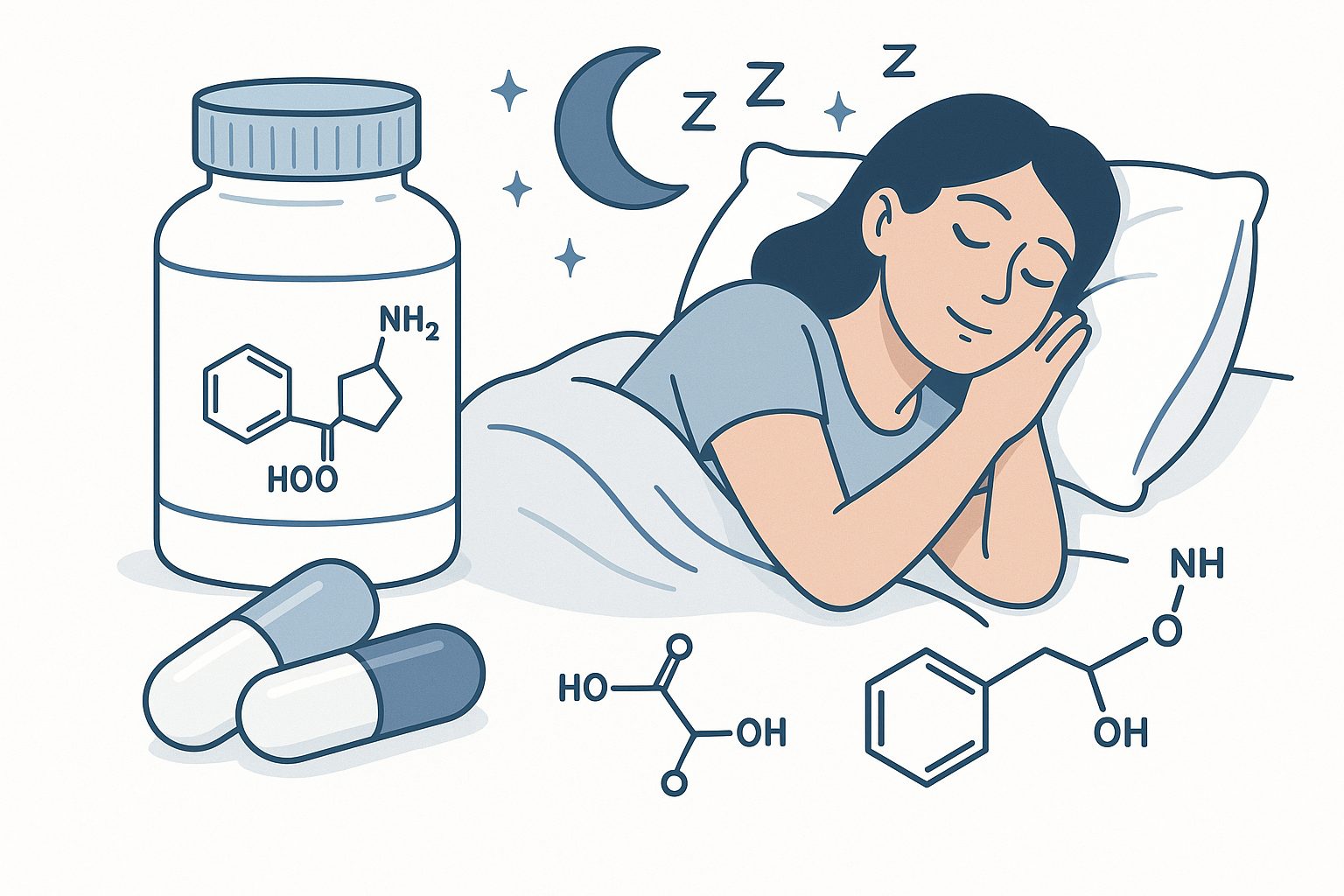
L-Tryptophan for Sleep: Does It Help?
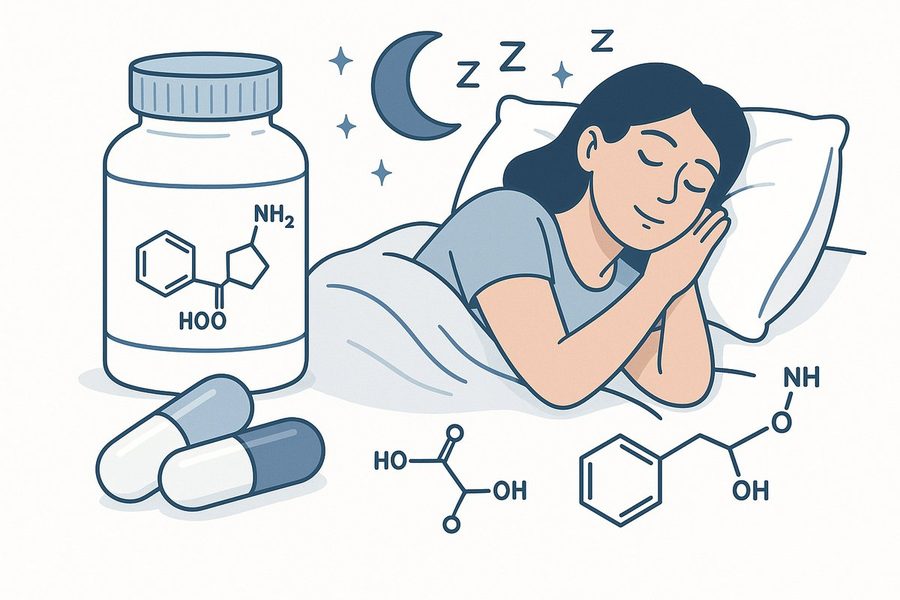
Quick Answer: Early controlled studies found that 1 g of L-tryptophan taken before bed reduced sleep onset time by roughly 15-20 minutes in healthy volunteers. The evidence is real but limited in size, and tryptophan works more gently than direct melatonin or sedative sleep aids.
Key Takeaways
- Tryptophan is the precursor to serotonin, which is in turn the precursor to melatonin via the enzyme AANAT (arylalkylamine N-acetyltransferase) in the pineal gland.
- Clinical trials using 1000-2000 mg L-tryptophan before bed show reductions in sleep onset time and improvements in sleep quality, particularly in people with low baseline serotonin (often associated with low tryptophan dietary intake).
- Consuming tryptophan with a carbohydrate-rich, low-protein snack before bed improves brain tryptophan uptake by reducing competing large neutral amino acids.
- 5-HTP (the direct serotonin precursor) tends to have stronger and faster sleep-onset effects than L-tryptophan, as it bypasses the rate-limiting hydroxylase step.
- Tryptophan’s sleep effects are more gradual than melatonin’s and work best when taken consistently over time; it supports the entire serotonin-melatonin synthesis cycle rather than directly raising melatonin like exogenous melatonin supplements.
The connection between L-tryptophan and sleep makes biological sense: tryptophan is the precursor to serotonin, which is then converted to melatonin – the hormone that regulates your sleep-wake cycle. But “makes biological sense” and “works reliably as a supplement” are not the same thing.
Here is what we actually know.
The Biological Logic
Your body converts L-tryptophan through a two-step process:
L-tryptophan ? 5-HTP ? Serotonin ? Melatonin
Melatonin production ramps up in the evening as light decreases, signaling your body to prepare for sleep. The idea behind tryptophan supplementation is simple: give the body more raw material, and it can produce more melatonin when needed.
This logic is sound but has a caveat: most dietary tryptophan does not go to serotonin/melatonin production. Over 95% is metabolized through the kynurenine pathway for other functions. Only a small fraction reaches the brain for neurotransmitter synthesis.
What the Sleep Studies Show
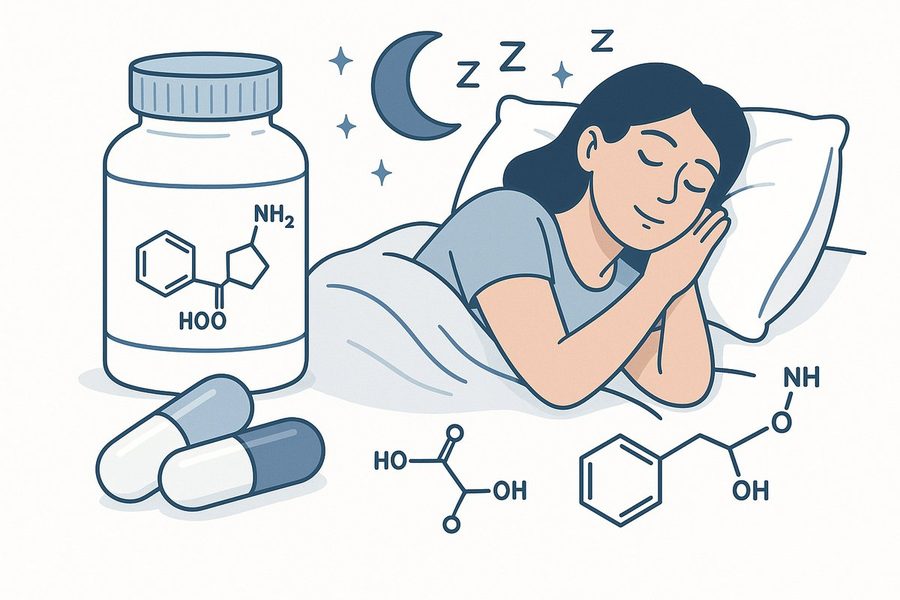
The Classic Finding: Reduced Sleep Latency
The most frequently cited result is from controlled trials in the 1970s and 1980s (Hartmann et al.) showing that 1 g of L-tryptophan taken 45 minutes before bed reduced the time to fall asleep by approximately 15-20 minutes in healthy adults with mild sleep difficulties.
This is a meaningful effect – comparable to what some people get from melatonin – but important context:
- These were relatively small studies
- Participants had mild sleep difficulties, not clinical insomnia
- The effect was primarily on sleep latency (time to fall asleep), not total sleep duration or sleep quality in a dramatic way
More Recent Context
A 1986 meta-analysis (Schneider-Helmert & Spinweber) concluded that tryptophan appeared effective for reducing sleep latency at doses of 1 g or more, with effects more consistent in people with mild sleep complaints than in those with severe insomnia.
More recent research has been sparse – partly because the 1989 EMS contamination incident led to a temporary FDA ban, which disrupted the research pipeline for years. The tryptophan-sleep literature is therefore older than what you would ideally want.
What About Dietary Tryptophan?
There is some epidemiological evidence that higher dietary tryptophan intake correlates with better sleep quality. A 2016 study examining the relationship between dietary tryptophan and sleep in Australian adults found associations between higher tryptophan intake and improved sleep, though this kind of observational data cannot prove causation.
L-Tryptophan vs. Melatonin for Sleep
| Factor | L-Tryptophan | Melatonin |
|——–|————-|———–|
| Mechanism | Precursor ? body makes its own melatonin | Direct melatonin supplementation |
| Onset | Slower (needs conversion) | Faster |
| Effect | More gradual, gentle | More direct sleep-onset signal |
| Dependency concern | Low | Debated but generally low at reasonable doses |
| Daytime mood overlap | Yes (serotonin pathway) | No |
| Best for | People who want gentle, system-level support | People who need a specific circadian timing signal |
The practical takeaway: If your problem is purely “I cannot fall asleep at a reasonable time,” melatonin is the more targeted tool. If you want something that supports both daytime mood and nighttime sleep through a more natural, upstream mechanism, tryptophan has an appeal – but it is slower and less predictable.
Dosing for Sleep
Based on the available evidence:
- Effective range in studies: 1-3 g taken 30-60 minutes before bed
- Practical starting dose: 500 mg-1 g
- Empty stomach preferred: tryptophan competes with other large neutral amino acids for transport across the blood-brain barrier; taking it away from protein-rich meals improves brain uptake
- Small carbohydrate pairing: eating a small amount of carbohydrate alongside tryptophan may help – insulin release clears competing amino acids from the bloodstream
Who Is L-Tryptophan for Sleep Best For?
People Who Want to Avoid Direct Melatonin
If you prefer not to take exogenous melatonin – whether because of concerns about dependency, morning grogginess, or personal preference – tryptophan is a reasonable upstream alternative.
People With Both Mood and Sleep Concerns
Because tryptophan feeds both the serotonin and melatonin pathways, it may be uniquely useful for people who have mildly low mood and trouble sleeping. See our main article on L-Tryptophan for Mood Support for that angle.
People With Mild Sleep-Onset Difficulty
If your issue is lying in bed for 30-45 minutes before falling asleep, tryptophan’s 15-20 minute reduction in sleep latency could meaningfully help. If you have severe insomnia, this is probably not strong enough on its own.
What It Will Not Do
- Replace sleep hygiene. Consistent wake times, dark rooms, and limiting screens before bed are still more important than any supplement.
- Fix circadian disruption. If your issue is shift work or jet lag, melatonin is the better tool.
- Sedate you. Tryptophan is not a sedative. It is a precursor. Do not expect it to knock you out.
Safety Notes
The same cautions apply as for mood use:
- Do not combine with SSRIs, SNRIs, MAOIs, or 5-HTP – serotonin syndrome risk
- Start low – some people experience next-day drowsiness or mild nausea at higher doses
- Full safety details in our L-Tryptophan Safety and Drug Interactions article
The Bottom Line
L-tryptophan for sleep is biologically logical and supported by older (but real) controlled studies showing reduced sleep latency at doses of 1 g or more. It is gentler and slower than melatonin, which makes it appealing to some and insufficient for others. Modern research is unfortunately thin.
If you want a gentle, amino-acid-based sleep nudge – especially if you also want mood support during the day – tryptophan is worth trying. Just do not expect it to overpower bad sleep habits.
Related Reading:
- Best L-Tryptophan Supplements for Mood Support in 2026
- How Tryptophan Becomes Serotonin: The Pathway Explained
- L-Tryptophan Safety and Drug Interactions
FAQ
How much tryptophan should I take for sleep?
Clinical trials for sleep use 500-2000 mg of L-tryptophan taken 30-60 minutes before bed, often with a small carbohydrate snack and minimal protein. Starting with 500 mg and increasing gradually to 1500-2000 mg if needed is a common approach.
Is tryptophan or melatonin better for sleep?
They work differently: melatonin (0.5-3 mg) directly signals circadian timing and is most effective for shifting sleep onset (jet lag, shift work, delayed sleep phase). Tryptophan supports the serotonin-melatonin pathway and may improve overall sleep quality and mood alongside sleep. Many find melatonin faster-acting; tryptophan more holistic.
Does turkey make you sleepy because of tryptophan?
Partly a myth. Turkey does contain tryptophan, but so do many other protein-containing foods. The post-Thanksgiving sleepiness is more attributable to large meal size, carbohydrate intake, and alcohol than tryptophan specifically. However, a carbohydrate-rich, low-protein snack can facilitate brain tryptophan uptake via the mechanism described above.
Can tryptophan help anxiety at night?
Tryptophan may reduce nighttime anxiety via its serotonin-supporting effects. Some studies show reductions in anxiety-related sleep disruption. 5-HTP shows stronger evidence for anxiety reduction. Magnesium glycinate taken alongside tryptophan at bedtime is a common complementary combination for anxiety-related insomnia.
Related Articles
- Best L-Tryptophan Supplements for Mood Support in 2026: What the Evidence Actually Shows
- Best Supplements for Depression in 2026: What the Evidence Actually Shows
- Vitamin D3 and Testosterone: What the Research Actually Shows in 2026
- Best Vitamin D3 + K2 Supplements for Bone and Heart Health in 2026: What the Evidence Actually Shows
- Sugarless Gum and Tooth Remineralization in 2026: What Chewing Actually Does for Your Teeth
Sources
- Sleep recalibrates homeostatic and associative synaptic plasticity in the human cortex. Nature communications. 2016. PMID: 27551934.
- Nutritional modulators of sleep: A narrative review of vitamins, minerals, amino acids, and their neurobiological and chronoepigenetic mechanisms. Chronobiology international. 2026. PMID: 41992896.
- Nutritional Interventions for Enhancing Sleep Quality: The Role of Diet and Key Nutrients in Regulating Sleep Patterns and Disorders. Food science & nutrition. 2025. PMID: 41356231.
- Serotonin, Kynurenine, and Indole Pathways of Tryptophan Metabolism in Humans in Health and Disease. Nutrients. 2026. PMID: 41683329.
- Adaptogens in Fatigue: Review (2009)