
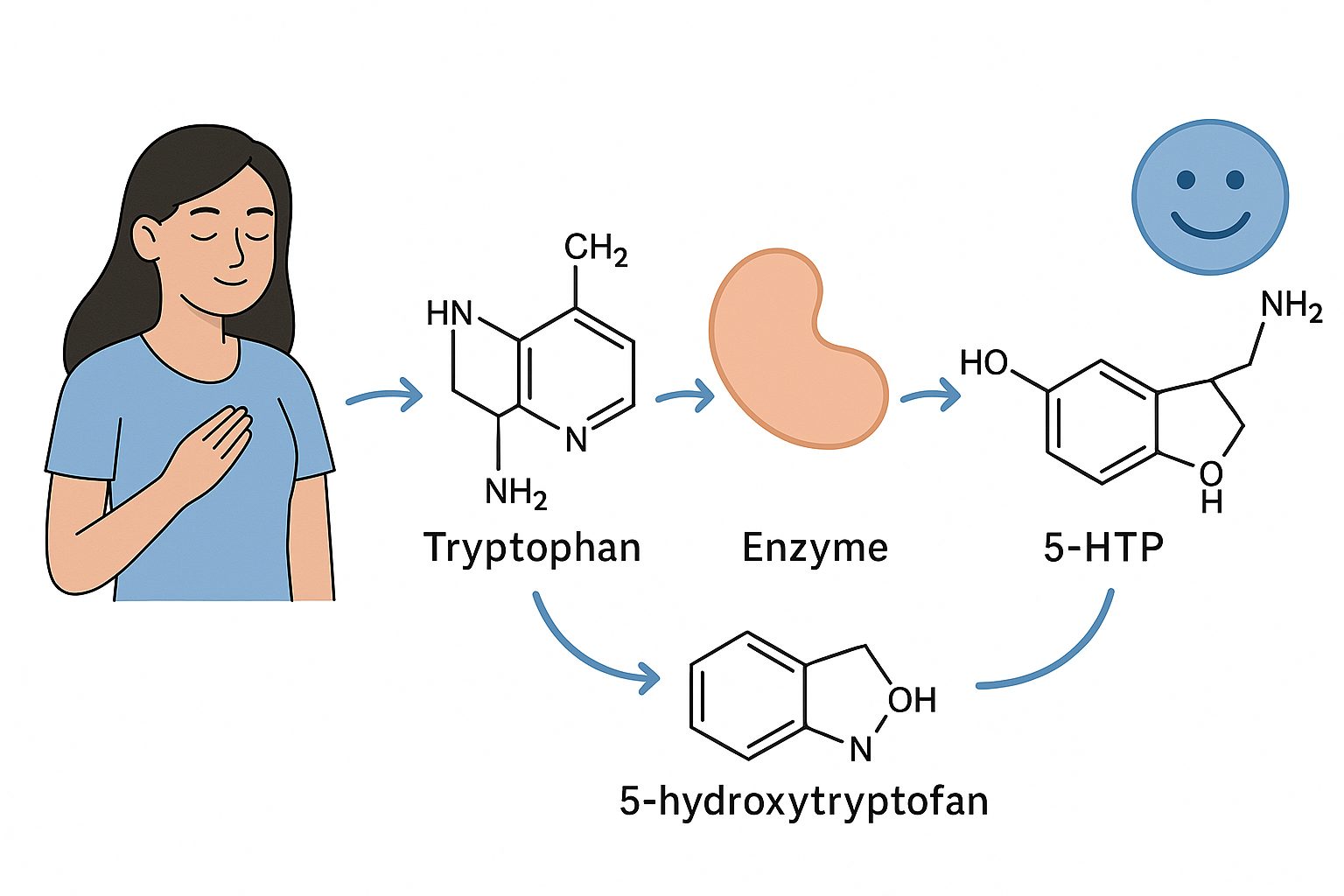
How Tryptophan Becomes Serotonin
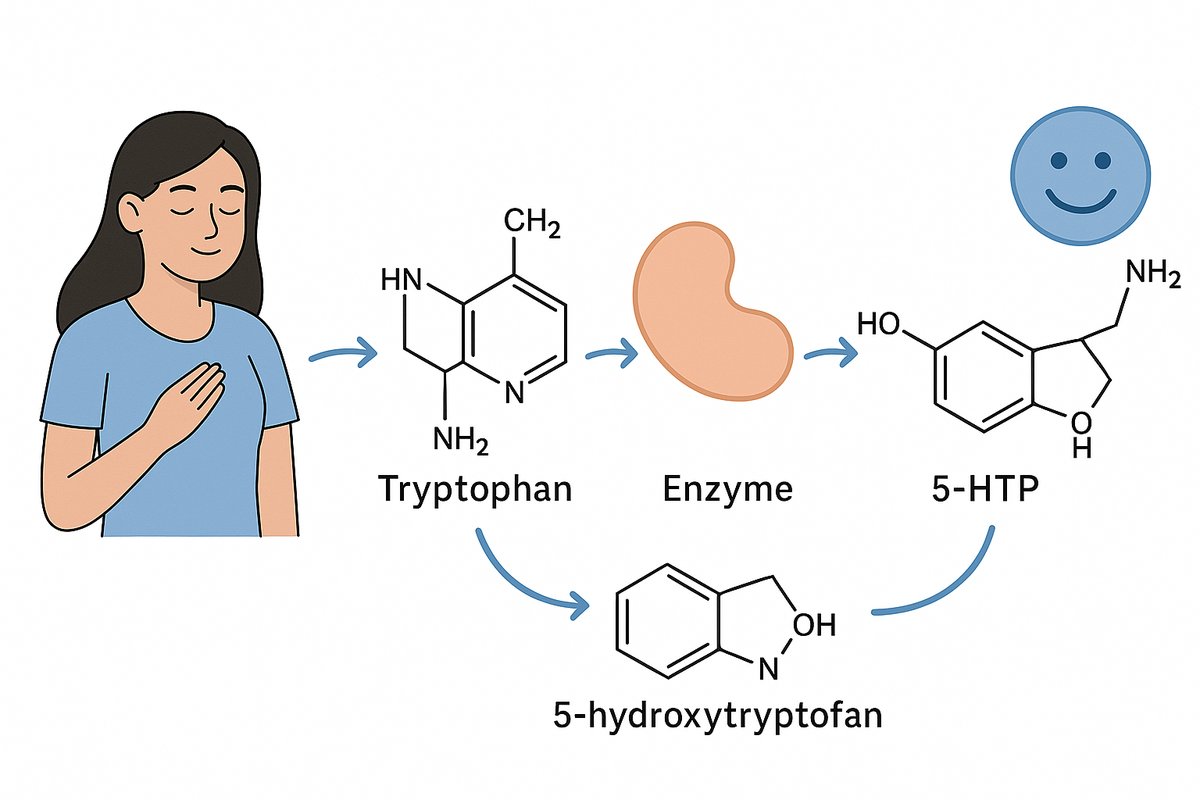
- Tryptophan hydroxylase is the rate-limiting enzyme in serotonin synthesis; its activity and tryptophan availability in the brain are key determinants of serotonin production.
- Tryptophan competes with other large neutral amino acids (leucine, valine, isoleucine, phenylalanine, tyrosine) for the same blood-brain barrier transporter (LAT1).
- Consuming tryptophan-containing foods with carbohydrates (without high protein) improves brain tryptophan uptake by reducing competing amino acids via insulin-stimulated muscle uptake.
- 5-HTP crosses the blood-brain barrier more readily than tryptophan and bypasses the rate-limiting hydroxylase step; it produces serotonin more reliably than tryptophan supplementation.
- Approximately 90% of total body serotonin is produced in the gut (enterochromaffin cells), not the brain; gut serotonin does not cross the blood-brain barrier and serves different physiological functions.
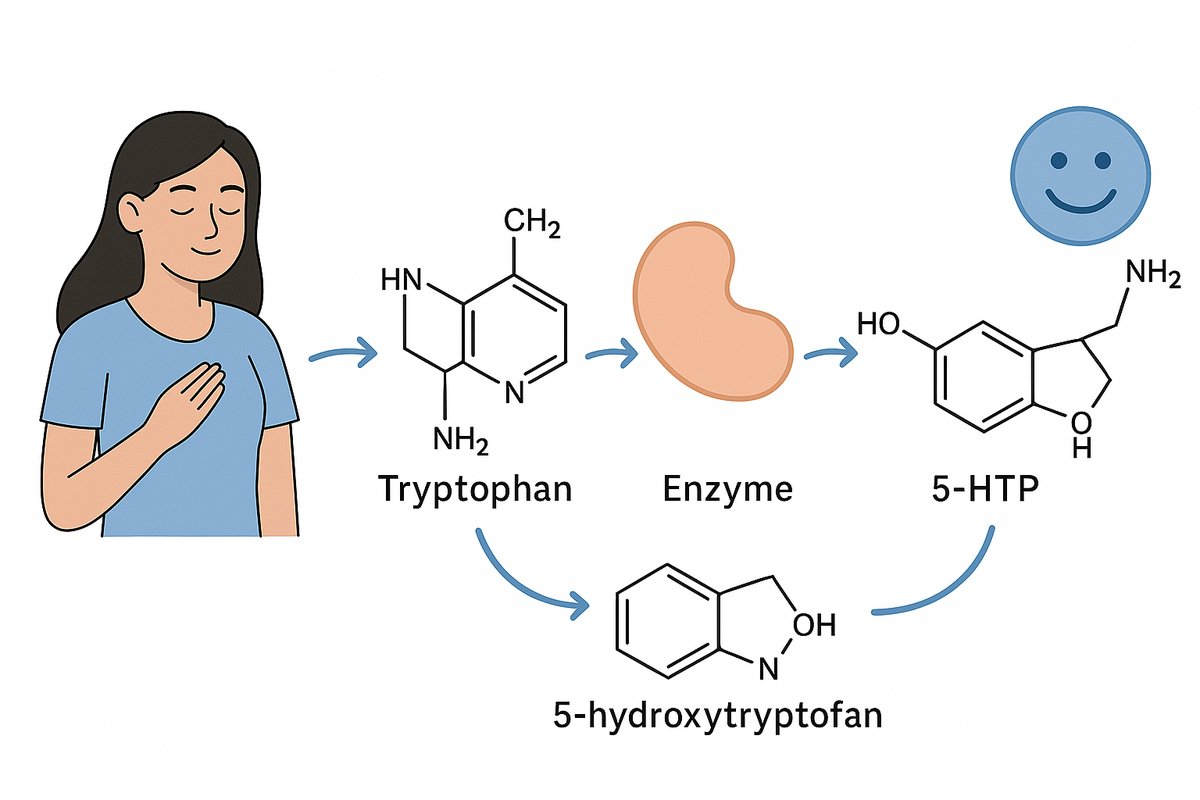
Quick Answer: L-tryptophan goes through a multi-step conversion: tryptophan ? 5-HTP (via tryptophan hydroxylase) ? serotonin (via aromatic amino acid decarboxylase + vitamin B6) ? melatonin. Each step has cofactors and bottlenecks that can affect how much serotonin you actually make.
If you have ever looked into mood or sleep supplements, you have probably seen the claim that “tryptophan makes serotonin.” That is true – but the full story involves several steps, competing pathways, and cofactors that determine how efficiently that conversion actually happens.
Dark chocolate is one of the richest food sources of magnesium, a mineral critical to serotonin production. For the full picture, see our review of dark chocolate’s magnesium and mood-supporting compounds in the serotonin synthesis pathway.
Understanding this pathway helps you make smarter decisions about supplementation. Here is the breakdown.
The Core Pathway: Four Key Steps
Step 1: L-Tryptophan Enters the Brain
L-tryptophan is an essential amino acid that you get from food (turkey, eggs, cheese, nuts, seeds, etc.) or supplements. But here is the first bottleneck: tryptophan must cross the blood-brain barrier (BBB) to be useful for serotonin production.
It does this via a transporter it shares with other large neutral amino acids (LNAAs) – leucine, isoleucine, valine, tyrosine, and phenylalanine. This means tryptophan is literally competing for a seat on the bus.
Practical implication: When you eat a high-protein meal, all those competing amino acids flood the transporter. This is why tryptophan supplementation is often recommended on an empty stomach or with a small carbohydrate source – insulin from carbs clears competing amino acids from the blood, giving tryptophan less competition.
Step 2: Tryptophan ? 5-HTP
Once in the brain, tryptophan is converted to 5-hydroxytryptophan (5-HTP) by the enzyme tryptophan hydroxylase (TPH).
This is considered the rate-limiting step – meaning it is the slowest part of the chain and therefore controls the overall speed of serotonin production.
Cofactors needed: iron, tetrahydrobiopterin (BH4), and oxygen.
Why it matters: If you are iron-deficient, this step may be impaired. This is one reason why mood symptoms sometimes accompany iron deficiency, beyond just fatigue.
Step 3: 5-HTP ? Serotonin (5-HT)
5-HTP is then converted to serotonin (5-hydroxytryptamine, or 5-HT) by the enzyme aromatic L-amino acid decarboxylase (AAAD).
Key cofactor: Vitamin B6 (specifically pyridoxal-5-phosphate, the active form).
This step is generally fast and not rate-limiting under normal conditions. However, B6 deficiency can slow it down. This is the biochemical basis for including B6 in some tryptophan and 5-HTP supplements.
Step 4: Serotonin ? Melatonin
In the pineal gland, serotonin undergoes two more conversions:
- Serotonin ? N-acetylserotonin (via the enzyme AANAT, which is activated by darkness)
- N-acetylserotonin ? Melatonin (via the enzyme ASMT)
This step is regulated by your circadian rhythm – it ramps up at night when light exposure decreases. This is why tryptophan and serotonin are relevant to both mood (daytime serotonin) and sleep (nighttime melatonin conversion).
The Competing Pathway: Kynurenine
Here is something most supplement articles skip: the majority of your dietary tryptophan does not become serotonin.
Approximately 95% of tryptophan is metabolized through the kynurenine pathway, which produces:
- NAD+ (nicotinamide adenine dinucleotide) – essential for energy metabolism
- Various metabolites involved in immune function and inflammation
The enzyme indoleamine 2,3-dioxygenase (IDO) diverts tryptophan into this pathway, and its activity increases during inflammation and stress. This means that when you are sick or chronically inflamed, even more tryptophan gets shunted away from serotonin production.
Why this matters for supplementation: It helps explain why simply taking more tryptophan does not guarantee proportionally more serotonin. Your body has other priorities for this amino acid, and those priorities shift based on your health status.
Why 5-HTP Is Different
If you are wondering why some people take 5-HTP instead of L-tryptophan, it is because 5-HTP enters the pathway after the rate-limiting step. It:
- Does not compete with other amino acids at the BBB
- Does not get diverted into the kynurenine pathway
- Converts more directly to serotonin
The trade-off: 5-HTP also converts to serotonin in the gut and peripheral tissues (not just the brain), which can cause GI side effects and may not be ideal for long-term use. L-tryptophan is more physiological – it lets your body regulate the conversion.
Cofactors That Support the Pathway
If you are supplementing tryptophan for mood or sleep, these cofactors are worth ensuring are adequate in your diet:
| Cofactor | Role | Good Sources |
|———-|——|————-|
| Vitamin B6 (P5P) | Required for 5-HTP ? serotonin conversion | Poultry, fish, potatoes, bananas |
| Iron | Required for tryptophan ? 5-HTP conversion | Red meat, lentils, spinach |
| Folate | Supports BH4 recycling | Leafy greens, legumes |
| Magnesium | General neurotransmitter function; supports relaxation | Nuts, seeds, dark chocolate |
You do not necessarily need to supplement all of these – a varied diet covers most people. But if you are taking tryptophan and not seeing results, a nutrient gap in one of these cofactors could be a limiting factor.
The Takeaway
The tryptophan-to-serotonin pathway is real and well-established. But it is not a simple pipe where “more in = more out.” Blood-brain barrier competition, the kynurenine shunt, cofactor availability, inflammation status, and circadian timing all influence how much serotonin and melatonin your body actually makes from supplemental tryptophan.
Understanding these steps helps you:
- Time your doses better (empty stomach, evening for sleep)
- Support cofactors (B6, iron)
- Set realistic expectations (not all tryptophan becomes serotonin)
- Choose between tryptophan and 5-HTP based on your needs
Related Reading:
- Best L-Tryptophan Supplements for Mood Support in 2026
- L-Tryptophan for Sleep: Does It Actually Help?
- L-Tryptophan Safety and Drug Interactions
Related Articles
- Serotonin and Melatonin Precursors: The Tryptophan Pathway Explained
- NAC and Glutathione Support Explained: How the Pathway Actually Works
- Growth Factor Serums Explained Simply
Sources
- Nutritional modulators of sleep: A narrative review of vitamins, minerals, amino acids, and their neurobiological and chronoepigenetic mechanisms. Chronobiology international. 2026. PMID: 41992896.
- Divergent Biochemical Strategies and Organ-Specific Metabolic Adjustments in Spinach Mediated by Exogenous Amino Acids Under Salt Stress. Physiologia plantarum. 2026. PMID: 41858176.
- Serotonin, Kynurenine, and Indole Pathways of Tryptophan Metabolism in Humans in Health and Disease. Nutrients. 2026. PMID: 41683329.
- Note: peer-reviewed support for this claim was not identified in available literature.
- Betaine and Plasma Homocysteine (2005)


Leave a Reply