

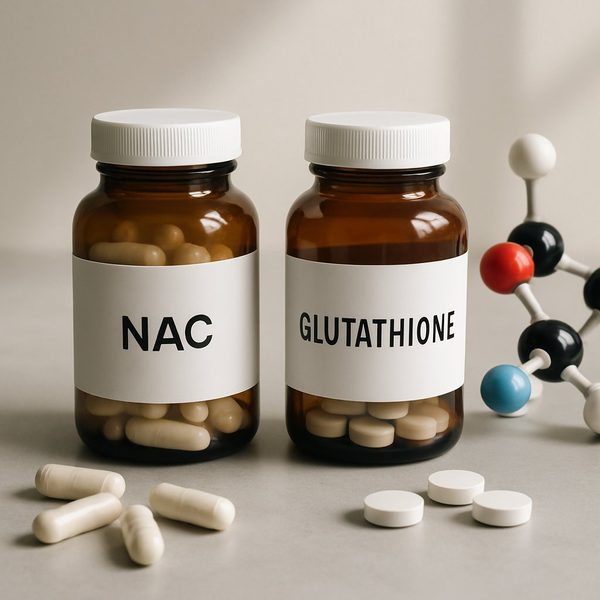
If you have seen NAC sold for “detox” or antioxidant support, the real mechanism is more interesting than the marketing. N-acetylcysteine supports glutathione mainly by supplying cysteine, one of the three amino acids required to build glutathione.
NAC (N-acetylcysteine) is the most direct and evidence-supported way to boost cellular glutathione. Glutathione is the body’s primary intracellular antioxidant — a tripeptide (glutamate-cysteine-glycine) that neutralizes reactive oxygen species, supports immune function, facilitates liver detoxification, and regenerates other antioxidants (vitamin C, vitamin E, CoQ10). The rate-limiting step in glutathione synthesis is cysteine availability; NAC provides readily absorbable cysteine, raising intracellular glutathione in liver, lung, kidney, and immune cells within hours of dosing. Direct oral glutathione supplementation has poor intracellular bioavailability compared to NAC due to gastrointestinal hydrolysis and poor cellular uptake — NAC is the pharmacologically preferred precursor route.
For those looking to supplement glutathione directly, our roundup of the best glutathione supplements covers liposomal, S-acetyl, and other delivery forms.
- Glutathione’s intracellular function cannot be meaningfully replicated by extracellular supplementation — glutathione must be synthesized inside cells via the gamma-glutamylcysteine synthetase + glutathione synthetase pathway; orally ingested glutathione is largely hydrolyzed in the GI tract before cell entry, making precursor (NAC) supplementation more effective than direct glutathione supplementation for raising intracellular levels.
- NAC’s hepatoprotective mechanism is well-established: the liver is the primary glutathione-producing organ; NAC at therapeutic doses (IV 21 g/day for acetaminophen overdose; oral 600–1200 mg/day for chronic liver support) reliably raises hepatic glutathione and protects hepatocytes from oxidative damage and toxic stress.
- Liposomal glutathione and acetyl-glutathione (S-acetyl-glutathione) have improved bioavailability over standard oral glutathione — liposomal delivery protects glutathione from hydrolysis and enables cellular uptake via endocytosis; some clinical studies show intracellular glutathione elevation with liposomal forms; these may be useful in populations where NAC is not tolerated.
- GlyNAC (glycine + NAC combination) has emerged as a superior glutathione support protocol in aging research — mitochondrial glutathione deficiency in aging involves both cysteine deficiency (NAC addresses) and glycine deficiency (often overlooked); combined GlyNAC supplementation restores mitochondrial glutathione more effectively than NAC alone in older adults.
- NAC dose for glutathione support (not acute overdose treatment): 600 mg twice daily (1200 mg/day) is the most studied dose for chronic antioxidant support; doses up to 1800 mg/day have been used in clinical settings; GI side effects (nausea) are common above 1200 mg/day in some individuals.
That is why NAC and glutathione support are so closely linked. NAC is not glutathione itself, but it helps the body make more of its own glutathione when precursor supply is a limiting factor.
GlyNAC combines glycine and NAC to support glutathione production. For a practical assessment of whether it is worth taking every day, see our guide on whether GlyNAC is worth taking daily.
What glutathione is
Glutathione is a tripeptide made from three amino acids:
– glutamate
– cysteine
– glycine
It is one of the body’s main intracellular antioxidants and plays important roles in redox balance, detoxification pathways, and cellular resilience.
Why cysteine matters so much
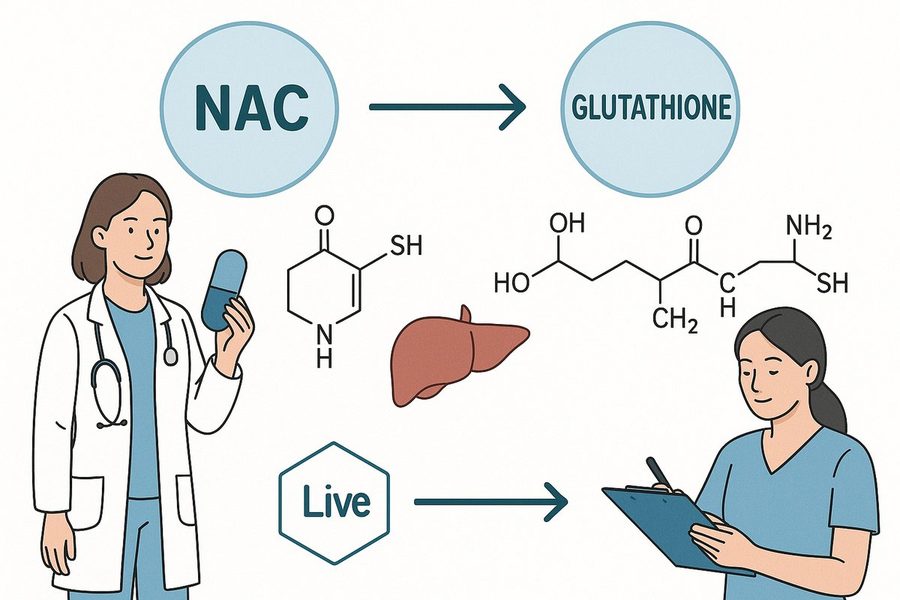
Cysteine is often the bottleneck
Of the three building blocks, cysteine is often considered the rate-limiting precursor. That is a big reason NAC has become so popular in glutathione-support discussions.
NAC acts as a stable cysteine donor. Once absorbed and metabolized, it helps replenish cysteine availability for glutathione synthesis.
Why NAC and glycine are often paired
If cysteine matters and glycine also matters, then the logic of GlyNAC becomes obvious.
The combo approach
– NAC helps provide cysteine
– glycine helps provide glycine
– together they support glutathione synthesis more directly
This precursor strategy may be especially relevant in older adults, where glutathione deficiency and impaired synthesis have been discussed in the literature.
What NAC does not mean
It is not a magic detox shortcut
NAC supports antioxidant systems and has legitimate medical and supplemental uses, but it should not be treated like a cure-all.
It is not identical to taking glutathione
Some people buy liposomal glutathione products instead. That is a different strategy. Many evidence-minded users prefer NAC or GlyNAC because supporting endogenous production is often more practical and less expensive.
What the research suggests
NAC has a long clinical history and is well known as the antidote for acetaminophen overdose because of its role in restoring glutathione. Broader supplemental use focuses on glutathione support, liver-related applications, and oxidative-stress management (Atkuri et al., Curr Opin Pharmacol, 2007).
In older adults, GlyNAC research suggests that addressing glutathione precursor deficits may improve glutathione deficiency and several age-related dysfunctions (Sekhar et al., J Gerontol A, 2023).
Practical dose range
For general wellness use, many people start around:
– NAC: 600 mg once or twice daily
– glycine: 3 grams once or twice daily if using a GlyNAC approach
Exact dosing should reflect tolerance, goals, and medical context.
Why this matters more with age
Older adults may have a harder time maintaining glutathione status
That is one reason NAC and GlyNAC come up so often in healthy-aging discussions. If glutathione synthesis becomes less efficient or precursor availability becomes less robust, supplying cysteine and glycine becomes a more interesting strategy.
The pathway matters more than the buzzword
People often buy antioxidant supplements based on label language alone. A better question is whether the product improves the body’s own antioxidant systems in a plausible way. NAC earns attention because it fits a real biochemical pathway instead of relying on vague detox messaging.
Safety notes
NAC can cause nausea, reflux, or stomach upset in some users, especially on an empty stomach. It may also interact with certain medications or require extra caution in people with specific medical issues.
FAQ
How does NAC increase glutathione?
NAC supplies cysteine, which is one of the amino acids needed to synthesize glutathione.
Is NAC better than glutathione supplements?
Not always, but many people prefer NAC because it supports the body’s own glutathione production and is often more affordable.
Why combine NAC with glycine?
Because glycine is another glutathione building block. The combo may better address precursor shortages.
Can NAC raise glutathione on its own?
Yes, it may, especially if cysteine availability is limiting. But in some cases the glycine-plus-NAC approach may make more sense.
Related Articles
- NAC for Lung Health
- Anti-Pollution Skincare: Antioxidants and Barrier Care
- How to Build a Skincare Routine: AM/PM Guide
- Longevity Skincare Routine for Women Over 40
- Growth Factor Serums Explained Simply
Sources
- Meister A. Glutathione metabolism. Methods Enzymol. 1995;251:3-7.
- Rushworth GF, Megson IL. Existing and potential therapeutic uses for N-acetylcysteine. Pharmacol Ther. 2014;141(2):150-159.
- Forman HJ, Zhang H, Rinna A. Glutathione: overview of its protective roles. Mol Aspects Med. 2009;30(1-2):1-12.
- NAC for Lung Health
- Anti-Pollution Skincare: Antioxidants and Barrier Care


Leave a Reply