Most people with insulin resistance don’t know they have it — because standard blood work doesn’t test for it directly, and the early symptoms are subtle. This guide covers what to look for, what to ask your doctor, and how to interpret the numbers.
Insulin resistance is one of the most common yet underdiagnosed metabolic conditions — estimated to affect 40-50% of US adults (at various severity levels), including many with normal fasting blood glucose. Classic signs include: central weight gain (waist >35 inches in women, >40 in men), skin tags and acanthosis nigricans (dark skin patches), fatigue after carbohydrate meals, and frequent hunger 2-3 hours after eating. Standard lab markers: fasting glucose (ideally <90 mg/dL), fasting insulin (<5 µIU/mL optimal, >10 = significant resistance), HOMA-IR score (<1.0 optimal), and triglycerides (<100 mg/dL optimal).
- HOMA-IR (Homeostatic Model Assessment of Insulin Resistance) = ÷ 405 (using US units); a score >1.9 indicates early insulin resistance; >2.9 indicates significant insulin resistance — this is a better marker than fasting glucose alone.
- Fasting insulin is the single most actionable lab test for early insulin resistance: normal <5 µIU/mL; 5-10 µIU/mL = early insulin resistance; >10 µIU/mL = significant resistance. Most standard metabolic panels do not include fasting insulin — you must specifically request it.
- Triglycerides are a sensitive insulin resistance marker: elevated triglycerides (>150 mg/dL) in the presence of low HDL (<50 in women, <40 in men) strongly suggests insulin resistance, often before glucose is elevated.
- Postprandial glucose (blood sugar 1-2 hours after eating) is more sensitive than fasting glucose for detecting early carbohydrate intolerance — a spike above 140 mg/dL at 1 hour post-meal suggests impaired insulin response.
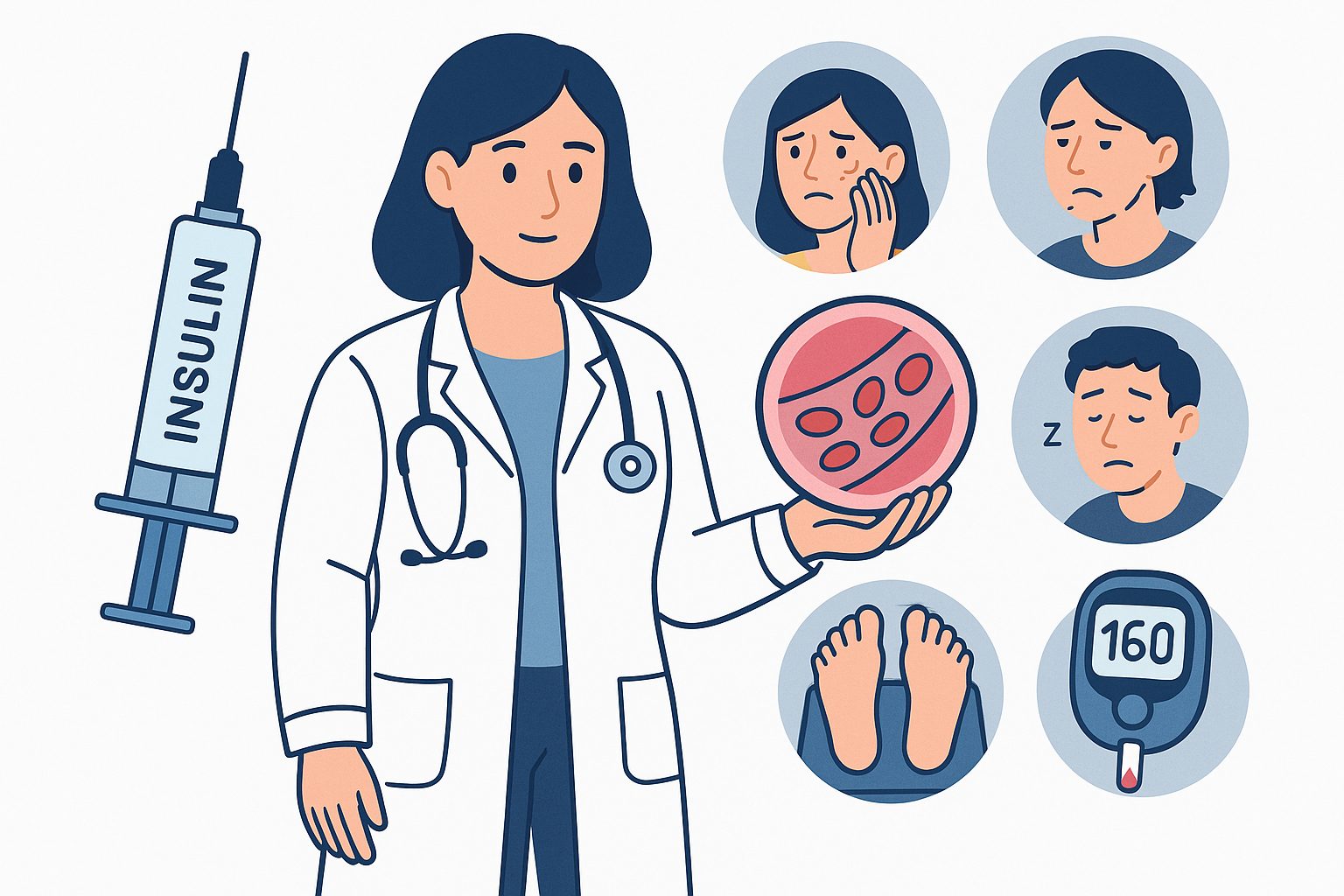
- Physical signs of insulin resistance include: acanthosis nigricans (velvety dark skin in skin folds — axillae, neck, groin), skin tags, central adiposity with a relatively normal BMI, and android fat distribution (waist:hip ratio >0.85 in women, >0.95 in men).
Why Insulin Resistance Goes Undetected
Standard metabolic panels measure fasting glucose. The problem: fasting glucose stays normal for years while insulin resistance develops, because your pancreas compensates by producing more insulin. By the time fasting glucose is elevated, you may have been insulin resistant for a decade.
The analogy: Imagine your car needs 2x the normal gas to go the same distance. The car still moves fine — it’s just burning through fuel faster. Eventually, the tank runs dry. That’s the progression from insulin resistance → prediabetes → type 2 diabetes.
`r`n`r`n
Physical Signs That Suggest Insulin Resistance

None of these are diagnostic alone, but patterns matter:
- Acanthosis nigricans: Darkened, velvety skin patches on the neck, armpits, or groin. The most specific visible sign.
- Skin tags: Common in insulin-resistant individuals, especially on the neck and armpits.
- Central adiposity: Carrying fat primarily around the waist (apple shape). Waist-to-hip ratio >0.85 (women) or >0.90 (men) raises suspicion.
- Difficulty losing weight despite caloric deficit: Hyperinsulinemia promotes fat storage and resists fat mobilization.
- Energy crashes after meals: Exaggerated insulin response → reactive hypoglycemia → fatigue/brain fog 1–3 hours after eating.
- Frequent sugar cravings: Cells aren’t getting adequate glucose despite high blood levels → perceived energy deficit → cravings.
- PCOS symptoms in women: Irregular periods, acne, hirsutism, difficulty conceiving.
- Elevated blood pressure and triglycerides with low HDL: The classic metabolic syndrome triad.
Tests to Request
Fasting Insulin (Most Important)
What it is: Measures insulin levels after an overnight fast.
Why it matters: This is the earliest indicator of insulin resistance. Your fasting glucose can be 90 mg/dL (perfectly normal) while your fasting insulin is 20 µIU/mL (too high) — meaning your pancreas is working overtime to maintain that normal glucose.
Optimal range: 3–8 µIU/mL. Under 5 is ideal.
Concerning: >12 µIU/mL suggests developing insulin resistance.
Problematic: >15–20 µIU/mL indicates significant insulin resistance.
The problem: Many doctors don’t routinely order this test. You may need to specifically request it.
`r`n`r`n
HOMA-IR (Calculated)
Formula: (Fasting Glucose mg/dL × Fasting Insulin µIU/mL) ÷ 405
Optimal: <1.0
Normal: <1.5
Early insulin resistance: 1.5–2.5
Significant insulin resistance: >2.5
`r`n`r`n
Fasting Glucose (Standard but Late)
Optimal: <90 mg/dL
Normal: <100 mg/dL
Prediabetes: 100–125 mg/dL
Diabetes: ≥126 mg/dL
Remember: this only elevates late in the process.
`r`n`r`n

HbA1c
What it is: 3-month average blood glucose (measured as glycated hemoglobin).
Optimal: <5.3%
Normal: <5.7%
Prediabetes: 5.7–6.4%
Diabetes: ≥6.5%
`r`n`r`n
Triglycerides and HDL
The ratio matters: Triglycerides/HDL ratio >2.0 (in mg/dL) correlates strongly with insulin resistance. A ratio >3.0 is a red flag.
`r`n`r`n
Oral Glucose Tolerance Test (OGTT) with Insulin
The most informative test. Measures glucose AND insulin at 0, 30, 60, 90, and 120 minutes after drinking 75g glucose. Shows exactly how your insulin responds to a glucose load.
Rarely ordered outside of pregnancy screening. Worth requesting if you have multiple risk factors.
`r`n`r`n
Risk Factors
You’re more likely to have insulin resistance if you have:
- Family history of type 2 diabetes
- BMI >25 (but normal-weight insulin resistance exists)
- Sedentary lifestyle
- PCOS
- History of gestational diabetes
- Age >40
- South Asian, African American, Hispanic, or Pacific Islander ancestry
- Sleep apnea
- Chronic stress or cortisol elevation
What to Do If You’re Insulin Resistant
- Exercise — resistance training 3x/week + daily walking. Most powerful intervention.
- Reduce refined carbohydrates — not eliminate, reduce. Focus on whole foods, fiber, protein.
- Sleep — prioritize 7–9 hours. One bad night measurably worsens insulin sensitivity.
- Consider supplements — magnesium (if deficient), berberine, chromium. Full guide
- Work with your doctor — metformin may be appropriate for significant insulin resistance.
- Retest in 3–6 months — track HOMA-IR and fasting insulin to measure progress.
Honest Take
Insulin resistance is common, detectable early, and reversible — but only if you test for it. Standard blood work misses it. Asking for fasting insulin alongside fasting glucose is cheap, easy, and potentially the most valuable $15 lab test you can get.
`r`n`r`n
FAQ
What are early signs of insulin resistance?
Early signs include: central weight gain (belly fat accumulating even with normal weight), energy crashes 2-3 hours after carbohydrate-heavy meals, frequent hunger despite eating, brain fog, skin tags, and darkening of skin folds (acanthosis nigricans). Blood markers: fasting insulin >5 µIU/mL, triglycerides >150 mg/dL, or HOMA-IR >1.9.
`r`n`r`n
What is a normal HOMA-IR score?
Optimal HOMA-IR is below 1.0. A score of 1.0-1.9 is considered within normal range but trending toward resistance; 1.9-2.9 is early insulin resistance; above 2.9 is significant insulin resistance. Many labs report only fasting glucose and don’t calculate HOMA-IR — you need both fasting glucose and fasting insulin to calculate it.
`r`n`r`n
Can you have insulin resistance with normal blood sugar?
Yes — this is the key insight most people miss. Insulin resistance can exist for years before blood glucose rises. The pancreas compensates by producing more insulin, keeping glucose normal at the cost of hyperinsulinemia. Fasting insulin and HOMA-IR detect this compensation phase that standard glucose testing misses entirely.
`r`n`r`n
How is insulin resistance treated?
First-line: lifestyle intervention. Low-carbohydrate or Mediterranean diet significantly reduces insulin levels; progressive resistance training increases glucose uptake independently of insulin via GLUT4 translocation; weight loss of 5-10% of body weight dramatically improves insulin sensitivity. Supplements with evidence: myo-inositol, berberine, and magnesium. Metformin is first-line pharmaceutical treatment when lifestyle changes are insufficient.
`r`n`r`n
References
- Wallace TM, et al. HOMA-IR: use and interpretation. Diabetes Care. 2004.
- Kraft JR. Detection of diabetes mellitus in situ. Lab Med. 2008.
- McLaughlin T, et al. TG/HDL ratio and insulin resistance. Ann Intern Med. 2005.
- Donga E, et al. Sleep restriction and insulin sensitivity. J Clin Endocrinol Metab. 2010.
- Reviews on insulin resistance diagnosis: fasting insulin, glucose markers, and clinical signs. PubMed search.
Related Articles
- Berberine Stack for Insulin Resistance Support
- Supplements for Post-Meal Glucose Control
- Best Supplements for Blood Sugar Balance
- Cinnamon, Chromium, and Berberine Stacks
- Complete Guide to Blood Sugar Supplements