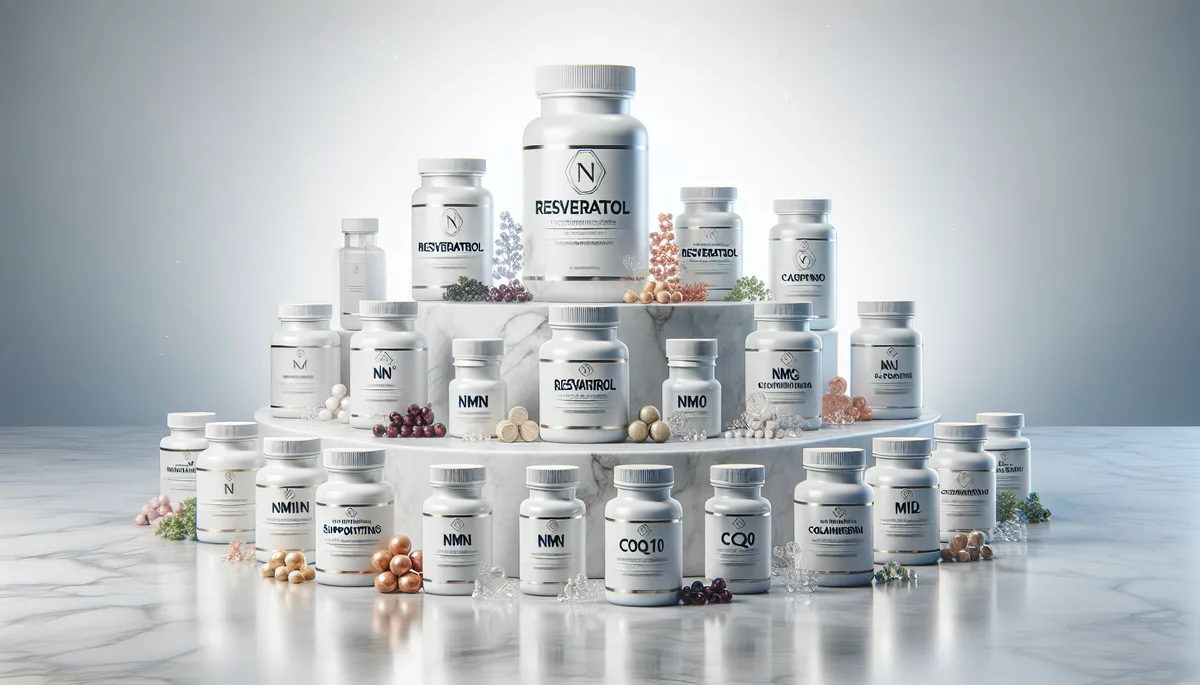
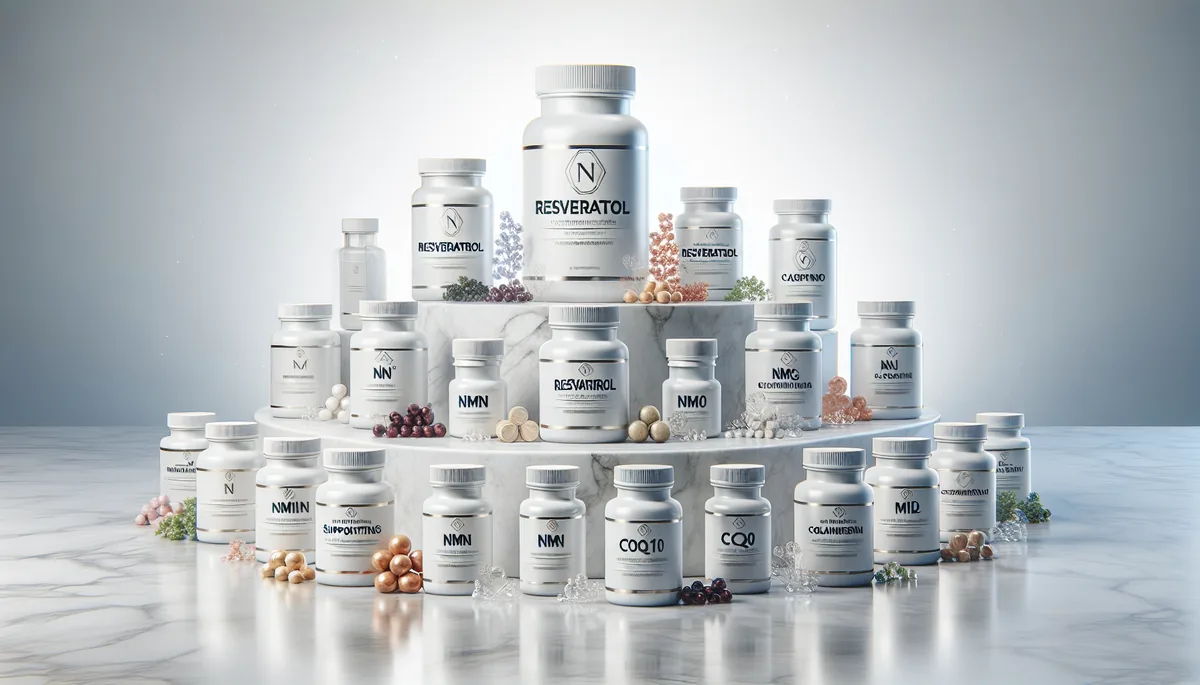
Longevity supplements fall into three evidence tiers. Tier 1 (strong mechanism + human data): NAD+ precursors (NMN/NR) increase NAD+ levels in humans, with improvements in metabolic, cardiovascular, and cognitive biomarkers; berberine and metformin activate lifespan-associated AMPK pathways. Tier 2 (strong mechanism + animal data only for lifespan): rapamycin, resveratrol, fisetin — compelling in model organisms but human longevity evidence is absent. Tier 3 (theoretical/preclinical only): most marketed longevity compounds. No supplement has demonstrated a causal increase in human lifespan in a randomized controlled trial.
Fisetin is one of the most discussed senolytic compounds. For a focused look at dosing, evidence, and how it compares to quercetin, see our fisetin supplement guide.
- The TAME (Targeting Aging with Metformin) trial is the first large RCT designed to test whether a compound (metformin) can delay multiple aging-related diseases simultaneously — results will fundamentally shape evidence standards for longevity supplements.
- NAD+ precursors (NMN: 250-1000 mg/day; NR: 250-500 mg/day) reliably raise blood NAD+ in humans (confirmed in multiple Phase 1 RCTs) and improve muscle mitochondrial function and insulin sensitivity in older adults — but have not demonstrated extended lifespan.
- Rapamycin (mTORC1 inhibitor) is the only compound that extends lifespan in diverse model organisms including mice — but it is an immunosuppressant with significant side effects not appropriate for healthy individual self-experimentation.
- Resveratrol, heavily marketed as a longevity compound, failed to replicate its lifespan-extending effects in mammalian longevity studies and has poor bioavailability (SIRT1 activation requires unrealistic plasma concentrations); its clinical relevance is uncertain.
- Lifestyle interventions — resistance training, caloric restriction/time-restricted eating, sleep optimization, stress management — have larger and better-evidenced effects on biological aging biomarkers than any available supplement.
Longevity supplements are one of the easiest categories to oversell.
The marketing pitch is seductive: support your cells, boost NAD+, activate autophagy, improve mitochondria, and maybe slow aging itself. The problem is that human aging is messy, and many supplements that look amazing in mice do not yet have strong proof in actual people.
So do longevity supplements actually work?
For a head-to-head look at the three main NAD+ precursor strategies, see our guide on NMN vs NR vs direct NAD+ boosters.
Some do, depending on what you mean by “work.” If you mean “support specific healthy-aging processes or measurable functions,” the answer is yes for some supplements. If you mean “proven to make humans live dramatically longer,” the answer is no.
`r`n`r`n
The Most Important Distinction: Biomarkers vs Outcomes
A longevity supplement can “work” in at least three different ways:
- raise a biomarker such as NAD+ levels
- improve a function such as muscle performance or insulin sensitivity
- extend human lifespan
Most supplements in this category have at best reached the first or second level. Very few have convincing evidence for the third.
That does not make them useless. It just means expectations need to stay grounded.
`r`n`r`n
Categories That Have the Best Practical Case
Creatine
Creatine is not usually sold as a glamorous anti-aging pill, but it may be one of the most practical healthy-aging supplements available. It supports strength, lean mass, training capacity, and potentially resilience in older adults when combined with exercise.
That matters because muscle loss is one of the clearest drivers of frailty and functional decline with age.
`r`n`r`n
Omega-3s
Omega-3 fatty acids have a more established record for cardiovascular support than most “longevity” compounds. They may not feel futuristic, but heart and vascular health are a big part of aging well.
`r`n`r`n
Vitamin D and magnesium when needed
These are not magic, but correcting deficiency matters. A deficiency correction is often more meaningful than adding a trendy molecule on top of shaky fundamentals.
`r`n`r`n
Categories That Are Promising but Still Emerging
NMN and NR
These can raise NAD-related biomarkers and may influence metabolism, but they are not proven lifespan extenders in humans.
`r`n`r`n
Urolithin A
This has credible emerging evidence for mitochondrial and muscle-related benefits in human trials.
`r`n`r`n
Spermidine
Spermidine is scientifically interesting, but human evidence remains early.
`r`n`r`n
Where the Hype Goes Wrong
Mouse results get treated like human proof
A compound extending lifespan in worms, flies, or mice is interesting. It is not the same as demonstrating a meaningful effect in humans.
`r`n`r`n
People ignore the base rate
Most of the aging burden in real life is still tied to:
- poor sleep
- low muscle mass
- insulin resistance
- high blood pressure
- sedentary living
- smoking
- excess body fat
- weak diet quality
Supplements can help at the margins, but they rarely overpower bad fundamentals.
`r`n`r`n
Too many products are stacked together
Huge stacks make it hard to know what is doing anything.
`r`n`r`n
What “Actually Work” Looks Like in the Real World
For most people, a useful longevity supplement does one or more of the following:
- supports muscle retention and physical function
- helps correct a deficiency
- improves a clinically relevant biomarker
- supports cardiovascular or metabolic health
- does so with acceptable safety and cost
That is a much better standard than waiting for a magic anti-aging breakthrough in capsule form.
`r`n`r`n
How to Judge a Longevity Supplement
Ask these questions
- Is there human evidence?
- Is the benefit meaningful or just biochemical?
- Is the dose clinically plausible?
- Is the product quality credible?
- Would basics give more return than this supplement?
If a product fails most of those questions, it is probably hype.
`r`n`r`n
FAQ
Do longevity supplements actually slow aging?
Some may influence aging-related pathways or functions, but no mainstream supplement has conclusively been shown to dramatically slow human aging or extend lifespan in a clear, proven way.
`r`n`r`n
Which longevity supplements are most evidence-based?
The most practical evidence-backed options are often unsexy ones such as creatine, omega-3s, and correcting vitamin D or magnesium insufficiency. Emerging options include urolithin A, NR, NMN, and spermidine.
`r`n`r`n
Are longevity supplements worth it?
They can be, especially when they target a real need or support a meaningful function. But they are usually best treated as additions to good training, sleep, nutrition, and metabolic health, not replacements.
`r`n`r`n
What is the biggest mistake people make with longevity supplements?
Starting expensive advanced compounds before fixing basics like strength training, protein intake, sleep, blood pressure, and blood sugar.
`r`n`r`n
References
- Andreux PA, et al. Urolithin A is safe and induces improved mitochondrial health in humans. Nat Metab. 2019.
- Yoshino M, et al. NMN increases muscle insulin sensitivity in prediabetic women. Science. 2021.
- Madeo F, et al. Spermidine in health and disease. Science. 2018.
- Bernasconi AA, et al. Omega-3 dosage and cardiovascular outcomes: meta-analysis. Mayo Clin Proc. 2021.
- Reviews on longevity supplement evidence and healthy aging. PubMed search.
This article is for informational purposes only and does not constitute medical advice. Talk with your healthcare professional before starting any new supplement regimen, especially if you have chronic disease or take prescription medications..ke prescription medications..*
`r`n`r`n
Related Articles
- NMN vs NR vs NAD+ Boosters: Key Differences Explained
- Urolithin A for Healthy Aging
- Spermidine Supplements: Benefits, Evidence, and Dosage
- Best Longevity Stack for Beginners
- Complete Guide to Longevity Supplements in 2026