
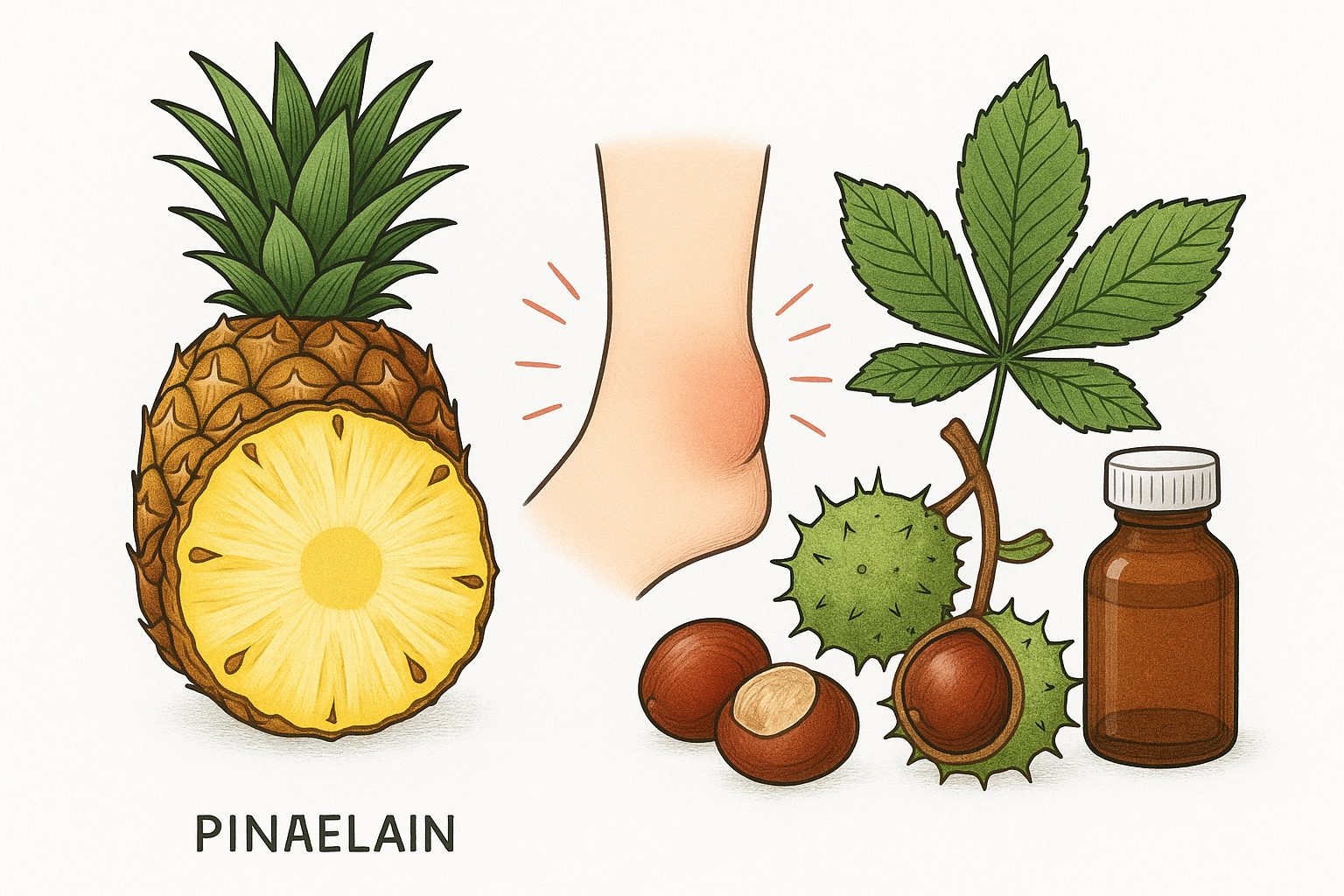
Bromelain and Horse Chestnut for Swelling
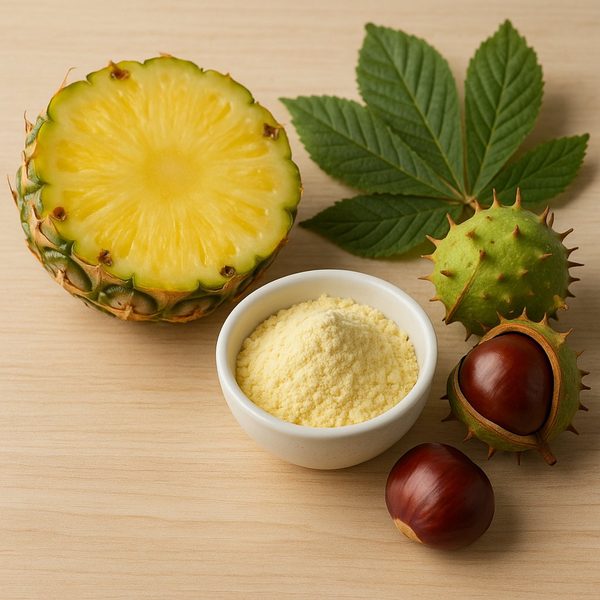
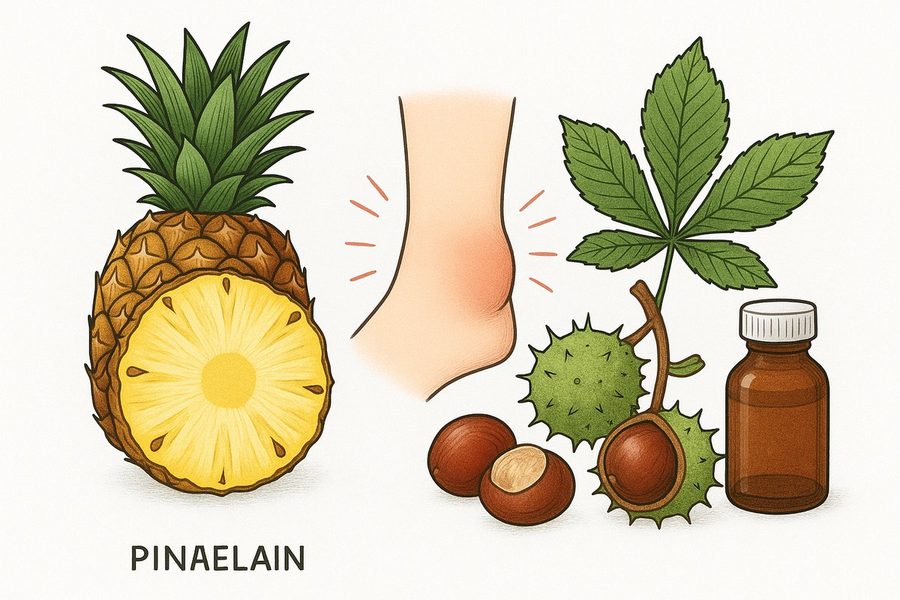
If you’re looking for supplements that genuinely help with swelling and fluid retention, bromelain and horse chestnut extract (aescin) are the two with the most clinical backing. Neither is a “lymphatic cleanser” — but both address fluid balance through real, studied mechanisms.
Edema and swelling from various causes — venous insufficiency, lymphedema, post-surgical, and sports injury — represent an area where several natural supplements have legitimate RCT evidence. Horse chestnut seed extract (HCSE, standardized to aescin) is the most evidence-backed: a Cochrane review of 17 RCTs (1049 participants) confirmed significant reduction in leg edema and pain in chronic venous insufficiency (CVI). Bromelain, a pineapple-derived enzyme mixture, has evidence for reducing post-surgical and sports-injury swelling via anti-inflammatory and fibrinolytic mechanisms. Both are well-tolerated alternatives or adjuncts to compression therapy.
Bromelain is another enzyme with anti-inflammatory research behind it. Our guide on bromelain supplements covers the digestive and anti-inflammatory evidence.
- Aescin (escin) from horse chestnut seeds reduces capillary permeability and strengthens vein walls — its mechanism is similar to some pharmaceutical venotonics. Standardized HCSE providing 100-150 mg aescin/day is the evidence-based dose.
- A Cochrane systematic review (2012, 17 RCTs) found HCSE significantly reduced lower leg volume, pain, and itching in CVI vs. placebo — with effects comparable to compression stockings in some trials.
- Bromelain (400-500 mg, 3x daily) reduces surgical swelling by degrading fibrin, bradykinin, and other inflammatory mediators — RCTs support it for reducing post-surgical edema and bruising following plastic surgery, dental procedures, and orthopedic injury.
- Diosmin + hesperidin (Daflon, a flavonoid combination) has the largest CVI evidence base of any oral supplement — reducing leg swelling, ankle circumference, and venous ulcer healing time in large European trials.
- Combining supplements addressing different mechanisms (HCSE + diosmin/hesperidin, or bromelain + HCSE) may provide additive benefit — but head-to-head comparison trials are limited; compression therapy remains the evidence-backed standard of care for severe CVI.
Bromelain
What It Is
A mixture of proteolytic enzymes extracted from pineapple stems (Ananas comosus). Used medicinally since the 1950s.
Bioflavonoids like diosmin and hesperidin support vascular tissue integrity, and the same flavonoid class is being researched for gut-protective effects. For the stomach-specific evidence, see our guide on quercetin and bioflavonoids for gut-protective support — the same flavonoid class studied for vascular and tissue integrity.
`r`n`r`n
Evidence for Swelling
Post-surgical edema: Several RCTs show bromelain reduces swelling and bruising after surgery (especially dental, nasal, and orthopedic procedures). A 2004 systematic review (Brien et al.) found “promising evidence” for anti-inflammatory and analgesic effects across 10 trials.
Sinusitis: A 2006 German trial of 116 patients with acute sinusitis found adjunctive bromelain reduced mucosal swelling and nasal symptoms faster than placebo.
Sports injuries: Limited but positive small trials for soft-tissue injury recovery.
`r`n`r`n
Mechanism
Bromelain is a fibrinolytic — it breaks down fibrin (the protein that forms clots and contributes to inflammation). It also modulates prostaglandins and thromboxane, reduces bradykinin-mediated swelling, and may improve tissue permeability to allow faster drainage.
`r`n`r`n
Dosing
- Therapeutic dose: 500–2,000 GDU/day (gelatin digestion units)
- Timing: Between meals (on an empty stomach) for systemic anti-inflammatory effects; with food for digestive support
- Duration: Typically 5–10 days post-surgery/injury; longer-term use is less studied
Safety
- GI discomfort at high doses
- May increase bleeding risk (avoid with blood thinners)
- Allergic reactions possible (especially pineapple-allergic individuals)
- Avoid 2 weeks before surgery
Honest Take
Bromelain has real evidence for reducing post-surgical and post-injury swelling. It’s not a lymphatic cleanser — it’s an anti-inflammatory enzyme that reduces the edema that the lymphatic system has to deal with. Useful, but for specific situations.
Horse Chestnut Extract (Aescin)
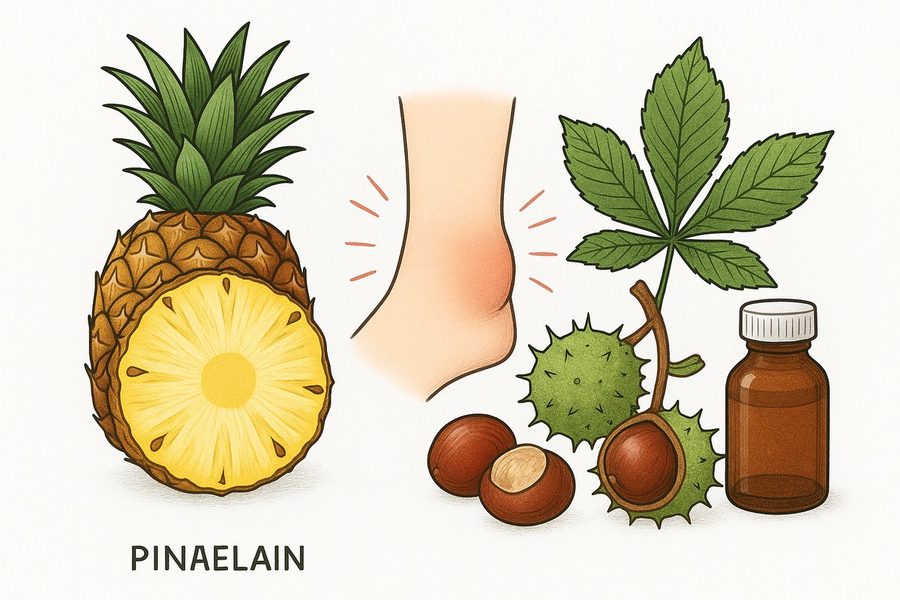
What It Is
Aescin (escin) is the triterpene saponin extracted from the seeds of Aesculus hippocastanum. Widely used in European medicine for venous insufficiency.
`r`n`r`n
Evidence for Swelling
Chronic venous insufficiency (CVI): A 2012 Cochrane review (Pittler & Ernst) analyzed 17 RCTs with 1,587 participants. Conclusion: horse chestnut seed extract significantly reduces leg pain, edema, and pruritis compared to placebo. Effects were comparable to compression stockings in some trials.
This is strong evidence — among the best for any herbal supplement for any condition.
`r`n`r`n
Mechanism
Aescin reduces capillary permeability (less fluid leaks out of blood vessels → less edema) and inhibits elastase and hyaluronidase (enzymes that degrade vessel walls). By reducing the fluid that leaks into tissues, it indirectly reduces the workload on the lymphatic system.
`r`n`r`n
Dosing
- From Cochrane review: 300 mg horse chestnut seed extract twice daily (standardized to 50 mg aescin per dose, so ~100 mg aescin/day total)
- Results typically seen: 2–4 weeks
Safety
- Generally well tolerated
- GI discomfort, headache, dizziness (uncommon)
- Raw horse chestnuts are toxic — only use standardized pharmaceutical-grade extracts
- Theoretical interaction with blood thinners and diabetes medications
- Avoid if allergic to latex (cross-reactivity reported)
Honest Take
Horse chestnut extract is a legitimate, Cochrane-reviewed treatment for chronic venous insufficiency. If you have leg swelling from poor venous return, this is one of the best-supported herbal options. It’s NOT a lymphatic cleanser — it reduces the cause of edema rather than “flushing” lymph.
Diosmin/Hesperidin (Honorable Mention)
These citrus bioflavonoids (sold as Daflon in Europe) have strong evidence for CVI and hemorrhoids. Similar mechanism to aescin: reducing capillary permeability and improving venous tone. Less commonly available as standalone supplements in the US.
The Distinction That Matters
These supplements help with edema (excess fluid in tissues) — not with “lymphatic cleansing.” The lymphatic system’s job is to drain that excess fluid. These supplements reduce the amount of excess fluid in the first place.
Think of it this way: if a drain is handling too much water, you can either try to make the drain bigger (the “lymph cleanse” pitch) or reduce how much water is flooding in (what these supplements actually do).
For the broader lymphatic supplement landscape, see our lymphatic cleanse guide.
`r`n`r`n
FAQ
Does horse chestnut actually reduce swelling?
Yes — horse chestnut seed extract (standardized to 100-150 mg aescin/day) has strong clinical evidence for reducing swelling, pain, and itching in chronic venous insufficiency. A Cochrane review of 17 RCTs confirmed its efficacy. It is appropriate for lower leg edema from CVI and is considered an evidence-based herbal medicine in European venous insufficiency guidelines.
`r`n`r`n
Is bromelain good for inflammation?
Bromelain has demonstrated anti-inflammatory and fibrinolytic (clot-dissolving) activity. RCT evidence supports its use for reducing post-surgical swelling, bruising, and inflammatory pain. Doses used in studies: 400-500 mg three times daily (away from meals for anti-inflammatory effects; with meals for digestive enzyme effects). It is well-tolerated but can thin blood — caution with anticoagulants.
`r`n`r`n
What supplements reduce edema?
The most evidence-backed supplements for edema are: horse chestnut seed extract (aescin, 100-150 mg/day) for venous insufficiency; diosmin + hesperidin (500-1000 mg/day) for CVI edema; bromelain (400-500 mg 3x/day) for post-injury/surgical swelling; and magnesium (300-400 mg/day) for premenstrual edema. None replace compression therapy for significant venous disease.
`r`n`r`n
Is bromelain safe to take daily?
Bromelain is generally safe for short-to-medium term use. Common concerns: blood-thinning effects (caution with anticoagulants or antiplatelet medications); potential allergic reactions in people with pineapple or latex allergy; GI irritation at high doses. Standard doses (400-500 mg 3x/day) are well-tolerated in clinical trials. Long-term daily use beyond 3 months lacks safety data.
`r`n`r`n
References
- Brien S, et al. Bromelain as an anti-inflammatory and analgesic agent. Evid Based Complement Alternat Med. 2004.
- Büttner R, et al. Bromelain for acute sinusitis. In Vivo. 2006.
- Pittler MH, Ernst E. Horse chestnut seed extract for chronic venous insufficiency. Cochrane Database Syst Rev. 2012.
- Martinez-Zapata MJ, et al. Phlebotonics for venous insufficiency. Cochrane Database Syst Rev. 2016.
- Reviews on bromelain and horse chestnut for edema and swelling. PubMed search.
Related Articles
- Does Dry Brushing Help Lymphatic Drainage? What the Evidence Actually Says
- Best Vitamin D3 + K2 Supplements for Bone and Heart Health in 2026: What the Evidence Actually Shows
- Best Mullein Leaf and NAC Supplements for Lung Support in 2026: What the Evidence Actually Shows
- Best Supplements for Depression in 2026: What the Evidence Actually Says
- Parasite Cleanse Supplements in 2026: What the Evidence Actually Says
Sources
- Bromelain Supplementation and Inflammatory Markers: Systematic Review of Clinical Trials (2023)
- Bromelain for Pain, Edema, and Trismus After Surgery: Systematic Review and Meta-Analysis (2018)
- Clinical Trial With Bromelain in Third Molar Exodontia (2010)
- Manual Lymphatic Drainage: History and Evidence Base (2010)
- Skin Massage and Dry Brushing as a Means to Maintain Health (2003)

Leave a Reply