
Lymphatic Cleanse Supplements: What Evidence Shows
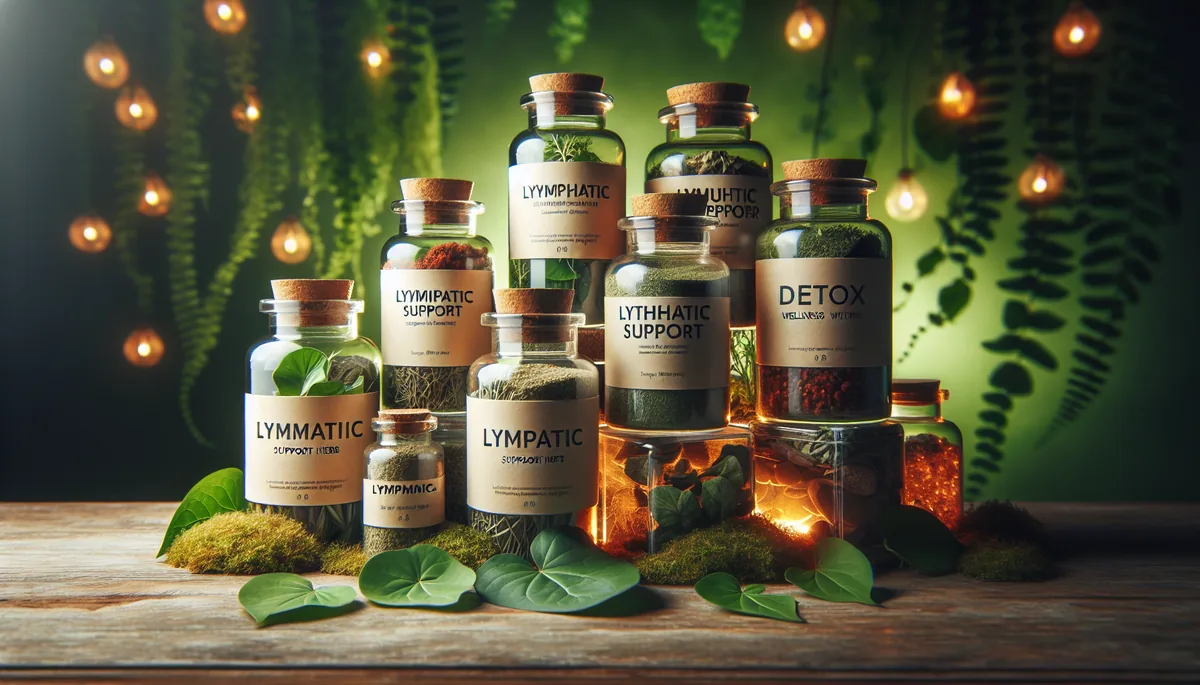
Quick Answer: The lymphatic system doesn’t accumulate ‘toxins’ that need to be flushed — it is continuously filtering lymph fluid through lymph nodes. Supplements marketed as ‘lymphatic cleansers’ are largely based on traditional herbal medicine with minimal clinical evidence. Some herbs like echinacea have immune-modulating properties relevant to lymphatic tissue, but this is not the same as ‘detoxing’ the lymphatic system. Lifestyle factors — movement, hydration, reduced sodium — have much better evidence for supporting lymphatic flow than supplements.
Key Takeaways
- The lymphatic system continuously processes lymph — it doesn’t accumulate toxins requiring supplemental ‘cleansing’
- No clinical trials demonstrate that herbal supplements meaningfully detox or cleanse the lymphatic system
- Echinacea and astragalus have immune-modulating research but this differs from lymphatic cleansing
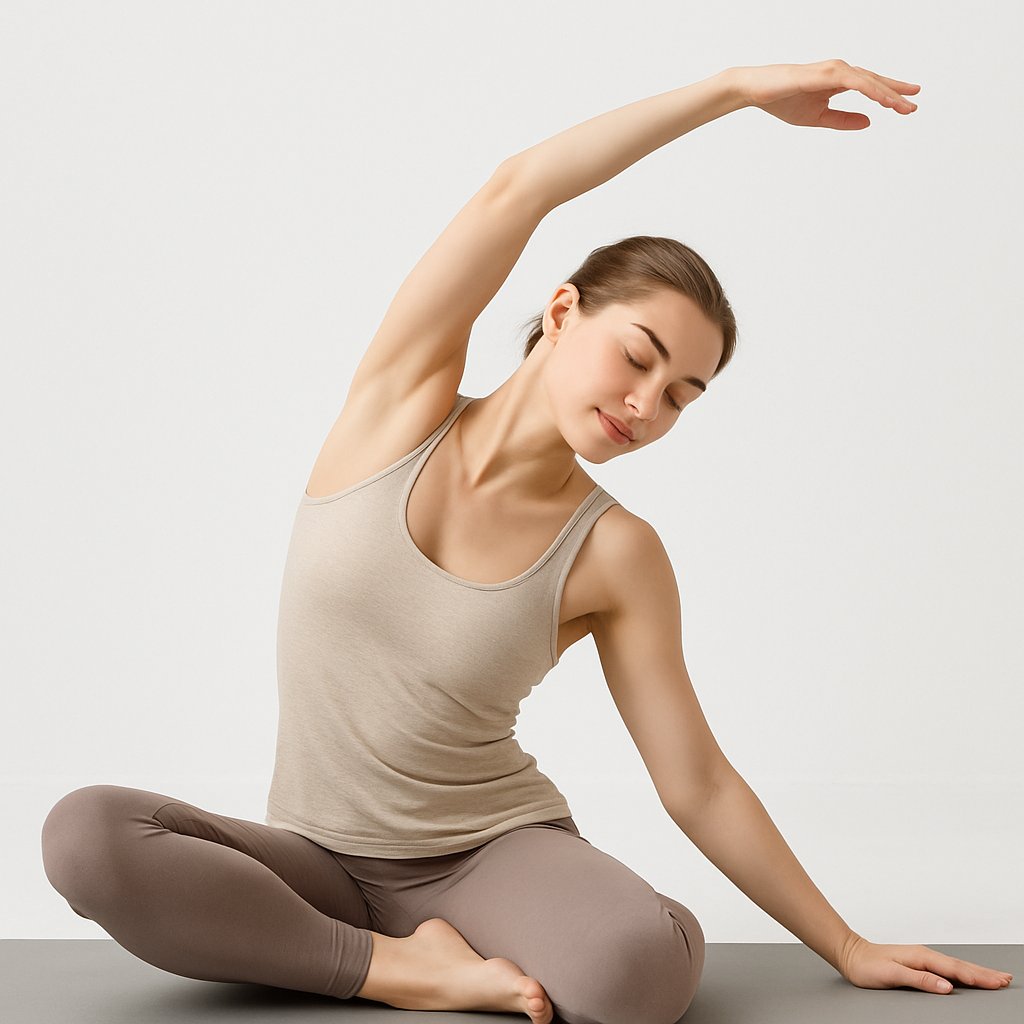
- Exercise, especially rebounding and walking, has the strongest evidence for improving lymphatic circulation
- Manual lymphatic drainage (a physical therapy technique) is the most evidence-supported intervention for lymphedema
Frequently Asked Questions
Do lymphatic cleanse supplements actually work?
There is no clinical evidence that any supplement cleanses or detoxes the lymphatic system. The lymphatic system functions continuously without needing supplemental interventions. Supplements marketed this way rely on vague wellness language, not mechanistic or clinical evidence.
`r`n`r`n
What actually helps the lymphatic system?
Physical movement — especially rebounding, walking, and diaphragmatic breathing — supports lymphatic circulation because the lymphatic system lacks its own pump and relies on muscle contractions. Staying hydrated and reducing sodium helps too. Manual lymphatic drainage is used clinically for lymphedema.
`r`n`r`n
Is dry brushing good for lymphatic drainage?
Dry brushing is claimed to stimulate lymphatic flow by lightly moving skin in the direction of lymph nodes. There is no rigorous clinical evidence for this claim in healthy adults. It is safe and can improve skin texture, but lymphatic drainage benefits are unproven.
“Lymphatic cleanse” is one of the wellness world’s fastest-growing supplement categories. The pitch: your lymphatic system is sluggish, toxins are accumulating, and you need herbal support to flush them out. The reality is more nuanced — your lymphatic system is real and important, but the claims made by most lymph-support supplements range from “plausible but unproven” to “not how lymphatics work.”
This guide separates what’s known from what’s marketed.
`r`n`r`n
How the Lymphatic System Actually Works
Your lymphatic system is a network of vessels, nodes, and organs (spleen, thymus, tonsils) that:
- Returns interstitial fluid to the bloodstream — about 3 liters/day of fluid that leaks from capillaries gets collected and recycled
- Transports immune cells — lymph nodes filter pathogens and activate immune responses
- Absorbs dietary fats — lacteals in the small intestine absorb fat-soluble nutrients
- Removes cellular waste — including dead cells, metabolic byproducts, and some toxins
What moves lymph: Unlike blood, lymph has no pump. It moves via:
- Skeletal muscle contraction (exercise/movement)
- Breathing (diaphragm movement)
- Smooth muscle in lymph vessel walls
- Gravity and body position changes
The key insight: The most effective “lymphatic cleanse” is regular physical movement. Walking, deep breathing, and avoiding prolonged sitting do more for lymphatic flow than any supplement.
`r`n`r`n
The “Lymphatic Cleanse” Supplement Category
Most products in this category contain some combination of:
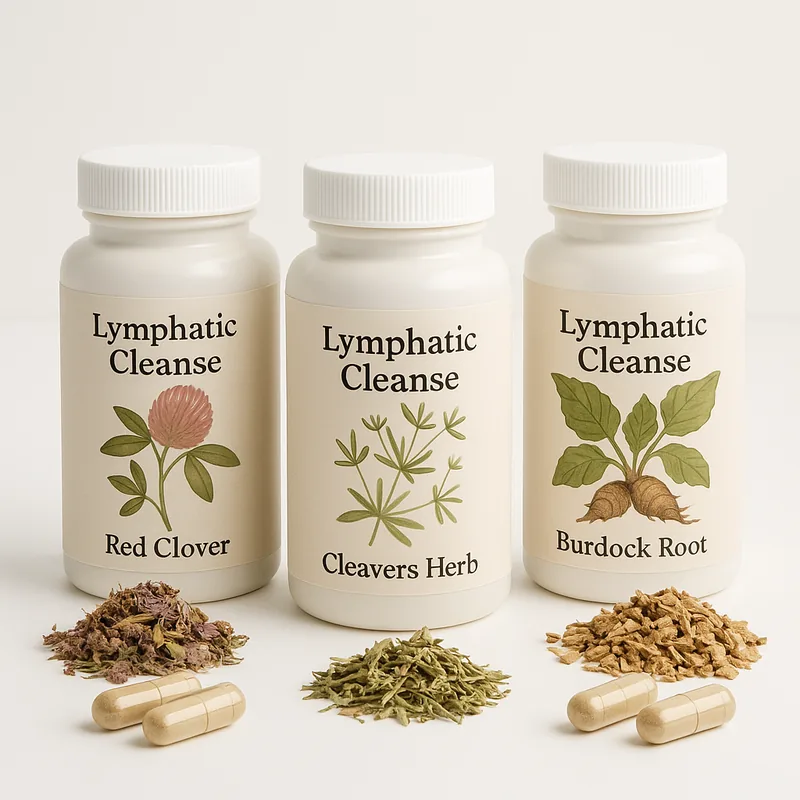
- Cleavers (Galium aparine)
- Red clover (Trifolium pratense)
- Echinacea
- Astragalus
- Burdock root
- Calendula
- Dandelion root
- Milk thistle
- Manjistha (Rubia cordifolia)
Let’s be honest about the evidence for each.
`r`n`r`n
Cleavers (Galium aparine) — The “Lymph Herb”
Traditional use: Western herbalism’s primary “lymphatic herb” for centuries. Used for swollen lymph nodes, skin conditions, and urinary health.
Scientific evidence: Almost none. No human clinical trials for lymphatic function. Contains iridoid glycosides, flavonoids, and coumarins. Some in vitro antioxidant and anti-inflammatory activity. One animal study showed mild diuretic effects.
Evidence level: ⚠️ Traditional use only. No clinical evidence for lymphatic benefits.
`r`n`r`n
Red Clover (Trifolium pratense)
Traditional use: “Blood purifier” and lymphatic support in folk medicine.
Actual evidence: Studied primarily for menopausal symptoms (isoflavone content). A 2015 Cochrane review found weak evidence for hot flash reduction. No studies on lymphatic function.
Evidence level: ⚠️ Studied for other purposes. No lymphatic evidence.
`r`n`r`n
Echinacea
What we know: Echinacea has been studied extensively — for upper respiratory infections, not lymphatic function. A 2014 Cochrane review found modest evidence for shortening cold duration. It does modulate immune cell activity, which involves lymph nodes, but “supporting immune function” ≠ “cleansing the lymphatic system.”
Evidence level: ⚠️ Immune modulation evidence exists. Not lymphatic-specific.
`r`n`r`n
Astragalus (Astragalus membranaceus)
Traditional use: Major TCM (Traditional Chinese Medicine) herb for immune support (“wei qi”).
Scientific evidence: Some evidence for immune modulation in cancer patients (as adjunct to chemotherapy, in Chinese trials). A 2016 systematic review found weak-to-moderate evidence for immune stimulation. No studies on lymphatic flow or drainage.
Evidence level: ⚠️ Immune modulation data (mostly Chinese trials). Not lymphatic-specific.
`r`n`r`n
Burdock Root (Arctium lappa)
Traditional use: “Blood purifier” in Western and TCM traditions.
Scientific evidence: Anti-inflammatory compounds (arctigenin) with some in vitro anticancer activity. A few small trials for skin conditions (limited results). No lymphatic studies.
Evidence level: ⚠️ Anti-inflammatory potential. No lymphatic evidence.
`r`n`r`n
Manjistha (Rubia cordifolia)
Traditional use: Ayurvedic herb specifically for “rakta shodhana” (blood purification) and lymphatic support.
Scientific evidence: Contains anthraquinones with anti-inflammatory and antioxidant properties in vitro. Some animal studies show hepatoprotective effects. No human clinical trials for lymphatic function.
Evidence level: ⚠️ Traditional Ayurvedic use. No human clinical evidence.
`r`n`r`n
What Actually Has Evidence for Lymphatic Health
Exercise and Movement
Evidence level: Strong. Physical activity is the most powerful driver of lymphatic flow. A 2019 systematic review confirmed exercise increases lymph transport velocity and immune cell trafficking. For lymphedema patients, controlled exercise programs are evidence-based standard care.
`r`n`r`n
Manual Lymphatic Drainage (MLD)
Evidence level: Moderate for lymphedema. MLD is a specific massage technique with RCT evidence for reducing swelling in lymphedema (especially post-mastectomy). A 2015 Cochrane review found “low-quality evidence” of benefit. For healthy people without lymphedema? No evidence it does anything special.
`r`n`r`n
Compression Therapy
Evidence level: Strong for lymphedema. Compression garments are standard medical treatment for lymphedema. Not relevant for people with healthy lymphatic systems.
`r`n`r`n
Dry Brushing
Evidence level: None. Widely promoted as a lymphatic stimulant. No clinical trials. The mechanical stimulation probably feels nice and may temporarily increase local circulation, but calling it a lymphatic treatment is unsupported. Anecdotal reports of feeling “energized” or having smoother skin after dry brushing are common but could easily be explained by increased blood flow and exfoliation.
`r`n`r`n
Deep Breathing
Evidence level: Plausible, limited data. The thoracic duct (largest lymph vessel) runs through the diaphragm. Deep breathing creates pressure changes that promote lymph return to the bloodstream. This is physiologically sound but hasn’t been specifically studied as an intervention.
`r`n`r`n
Supplements With Some Relevant Evidence (Not “Lymph Cleanses”)
Bromelain
What it is: Proteolytic enzyme from pineapple stems.
Relevant evidence: A few small trials show bromelain reduces post-surgical and post-injury edema (swelling), which involves lymphatic drainage. A German Commission E monograph approved it for swelling from surgery/trauma. This is NOT the same as “cleansing lymphatics” in healthy people.
Dose: 500–2,000 GDU/day between meals.
`r`n`r`n
Horse Chestnut Extract (Aescin)
What it is: The active compound in horse chestnut.
Relevant evidence: Well-studied for chronic venous insufficiency (CVI) — a 2012 Cochrane review of 17 RCTs confirmed it reduces leg swelling. The mechanism involves reducing capillary permeability, which reduces the fluid burden on the lymphatic system. Again, this is for a specific medical condition, not general “lymph cleansing.”
Dose: 300 mg aescin/day (standardized extract).
`r`n`r`n
Diosmin / Hesperidin
What it is: Citrus bioflavonoids.
Relevant evidence: Strong evidence for chronic venous insufficiency. A pharmaceutical formulation (Daflon) is prescribed in Europe for venous insufficiency and hemorrhoids. Reduces capillary permeability and edema. Tangentially relevant to lymphatic load but not studied for lymphatic function directly.
`r`n`r`n
The Honest Summary
| Claim | Reality |
|---|---|
| “Your lymph system is clogged with toxins” | Not how it works. Healthy lymphatic systems self-regulate. |
| “Herbal lymph cleanses flush toxins” | No clinical evidence for any herbal lymph cleanse formula |
| “You need supplements for lymphatic flow” | Movement, breathing, and hydration are the evidence-based interventions |
| “Traditional herbs support lymph health” | Traditional use exists; clinical validation doesn’t (yet) |
| “Bromelain/horse chestnut help swelling” | Yes — but for specific conditions, not general “lymph cleansing” |
Who Might Benefit from “Lymph Support”
- People with lymphedema — need medical management, not supplements
- Post-surgical patients — bromelain has some evidence for edema
- People with CVI — horse chestnut and diosmin have real evidence
- Sedentary people — need movement, not herbs
Who Is Being Marketed To Unnecessarily
- Healthy people told their lymph system is “sluggish”
- People sold expensive herbal blends for normal physiological processes
- People confusing immune support with lymphatic cleansing
If You Still Want to Try Herbal Lymph Support
We’re not going to pretend the traditional herbs are dangerous — most are quite safe. If you find them helpful (even through placebo or general wellness effects), that’s legitimate. Just know:
- No clinical evidence supports herbal lymph cleansing
- Movement is the real intervention — walk daily, breathe deeply
- Stay hydrated — dehydration genuinely reduces lymph flow
- Don’t skip medical evaluation if you have persistent swelling — it could be something serious
If you buy a product: Look for cleavers, echinacea, or astragalus from reputable brands with third-party testing. Avoid products with wild claims about “flushing toxins” or “decongesting the lymphatic system.”
`r`n`r`n
References
- Hespe GE et al. (2019) Exercise and lymphatic function. Lymphat Res Biol.
- Ezzo J et al. (2015) Manual lymphatic drainage for lymphedema. Cochrane Database Syst Rev.
- Pittler MH & Ernst E (2012) Horse chestnut for CVI. Cochrane Database Syst Rev.
- Brien S et al. (2004) Bromelain as anti-inflammatory/analgesic. Evid Based Complement Alternat Med.
- Karimi A et al. (2015) Red clover isoflavones Cochrane review. Cochrane Database Syst Rev.
- Linde K et al. (2014) Echinacea for preventing common cold. Cochrane Database Syst Rev.
Related Articles
- Chelation Therapy: Medical Uses vs Supplement Hype
- Best Postbiotics for Bloating
- Prebiotics vs Probiotics
- Butyrate Supplements for Gut Lining Support
- Best Gut Health Supplements for Bloating
Sources
- Reviews on lymphatic system function and supplement claims. PubMed search.
- Reviews on detox supplement evidence. PubMed search.
- Reviews on herbal products claimed for lymphatic drainage. PubMed search.
- National Institutes of Health Office of Dietary Supplements. Dietary supplement fact sheets.
- Reviews on lymphedema management. PubMed search.



Leave a Reply