Best Primers for Breakout-Prone Skin
The best primers for breakout-prone skin do one of two jobs well: they reduce excess shine without suffocating the skin, or they smooth texture lightly so foundation sits better over acne. The best formulas are usually lightweight, silicone-balanced rather than greasy, and labeled non-comedogenic.
A primer should make the rest of your makeup easier. If it adds congestion, it failed the assignment.
Quick Answer: The best primers for breakout-prone skin are lightweight, oil-free, and non-comedogenic — silicone-based or water-based formulas that create a smooth base without clogging pores, ideally with niacinamide or salicylic acid.
Does Acne-Prone Skin Even Need Primer?
Not always. Plenty of people with acne do better skipping primer entirely and relying on moisturizer and sunscreen. But a good primer can help in a few specific situations:
- oily skin that breaks down foundation fast
- enlarged-looking pores around the nose or cheeks
- uneven texture where makeup catches
- long-wear days when you need extra grip
Best Primer Types for Breakout-Prone Skin
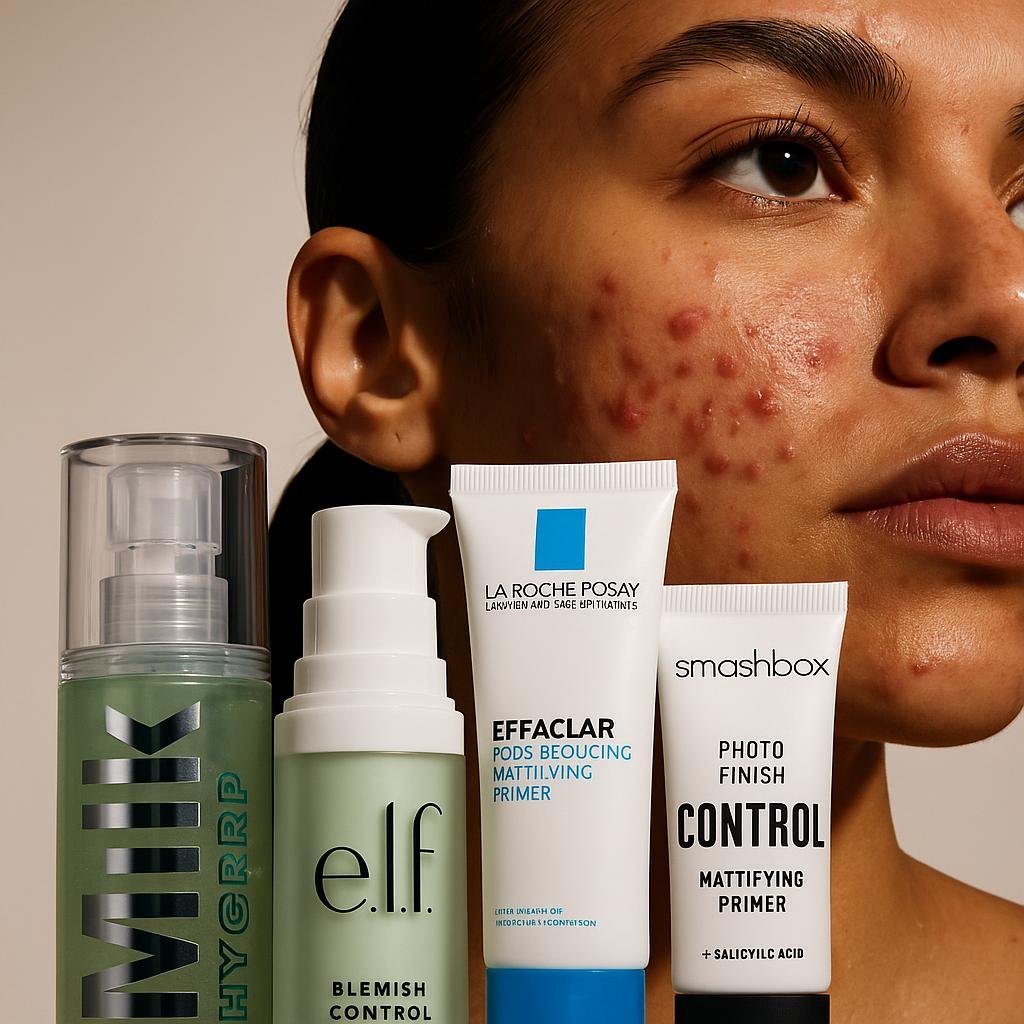
Lightweight pore-blurring primer
A thin pore-blurring primer can help foundation glide over texture without the heavy feel of older silicone putties.
Mattifying gel primer
Great for oily acne-prone skin, especially in humid weather. Gel textures tend to feel fresher and less occlusive.
Hydrating but non-greasy primer
If you use acne treatments that leave dry patches, a lightly hydrating primer can stop foundation from clinging to flakes.
How to Choose the Right Primer for Your Skin Pattern
Oily and breakout-prone
Go for lightweight mattifying or pore-refining formulas. Avoid anything that feels balmy or thick.
Dry from acne treatments
Choose a flexible hydrating primer, but keep it thin. Rich emollient primers can become too much under foundation.
Combination skin with acne zones
Spot-prime only. You do not need one formula all over the face if the issue is mostly the T-zone or textured cheeks.
Primer Mistakes That Trigger Makeup Problems
Applying too much
This is the most common error. Too much primer creates slip and buildup rather than smoothness.
Layering incompatible textures
If your skincare is very dewy and your primer is aggressively mattifying, your base may separate.
Expecting primer to hide active acne
Primer can smooth a little. It cannot erase raised inflamed bumps.
Ingredients and Claims to Prioritize
Look for primers that are:
- non-comedogenic
- lightweight
- oil-free when helpful for your skin type
- fragrance-free if you are easily irritated
- designed for pores, shine control, or texture rather than heavy glow
Dermatology guidance around acne makeup consistently favors careful product selection plus full nightly removal.
How to Apply Primer on Acne-Prone Skin
Use less than a pea-size for the whole face if possible
You need less than beauty influencers suggest.
Press, do not rub aggressively
Pressing helps avoid lifting flakes and redness.
Prime only where needed
Forehead, nose, and textured inner cheeks are common spots. Leave calm areas alone.
Let it set before foundation
A minute of patience prevents pilling.
When Skipping Primer Is the Better Call
Sometimes the best primer for breakout-prone skin is no primer at all. If your moisturizer, sunscreen, and foundation already sit well together, adding another layer may only increase the chance of pilling or congestion. This is especially true for people whose acne-prone skin is also sensitive or treatment-dry. Primer should solve a problem, not create a new one.
FAQ: Best Primers for Breakout-Prone Skin
What kind of primer is best for acne-prone skin?
A lightweight non-comedogenic gel, pore-blurring, or soft-mattifying primer is usually the best choice.
Can primer clog pores?
It can, depending on the formula and how your skin reacts. Non-comedogenic claims help, but real-world wear still matters.
Should oily acne-prone skin use mattifying primer?
Usually yes, especially on the T-zone, but keep the layer thin.
Do I need primer if I already use moisturizer and sunscreen?
Not necessarily. Use primer only if it solves a real wear or texture problem.
Sources
- U.S. Food and Drug Administration. Cosmetics labeling guide.
- Environmental Working Group. Skin Deep cosmetic ingredient safety database.
- European Commission. CosIng: cosmetic ingredient database.
- Reviews on hypoallergenic cosmetics and contact dermatitis. PubMed search.
- Reviews on non-comedogenic cosmetics and acne. PubMed search.
Related Articles
- Best Non-Comedogenic Foundations
- Best Blush and Bronzer for Acne-Prone Skin
- Best Powders for Oily Skin Without Cakiness
- Best Invisible Pimple Patches Under Makeup
- Primer-Serum Hybrids Worth Buying
📚 Part of our Best Acne-Safe Makeup in 2026 hub. Explore all our acne-safe makeup guides.