
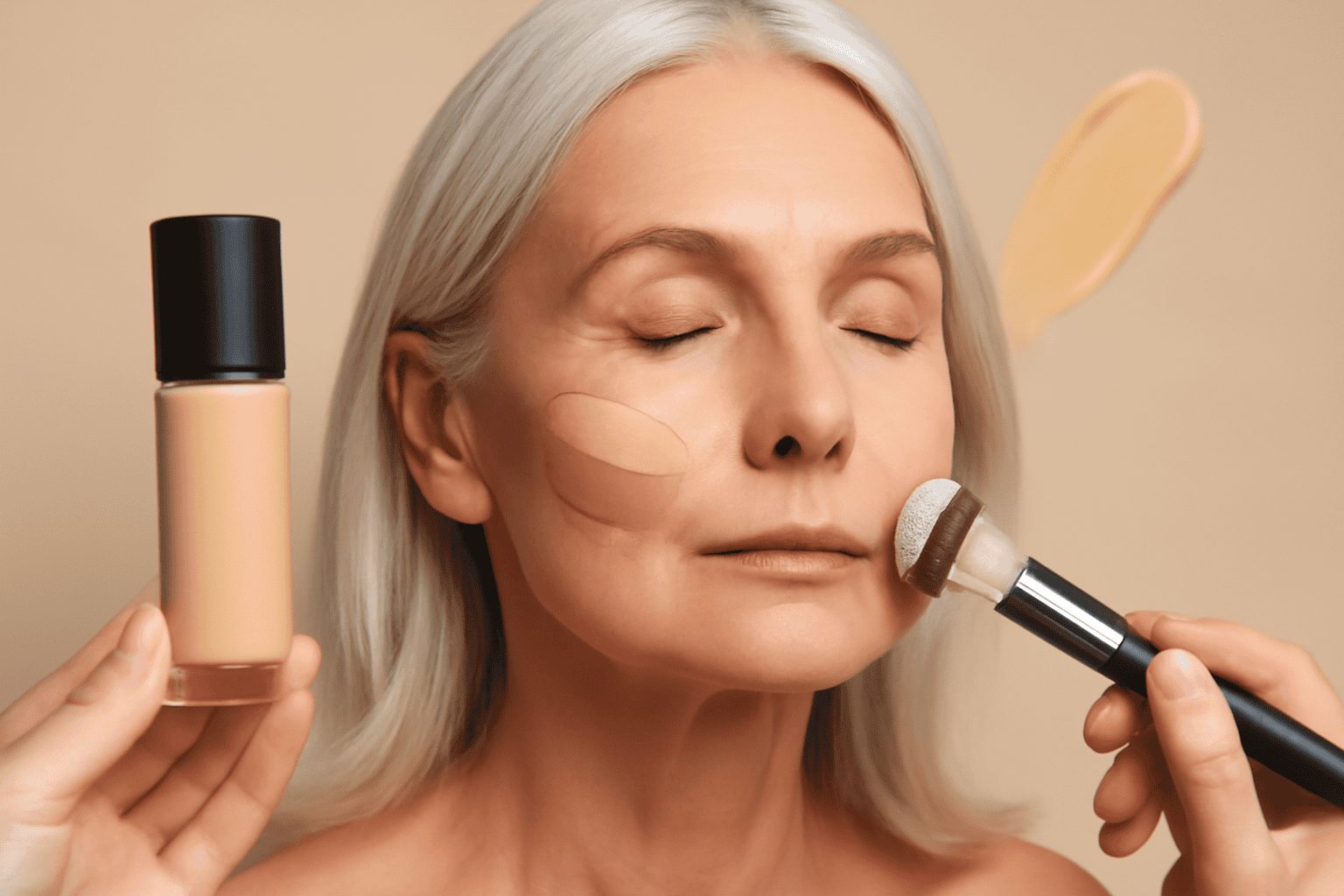
Best Non-Comedogenic Foundations
The best non-comedogenic foundations give coverage without feeling like a second skin made of regret. For acne-prone or congestion-prone skin, the smartest foundation choices are usually lightweight liquids, serum foundations, breathable mineral formulas, and oil-free bases that do not sit heavily in the pores.
The key thing to know is that “non-comedogenic” is a useful signal, not a perfect guarantee. Dermatology literature has shown that finished products can behave differently from individual ingredients alone, which is why skin response still matters more than marketing.
Quick Answer: The best non-comedogenic foundations are oil-free or water-based formulas without pore-blocking ingredients — look for dimethicone, niacinamide, or salicylic acid over coconut oil, isopropyl myristate, or heavy waxes.
What Non-Comedogenic Actually Means
Non-comedogenic means a product is designed not to clog pores or promote comedones. That matters for acne-prone skin, but the label is not absolute.
A classic Cutis paper on non-comedogenic cosmetics linked acne-friendly formulations with lower rates of acne cosmetica in susceptible women. More recent dermatology work also notes that finished products containing ingredients once labeled comedogenic are not automatically comedogenic in real-world formula form.
That is the practical takeaway: labels help, but texture, wear, removal, and your own skin still decide the outcome.
Best Foundation Types for Acne-Prone Skin
Lightweight liquid foundation
This is often the most flexible category. Lightweight liquids spread easily, can be built gradually, and tend to feel less occlusive than thick cream foundations.
Serum foundation
Serum-style formulas often work well for people who want a more skin-like finish with less obvious buildup over active texture.
Mineral foundation
Loose or pressed mineral foundation can be a good option for oilier acne-prone skin, especially if you prefer lighter coverage and careful application.
Soft-matte oil-free foundation
If shine control matters, a soft-matte oil-free formula can help without the suffocating look of older flat matte foundations.
What to Avoid in a Foundation Search
Heavy, waxy, full-coverage formulas every day
High coverage is not always wrong, but thicker textures can feel more occlusive and may sit poorly on inflamed breakouts.
Fragrance-forward formulas
Acne-prone skin is often sensitive skin too. Extra fragrance is usually not helping.
Trend formulas that emphasize glow over wear
Some dewy foundations look beautiful for an hour and then slide around clogged areas by noon.
How to Choose a Better Acne-Safe Foundation
Look for these clues
Prioritize formulas described as:
- non-comedogenic
- oil-free or lightweight
- suitable for acne-prone skin
- breathable or skin-like
- fragrance-free when possible
Think about finish honestly
If you are very oily, a radiant finish may not age well. If you are using drying acne treatments, an ultra-flat matte finish may emphasize flakes.
Build coverage strategically
Often the better move is a sheer or medium foundation plus spot concealer instead of one thick high-coverage layer everywhere.

Application Tips That Reduce Breakout Risk
Start with clean tools
Dirty sponges quietly sabotage acne-prone skin.
Use less than you think
A thin, even layer usually looks better over acne texture than a heavy coat.
Let skincare settle first
If sunscreen and moisturizer are still sliding around, foundation will grab unevenly.
Remove it fully at night
AAD acne guidance is clear that makeup is okay if you choose carefully and remove it every day.
FAQ: Best Non-Comedogenic Foundations
What type of foundation is best for acne-prone skin?
Lightweight liquid, serum, mineral, or oil-free soft-matte foundations are usually the best starting points because they offer coverage without excessive heaviness.
Does non-comedogenic mean it will not break me out?
No. It lowers risk, but your skin can still react based on the full formula, your skincare, and how the product wears on you.
Is mineral foundation good for acne?
Often yes, especially for oily skin, as long as the formula is not overly drying or heavily fragranced.
Should acne-prone skin avoid full-coverage foundation?
Not always, but many people do better using thinner layers and adding concealer only where needed.
Key Takeaways
- Non-comedogenic means formulated to avoid blocking pores — always verify this on acne-prone skin.
- Water-based and silicone-based foundations are generally safer than oil-based formulas.
- Lightweight to medium coverage builds better than heavy full-coverage on acne-prone skin.
- Niacinamide in foundation helps control sebum production and reduce redness over time.
- Avoid foundations with coconut oil, isopropyl myristate, or heavy waxes in the first five ingredients.
- Satin or natural-finish foundations are more forgiving on breakout-prone skin than full matte.
Related Articles
- Best Primers for Breakout-Prone Skin
- Best Blush and Bronzer for Acne-Prone Skin
- Best Sweat-Proof Foundation for Heat and Oil
- Best Vegan Foundations for Mature Skin
- Best Powders for Oily Skin Without Cakiness
Sources
- Note: peer-reviewed support for this claim was not identified in available literature.
- Environmental Working Group. Skin Deep cosmetic ingredient safety database.
- European Commission. CosIng: cosmetic ingredient database.
- Allergic contact dermatitis from pentylene glycol in ‘hypoallergenic’ eye cosmetics. Contact dermatitis. 2023. PMID: 36125394.
- Non-comedogenic cosmetics. Cutis. 1976. PMID: 138532.
📚 Part of our Best Acne-Safe Makeup in 2026 hub. Explore all our acne-safe makeup guides.



Leave a Reply