
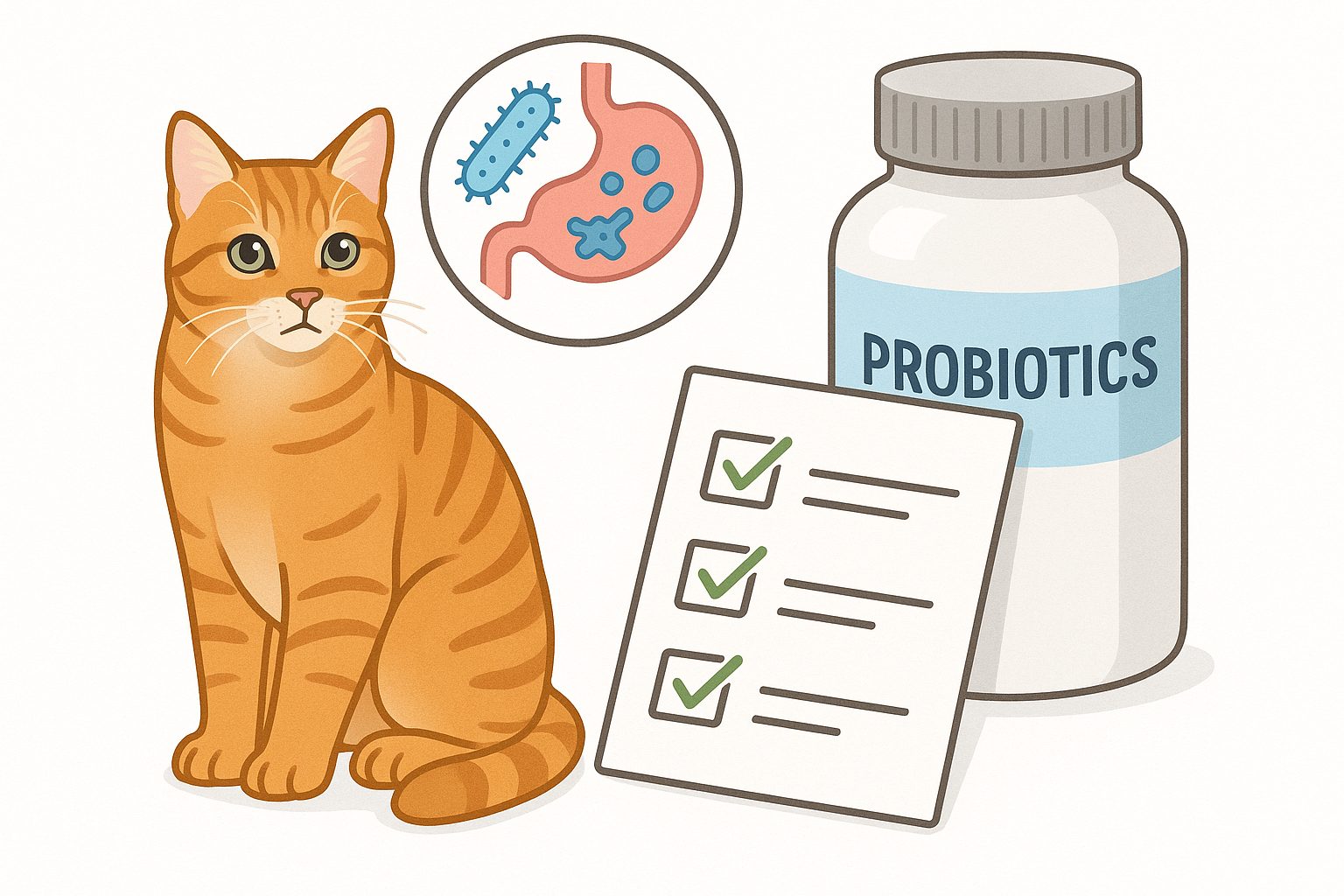
Digestive issues are common in cats, but they are not all the same. One cat has stress diarrhea, another has antibiotic-related loose stool, and another has vomiting plus weight loss from a more serious problem. That is why probiotics for cats with digestion issues can be helpful in some situations and not nearly enough in others.
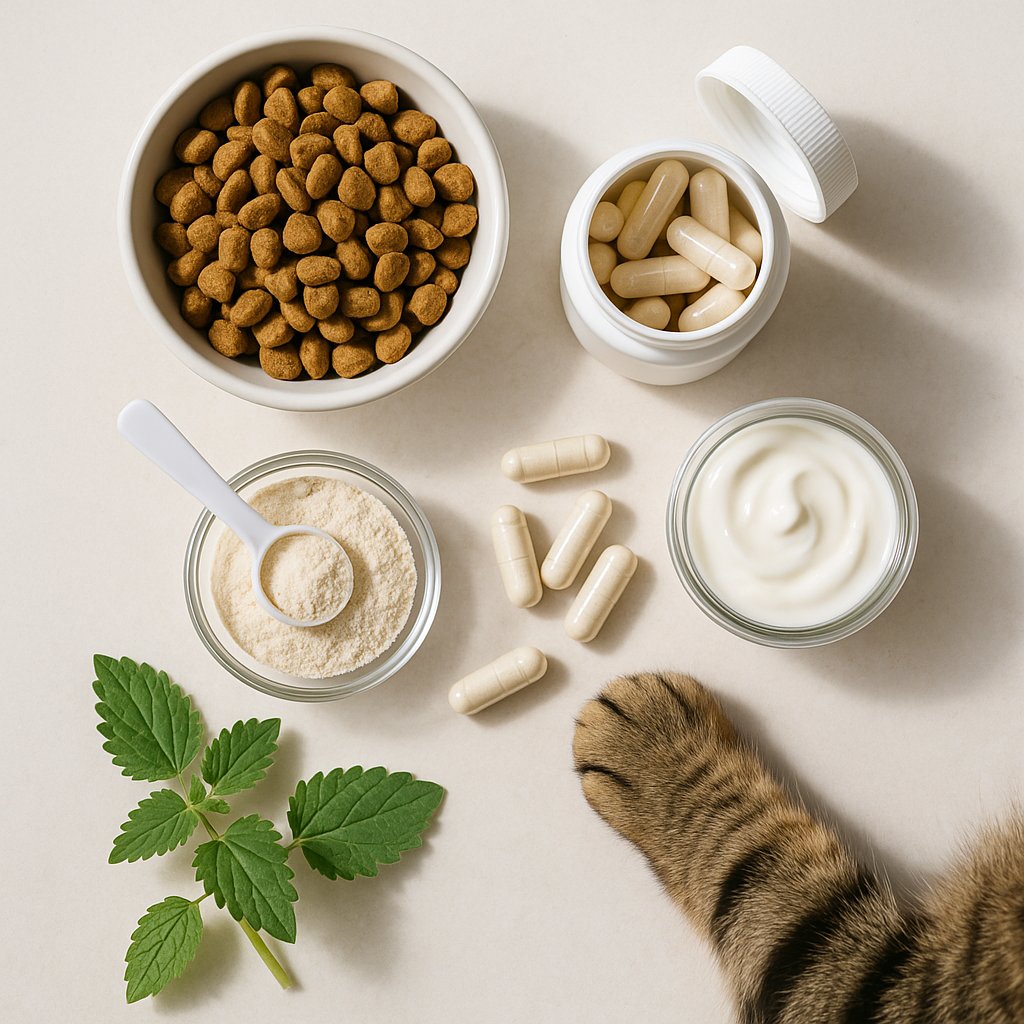

Feline gastrointestinal conditions — including chronic vomiting, diarrhea, IBD, and constipation — are among the most common reasons cats visit veterinarians, and probiotics are frequently discussed as supportive interventions. Veterinary evidence for feline probiotics is more limited than for dogs or humans, but several studies support their use for acute diarrhea (shortening duration), chronic enteropathy management, and post-antibiotic microbiome recovery. Species-specific probiotic strains matter: Enterococcus faecium (FortiFlora, Purina) and Bifidobacterium animalis are the best-studied feline strains. Human probiotic strains colonize the feline gut poorly and are not recommended. FortiFlora is the most veterinary-recommended and research-backed feline probiotic available OTC.
- Enterococcus faecium SF68 (the active strain in Purina Pro Plan FortiFlora) is the most clinically studied probiotic strain for cats — a 2011 veterinary RCT found FortiFlora significantly reduced fecal score and diarrhea duration in cats with chronic diarrhea vs. placebo.
- Human Lactobacillus strains (Lactobacillus acidophilus, L. rhamnosus GG, etc.) are poorly adapted to the feline gut environment and show limited colonization in studies — these strains survive transit but don’t establish meaningful populations, reducing their therapeutic utility compared to feline-specific strains.
- Feline IBD (inflammatory bowel disease) and small cell lymphoma share overlapping presentations — chronic vomiting, weight loss, diarrhea — and require biopsy for definitive diagnosis. Probiotics may support symptom management in IBD-confirmed cats but are not diagnostic tools and should not delay appropriate veterinary workup.
- Prebiotics (fomenting fiber substrates like FOS, inulin, psyllium) complement probiotics by feeding beneficial bacteria — pumpkin puree (plain, not pie filling) is a commonly recommended prebiotic/fiber adjunct for cats with diarrhea or constipation and has good palatability for most cats.
- Probiotic quality varies enormously in pet products: colony-forming unit (CFU) counts on packaging often don’t reflect actual viable counts at time of use. Look for products with verified potency through expiration date, storage stability data, and veterinary-brand sourcing (Purina, Nutramax, VetriScience) rather than generic supplement brands.
The good news is that certain probiotics have shown promise in feline GI health. The honest limitation is that strain-specific evidence in cats is still smaller than many owners assume.
The short answer
A good feline probiotic may help with:
- mild diarrhea or inconsistent stool quality
- recovery after GI upset
- support during or after antibiotics
- stress-related digestive disruption
They are not a cure for persistent vomiting, blood in stool, severe lethargy, intestinal parasites, or unexplained weight loss.
How probiotics may help cats
They can support microbial balance
Probiotics are live microorganisms intended to help support a healthier intestinal environment. In cats, they are commonly used to improve stool consistency, support digestion during stress, and aid recovery after GI disruptions [1].
They may support gut barrier and immune function
The feline gut is tightly linked to immune activity. Some probiotic strains may help moderate inflammation and improve resilience in the intestinal lining [2].
Which cats may benefit most?
Cats with short-term diarrhea
For mild, uncomplicated diarrhea, a feline-specific probiotic can be a reasonable adjunct while you monitor hydration and appetite.
Cats on antibiotics
Antibiotics may disturb gut flora. A probiotic may support stool quality during recovery, though timing should be discussed with your veterinarian.
Stress-sensitive cats
Travel, boarding, household changes, and even a new pet can throw off a cat’s digestion. These are common situations where probiotics are worth considering.
What to look for in a cat probiotic
Specific strains and CFU count
Look for a product that tells you the actual strains used, not just “proprietary probiotic blend.” Common companion-animal strains may include Enterococcus faecium or certain Bifidobacterium and Lactobacillus species [1][3].
Feline or veterinary-targeted formulation
Cats are not tiny dogs. A product designed for feline use is usually the safer default.
Stability and storage guidance
If the company is vague about viability, expiration, or storage, that is not encouraging.
When probiotics are not enough
Repeated vomiting changes the equation
If the main issue is vomiting rather than stool quality, the cause may be hairballs, inflammatory disease, kidney issues, pancreatitis, food intolerance, or something else that needs medical workup.
Chronic weight loss is a red flag
Cats do not have a lot of room for “watch and wait” when appetite or weight is declining.
Constipation may need a different approach
For some cats, hydration, fiber strategy, or medication matters more than probiotics alone.
Tips for giving probiotics to cats
Start slowly if needed
Some cats tolerate powders mixed into food; others do better with capsules, paste, or sachets.
Give the product enough time
For mild issues, a few days may show a difference. For recurring stool inconsistency, a 2- to 4-week trial is more realistic.
Keep expectations reasonable
A probiotic can support digestive balance. It does not erase every cause of diarrhea.
FAQ
Do probiotics help cats with digestive issues?
They can, especially for mild diarrhea, stool inconsistency, stress-related GI upset, and antibiotic-associated digestive disruption.
What is the best probiotic for cats?
The best choice is usually a feline or veterinary product with clearly listed strains, viable counts, and good quality-control signals.
Can I give my cat human probiotics?
It is better to use a cat-specific or veterinary product because strain choice, palatability, and dosing are more appropriate.
How long does it take for cat probiotics to work?
Some cats improve within days, but a 2- to 4-week trial is often a fairer test for recurring issues.
- Bybee SN, Scorza AV, Lappin MR. Effect of the probiotic Enterococcus faecium SF68 on presence of diarrhea in cats and dogs housed in an animal shelter. J Vet Intern Med. 2011;25(4):856-860. doi:10.1111/j.1939-1676.2011.0738.x.
- Suchodolski JS. Diagnosis and interpretation of intestinal dysbiosis in dogs and cats. Vet J. 2016;215:30-37. doi:10.1016/j.tvjl.2016.05.003.
- García-Mazcorro JF, Suchodolski JS, Jones KR, et al. Effect of a multi-species synbiotic on fecal microbiome and metabolomic profiles of healthy cats and dogs. J Feline Med Surg. 2017;19(7):716-722. doi:10.1177/1098612X16643232.
—
This article is for informational purposes only and does not replace veterinary advice. Seek prompt care for repeated vomiting, blood in stool, dehydration, or loss of appetite in cats.
Related Articles
- Best Pet Supplements for Dogs and Cats
- Omega-3 Supplements for Pets
- Multivitamins for Picky Dogs
- Calming Supplements for Anxious Dogs
- Best Joint Supplements for Senior Dogs
Sources
- Hill C, Guarner F, Reid G, et al. The ISAPP consensus statement on the scope and appropriate use of the term probiotic. Nat Rev Gastroenterol Hepatol. 2014;11(8):506-514.
- Reviews on feline probiotics and gastrointestinal health. PubMed search.
- Clinical studies on probiotic use for diarrhea and digestive support in cats. PubMed search.
- Reviews on probiotic safety and use in dogs and cats. PubMed search.
- Reviews on the feline microbiome and digestive health. PubMed search.
📚 Part of our Best Pet Supplements hub. Explore all our pet health guides.


Leave a Reply