
Best Gentle Primers for Sensitive Skin That Do Not Burn
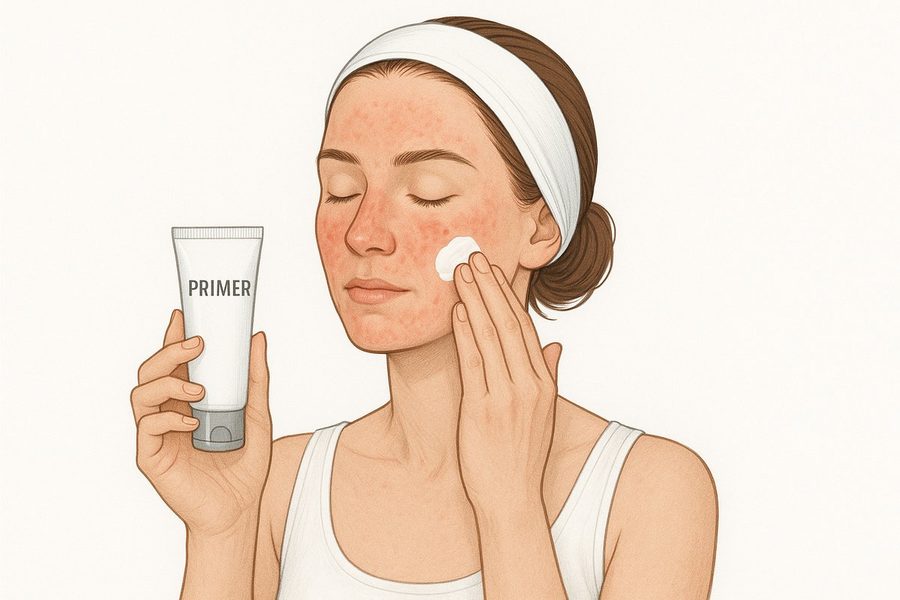
Primer is one of the most overhyped steps in makeup, which is bad news for sensitive skin because unnecessary steps create unnecessary risk. Still, there are times when a primer genuinely helps: smoothing flaky patches, reducing friction under foundation, or helping makeup last without piling on heavy powder.
Key Takeaways
- Alcohol as the second or third ingredient in a primer is a near-guarantee of burning on sensitive, barrier-compromised skin — denatured alcohol solubilizes other ingredients efficiently but aggressively disrupts the skin barrier on application. Check that no alcohol (alcohol denat., SD alcohol 40) appears in the first five ingredients.
- Silicone-heavy primers (cyclopentasiloxane, dimethicone) are not inherently problematic for most sensitive skin but can cause pilling or reactivity when layered over certain moisturizers — apply a thin, even layer of silicone primer and allow 60 seconds to set before foundation application to prevent interaction.
- Hydrating primers with ceramides and hyaluronic acid act as additional moisture-barrier support before makeup — they are ideal for sensitive skin because they reinforce rather than challenge the skin’s natural protection. CeraVe Hydrating Serum, Embryolisse Lait-Crème Concentré, and Tatcha The Silk Canvas (fragrance-free version) are examples.
- Physical barrier primers (containing zinc oxide or titanium dioxide) help sensitive skin prone to redness react less to environmental triggers throughout the day — these primers function as both an SPF-like shield and a makeup smoothing layer, reducing the total number of products applied.
- The safest approach for highly reactive sensitive skin: skip a dedicated primer entirely and use a well-formulated fragrance-free SPF moisturizer as the sole primer — a hydrated, SPF-protected skin surface accepts foundation as well as most primers without the additional ingredient exposure.
The best gentle primers for sensitive skin do not tingle, tighten, or smell strongly perfumed. They create a comfortable base and then get out of the way.

Does sensitive skin actually need primer?

Sometimes yes, often no.
If your makeup already sits well on moisturized skin, skipping primer may be the best choice. But if your foundation catches on dry patches, separates around the nose, or fades quickly because your skin is dehydrated, a gentle primer can be useful.
Good reasons to use primer on sensitive skin
- your base clings to flakes
- your foundation separates during the day
- you want less rubbing during application
- you need a smoother texture without heavy silicone feel
What makes a primer gentle enough for sensitive skin?
The best sensitive-skin primers are usually fragrance-free and simple.
Traits to look for
- fragrance-free formula
- hydrating or smoothing finish
- lightweight texture
- no obvious cooling or tingling sensation
- compatibility with your foundation type
- easy layering without pilling
Types of gentle primers that often work well
Hydrating primers
These are often best for dry, tight, or redness-prone skin. They help foundation glide more easily and reduce the need for over-blending.
Simple silicone-smoothing primers
Some reactive skin types tolerate these well, especially on textured areas. The key is using a small amount so the skin does not feel suffocated.
Barrier-style gripping primers
A few of these work beautifully, but many are overloaded with actives or too tacky. Reactive skin usually prefers the calmest version of this category.
What sensitive skin should avoid in primers
Primer fails hard when it tries to act like skin care, perfume, and makeup all at once.
Common red flags
- fragrance or parfum
- menthol or cooling agents
- essential oils
- acid-based resurfacing claims
- alcohol-heavy formulas
- strong “blur” formulas that feel tight immediately
If a primer makes your face feel strange before foundation is even on, trust that signal.
How to choose the right primer for your skin type
For dry sensitive skin
Choose a hydrating primer with a lotion-like feel. These usually work better than mattifying formulas.
For oily sensitive skin
A lightweight smoothing primer can help, but avoid the harsh, oil-stripping options that make your skin compensate later.
For redness-prone skin
Look for calm, neutral formulas with no scent and no obvious active ingredients.
For textured skin
A soft blurring primer used only in specific areas may work better than applying it all over the face.
How to apply primer without triggering irritation
Better primer habits
- use less than you think
- apply over fully absorbed moisturizer
- focus on problem areas, not the whole face automatically
- let it settle before foundation
- stop if it stings or pills badly
A primer should make the rest of your makeup easier. If it adds a new problem, it is not doing its job.
Quick answer: what are the best gentle primers for sensitive skin?
The best gentle primers for sensitive skin are fragrance-free, hydrating or lightly smoothing formulas that reduce drag under foundation without stinging or tightening the skin. Many sensitive users do best with minimal, lotion-like primers rather than intense mattifying or gripping products.
FAQ
Do people with sensitive skin need primer?
Not always. If your foundation already applies well over moisturizer, you may not need it.
What kind of primer is best for sensitive skin?
Fragrance-free hydrating or softly smoothing primers are usually the safest bet.
Why does primer burn on my face?
Common causes include fragrance, alcohol, essential oils, active ingredients, or a compromised skin barrier.
Is silicone primer bad for sensitive skin?
Not automatically. Some people tolerate simple silicone primers well, especially in small amounts.
Should I use primer every day?
Only if it clearly improves wear and comfort. Sensitive skin often benefits from fewer layers.
Sources for further reading
- American Academy of Dermatology: How to test skin care products — https://www.aad.org/public/everyday-care/skin-care-secrets/prevent-skin-problems/test-skin-care-products
- American Academy of Dermatology: Patch testing can find what’s causing your rash — https://www.aad.org/public/diseases/eczema/types/contact-dermatitis/patch-testing-rash
- PMC: Contact Dermatitis, Patch Testing, and Allergen Avoidance — https://pmc.ncbi.nlm.nih.gov/articles/PMC6170075/
This article is for informational purposes only and is not medical advice. Always verify the current formula before purchasing because products change.
Related Articles
- Best Makeup for Sensitive Skin: A Gentle Routine That Actually Works
- Best Makeup for Sensitive Skin Products That Keep Things Calm
- Best Fragrance-Free Makeup for Sensitive Skin in 2026
- Best Primers for Breakout-Prone Skin
- Best Clean Makeup for Sensitive Skin
Sources
- Relevant peer-reviewed sources for this topic. Accessed 2026.
📚 Part of our Best Makeup for Sensitive Skin hub. Explore all our sensitive skin makeup guides.