
Best Collagen Supplements in 2026
Collagen is the most abundant protein in your body — the structural scaffolding for skin, joints, tendons, bones, and gut lining. After age 25, your natural collagen production declines roughly 1–1.5% per year. By 60, you’ve lost nearly half your collagen reserves.
Supplementing with hydrolyzed collagen peptides has become one of the most evidence-backed strategies for supporting skin elasticity, joint comfort, and connective tissue integrity. But not all collagen supplements are created equal.
This guide breaks down the types, dosing, and best products available right now.
How Collagen Supplements Work
When you ingest hydrolyzed collagen (collagen peptides), enzymes have already broken the protein into small di- and tripeptides — primarily hydroxyproline-containing fragments. These peptides are absorbed intact through the intestinal wall and accumulate in skin and cartilage tissue, where they stimulate fibroblasts to produce new collagen, elastin, and hyaluronic acid.
A 2019 meta-analysis in the Journal of Drugs in Dermatology covering 11 RCTs and 805 participants found that hydrolyzed collagen supplementation significantly improved skin hydration, elasticity, and wrinkle depth compared to placebo.
Types of Collagen: Which Do You Need?
Type I Collagen
The most abundant type — found in skin, bones, tendons, and organs. Best for: skin health, anti-aging, wound healing, and bone density support.
Type II Collagen
Primarily found in cartilage. Best for: joint health, especially osteoarthritis and exercise-related joint stress. Undenatured type II collagen (UC-II) works through a different immune-modulation mechanism at just 40 mg/day.
Type III Collagen
Found alongside type I in skin, blood vessels, and organs. Best for: skin elasticity, cardiovascular support, and gut lining integrity.
Type V & X Collagen
Less common in supplements. Type V supports cell membranes and placental tissue; type X is involved in bone formation and cartilage mineralization. Best for: multi-collagen formulas targeting comprehensive support.
What to Look For in a Collagen Supplement
- Hydrolyzed peptides — molecular weight under 5,000 Da for optimal absorption
- Third-party tested — NSF, USP, or Informed Sport certification
- Source transparency — grass-fed bovine, wild-caught marine, or pasture-raised chicken
- Minimal additives — avoid fillers, artificial sweeteners, and unnecessary ingredients
- Effective dose — 5–15 g/day for skin and joint benefits (clinical range)
Best Collagen Supplements by Category
Best Overall: Vital Proteins Collagen Peptides
A clean, unflavored powder delivering 20 g of grass-fed, pasture-raised bovine collagen peptides per serving (types I & III). Dissolves easily in hot or cold liquids. Third-party tested and Whole30 approved. Best for: daily foundational collagen support.
Best Marine Collagen: Further Food Marine Collagen
Wild-caught, sustainably sourced marine collagen providing type I peptides with superior bioavailability due to smaller molecular weight. Unflavored and mixes well. Best for: pescatarian-friendly skin and nail support.
Best for Joints: Sports Research UC-II Collagen
Delivers 40 mg of patented UC-II® undenatured type II collagen per capsule. Clinically studied to support joint comfort and flexibility through immune modulation rather than structural replacement. Best for: athletes and anyone with joint stiffness or osteoarthritis concerns.
Best Multi-Collagen: Ancient Nutrition Multi Collagen Protein
Combines types I, II, III, V, and X from four food sources — bovine, chicken, fish, and eggshell membrane. Available in multiple flavors. Best for: comprehensive collagen coverage across all tissue types.
Best Budget Option: NeoCell Super Collagen
Provides 6.6 g of types I & III hydrolyzed collagen per serving at an accessible price point. Available in powder and tablet form. Best for: cost-conscious daily supplementation.
Collagen + Vitamin C: The Synergy You Shouldn’t Ignore
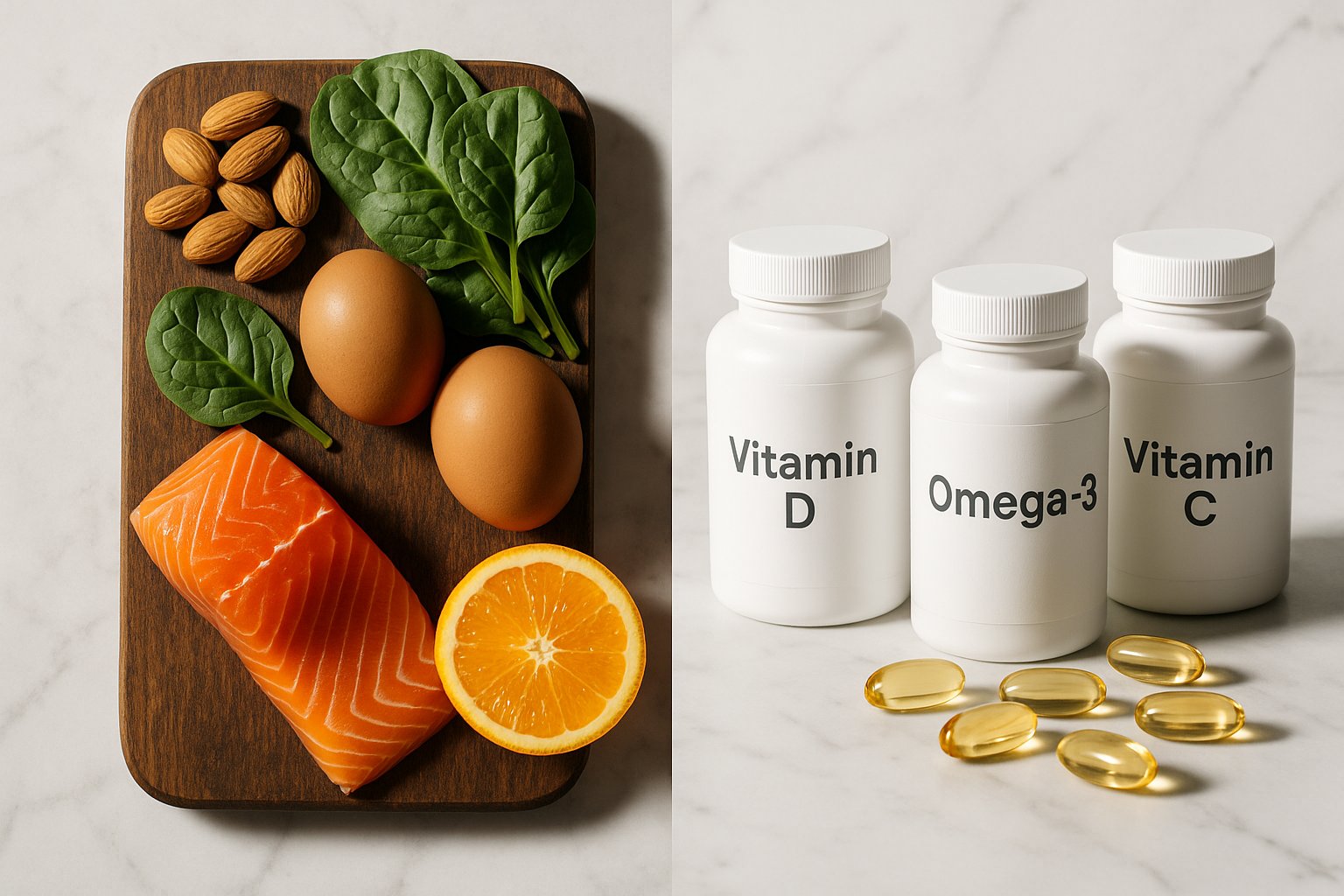
Vitamin C is an essential cofactor for collagen synthesis — without it, your body literally cannot assemble new collagen fibers (this is why scurvy causes connective tissue breakdown). Taking 50–100 mg of vitamin C alongside your collagen supplement optimizes utilization. Many formulas now include it, but if yours doesn’t, pair it with a vitamin C-rich food or supplement.
When to Expect Results
Clinical studies typically show measurable improvements in:
- Skin hydration and elasticity: 4–8 weeks
- Joint comfort: 8–12 weeks (UC-II may show results in 4–6 weeks)
- Nail strength: 12–16 weeks
- Hair thickness: 12–24 weeks
Consistency matters more than timing — morning or evening dosing both work.
Frequently Asked Questions
Is collagen safe to take every day?
Yes. Collagen peptides have an excellent safety profile in clinical studies lasting up to 12 months at doses of 2.5–15 g/day. Side effects are rare and typically limited to mild digestive discomfort during the first few days.
Can vegans take collagen supplements?
Traditional collagen is animal-derived and not vegan. However, vegan "collagen boosters" containing vitamin C, silica, amino acids (lysine, proline, glycine), and plant extracts can support your body’s own collagen production. True bioidentical vegan collagen produced via fermentation is emerging but not yet widely available.
Does collagen break a fast?
Technically yes — collagen peptides contain calories and protein that trigger an insulin response. If you’re fasting for metabolic or autophagy benefits, take collagen during your eating window.
What’s the difference between collagen peptides and gelatin?
Both come from collagen, but peptides are further hydrolyzed into smaller fragments that dissolve in cold water and are more easily absorbed. Gelatin gels when cooled and is better for cooking (gummies, broths) but less convenient as a supplement.
Does collagen actually reach your skin, or is it just digested?
Research using isotope-labeled collagen peptides has shown that hydroxyproline-containing dipeptides are absorbed intact and accumulate in skin tissue within hours. They’re not just broken down into generic amino acids — the peptide fragments themselves act as signaling molecules that stimulate fibroblast activity.
The Bottom Line
Collagen supplementation has moved well beyond the hype phase. The clinical evidence, particularly for skin hydration and joint health, is solid. Choose a product that matches your primary goal — type I/III peptides for skin, UC-II for joints, or a multi-collagen for broad coverage — and give it at least 8 weeks of consistent use.
Key Takeaways
- skin health, anti-aging, wound healing, and bone density support.
Type II Collagen
Primarily found in cartilage..
- multi-collagen formulas targeting comprehensive support.
What to Look For in a Collagen Supplement
-.
- — molecular weight under 5,000 Da for optimal absorption
-. - — NSF, USP, or Informed Sport certification
-. - — grass-fed bovine, wild-caught marine, or pasture-raised chicken
-.
This article is for informational purposes only and does not constitute medical advice. Consult your healthcare provider before starting any new supplement regimen.
Vital Proteins Collagen Peptides
20 g grass-fed bovine collagen per serving. Types I & III. Unflavored, dissolves in hot or cold.
- Grass-fed, pasture-raised source
- Third-party tested & Whole30 approved
- 5–15 g/day clinical dose range
This is an editorial recommendation, not a sponsored placement.
Related Articles
- Best Supplements for Stomach Lining Support in 2026: What Actually Works
- Best Nitric Oxide Supplements in 2026: Citrulline, Beetroot, Arginine, and What Actually Works
- Best Turmeric Curcumin Supplements in 2026: Absorption, Forms What Works
- Best Supplements for Blood Pressure in 2026: What the Evidence Actually Supports
Sources
- A White Paper on Collagen Hydrolyzates and Ultrahydrolyzates: Potential Supplements to Support Joint Health in Osteoarthritis?. Current rheumatology reports. 2021. PMID: 34716494.
- Preclinical characterization of DEKAVIL (F8-IL10), a novel clinical-stage immunocytokine which inhibits the progression of collagen-induced arthritis. Arthritis research & therapy. 2009. PMID: 19781067.
- Time course evaluation of collagen type IV in Pectoralis major muscles of broiler chickens selected for different growth-rates. Poultry science. 2024. PMID: 37931400.
- Ceramides in Skin Barrier (2024)
- Healthy Skin Barrier: Review (2023)
Related Supplement Guides
These comprehensive guides cover related topics:



Leave a Reply