
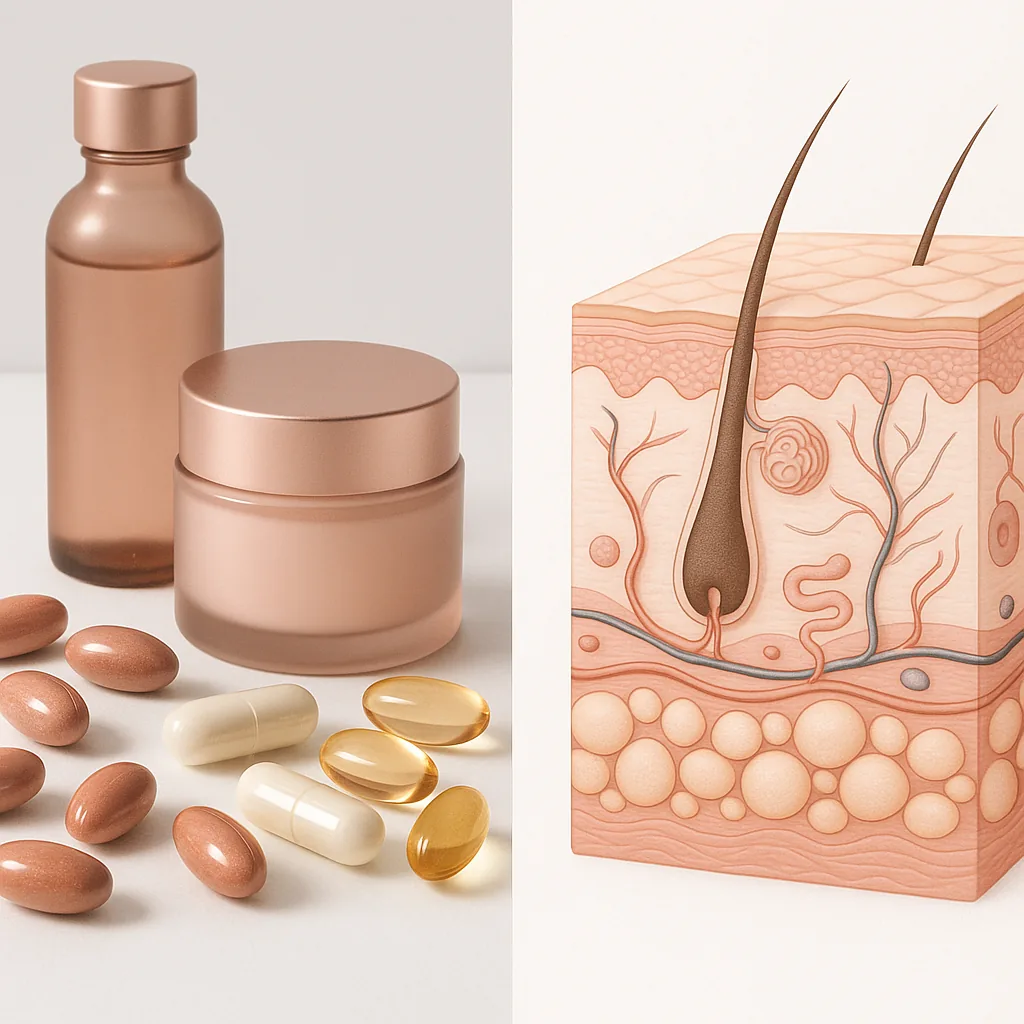
The beauty industry wants to sell you a cream. The science says your skin starts somewhere else entirely.
Walk down any drugstore aisle and you’ll find hundreds of products promising transformation – serums, masks, toners, eye creams with ingredients lists longer than a lease agreement. Most of them do something. A few do a lot. But the conversation almost never begins where skin health actually begins: inside your body.
Your skin is the largest organ you have. It reflects what you eat, how you sleep, whether your gut is inflamed, whether your hormones are balanced, and what your collagen production looks like at the cellular level. Treating it purely as a surface problem is like painting over rust. You might like the look for a while, but the underlying issue keeps progressing.
This guide bridges both worlds – the biochemistry of beauty from within and the evidence-backed actives that work from without. By the end, you’ll know exactly what to prioritize, what to skip, and why the order of operations matters more than most people realize.
Beauty From Within: What the Research Actually Says
Collagen – Not All Hype
Collagen is the structural protein that keeps skin firm, plump, and elastic. By your mid-20s, production begins a slow decline. By 40, it’s measurable. By 60, it’s visible.
Supplemental collagen – specifically hydrolyzed collagen peptides – has better evidence behind it than most beauty supplements. A 2019 review in the Journal of Drugs in Dermatology found that oral collagen supplementation improved skin elasticity, hydration, and dermal collagen density. The mechanism makes sense: hydrolyzed peptides are small enough to be absorbed, and they appear to stimulate fibroblasts – the cells that produce collagen – through a feedback signal.
What to look for: Type I and Type III collagen peptides, typically 5-10g daily. Marine collagen (from fish) has smaller peptides and slightly better absorption data than bovine in some studies, though both show benefits. See our deep-dives on collagen powder and best collagen supplements for 2026.
Biotin – A Reality Check
Biotin has been marketed heavily for hair, skin, and nails. The honest answer: if you’re deficient, supplementing will absolutely help. If you’re not deficient (most people aren’t), the effect is modest at best.
True biotin deficiency causes hair loss, dermatitis, and brittle nails – but it’s rare in people eating a varied diet. Where biotin supplementation earns real points is in combination stacks alongside collagen and zinc, and in people with absorption issues or certain metabolic conditions. High-dose biotin (5,000-10,000 mcg) also interferes with some thyroid and cardiac lab tests – something worth knowing if you’re getting bloodwork done.
Ceramides – The Underrated Skin Barrier Nutrient
Ceramides are lipid molecules that make up roughly 50% of your skin’s outer barrier. They’re what keeps moisture in and irritants out. You can apply them topically (highly effective), but oral ceramides – derived from wheat or konjac – have shown genuine results in clinical trials for improving skin hydration and barrier function, particularly in people with dry or eczema-prone skin.
If topical products aren’t fully solving persistent dryness or sensitivity, internal ceramide support is worth considering.
Astaxanthin – The Antioxidant With Real Evidence
Astaxanthin is a carotenoid found in microalgae and the shellfish that eat them – it’s what makes salmon pink. It’s also one of the most potent antioxidants known, with significantly higher singlet-oxygen quenching activity than vitamin E in in-vitro assays.
For skin, the evidence is solid: multiple randomized controlled trials have shown that 4-6mg of astaxanthin daily reduces UV-induced oxidative stress, improves skin moisture, elasticity, and texture, and may reduce the appearance of fine lines over 8-12 weeks. It also has promising data for reducing sunburn response when combined with topical sunscreen – not a replacement, but a meaningful addition.
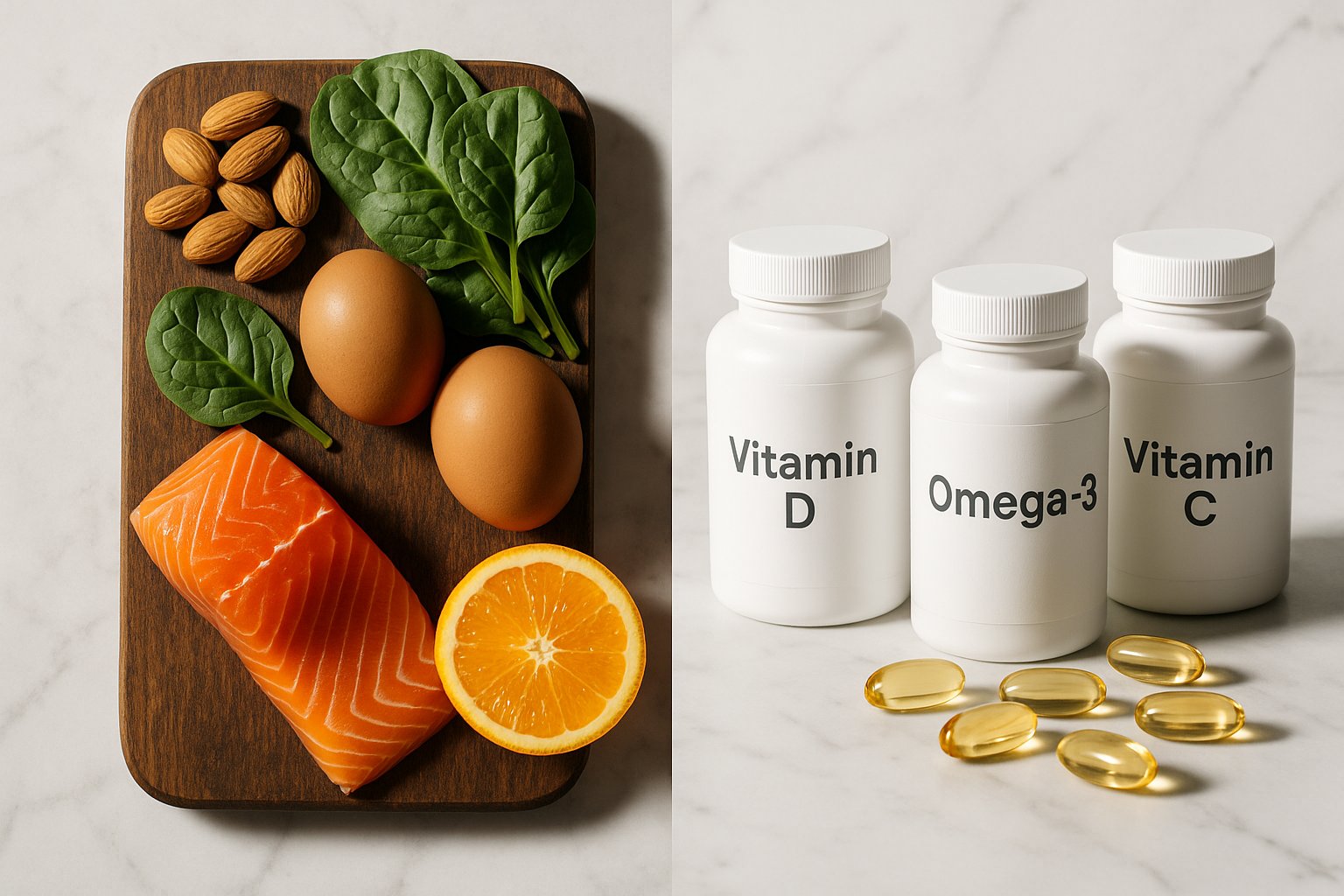
The Skin Supplement Stack: Core Three
If you’re building a foundation, these three earn their place before anything else:
Vitamin C (Ascorbic Acid)
Vitamin C is essential for collagen synthesis – without it, the enzymatic process that forms stable collagen triple-helix structures doesn’t work properly. (Scurvy is, at its core, a collagen breakdown disease.) Beyond collagen, vitamin C is a key antioxidant that helps neutralize UV-induced free radical damage in skin.
Dosing for skin benefits: 500-1,000mg daily, split doses for better absorption. Liposomal forms have modestly better bioavailability. Note: vitamin C also works powerfully topically (more on that in the actives section).
Zinc
Zinc is involved in over 300 enzymatic reactions and plays a direct role in wound healing, sebum regulation, and reducing skin inflammation. Several studies have found that people with acne tend to have lower serum zinc levels, and zinc supplementation (typically as zinc gluconate or zinc picolinate, 25-40mg) has shown efficacy for mild-to-moderate inflammatory acne in trials, in some cases comparable to antibiotic regimens, without the microbiome disruption.
Zinc also supports hair follicle health and is a co-factor in the enzyme 5-alpha reductase regulation – relevant to DHT-driven hair loss.
Omega-3 Fatty Acids (EPA/DHA)
EPA and DHA from fish oil reduce the production of pro-inflammatory cytokines – the same cytokines that drive inflammatory acne, rosacea flares, eczema, and accelerated skin aging. They also maintain membrane fluidity in skin cells, which translates directly to better hydration and plumpness.
Target: 2-3g combined EPA+DHA daily, from a quality triglyceride-form fish oil. Algal omega-3 works equally well for DHA and is a clean vegan option.
For a comprehensive breakdown of what belongs in a skin supplement stack, see our dedicated guide.
Hair & Nail Support
Hair loss is often treated as cosmetic, but it usually signals something systemic: nutritional deficiency, hormonal imbalance, thyroid dysfunction, or chronic stress.
The DHT Problem
Androgenetic alopecia (male and female pattern hair loss) is driven by dihydrotestosterone (DHT) – a potent androgen that binds to hair follicle receptors and gradually miniaturizes them. Addressing DHT is the core of any serious hair loss strategy.
Saw palmetto (320mg extract, standardized to 85-95% fatty acids) inhibits 5-alpha reductase – the enzyme that converts testosterone to DHT – through a similar mechanism to finasteride, but with a gentler side-effect profile. Multiple studies show meaningful results in both men and women with pattern hair loss.
DIM (Diindolylmethane), derived from cruciferous vegetables, helps metabolize estrogen through healthier pathways and can reduce the hormonal burden that contributes to hair loss and hormonal acne in women. Our DIM supplement guide covers the evidence in depth.
For Nails
Brittle nails respond well to a combination of: biotin (even modest doses of 2,500mcg), silica, collagen peptides, and adequate protein intake. If nails are breaking, peeling, or growing slowly despite a solid diet, get ferritin tested – low iron stores are a surprisingly common and overlooked culprit.
For a complete evidence review, see our best supplements for hair growth guide.
Peptides for Skin: The Advanced Layer
Peptides are short chains of amino acids that act as signaling molecules. In skincare – both topical and systemic – they can activate collagen synthesis, promote wound healing, and regulate melanin production.
GHK-Cu (Copper Peptide)
GHK-Cu is the most extensively researched skin peptide. Topically, it stimulates collagen and glycosaminoglycan synthesis, promotes wound healing, and has shown anti-inflammatory and even anti-fibrotic effects. Loren Pickart, the researcher who first isolated it in 1973, spent decades documenting its regenerative properties.
As a research peptide (used investigationally), GHK-Cu has attracted interest for its broader systemic effects on gene expression, though the topical literature is far more robust and clinically established. Our GHK-Cu guide walks through what the science supports and what it doesn’t.
Melanotan I and II – Understand the Differences
Melanotan peptides stimulate melanocortin receptors and increase melanin production, resulting in skin darkening. They are research compounds, not FDA-approved cosmetics, and come with significant safety considerations.
Melanotan I (afamelanotide) has a legitimate clinical application – it’s used in Europe under the brand name Scenesse for erythropoietic protoporphyria, a rare light-sensitivity disorder. It acts more selectively on skin melanocytes.
Melanotan II has a broader receptor profile, affecting appetite, libido, and other systems. It carries a more complex safety profile, including nausea, facial flushing, and potential effects on existing moles (a reason for dermatological monitoring).
Neither should be approached casually. Our Melanotan II safety guide covers risks, what to know before considering, and why sunscreen remains non-negotiable regardless.
Skincare Actives: An Evidence-Based Tier List
Not all skincare ingredients are created equal. Here’s what the dermatology literature actually supports:
Tier 1: Non-Negotiable
Sunscreen (SPF 30+, broad-spectrum) – Full stop. UV radiation is responsible for 80-90% of visible skin aging. Photoaging – wrinkles, hyperpigmentation, texture changes, loss of elasticity – is almost entirely UV-driven. No serum, no supplement, no procedure undoes chronic unprotected sun exposure. Mineral sunscreens (zinc oxide, titanium dioxide) are gentler for sensitive and acne-prone skin.
Retinoids – The gold standard for anti-aging, acne, and skin texture. Prescription tretinoin has the most data. OTC retinol works but requires conversion to retinoic acid and is less potent. Retinaldehyde sits in between. Benefits include increased cell turnover, collagen synthesis stimulation, and reduced fine lines. Start low, go slow, and moisturize well to manage initial irritation.
Tier 2: High Value
Vitamin C (L-ascorbic acid, 10-20%) – Topical vitamin C brightens hyperpigmentation, boosts collagen synthesis, and provides antioxidant protection against UV-induced free radical damage. Pairs well with niacinamide (contrary to old concerns, they work fine together at current formulation standards). Stability is the main challenge – look for well-formulated products with low pH and opaque or airless packaging.
Niacinamide (Vitamin B3, 5-10%) – Reduces inflammation, minimizes pore appearance, regulates sebum, improves barrier function, and fades hyperpigmentation. Gentle enough for sensitive skin and compatible with nearly every other active. One of the best-tolerated, most versatile ingredients in skincare.
AHAs/BHAs – Alpha hydroxy acids (glycolic, lactic) exfoliate the surface and improve texture. Salicylic acid (BHA) is lipid-soluble and penetrates pores – the standard for acne and blackheads. These shouldn’t be used directly alongside retinoids (pH conflicts and over-exfoliation risk), but alternating nights works well.
Tier 3: Worth Considering
Hyaluronic acid (hydration), peptide serums (collagen signaling support), azelaic acid (hyperpigmentation, acne, rosacea). All have solid data; placement below Tier 2 reflects relative impact compared to the heavy hitters above.
Makeup That Actually Works With Your Skin
Makeup and skincare are not in conflict – but the wrong products absolutely can be.
Acne-Prone Skin
Look for non-comedogenic formulas – but verify: that label is not regulated, and some products bearing it still clog pores. Known pore-cloggers to avoid: isopropyl myristate, sodium lauryl sulfate, heavy oils (coconut oil, especially). Mineral-based foundations and tinted sunscreens often double as both makeup and SPF protection without the comedogenic load.
Avoid layering thick, occlusive foundations over active acne treatments at night – give your skin treatment-only time several nights per week.
Sensitive Skin
Fragrance (including “natural” fragrance) is the top allergen in cosmetics. Preservatives like methylisothiazolinone (MI) are a close second. If your skin reacts to products regularly, fragrance-free and preservative-minimal formulas are the starting point, not a nice-to-have.
Silicone-based primers and foundations create a gentle, non-reactive barrier between skin and pigment – often a good choice for reactive skin.
Bridal & Event Makeup
Long-wear formulation strategies involve primer adhesion, setting spray, and powder placement (not blanket coverage). Our bridal makeup guide covers the full system for photography-ready, all-day wear without irritating skin you’ve carefully prepared.
The Inside-Outside Framework: Priority Order
If you’re starting from scratch, sequence matters. Here’s the evidence-based priority ladder:
1. Gut health first. Gut permeability and microbiome imbalance drive systemic inflammation – the same inflammation that shows up as acne, rosacea, eczema, and accelerated aging. If you have persistent skin issues that don’t respond to topicals, look at the gut. Gut health supplements – probiotics, L-glutamine, anti-inflammatory foods – form the foundation.
2. Address deficiencies. Before loading up on supplements, find out what you’re actually low in. Vitamin D, zinc, iron (ferritin), and omega-3s are the most commonly deficient in the context of skin and hair concerns. Targeted supplementation beats a scattershot stack.
3. Core supplements. Collagen peptides, vitamin C, omega-3, zinc. These work across multiple skin systems and have the strongest evidence base.
4. Sunscreen + retinoid. The single most impactful topical intervention pair. These two alone, used consistently, will outperform nearly every other topical product on the market.
5. Targeted actives. Vitamin C serum, niacinamide, AHAs/BHAs – layered in based on your specific concerns (pigmentation, acne, texture, dehydration).
6. Advanced options. Peptides, specialized supplements (astaxanthin, ceramides), and investigational compounds – once the foundation is solid.
This isn’t a hierarchy of value; it’s a hierarchy of impact and efficiency. There’s no point layering peptide serums over an inflamed, nutritionally depleted baseline.
Frequently Asked Questions
Does collagen actually work, or is it just marketing?
Hydrolyzed collagen peptides have legitimate clinical evidence behind them – multiple randomized controlled trials show improvements in skin elasticity, hydration, and fine line appearance over 8-12 weeks of consistent use. It’s not magic and it won’t reverse decades of damage overnight, but the mechanism is real and the evidence is meaningful.
Can supplements replace topical skincare?
No – they work on different pathways. Supplements support the biological substrate from which healthy skin is built. Topicals address surface-level concerns, deliver active ingredients directly to skin cells, and provide protection (especially sunscreen). The best outcomes come from doing both.
Is biotin worth taking if my hair is thinning?
Only if you’re deficient, which is uncommon. Biotin deficiency does cause hair loss – but most thinning has other causes: DHT sensitivity, low ferritin, thyroid dysfunction, or caloric restriction. If hair loss is a concern, get bloodwork before assuming biotin is the answer. See our biotin supplement guide for a full breakdown.
What’s the best order to apply skincare products?
Thinnest to thickest, generally. Cleanser → toner/essence (if used) → vitamin C serum → niacinamide or other water-based serums → moisturizer → sunscreen (AM only). Retinoid goes on clean, dry skin at night, after cleansing and before moisturizer. Avoid mixing retinoids with AHA/BHAs in the same routine.
How long does it take to see results from skin supplements?
Most supplement effects on skin become noticeable at 8-12 weeks, because that’s the turnover cycle of skin tissue. Topical actives like vitamin C and niacinamide may show changes in tone and texture within 4-6 weeks. Patience is genuinely required – this is slow biology, not instant chemistry.
Is sunscreen the most important thing I can do for skin aging?
Yes. UV exposure drives the vast majority of visible skin aging. Broad-spectrum SPF 30+ used daily is the single highest-leverage skincare intervention available, bar none. Everything else – serums, supplements, procedures – works in the context of UV protection, not instead of it.
Sources
- Proksch E, et al. “Oral supplementation of specific collagen peptides has beneficial effects on human skin physiology: a double-blind, placebo-controlled study.” Skin Pharmacology and Physiology, 2014.
- Bolke L, et al. “A Collagen Supplement Improves Skin Hydration, Elasticity, Roughness, and Density.” Nutrients, 2019.
- Choi FD, Sung CT, Juhasz ML, Mesinkovsk NA. “Oral collagen supplementation: A systematic review of dermatological applications.” Journal of Drugs in Dermatology. 2019;18(1):9-16.
- Tominaga K, et al. “Cosmetic benefits of astaxanthin on humans subjects.” Acta Biochimica Polonica, 2012.
- Oon HH, et al. “Zinc as treatment for acne vulgaris: a systematic review of the evidence.” Dermatologic Therapy, 2018.
- Kafi R, et al. “Improvement of naturally aged skin with vitamin A (retinol).” Archives of Dermatology, 2007.
- Mori TA, et al. “Dietary fish oils modulate the inflammatory response.” Current Opinion in Lipidology, 2014.
- Pickart L, Margolina A. “Regenerative and Protective Actions of the GHK-Cu Peptide in the Light of the New Gene Data.” International Journal of Molecular Sciences, 2018.
- Zouboulis CC, et al. “Sebaceous gland, acne, and retinoids: review.” Dermatology, 2001.
Related Articles
- Skin Supplements: The Complete Guide
- Best Collagen Supplements for 2026
- Collagen Powder: Types, Benefits, and How to Use It
- Best Supplements for Hair Growth in 2026
- GHK-Cu Copper Peptide Guide 2026
- Melanotan II Safety & Risks Guide 2026
- Bridal & Wedding Makeup Guide 2026
- Beauty FAQ: Your Top Questions Answered
- Best Gut Health Supplements 2026
- DIM Supplements: Estrogen Metabolism & Hormonal Acne
- Best Biotin Supplements 2026
Sources
- PubMed Central — NIH database of peer-reviewed dermatology and nutrition research studies
- Examine.com — Evidence-based supplement research summaries and efficacy ratings
- ConsumerLab — Third-party testing and quality verification of skin and beauty supplements
- American Academy of Dermatology — Clinical guidelines on skin health and nutrition
- NIH Research Articles — Peer-reviewed studies on collagen, antioxidants, and skin aging



Leave a Reply