Quick Answer: Collagen powder (hydrolyzed collagen peptides) has genuine clinical evidence supporting improvements in skin elasticity, hydration, and joint pain—but only at specific doses (2.5–10g/day) and with realistic expectations. Type I/III collagen from bovine or marine sources is best for skin; undenatured Type II for joints. Marine collagen is slightly better absorbed. Benefits take 8–12 weeks to emerge and are modest, not miraculous.
Collagen has become one of the best-selling supplements in the wellness market, and unlike many trending supplements, the clinical evidence behind it is actually reasonable—if you know what to look for and what not to expect. This deep-dive reviews the types of collagen, what the human RCTs show for skin, joints, and gut, how absorption actually works, and where the marketing overreaches the science.
What Is Collagen and Why Does It Decline with Age?
Collagen is the most abundant protein in the human body, making up roughly 30% of total protein mass. It’s the primary structural component of skin, tendons, ligaments, cartilage, bones, and blood vessels. Think of it as the scaffolding that holds your connective tissues together.
The body produces collagen from dietary amino acids (particularly glycine, proline, and hydroxyproline) using vitamin C as an essential cofactor. Peak collagen production occurs in your 20s. After that, production declines at roughly 1–1.5% per year, and existing collagen degrades more quickly due to UV exposure, smoking, high sugar intake, and chronic inflammation.
By your 50s, skin may have lost 30% or more of its dermal collagen—a key driver of visible aging. Cartilage also thins over time, contributing to joint pain and osteoarthritis. This age-related decline is the biological rationale for collagen supplementation.
The Different Types of Collagen: I, II, and III
There are at least 28 distinct types of collagen, but three dominate supplementation:
Type I Collagen
Type I is the most abundant type in the body and is the primary collagen in:
Skin
Tendons and ligaments
Bones
Corneas
This is the type most relevant for skin aging and connective tissue support. Most collagen powders marketed for skin health are Type I (and often Type III as a co-benefit).
Sources: Bovine hide, marine fish scales/skin
Type II Collagen
Type II collagen is found almost exclusively in articular cartilage—the smooth tissue cushioning your joints. It’s structurally different from Type I: its triple-helix structure is designed for compression rather than tensile load.
Two forms are used in supplements:
Hydrolyzed Type II: Broken down for absorption; used for building cartilage matrix
Undenatured Type II (UC-II): Taken at very small doses (10–40mg); thought to work via oral tolerization—training the immune system to reduce autoimmune attacks on joint cartilage
The UC-II mechanism is different from standard hydrolyzed collagen and requires much lower doses. It’s the form typically used in joint-specific supplements.
Sources: Chicken sternum cartilage
Type III Collagen
Type III is found alongside Type I in skin, blood vessels, and internal organs. It contributes to skin elasticity and tissue elasticity generally.
Sources: Bovine hide (often co-extracted with Type I)
Marine vs. Bovine Collagen: What the Evidence Shows
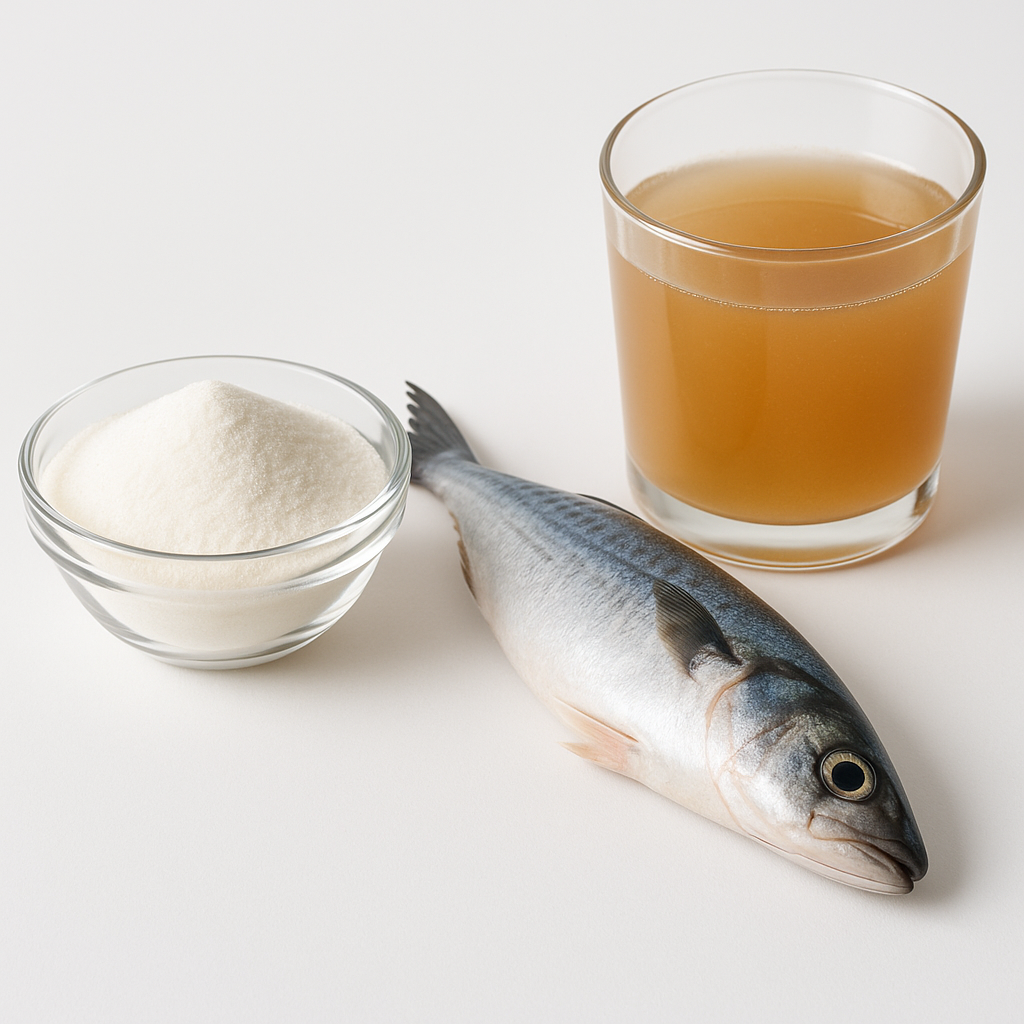
Most collagen supplements derive from two sources: bovine (cows) and marine (fish). Here’s how they compare:
Bovine Collagen
Sourced from the hides, bones, and cartilage of cattle. Bovine collagen typically contains:
Type I and Type III collagen
Larger peptide sizes on average
It’s the most widely available and usually the most affordable form. Quality concerns: some bovine sources use lower-quality material; look for “grass-fed” or “pasture-raised” labeling if bovine source quality matters to you. More importantly, look for brands that test their finished product for heavy metals.
Marine Collagen
Sourced primarily from fish skin and scales. Marine collagen is almost exclusively Type I, with a smaller average peptide size, which may improve absorption rates. Studies examining blood amino acid levels after marine vs. bovine collagen consumption suggest marine collagen peptides reach circulation slightly faster, though whether this translates to meaningfully better outcomes in long-term trials is not yet clearly established.
For skin applications, marine collagen’s Type I composition and absorption profile make it a logical choice. For joint health (Type II requirement), marine collagen is not the right source—you’d need bovine or chicken-derived Type II.
Egg Membrane Collagen
Egg membrane (from eggshell membranes) contains primarily Type I, V, and X collagen along with hyaluronic acid. Some small studies have shown joint pain reduction, but the research base is thin compared to bovine or marine collagen peptides.
How Collagen Absorption Works
For decades, conventional wisdom held that digested proteins are broken down entirely into individual amino acids, so collagen peptides would simply become glycine and proline—indistinguishable from any other protein source. The supplement industry would be selling expensive amino acids at a premium.
More recent research has revised this understanding significantly. Bioactive collagen peptides (particularly dipeptides like hydroxyproline-glycine) survive digestion partially intact and are absorbed as small peptides, not just free amino acids. Studies using labeled collagen peptides have traced these small fragments to:
Dermal fibroblasts (skin cells that produce collagen)
Synovial fluid in joints
Cartilage tissue
Once there, these bioactive peptides appear to:
Provide direct building blocks for collagen synthesis
Stimulate fibroblasts to increase their own collagen production (a positive feedback mechanism)
León-López et al.’s 2019 review in Molecules provides a detailed overview of these absorption and bioavailability mechanisms, noting that hydrolysis of collagen to molecular weights below 3 kDa substantially improves bioavailability compared to native (non-hydrolyzed) collagen.
This mechanism doesn’t apply to native (non-hydrolyzed) collagen, which is largely digested into free amino acids. Hydrolyzed collagen peptides are the form used in nearly all clinical research and should be what you look for on labels.
What the Clinical Trials Actually Show
Skin Aging
The clinical evidence for collagen and skin is the strongest of any application.
Proksch et al. (2014) conducted a double-blind, placebo-controlled RCT in 69 women aged 35–55 taking 2.5g or 5g of specific collagen peptides daily for 8 weeks. Both doses significantly improved skin elasticity compared to placebo; the 2.5g dose showed particular effectiveness. The researchers also noted improvements in skin moisture and a reduction in skin roughness. At 4 weeks post-supplementation, the improvements in skin elasticity were still detectable.
A follow-up study by the same team found that daily supplementation of 2.5g of collagen peptides for 8 weeks increased dermal collagen density and decreased fragmentation of the collagen network in women aged 45–65.
Limitations to acknowledge: Most skin collagen studies are industry-funded, sample sizes are small (50–150 people), and the control arm sometimes uses suboptimal placebos. Effect sizes are real but modest—we’re talking measurable improvements in elasticity and moisture, not dramatic reversal of skin aging.
Joint Health
Clark et al. (2008) conducted a 24-week RCT in 147 athletes with activity-related joint pain, supplementing with 10g of collagen hydrolysate daily. The treatment group experienced significantly less joint pain during activity than the placebo group. The effects were most pronounced in the knee and hip.
UC-II (undenatured Type II collagen) has been evaluated in several trials for osteoarthritis. Studies using 40mg/day of UC-II have shown reductions in WOMAC pain scores and improvements in range of motion in patients with knee osteoarthritis, with effects appearing comparable to—or in some trials superior to—glucosamine/chondroitin combinations.
Important caveat: Joint trials are not as robust as pharmaceutical drug trials. Sample sizes are typically 100–200, trial durations are 3–6 months, and industry funding is common. Treat these findings as encouraging but not definitive.
Gut Health
This is where the evidence is thinnest. Collagen contains high concentrations of glycine, proline, and glutamine—amino acids that may support intestinal barrier integrity. In vitro studies and animal models have suggested that collagen peptides may help maintain tight junction proteins in the intestinal lining.
However, human RCT evidence for collagen and gut health is sparse. Claims that collagen “heals leaky gut” are not supported by direct human clinical trials. The amino acid composition provides a plausible mechanism, but plausibility is not evidence. If gut health is your primary concern, the evidence base for other interventions (probiotics, fiber, targeted dietary changes) is far more robust.
Bone Density
Emerging evidence suggests collagen peptides may support bone mineral density. A 2018 RCT by König et al. in Nutrients found that postmenopausal women taking 5g of collagen peptides daily for 12 months showed significantly greater increases in bone mineral density at the spine and femoral neck compared to placebo. This is promising, but requires replication in larger trials.
The Vitamin C Connection
Collagen synthesis cannot proceed without adequate vitamin C. Vitamin C is a required cofactor for the enzymes prolyl hydroxylase and lysyl hydroxylase, which catalyze the hydroxylation of proline and lysine residues in the collagen triple helix. Without this step, collagen is structurally weak and unstable.
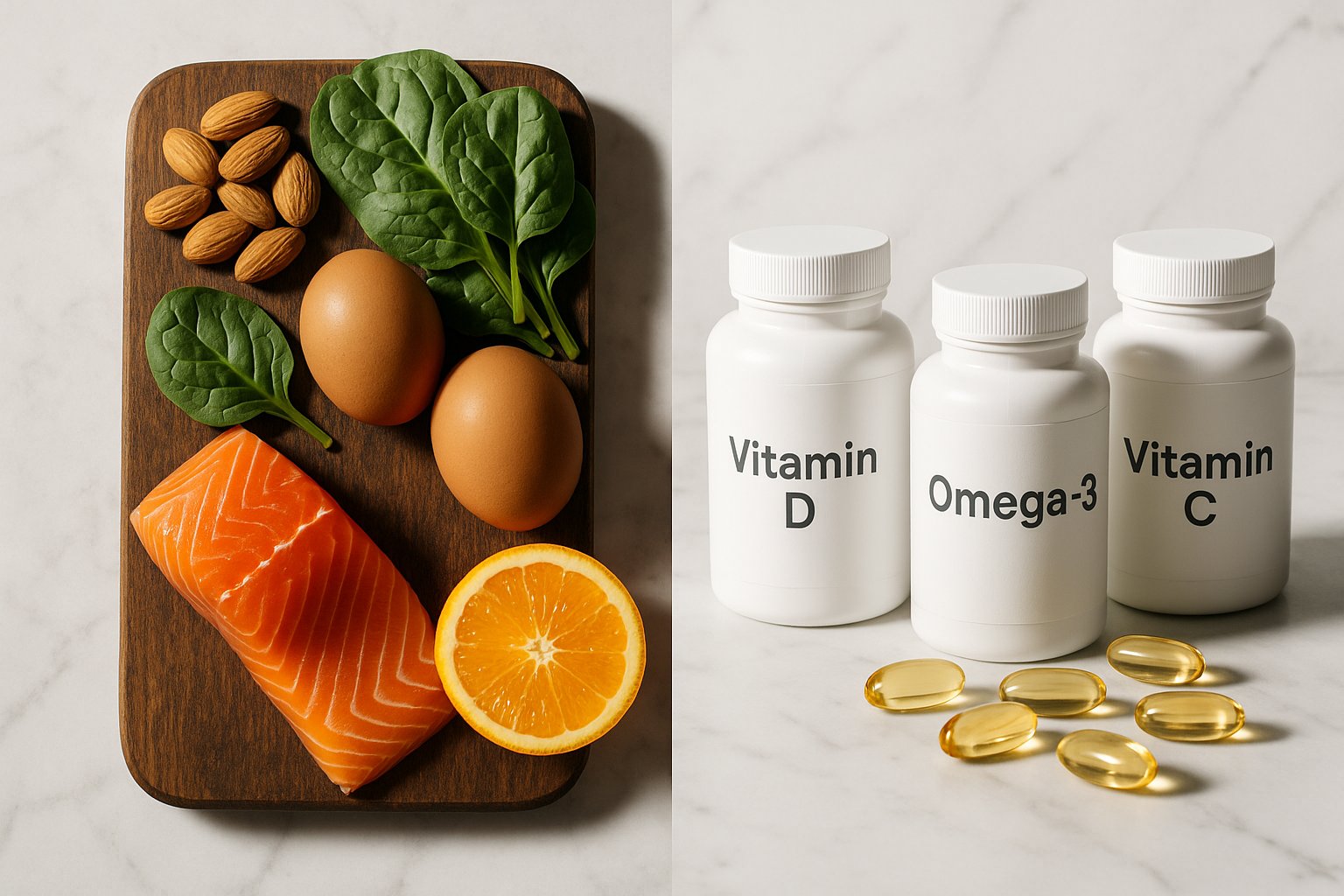
Shaw et al. (2017) demonstrated in an RCT that consuming vitamin C-enriched gelatin before exercise significantly increased collagen synthesis markers in the bloodstream compared to placebo. The practical implication: taking collagen alongside a vitamin C source (a small glass of orange juice, a vitamin C supplement, or a C-rich fruit) may enhance the effectiveness of collagen supplementation.
Most quality collagen products now include vitamin C in their formulations, or at least note this pairing on their labeling.
Dosing: What the Research Supports
Application
Recommended Form
Dose
Duration
Skin aging
Hydrolyzed Type I (marine or bovine)
2.5–5g/day
8–12+ weeks
Joint pain
Hydrolyzed collagen
10g/day
12–24 weeks
Joint (autoimmune/OA)
Undenatured Type II (UC-II)
10–40mg/day
3–6 months
Bone density
Hydrolyzed collagen
5g/day
12+ months
These are the doses used in the clinical trials with positive outcomes. Products using doses below these thresholds may be underdosed relative to the evidence.
What to Look For When Buying Collagen Powder
Hydrolyzed collagen peptides: Avoid “collagen protein” products that don’t specify hydrolyzed/peptides. Native collagen is poorly absorbed.
Molecular weight: Products specifying low molecular weight peptides (1–5 kDa) align best with absorption research.
Source transparency: Marine, bovine hide, bovine bone—what’s the source? Grass-fed bovine and wild-caught marine are the cleanest options.
Third-party testing: As with all supplements, look for NSF, Informed Sport, or USP testing to verify label accuracy and screen for contaminants.
No proprietary blends: You should know exactly how much collagen per serving.
Vitamin C inclusion or pairing: Either buy a product with added vitamin C, or take your collagen with a vitamin C source.
What Collagen Won’t Do
To keep expectations calibrated:
Collagen supplements will not regrow lost hair (no clinical evidence)
They will not eliminate deep wrinkles (modest improvement in elasticity, not dermal filling)
They will not cure osteoarthritis (may reduce pain and slow progression; does not reverse joint damage)
They will not “seal” a leaky gut in any clinically proven sense
The popular claim that collagen “boosts metabolism” is not supported by evidence
Collagen can be a worthwhile addition to a comprehensive anti-aging or joint health protocol, particularly for people in their 40s and beyond. But it’s one tool among many—not a miracle supplement.
Collagen Powder for Specific Goals: A Practical Framework
For Skin Aging (30s–60s)
If skin elasticity and hydration are your primary goals, the clinical evidence points to:
Form: Hydrolyzed Type I collagen peptides (marine or bovine)
Dose: 2.5–5g/day
Duration: Minimum 8 weeks; most studies ran 8–12 weeks and found continued improvement with ongoing use
Pairing: Take with vitamin C (50–100mg is sufficient as a cofactor dose)
Timing: Timing doesn’t appear to matter; take what works for your routine
Manage expectations: you won’t look 10 years younger. Measurable improvements in skin elasticity, hydration, and roughness are the realistic outcomes. These are meaningful changes that compound over time.
For Joint Pain (Active Adults, 40s+)
Form: Hydrolyzed collagen (10g/day) or undenatured Type II (UC-II, 40mg/day)
Duration: 12–24 weeks for joint applications
Best for: Activity-related joint pain, early osteoarthritis, post-exercise recovery
Not a replacement for: Physical therapy, strength training, or medical treatment for advanced OA
For athletes with knee or hip pain specifically, the Clark 2008 trial is the most directly applicable human evidence. The athletes who responded best were those with persistent activity-related pain rather than advanced structural damage.
For Healthy Aging and Bone Support
Form: Hydrolyzed Type I+III collagen
Dose: 5g/day
Duration: 12+ months (the König 2018 bone density trial ran a full year)
Target population: Postmenopausal women and older men at risk of osteoporosis
Collagen supplementation for bone is an emerging area with less established evidence than skin or joints, but the mechanism is sound (collagen is the organic matrix onto which calcium phosphate mineralizes), and the 12-month RCT data is promising.
Nails and Hair: Limited but Plausible
Many people report improved nail strength and growth rate while taking collagen, and some note improvements in hair thickness and texture. Clinical evidence is sparse but not absent:
A 2017 study in the Journal of Cosmetic Dermatology (Hexsel et al.) involving 25 women taking specific collagen peptides for 24 weeks found significant improvement in nail growth rate, reduced frequency of broken nails, and improved brittleness. 88% of participants reported improvement overall.
For hair, there are no high-quality RCTs. The theoretical basis exists—hair follicles exist in a collagen-rich matrix, and hydroxyproline (a collagen amino acid) is present in hair structure—but direct clinical evidence is lacking.
Honest summary: Nails have the best preliminary evidence; hair benefits are plausible but unproven. Neither is a primary clinical endpoint in most major collagen trials, so treat these as anecdotal until better evidence emerges.
Frequently Asked Questions
Is marine collagen better than bovine collagen?
For skin applications, marine collagen’s higher Type I content and smaller peptide size may offer a modest bioavailability advantage, though head-to-head human trials comparing outcomes (not just absorption kinetics) are limited. For joint applications requiring Type II collagen, bovine or chicken-derived forms are the appropriate source—marine collagen is not Type II.
How long does it take for collagen powder to work?
Skin elasticity studies show measurable changes at 8 weeks; joint pain studies typically show meaningful improvements at 12–24 weeks. Don’t expect noticeable results before 8 weeks of consistent use. Many people report improvements in skin texture and nail strength within 6–8 weeks.
Can I take collagen powder if I’m vegan?
Conventional collagen is animal-derived and not vegan. “Vegan collagen boosters” exist but contain no actual collagen—they typically provide vitamin C, zinc, copper, and amino acids that support your body’s own collagen synthesis. Whether these boosters are effective is a different question from whether you need collagen itself; the body can synthesize its own collagen given adequate nutrition.
Is it safe to take collagen powder every day?
Yes, for most people. Collagen is a protein and is generally well tolerated. People with allergies to fish should avoid marine collagen. Those with PKU (phenylketonuria) should be cautious due to phenylalanine content. The main risk of bovine collagen is from poorly sourced products that may carry contaminants—hence the importance of third-party testing.
Does collagen powder help with cellulite?
A small number of studies have explored this. A 2015 RCT found that collagen peptides improved the appearance of cellulite in normal-weight women after 6 months of treatment; effects in overweight women were less pronounced. The evidence is limited but not implausible given collagen’s role in skin structure.
What is the difference between collagen powder and gelatin?
Gelatin is partially hydrolyzed collagen—it has been broken down enough to dissolve in hot water and gel when cooled. Collagen peptides are more fully hydrolyzed, dissolving in both hot and cold water and not gelling. Both provide similar amino acids, but the absorption kinetics differ: collagen peptides are absorbed more efficiently than gelatin due to their smaller molecular size.
The Bottom Line
Hydrolyzed collagen peptides have earned a legitimate place in the evidence-based supplement toolkit—particularly for skin aging (2.5–5g/day) and joint pain management (10g/day). The research has real limitations (industry funding, small samples, short durations), but the signal is consistently positive and the biological mechanism is well-established.
Choose a product with specified hydrolyzed peptides, a transparent dose, a reputable source, and third-party testing. Take it consistently for at least 8–12 weeks, paired with vitamin C, and assess your results.
Proksch E, Segger D, Degwert J, Schunck M, Zague V, Oesser S. Oral supplementation of specific collagen peptides has beneficial effects on human skin physiology: a double-blind, placebo-controlled study. Skin Pharmacol Physiol. 2014;27(1):47–55. https://pubmed.ncbi.nlm.nih.gov/24401291/
Clark KL, Sebastianelli W, Flechsenhar KR, et al. 24-Week study on the use of collagen hydrolysate as a dietary supplement in athletes with activity-related joint pain. Curr Med Res Opin. 2008;24(5):1485–1496. https://pubmed.ncbi.nlm.nih.gov/18416885/
León-López A, Morales-Peñaloza A, Martínez-Juárez VM, Vargas-Torres A, Zeugolis DI, Aguirre-Álvarez G. Hydrolyzed Collagen—Sources and Applications. Molecules. 2019;24(22):4031. https://pubmed.ncbi.nlm.nih.gov/31703345/
Shaw G, Lee-Barthel A, Ross ML, Wang B, Baar K. Vitamin C-enriched gelatin supplementation before intermittent activity augments collagen synthesis. Am J Clin Nutr. 2017;105(1):136–143. https://pubmed.ncbi.nlm.nih.gov/27852613/
Bello AE, Oesser S. Collagen hydrolysate for the treatment of osteoarthritis and other joint disorders: a review of the literature. Curr Med Res Opin. 2006;22(11):2221–2232. https://pubmed.ncbi.nlm.nih.gov/17076983/
Proksch E, Schunck M, Zague V, Segger D, Degwert J, Oesser S. Oral intake of specific bioactive collagen peptides reduces skin wrinkles and increases dermal matrix synthesis. Skin Pharmacol Physiol. 2014;27(3):113–119. https://pubmed.ncbi.nlm.nih.gov/24401219/
[…] absorption data than bovine in some studies, though both show benefits. See our deep-dives on collagen powder and best collagen supplements for […]
[…] and full evidence review, see our complete collagen supplement guide and the practical breakdown of collagen powder formats and mixing tips. For skin-specific recommendations grounded in cosmetic dermatology research, visit our best […]




Leave a Reply