
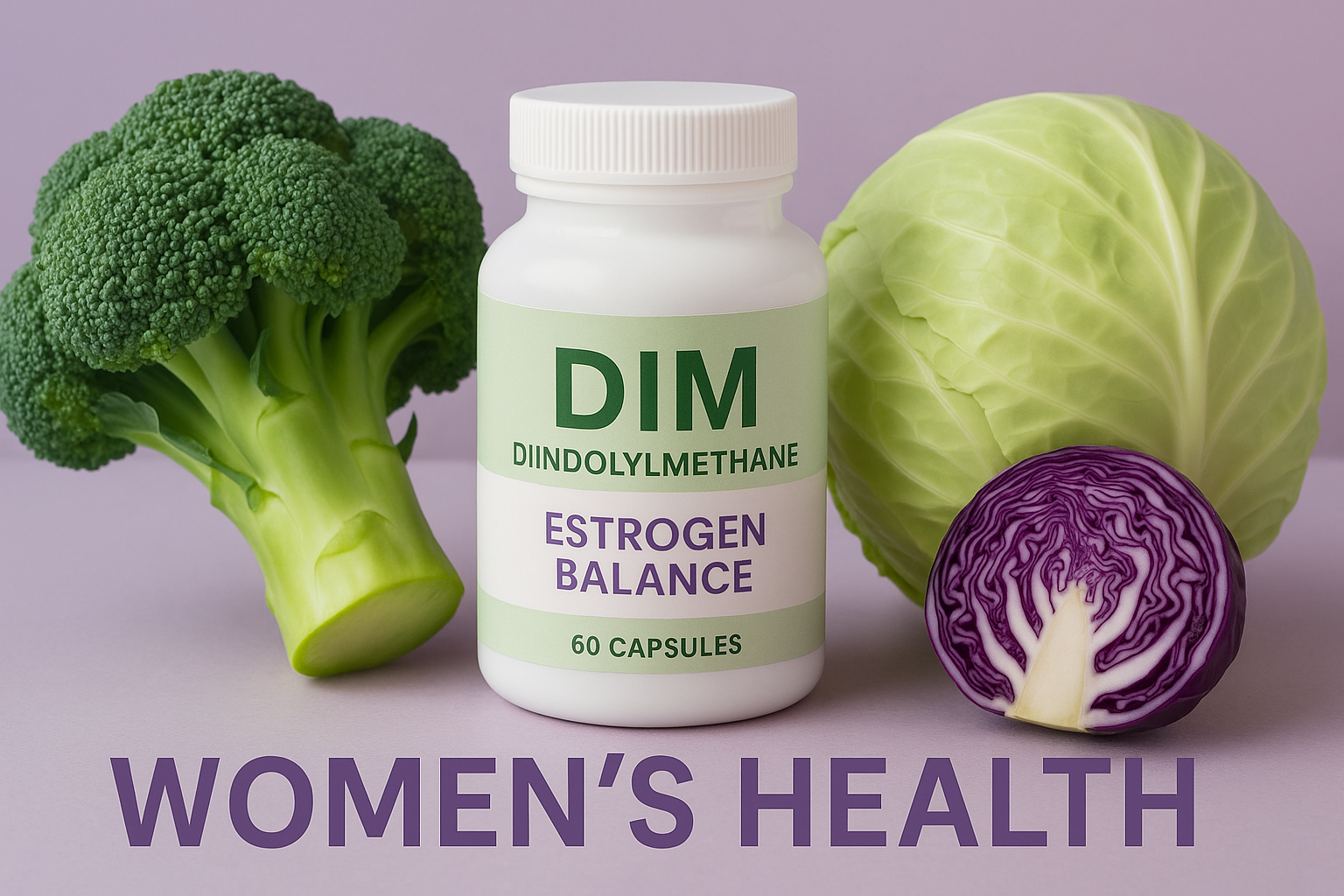
Quick Answer: DIM (diindolylmethane) is a compound from cruciferous vegetables that shifts estrogen metabolism toward less potent 2-hydroxy estrogen metabolites. It’s used for hormonal acne, PMS, and estrogen dominance symptoms. The evidence is real but mostly mechanistic — strong human RCT data remains limited. It works best for specific hormonal patterns, not everyone.
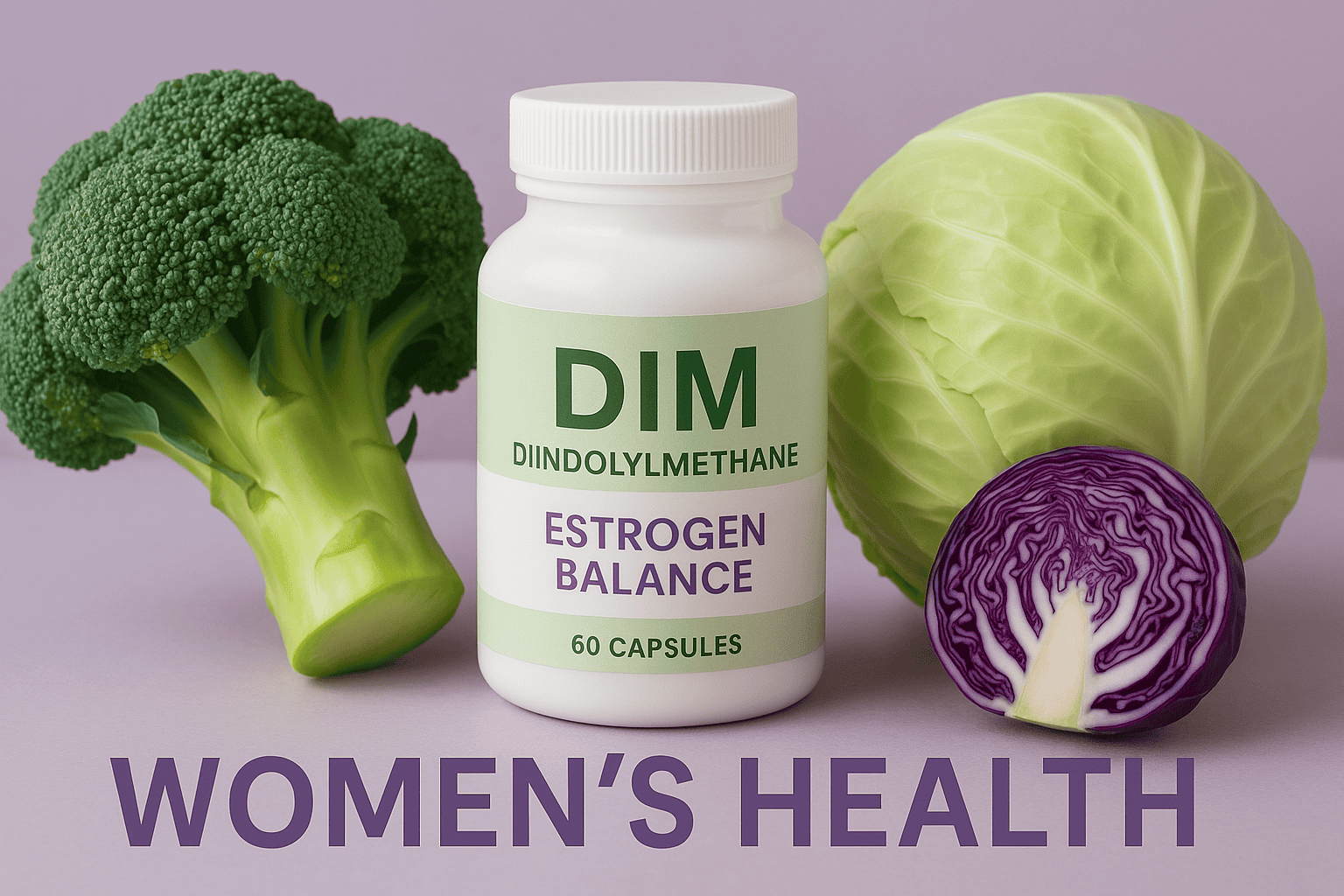
DIM has become one of the more fashionable supplements in women’s hormonal health, frequently recommended by integrative practitioners and popular wellness brands for conditions ranging from hormonal acne to PMS to weight management. The science behind it is genuinely interesting — there are real mechanisms at work, and some clinical evidence supports its use. But the marketing has significantly outpaced the clinical trial data, which means separating what DIM can realistically do from what’s being implied is essential before spending money on it.
What Is DIM and Where Does It Come From?
DIM (diindolylmethane) is a compound formed in the body from indole-3-carbinol (I3C), which is itself produced when cruciferous vegetables — broccoli, Brussels sprouts, cabbage, kale, and cauliflower — are chewed and digested. Myrosinase enzyme (activated by cell damage from chewing) converts glucosinolates in these vegetables to I3C; I3C then undergoes acid-catalyzed dimerization in the stomach to form DIM.
Cruciferous vegetables have long been associated with cancer protection in epidemiological studies. DIM is considered one of the key bioactive compounds mediating these effects.
How DIM Affects Estrogen Metabolism
Estrogen is not a single compound — it’s a family of related hormones, and crucially, it’s metabolized through multiple pathways that produce different metabolites with different potency:
2-hydroxy estrogens (2-OHE): “Good” estrogen metabolites — relatively weak estrogen activity, some evidence for anti-proliferative effects. Formed via the 2-hydroxylation pathway.
4-hydroxy estrogens (4-OHE): More mutagenic potential; can form reactive intermediates that damage DNA.
16-alpha-hydroxy estrogens (16α-OHE): Potent estrogens with stronger receptor activity; associated with increased cell proliferation. Higher 16α-OHE is linked to estrogen-dependent cancers and possibly estrogen dominance symptoms.
The 2:16 ratio: The ratio of 2-hydroxy to 16-alpha-hydroxy estradiol is used as a marker of estrogen metabolic balance. Higher 2:16 ratio is generally considered favorable.
DIM’s key action: DIM upregulates CYP1A1 and CYP1A2 enzymes in the liver, which shift estrogen metabolism toward 2-hydroxylation, increasing the 2:16 ratio. This is the mechanistic foundation for DIM’s proposed benefits in estrogen-sensitive conditions.
Who Might Benefit: The “Estrogen Dominance” Connection
“Estrogen dominance” is a clinical concept — not an official medical diagnosis — that refers to elevated estrogen relative to progesterone, or a pattern of estrogen metabolites weighted toward the more potent 16α-hydroxy pathway.
Symptoms attributed to estrogen dominance or unfavorable estrogen metabolism:
- Hormonal acne (particularly jawline and chin)
- Severe PMS (bloating, mood changes, breast tenderness)
- Heavy or irregular periods
- Fibrocystic breast changes
- Uterine fibroids
- Difficulty losing weight, particularly fat around hips and thighs
- Estrogen-sensitive tumor history (relevant, not a simple fix)
DIM is proposed to help by shifting the metabolic balance away from the more potent estrogen forms.
Evidence: What Does the Research Actually Show?
Estrogen Metabolite Changes
Multiple controlled studies confirm that DIM (and I3C) do shift urinary estrogen metabolites — specifically increasing the 2:16 ratio. This is consistent and replicated. It happens at doses of 100–300 mg/day. The mechanistic action is established.
Cervical Dysplasia / HPV
I3C has been studied for cervical dysplasia (abnormal cervical cells, often HPV-related). Early trials (1990s-2000s) showed I3C at 200–400 mg/day for 3 months produced regression of mild/moderate cervical dysplasia in a subset of patients compared to placebo. DIM studies are less numerous than I3C studies for this indication. Results are promising but require larger trials.
Breast Cancer Risk
Epidemiological associations between cruciferous vegetable consumption and reduced breast cancer risk are well-established. Several studies show DIM/I3C reduce estrogen receptor-positive breast cancer cell growth in vitro. Phase I/II clinical trials show DIM is safe and affects estrogen metabolites in women at elevated breast cancer risk. But whether supplemental DIM reduces actual breast cancer incidence remains unproven in RCTs.
Hormonal Acne
The DIM-for-hormonal-acne application has strong mechanistic rationale (elevated androgens and specific estrogen metabolites can drive sebaceous gland activity), and anecdotal evidence is substantial. However, controlled clinical trials specifically for hormonal acne using DIM are limited. One small study showed improvements in acne with DIM supplementation. Dermatologists generally don’t recommend DIM as first-line treatment (retinoids, spironolactone, and oral contraceptives have stronger evidence), but it’s a reasonable adjunct for those preferring natural approaches with some hormonal acne.
PMS
The estrogen metabolite shift from DIM is biologically plausible as a mechanism for PMS symptom reduction. Clinical trial evidence specifically for PMS is limited. Anecdotal reports of improved PMS symptoms are common in communities using DIM. This is an area needing more research.
Prostate Cancer and Men’s Health
DIM has also been studied in men. Prostate cancer cells express estrogen receptors and some estrogen metabolites drive proliferation. A 2007 phase II trial in men with rising PSA post-prostatectomy found BR-DIM (a bioavailable DIM formulation) stable PSA in a subset of patients. Research is ongoing.
Interestingly, DIM may modestly support testosterone in men by reducing estrogen signaling that feeds back to suppress gonadotropin release — though this effect is modest compared to dedicated testosterone-supporting supplements.
Bioavailability: The Key Issue
Standard DIM has poor oral bioavailability. Most DIM in regular capsules is not well absorbed due to its hydrophobic nature.
Enhanced delivery forms:
- Microencapsulated DIM (BioResponse DIM / BR-DIM): The most clinically studied enhanced form; used in most human clinical trials. Dramatically improves bioavailability (10-30x vs. standard powder)
- Phospholipid complexes: Some products use phosphatidylcholine complexation
- Absorption enhancers: Some formulas add lecithin, black pepper (piperine), or oil-based delivery
Practical implication: Always choose a DIM product specifying enhanced bioavailability. A product listing “diindolylmethane, 200 mg” as plain powder is far less effective than 100 mg of BR-DIM or other enhanced forms. Most research showing clinical effects used enhanced forms.
Dosing
| Purpose | Dose | Notes | |———|——|——-| | Estrogen metabolism support | 100–200 mg/day enhanced DIM | With food; evening preferred by some | | Hormonal acne | 100–200 mg/day | May take 6–8 weeks to see skin changes | | PMS support | 100–200 mg/day | Start in luteal phase (2 weeks before period) initially | | Men’s hormonal support | 100 mg/day | Lower dose than women’s protocols | | Cervical dysplasia | Under physician supervision | I3C may have been better studied here |
Side Effects and Who Should Be Cautious
Common effects (usually benign):
- Changes in urine color (yellow/greenish — harmless DIM metabolite excretion)
- Vivid dreams or sleep changes (occasionally reported)
- Initial hormonal flux — some women experience more intense symptoms for 1–2 weeks before improvement
Cautions:
- Estrogen-sensitive cancer history: DIM’s effect on estrogen signaling theoretically makes it relevant for estrogen-receptor-positive cancers. Some oncologists support its use (2-hydroxy metabolites are less proliferative); others are cautious about any estrogen modulation. Discuss with your oncologist.
- Hormone therapies: DIM may interact with HRT, oral contraceptives, or hormone-modulating medications
- Thyroid: Very high doses of cruciferous compounds may affect thyroid function (goitrogenic effects) — not typically relevant at DIM supplement doses but worth noting for thyroid patients
- Pregnancy: Not recommended during pregnancy due to unknown effects on fetal hormone development
Key Takeaways
- DIM shifts estrogen metabolism toward the 2-hydroxy pathway (less potent, potentially antiproliferative) and away from the more stimulatory 16α-hydroxy pathway
- The mechanistic basis and metabolite-shifting effects are well-established; direct clinical outcomes data (acne, PMS reduction, cancer prevention) requires more RCT evidence
- Bioavailability is critical — use enhanced forms (BR-DIM or equivalent) at 100–200 mg/day, not standard powder
- Most useful for women with hormonal acne, PMS, fibrocystic breast changes, or estrogen dominance patterns — not a universal supplement
- Estrogen receptor-positive cancer patients should discuss with their oncologist before supplementing
- DIM is complementary to lifestyle approaches: cruciferous vegetable consumption, liver detoxification support (NAC, milk thistle), and hormone balance lifestyle factors (stress reduction, healthy weight)
Frequently Asked Questions
How long does DIM take to work for hormonal acne?
Most users report visible changes at 6–12 weeks. The estrogen metabolite shift occurs within days of starting DIM, but hormonal acne reflects deeper dysregulation that takes weeks to correct. Don’t judge efficacy before 8 weeks of consistent use.
Can men take DIM?
Yes. Men produce and metabolize estrogen, and the 2-hydroxy pathway is relevant to prostate health and breast tissue health in men (gynecomastia). DIM at lower doses (100 mg/day) is appropriate for men with estrogen-related concerns or prostate health interest.
Does DIM lower estrogen?
DIM doesn’t primarily lower estrogen — it redirects how estrogen is metabolized. Total estrogen levels may not change significantly; the balance between estrogen metabolite types shifts favorably. This distinction matters: DIM is an estrogen metabolic modifier, not an estrogen blocker like aromatase inhibitors.
Can I just eat cruciferous vegetables instead of supplementing?
Yes, and this is ideal. A diet rich in broccoli, Brussels sprouts, kale, and cabbage provides both I3C/DIM and the fiber, phytonutrients, and other compounds that work synergistically. However, the amounts needed for the therapeutic estrogen-shifting effect are roughly equivalent to eating a cup or more of cruciferous vegetables per meal, every day. Our cruciferous vegetables and sulforaphane article covers this in depth. Supplementation provides a more convenient, concentrated dose.
Does DIM cause weight loss?
Indirectly, through estrogen metabolite optimization, DIM may support healthy body composition — particularly reducing estrogen-driven fat storage around hips and thighs in women with estrogen dominance. It’s not a weight loss supplement per se, and the evidence is weak for direct fat-loss effects.
Sources
- How Estrogen, Testosterone, and Sex Differences Influence Serum Immunoglobulin Isotype Patterns in Mice and Humans. Viruses. 2023. PMID: 36851695.
- Dalessandri KM et al. “Pilot Study: Effect of 3,3′-Diindolylmethane Supplements on Urinary Hormone Metabolites in Postmenopausal Women With a History of Early-Stage Breast Cancer.” Nutrition and Cancer. 2004. https://doi.org/10.3945/jn.109.112983
- Felgueiras HP (2024). Special Issue “Antimicrobial Biomaterials: Recent Progress”. International journal of molecular sciences. PMID: 39000256.

Leave a Reply