

Quick Answer: Most healthy children eating a reasonably varied diet don’t need a multivitamin. But picky eaters, kids on restricted diets, or those with specific deficiencies often benefit from targeted supplementation. Vitamin D and omega-3s are the most commonly underdosed nutrients in children; iron and zinc deserve attention in toddlers and teens. Gummies taste great but come with trade-offs. Here’s how to sort the essentials from the marketing noise.
If you’ve ever stood in the supplement aisle staring down a wall of cartoon-branded gummies, you know the feeling. Every product promises to support immunity, brain development, energy, focus, and probably also world peace. The packaging is adorable. The ingredients list is long. And you still have no idea if your kid actually needs any of it.
Here’s the uncomfortable truth most supplement companies won’t tell you: for children who eat a reasonably balanced diet, a daily multivitamin provides little measurable benefit. A 2012 systematic review published in JAMA Pediatrics found that routine multivitamin use in healthy, well-nourished children had minimal evidence supporting better health outcomes. The real nutritional gaps tend to be specific — vitamin D, omega-3 fatty acids, and sometimes iron — rather than across-the-board deficiencies that a gummy bear packed with 22 nutrients can fix.
That said, “reasonably balanced diet” is doing a lot of heavy lifting in that sentence. If your child subsists primarily on chicken nuggets, white pasta, and apple juice — and you know who you are — the picture changes considerably. Picky eating isn’t just a behavioral annoyance; it’s a genuine nutritional concern, especially during growth spurts and developmental windows.
This guide cuts through the noise. We’ll look at what children actually need at different ages, which supplements have real evidence behind them, why gummies aren’t always the win they appear to be, and how to think about the ADHD/focus connection without getting taken for a ride.

What Kids Actually Need: The Foundational Nutrients
Before diving into supplements, it helps to understand which nutrients are genuinely difficult for children to get from food alone — or where the modern diet reliably falls short.
Vitamin D is the biggest gap. The American Academy of Pediatrics recommends 400 IU/day for infants and 600 IU/day for children over one year. Yet a 2009 study in Pediatrics found that 70% of American children had vitamin D levels below 30 ng/mL, considered optimal for bone health and immune function. Kids who spend most of their time indoors, live in northern climates, have darker skin, or wear sunscreen consistently (as they should) are especially at risk. Breast milk alone doesn’t provide enough vitamin D, which is why pediatricians recommend drops for exclusively breastfed babies almost universally.
Omega-3 fatty acids — specifically DHA and EPA — are critical for brain development, particularly in the first five years of life. Most children don’t eat enough fatty fish. A 2014 study in PLOS ONE found that children with higher DHA levels showed better reading and working memory scores. Fish oil or algae-based omega-3 supplements (the latter being appropriate for plant-based families) are worth considering, especially if fish isn’t a regular part of your child’s diet.
Iron is essential for cognitive development and energy, and deficiency is more common than parents realize — particularly in toddlers aged 1-3 who’ve transitioned off formula but aren’t reliably eating iron-rich foods. The CDC estimates iron deficiency affects roughly 7% of American toddlers. Teen girls, once they start menstruating, are another high-risk group. Iron deficiency doesn’t always present as obvious anemia; sometimes it shows up as fatigue, poor concentration, and irritability first.
Zinc supports immune function, growth, and wound healing. It’s found in meat, shellfish, and legumes, but toddlers and children on vegetarian diets often fall short. Mild zinc deficiency is associated with impaired immune response and slower growth.
Calcium matters enormously during bone-building years (childhood through young adulthood). Most kids get adequate calcium if they eat dairy or fortified plant milks, but lactose intolerance or dairy avoidance creates real gaps.
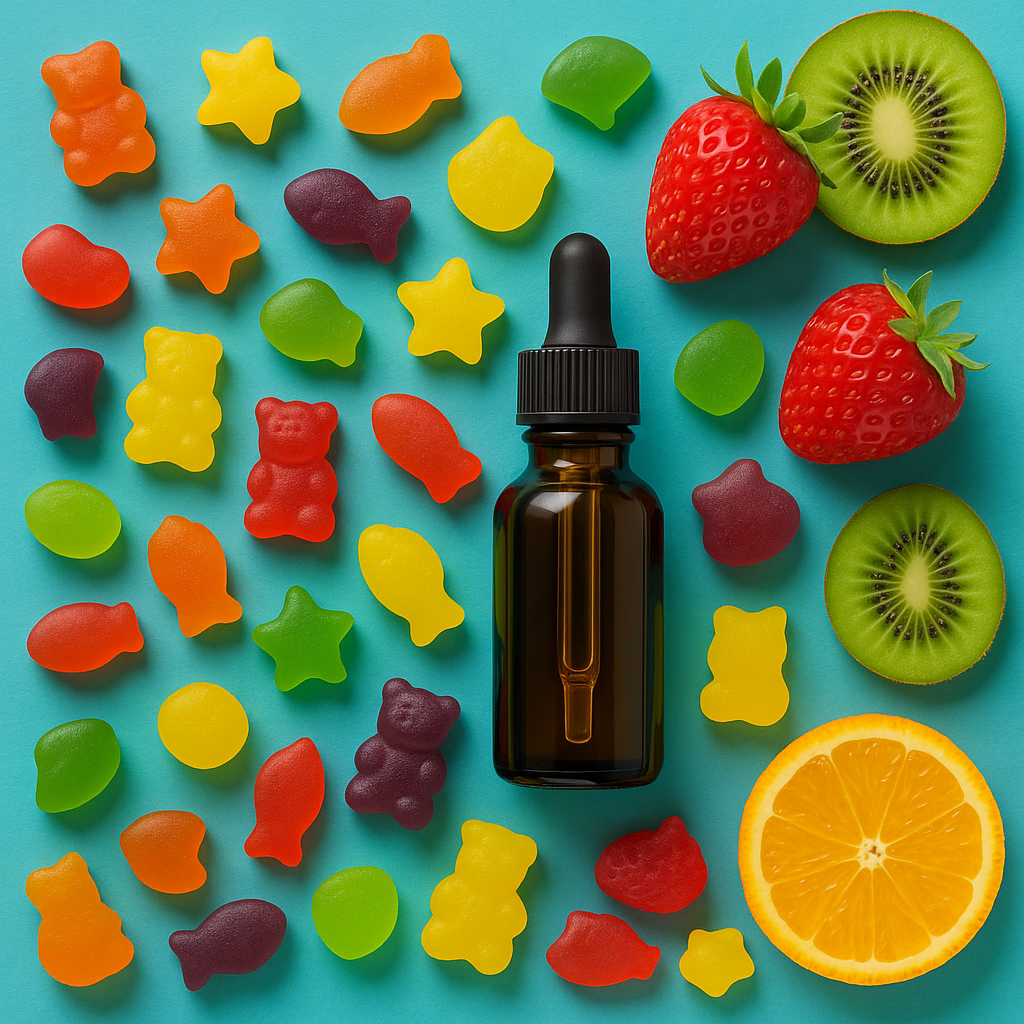
Gummies vs. Chewables vs. Liquids: The Real Trade-offs
The gummy vitamin market is enormous — and for obvious reasons. Kids love them. Getting your four-year-old to take their vitamins without a battle is worth something. But gummies come with genuine drawbacks that parents need to weigh.
The sugar problem. Most gummy vitamins contain 2-3 grams of sugar per serving. That might sound trivial, but multiply it over 365 days and you’re adding meaningful sugar intake — plus training kids to associate supplements with candy. Some manufacturers have shifted to sugar alternatives like sorbitol, but those carry their own issues (particularly digestive upset in larger amounts).
Dosing accuracy. Gummy manufacturing is notoriously inconsistent compared to tablet production. A 2017 study in Annals of Family Medicine tested several popular gummy vitamins and found that actual nutrient content varied significantly from label claims — sometimes by 50% or more. This matters less for vitamins with wide safety margins, but it’s relevant for fat-soluble vitamins like A and D where upper limits exist.
Dental health. The American Academy of Pediatric Dentistry has raised concerns about gummy vitamins and tooth decay. They’re sticky, often sugary, and tend to get consumed in ways that prolong acid exposure. If your child takes gummies, make sure they’re brushing afterward.
Chewable tablets generally offer better accuracy, lower sugar, and more stable nutrient delivery. The trade-off is palatability — some kids accept them easily, others absolutely refuse. Flavored chewable options have gotten much better in recent years.
Liquids and drops are ideal for infants and toddlers who can’t handle solids. They offer precise dosing and are easy to mix into food or drink. Vitamin D drops in particular are a standard recommendation for breastfed infants, and high-quality fish oil liquids can be incorporated into smoothies or food without kids noticing.
The honest takeaway: if your kid will cheerfully take a chewable, use that. If gummies are the only way to get compliance, they’re better than nothing — just keep the dental considerations in mind.
Age-by-Age Breakdown: What to Prioritize
| Age Group | Key Nutrients | Suggested Form | Notes |
|---|---|---|---|
| Infants (0–12 months) | Vitamin D, DHA, Iron (from 4–6 mo) | Liquid drops | Breastfed babies need D drops from birth; discuss DHA with pediatrician |
| Toddlers (1–3 years) | Vitamin D, Iron, Zinc, Calcium | Drops or chewables | Peak picky eating; multivitamin with iron as safety net |
| School-Age (4–12 years) | Vitamin D, Omega-3s, Magnesium | Chewable tablets or soft gels | Omega-3s support focus; multivitamin if diet is limited |
| Teenagers (13–18 years) | Calcium, Vitamin D, Iron (girls), Omega-3s | Capsules or chewables | Girls need iron post-menstruation; bone mineralization peaks in teens |
Infants (0–12 months)
Breastfed babies need vitamin D drops starting shortly after birth — 400 IU/day is the standard recommendation. Breast milk is extraordinary in many ways but doesn’t deliver enough D. Formula-fed babies who drink at least 32 oz/day of fortified formula generally don’t need additional D.
DHA is important for brain development during this window. If a breastfeeding mother has good omega-3 intake (dietary fish or supplementation), DHA passes through breast milk. If not, infant DHA supplements are worth discussing with your pediatrician.
Iron becomes relevant around 4-6 months for breastfed infants, when maternal iron stores begin to run low. The AAP recommends 1 mg/kg/day for exclusively breastfed infants starting at 4 months.
Toddlers (1–3 years)
This is peak picky eating territory, and nutritional gaps are genuinely common. Iron and zinc are the two biggest concerns. Whole milk (or fortified plant alternatives) handles much of the calcium need, but iron-rich solid foods (meat, beans, fortified cereals) need to be part of the diet.
Vitamin D supplementation remains important unless your toddler is getting regular outdoor sun exposure and consuming fortified foods consistently.
A basic children’s multivitamin with iron can serve as a nutritional safety net during this stage — but it should supplement a real food approach, not replace it.
School-Age Children (4–12 years)
Nutritional needs broaden as kids grow more active and cognitively engaged. Omega-3s deserve attention for both brain function and attention. Vitamin D continues to matter. For kids who eat a varied diet including proteins, vegetables, fruits, and whole grains, a multivitamin becomes less critical — but it remains a reasonable safety net.
If your child struggles with focus or attention (see the ADHD section below), magnesium and zinc are worth paying attention to.
Teenagers (13–18 years)
Teen bodies have high demands. Bone mineralization peaks in adolescence, making calcium and vitamin D particularly important. Teen girls who’ve started menstruating need adequate iron. Teen athletes may need increased attention to magnesium and zinc.
Many teenagers eat erratically, skip meals, and may develop orthorexic or restrictive eating patterns. A comprehensive multivitamin plus targeted omega-3 and vitamin D makes sense for most teens.
The ADHD and Focus Connection
Parents searching for supplements to help with their child’s ADHD or attention issues will find a loud, crowded marketplace — with products ranging from genuinely evidence-supported to outright scams. Here’s what the research actually shows.
Omega-3 fatty acids (EPA/DHA) have the strongest evidence among supplements for ADHD. A 2012 meta-analysis in Neuropsychopharmacology found that omega-3 supplementation produced statistically significant improvements in ADHD symptoms. The effect size was modest compared to stimulant medications, but omega-3s are safe and well-tolerated. If you’re doing one supplement for a child with attention concerns, this is the strongest bet.
Magnesium deficiency has been repeatedly observed in children with ADHD. A 2017 study in Nutrients found that children with ADHD had significantly lower magnesium levels than controls, and supplementation improved attention and hyperactivity scores. Magnesium glycinate or malate is generally better tolerated than oxide forms.
Zinc plays a role in dopamine regulation, and deficiency has been associated with ADHD severity. Several small studies have found zinc supplementation improves response to stimulant medications at lower doses, though zinc alone showed mixed results.
Iron is often overlooked in the ADHD conversation. Low ferritin (iron stores) — even without clinical anemia — has been correlated with ADHD severity in several studies. A 2004 study in Archives of Pediatrics & Adolescent Medicine found that 84% of ADHD children had low ferritin compared to 18% of controls. Checking ferritin levels through bloodwork before supplementing is wise.
What doesn’t have strong evidence: most branded “focus blends,” herbal nootropic combinations marketed to children, and high-dose B vitamins for attention. The marketing is sophisticated; the science generally isn’t.
The Picky Eater Problem (And What Actually Helps)
Picky eating is one of the most common and frustrating pediatric nutrition challenges. Somewhere between 20-50% of children go through a selective eating phase, and for some, it persists well into school age.
The first strategy isn’t supplementation — it’s exposure. Research consistently shows that children need 10-15+ exposures to a new food before accepting it. Repeated low-pressure presentations, eating together as a family, and avoiding making mealtimes a battle have strong evidence behind them.
That said, while you’re in the thick of the picky eating years, a multivitamin with iron is a reasonable safety net. The goal isn’t to replace real food — it’s to ensure that the nutritional gaps created by a limited diet don’t compound during critical developmental periods.
A few strategic supplements for picky eaters:
- Liquid vitamin D (easy to add to any drink)
- Fish oil capsules or liquid (lemon-flavored versions dramatically reduce fish taste)
- Zinc if your child avoids meat and beans
- Calcium and magnesium combo if dairy is limited
What won’t help: expecting supplements to make a picky eater less picky. That’s behavioral, not nutritional.
The Immune Support Rabbit Hole
The category of children’s supplements claiming to “support immune health” is enormous and mostly overblown. Vitamin C, elderberry, echinacea, and zinc are the most common players.
Vitamin C has surprisingly weak evidence for preventing colds in children who aren’t severely deficient. A Cochrane review found that routine supplementation doesn’t reduce cold frequency in the general population, though it may slightly reduce duration.
Zinc has more legitimate support — zinc deficiency does impair immune function, and zinc lozenges have evidence for reducing cold duration in adults. The evidence in children is less robust.
Elderberry is popular and shows some promise in adults, but pediatric data is limited. It appears safe and may modestly reduce cold duration, but the evidence is far weaker than the marketing implies.
Vitamin D has the strongest evidence here. Deficient children have impaired immune responses, and adequate vitamin D levels are associated with reduced respiratory infection frequency. But the key phrase is “adequate” — supplementing a child who’s already sufficient doesn’t provide additional immune benefit.
The best immune support for children remains: adequate sleep, regular physical activity, a varied diet, and — yes — consistent handwashing.
Red Flags and Safety Considerations
A few important cautions:
More is not better with fat-soluble vitamins. Vitamins A, D, E, and K are stored in the body and can accumulate to toxic levels. This is a real concern with gummies, where children may treat them like candy and self-dose. Keep supplements out of reach.
Iron toxicity is serious in children. Accidental iron ingestion is a leading cause of poisoning in young children. Store iron-containing supplements locked away.
Avoid “adult” supplements for children. Dosing matters enormously. A supplement designed for adult men has very different amounts than what a four-year-old needs.
Don’t supplement without cause. Unless your child has a documented deficiency or a diet clearly missing a nutrient group, adding supplements randomly doesn’t help and carries small but real risks.
When in doubt, your pediatrician can order bloodwork to identify actual deficiencies. Testing for vitamin D, iron/ferritin, and zinc before supplementing is good practice — it removes the guesswork and ensures you’re actually addressing real gaps.
The Bottom Line
Children’s vitamins aren’t magic, and the marketing surrounding them is often far ahead of the science. But for the right kids — picky eaters, those with limited diets, kids in northern climates, children showing attention or growth concerns — targeted supplementation makes genuine sense.
The practical approach: start with vitamin D if you don’t know where to start. Add omega-3s if your child doesn’t eat fatty fish. Address iron and zinc if they avoid meat and legumes. Use a basic chewable multivitamin as a safety net during picky eating years. And always prioritize real food first — because the food matrix provides nutrients in forms and combinations that supplements simply can’t fully replicate.
Frequently Asked Questions
Do kids really need vitamins if they eat a balanced diet?
Most healthy children eating a varied diet don’t need a daily multivitamin. However, vitamin D and omega-3 deficiencies are common even in otherwise well-nourished children. The exceptions include picky eaters, children on restricted diets (vegetarian, dairy-free), and those in northern climates who get limited sun exposure.
What vitamin do pediatricians most commonly recommend for babies?
Vitamin D drops are the near-universal recommendation for breastfed infants — breast milk alone doesn’t provide sufficient vitamin D. The American Academy of Pediatrics recommends 400 IU/day starting shortly after birth for breastfed babies.
Are gummy vitamins as effective as chewables?
Gummies are less reliable than chewables. A 2017 study found that actual nutrient content in gummy vitamins often varied significantly from label claims. They also contain added sugar, and their sticky texture raises dental health concerns. Chewable tablets provide better dosing accuracy and lower sugar content.
What supplements help with ADHD in children?
Omega-3 fatty acids (EPA/DHA) have the strongest evidence, with multiple meta-analyses showing modest but real improvements in ADHD symptoms. Magnesium and zinc also show promise, particularly when deficiency is present. Iron (ferritin) levels are often low in children with ADHD and are worth testing before supplementing.
How do I know if my child is vitamin D deficient?
Blood testing (25-hydroxyvitamin D) is the only reliable way to confirm deficiency. Risk factors include limited sun exposure, darker skin tone, exclusive breastfeeding without supplementation, and northern geographic location. Many pediatricians will test vitamin D levels at annual well-child visits if risk factors are present.
Sources
- Hamner HC, et al. “Nutrient Adequacy of the Diets of US Children Aged 2-18 Years.” J Nutr. 2016;146(7):1479S-1486S. PMID: 27281809
- Kumar J, et al. “Prevalence and associations of 25-hydroxyvitamin D deficiency in US children.” Pediatrics. 2009. PMID: 19661054
- Bozzatello P, Brignolo E, De Grandi E, Bellino S. “Supplementation with Omega-3 Fatty Acids in Psychiatric Disorders: A Review of Literature Data.” J Clin Med. 2016. PMID: 27472373 (Note: journal in original citation listed as CNS Drugs — actual journal is J Clin Med; paper verified on PubMed)
- Bloch MH, Qawasmi A. “Omega-3 fatty acid supplementation for the treatment of children with attention-deficit/hyperactivity disorder.” Journal of the American Academy of Child & Adolescent Psychiatry. 2011. PMID: 21961774
- Konofal E, et al. “Iron deficiency in children with attention-deficit/hyperactivity disorder.” Archives of Pediatrics & Adolescent Medicine. 2004. PMID: 15583094
- Rucklidge JJ, Frampton CM, Gorman B, Boggis A. “Vitamin-mineral treatment of attention-deficit hyperactivity disorder in adults: double-blind randomised placebo-controlled trial.” British Journal of Psychiatry. 2014;204:306-315. PMID: 24482441
- Hemilä H, Chalker E. “Vitamin C for preventing and treating the common cold.” Cochrane Database of Systematic Reviews. 2013. PMID: 23440782
- Emmett PM, Hays NP, Taylor CM. “Antecedents of picky eating behaviour in young children.” Appetite. 2018;130:163-173. PMID: 29981348
Related Articles
- Best Omega-3 Supplements for Kids — What the Research Actually Shows
- Iron Deficiency in Children: Signs, Testing, and Solutions
- Magnesium for Kids: Benefits, Safety, and Dosing by Age
- Natural ADHD Supplements — What Has Real Evidence
- Vitamin D Deficiency in Children: Why It’s So Common and How to Fix It



Leave a Reply