
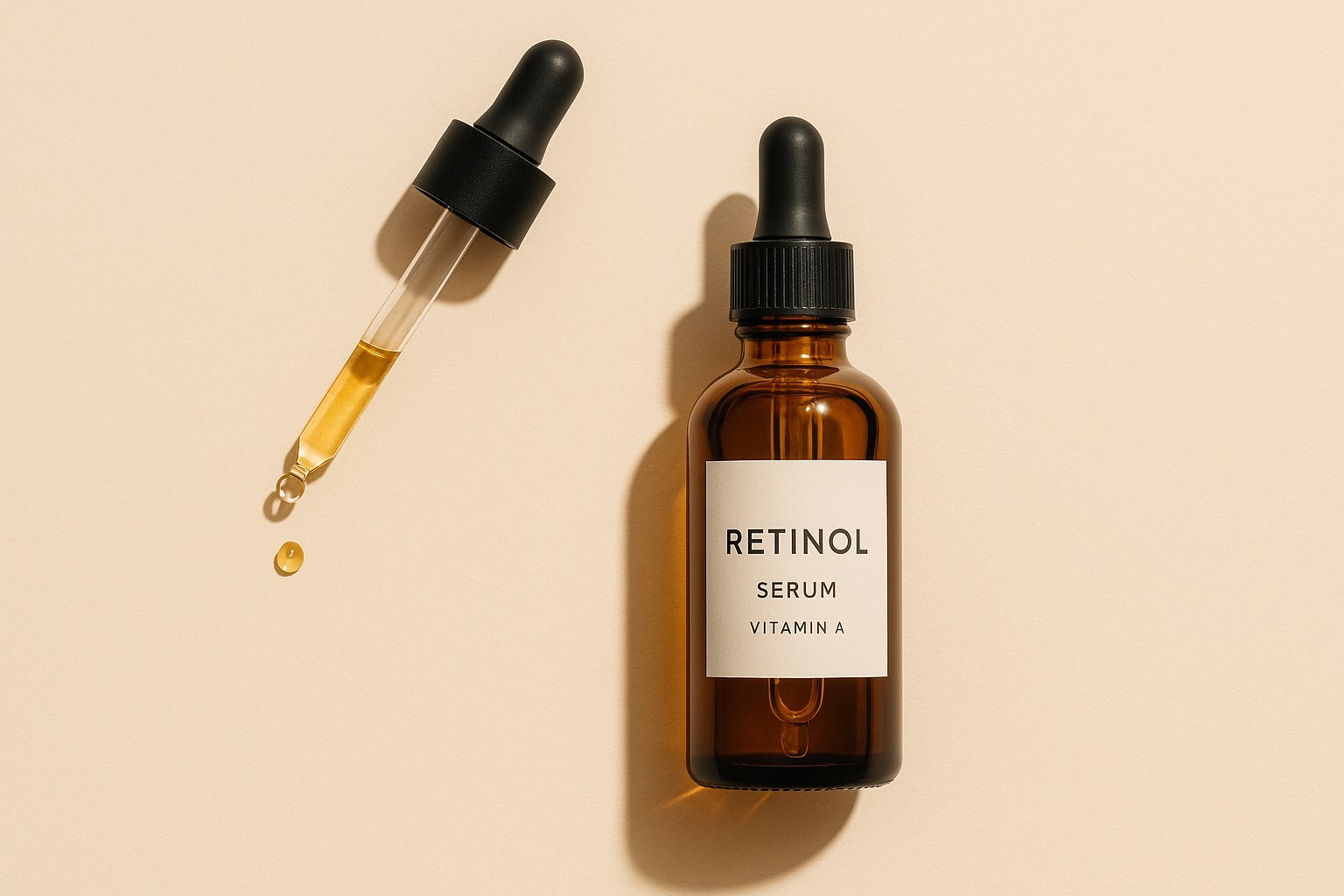
Retinol Guide 2026: Forms, Strengths, Purging, Prescription vs OTC, and Routine Building
Quick Answer: Retinol is the OTC vitamin A form that converts to retinoic acid in skin, stimulating collagen, increasing cell turnover, and reducing fine lines, hyperpigmentation, and acne. Start with 0.025-0.05%, use at night, apply moisturizer over it, and expect a 6-12 week purging period before results appear.
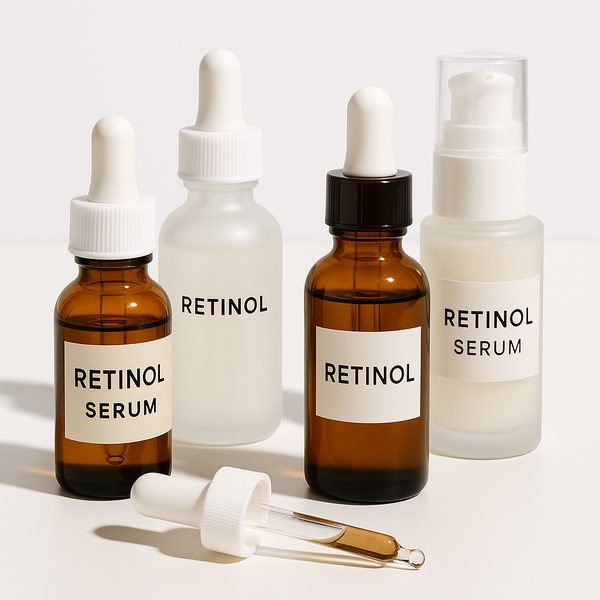
Retinol remains the gold standard of evidence-based anti-aging skincare — a title it has held for decades. But in 2026, the landscape has grown far more nuanced. Retinaldehyde formulas, encapsulated retinol, and a surge in prescription-strength options have made choosing the right product more complex than ever. This guide cuts through the noise with current science, practical routine advice, and honest answers to the most common questions.
What Is Retinol and Why Does It Work?
Retinol is a form of vitamin A. When applied to skin, it must be converted through two enzymatic steps into retinoic acid — the active molecule that actually communicates with skin cell receptors. Retinoic acid (tretinoin) is the prescription end product; retinol, retinaldehyde, and retinyl esters are precursors with progressively less conversion efficiency.
The mechanism: retinoic acid binds to nuclear receptors (RAR and RXR), regulating gene expression. This accelerates cellular turnover, increases collagen synthesis, normalizes follicular keratinization (reducing clogged pores), and fades pigmentation. The result, with consistent use over months, is measurably smoother texture, reduced fine lines, and more even tone.
The Retinoid Spectrum: Forms and Conversion Efficiency
| Form | Conversion Steps to Retinoic Acid | Relative Strength | OTC or Rx |
|---|---|---|---|
| Retinyl Palmitate / Retinyl Acetate | 3 steps | Weakest | OTC |
| Retinol | 2 steps | Moderate | OTC |
| Retinaldehyde (Retinal) | 1 step | Stronger | OTC |
| Hydroxypinacolone Retinoate (HPR) | Binds receptors directly | Near-Rx strength | OTC |
| Adapalene (Differin) | Synthetic, receptor-selective | Rx-equivalent at 0.3% | OTC/Rx |
| Tretinoin | No conversion needed | Strongest | Rx only |
| Tazarotene | Synthetic, strongest retinoid | Strongest | Rx only |
Retinaldehyde has had a major moment in the 2020s. It converts to retinoic acid in a single step, making it substantially more potent than standard retinol but still gentle enough for most beginners. It also has inherent antibacterial properties, making it especially good for acne-prone skin.
HPR (Granactive Retinoid) is a retinoic acid ester that binds directly to retinoid receptors without conversion. Studies show comparable efficacy to tretinoin with significantly less irritation, making it an excellent choice for sensitive skin types.
Adapalene is a third-generation synthetic retinoid now available OTC at 0.1% (Differin). It was originally prescription-only for acne but is increasingly used for anti-aging. At 0.3%, it is prescription strength.
OTC vs Prescription: What’s the Real Difference?
The primary difference between OTC retinol and prescription tretinoin is speed and intensity — not ultimate results. Studies comparing long-term use (12+ months) show similar endpoints for fine lines and texture improvement. However:
- Tretinoin works faster. You see meaningful results in 12–16 weeks rather than 6–12 months.
- Tretinoin is more irritating. Dryness, flaking, and redness are more common, especially in the first 4–8 weeks.
- Tretinoin requires a prescription. Telehealth platforms (Curology, Apostrophe, Hims/Hers) have made access easier and more affordable.
- OTC retinol is more accessible. No consultation needed; price points range from $15 to $200+.
For most beginners, starting OTC is sensible. If you have significant photodamage, deep wrinkles, or acne scarring, a dermatologist consultation for prescription tretinoin is worth considering.
Understanding OTC Retinol Strengths
OTC retinol is typically sold in concentrations from 0.025% to 1%. Here’s how to think about the ladder:
- 0.025–0.05%: Beginner-friendly. Minimal purging, good for sensitive skin or first-time users.
- 0.1%: A significant step up. Good for those who have tolerated lower concentrations.
- 0.3%: Intermediate-advanced. Noticeable results within 3–4 months for most users.
- 0.5–1%: Approaching the potency of low-dose prescription retinoids. Higher irritation risk; many people don’t need this strength.
Formulation matters as much as concentration. An encapsulated 0.3% retinol delivered in a squalane base will behave very differently than a harsh 0.3% in an alcohol-heavy gel. Slow-release and encapsulated formulas reduce irritation without compromising efficacy.
The Purging Phase: What to Expect
Retinoid “purging” is not a myth — but it’s also not universal. When you start a retinoid, accelerated cell turnover can push existing microcomedones (clogged pores forming beneath the surface) to the skin’s surface faster than usual. This manifests as:
- New pimples in areas you’re prone to breakouts
- Small whiteheads or bumps in areas you don’t normally break out (this is less likely to be true purging)
- Increased flaking and dryness
How long does purging last? Typically 4–8 weeks. If you’re seeing new breakouts after week 8 in areas you were never prone to, that’s more likely irritation or a reaction to another ingredient in the formula, not purging.
Managing purging:
– Don’t over-moisturize with occlusive products that can trap more bacteria
– Avoid adding other actives (acids, benzoyl peroxide) during this period
– Use a simple, non-comedogenic moisturizer
– Don’t stop unless you develop a true allergic reaction
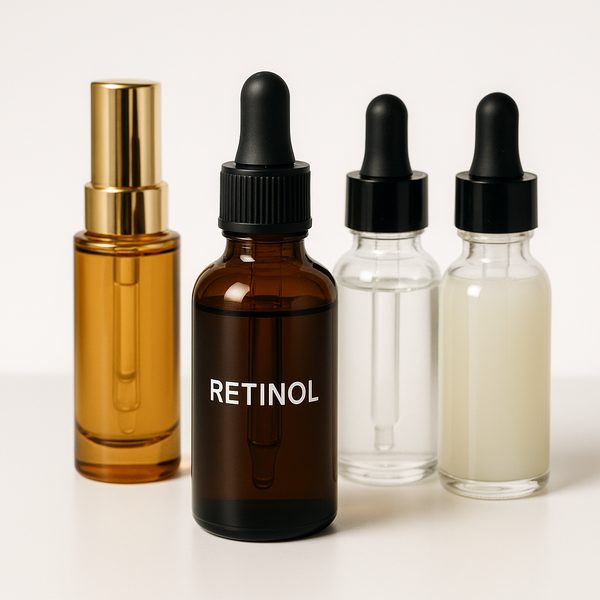
How to Start a Retinol Routine
The “Low and Slow” Method
- Start with 0.025%–0.05% retinol, applied 1–2 nights per week for 2 weeks
- Increase to 3 nights per week for 2–3 weeks
- Work up to every other night, then nightly over 2–3 months
- Upgrade strength only after tolerating current strength with no irritation for 4+ weeks
The Sandwich Method (for sensitive skin)
Apply a light moisturizer → retinol → another layer of moisturizer. This dilutes the retinol slightly, reducing irritation without eliminating efficacy.
Timing and Application
- Apply to clean, dry skin at night (retinol is photosensitive and breaks down in UV light)
- Wait 20–30 minutes after washing to reduce irritation from residual water disrupting the skin barrier
- A pea-sized amount for the entire face is sufficient — more does not equal more benefit
Non-Negotiable: Sunscreen
Retinoids increase photosensitivity. Wearing broad-spectrum SPF 30+ every morning is non-negotiable when using any retinoid. This is not optional — skipping sunscreen while using retinoids will accelerate exactly the photodamage you’re trying to reverse.
Ingredients That Pair Well (and Those That Don’t)
Good pairings:
– Niacinamide: Calms irritation, reinforces barrier. Excellent complement to retinol.
– Hyaluronic acid: Adds hydration to offset dryness.
– Peptides: Used in the AM while retinol is used at night; supports collagen synthesis synergistically.
– Ceramides: Barrier repair. Critical when the retinol-induced shedding phase disrupts the skin barrier.
Use with caution or avoid on the same night:
– AHAs/BHAs: Can compound irritation. Use on alternate nights or buffer with time.
– Benzoyl peroxide: Oxidizes retinol, reducing its efficacy. Use AM/PM separation if needed.
– Other vitamin A derivatives: Layering multiple retinoids adds no benefit and significantly increases irritation.
– Physical scrubs: Your skin is already turning over rapidly — mechanical exfoliation on top is too much.
Special Situations
Pregnancy
Topical retinoids are contraindicated during pregnancy. Even OTC retinol should be avoided. Safe alternatives include azelaic acid and vitamin C for tone and texture goals during pregnancy.
Rosacea and Sensitive Skin
Retinaldehyde and HPR are the best starting points for sensitive skin or rosacea. They deliver real results with considerably less irritation. Start even slower (once per week) and always buffer with moisturizer.
Darker Skin Tones
Individuals with darker skin tones are more prone to post-inflammatory hyperpigmentation from retinoid-induced irritation. A gentler approach — lower starting concentrations, more moisturizer buffering — is important. Pairing with niacinamide can help manage PIH risk.
Prescription Access in 2026
Telehealth has transformed access to prescription retinoids. Platforms offer:
– Tretinoin: Available at 0.025%, 0.05%, and 0.1% (cream or gel)
– Tazarotene: Higher potency; sometimes used for acne or recalcitrant photodamage
– Adapalene 0.3%: Less used via telehealth but available
Monthly subscription models have made these affordable, often $20–$40/month including consultations. If you’re in the US, this is now a realistic option for most budgets.
Frequently Asked Questions
Can I use retinol every night?
Eventually, yes — but only after your skin has fully adapted over several months. Jumping straight to nightly use is the most common mistake and leads to the irritation that causes people to give up on retinoids entirely.
Does retinol thin the skin?
No — this is a persistent myth. Short-term, retinoids cause some surface shedding, but long-term use actually thickens the dermis by stimulating collagen. Thinning occurs with topical corticosteroids, not retinoids.
How long before I see results?
For texture and pores, 8–12 weeks. For fine lines and pigmentation, expect 4–6 months of consistent use. Real results take time; the mechanism works on the cellular level and isn’t instant.
Can I use retinol around my eyes?
Yes, carefully. Use a smaller amount, avoid the eyelid margin, and consider a dedicated eye-safe retinol formula. The eye area is thinner and more sensitive but also benefits from retinol for crow’s feet.
Is expensive retinol better than drugstore options?
Not necessarily. Packaging (airtight, opaque pumps to prevent oxidation) and formulation stability matter more than price. CeraVe Resurfacing Retinol Serum and La Roche-Posay Effaclar Adapalene are high performers at accessible prices.
Should I stop retinol in summer?
No — just ensure daily SPF. Retinol is applied at night and has largely broken down by morning. The sun sensitivity concern is real but managed by consistent sunscreen, not by stopping retinol seasonally.
What’s the difference between retinol and retinoid?
“Retinoid” is the umbrella term for all vitamin A derivatives including retinol, tretinoin, adapalene, and others. “Retinol” specifically refers to the OTC form that requires two conversion steps.
Can teens use retinol?
Adapalene (Differin) is FDA-approved for acne in those 12 and older and is commonly recommended for teenage acne. Standard anti-aging retinol is generally not necessary before the mid-20s, though a very low strength can be used earlier if acne is the concern.
Key Takeaways
- The retinoid hierarchy by strength: tretinoin (prescription) > retinaldehyde > retinol > retinyl esters – each conversion step reduces both efficacy and irritation.
- Start with 0.025-0.05% retinol 2-3x/week and increase frequency and strength gradually over 3-6 months.
- Purging (temporary breakouts and flakiness) in weeks 2-6 is normal – this means it’s working, not that it’s wrong for your skin.
- Never layer retinol with AHAs, BHAs, or vitamin C in the same routine – this increases irritation without additional benefit.
- Use SPF every morning when using retinol – photosensitivity is significantly increased.
Conclusion
Retinol in 2026 is better formulated, more accessible, and better understood than ever. Whether you choose a drugstore 0.025% beginner formula, a retinaldehyde serum for sensitive skin, or telehealth-prescribed tretinoin for accelerated results, the key is consistency over intensity. Start low, go slow, protect with sunscreen, and give it the time it needs. The science is settled — retinoids work. Your job is just to stick with the right one long enough for the results to show.
Sources
- Leyden J, Stein-Gold L, Weiss J. (2017). Why Topical Retinoids Are Mainstay of Therapy for Acne. Dermatol Ther (Heidelb), 7(3):293-304. PMID: 28585191
- Mukherjee S, Date A, Patravale V, et al. (2006). Retinoids in the treatment of skin aging: an overview of clinical efficacy and safety. Clin Interv Aging, 1(4):327-348. PMID: 18046911
- Sorg O. (2006). Retinoids in cosmeceuticals. Dermatol Ther, 19(5):289-96. PMID: 17014484
- Zasada M, Budzisz E. (2019). Retinoids: active molecules influencing skin structure formation in cosmetic and dermatological treatments. Postepy Dermatol Alergol, 36(4):392-397. PMID: 31616211
- Kong R, Cui Y, Fisher GJ, et al. (2016). A comparative study of the effects of retinol and retinoic acid on histological, molecular, and clinical properties of human skin. J Cosmet Dermatol, 15(1):49-57. PMID: 26578346
Related Articles
- Niacinamide Skincare Guide 2026: Concentration, Barrier Repair, and Combinations
- Azelaic Acid Guide 2026: Rosacea, Acne, and Pregnancy-Safe Actives
- Sunscreen Guide 2026: Mineral vs Chemical, SPF Myths, and Reapplication
- How to Build a Skincare Routine: AM/PM Guide by Skin Type


Leave a Reply