GHK-Cu Copper Peptide Guide 2026: Benefits, Science, and How to Use It
Quick Answer: GHK-Cu (glycyl-L-histidyl-L-lysine copper complex) is a naturally occurring tripeptide found in human blood plasma that declines sharply with age. It promotes collagen synthesis, wound healing, and skin renewal by modulating gene expression. Topical serums are widely available and backed by clinical data; injectable forms exist in the research peptide market but are unregulated. It’s one of the most evidence-backed anti-aging peptides in dermatology.
Few compounds in anti-aging research have the pedigree of GHK-Cu copper peptide. It’s not a synthetic invention or a trendy lab creation — it’s a molecule your body already makes, one that has been quietly orchestrating tissue repair since before you were born. The problem is that your levels drop by more than half between your twenties and your sixties, and the consequences show up everywhere: slower wound healing, thinner skin, reduced hair density, and a measurable decline in the gene-expression programs that keep tissues young.
This article covers what GHK-Cu is, where the science actually stands, how to use it, and what to look for when evaluating products.
What Is GHK-Cu?
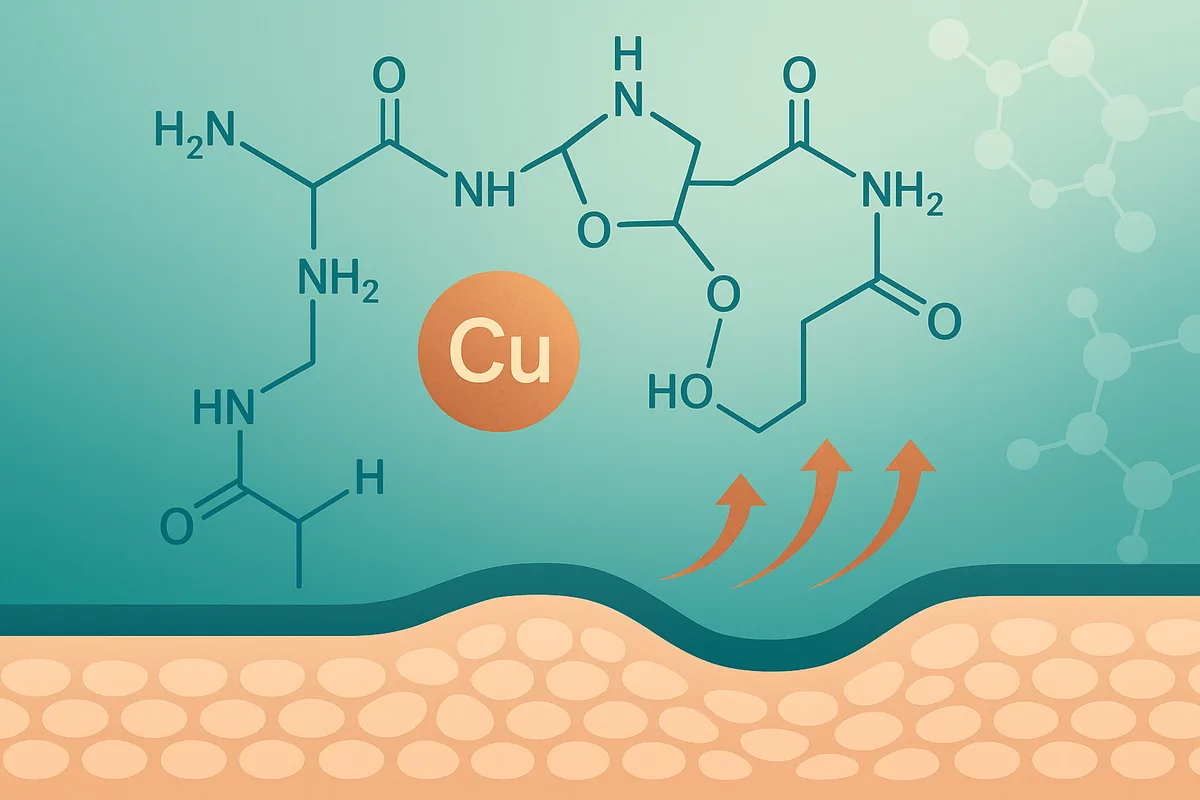
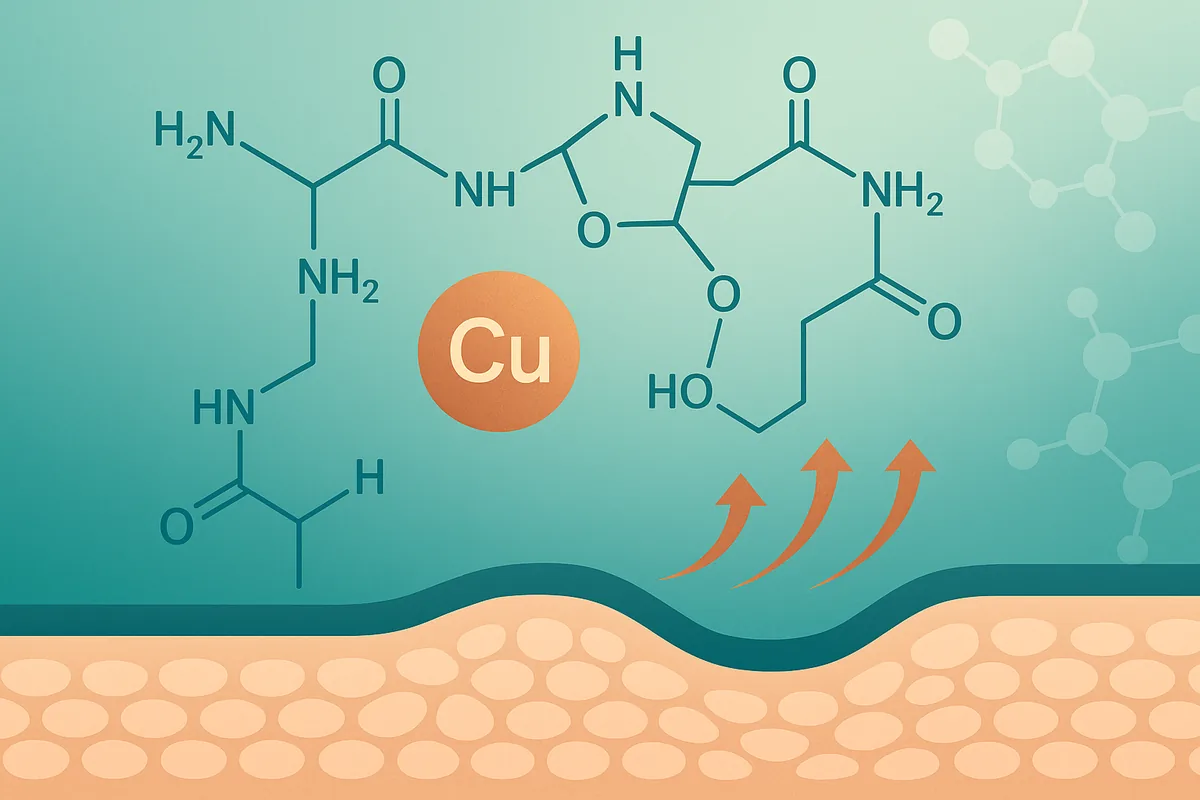
GHK-Cu is a tripeptide — three amino acids (glycine, histidine, lysine) naturally bonded to a copper(II) ion. The “Cu” in its name is simply the chemical symbol for copper. It circulates in human blood plasma, urine, and saliva, and it’s released in higher concentrations at wound sites, acting as a local alarm signal that recruits repair processes.
The molecule is small enough to penetrate skin. It has a blue color in solution due to the copper complex — a fact you’ll use later when evaluating product quality.
At its core, GHK-Cu functions as a biological signal molecule, not simply a building block. When it binds to cell receptors and enters cells, it changes what genes are turned on or off — a property that makes it unusually versatile.
Discovery and History: Loren Pickart’s Work
The story of GHK-Cu begins in 1973 with biochemist Loren Pickart, who was studying why young plasma restored liver function better than old plasma in tissue culture experiments. His search for the active factor led him to isolate a small tripeptide with high copper affinity.
Pickart spent decades documenting GHK-Cu’s biological effects, initially focusing on its wound-healing properties before broadening to skin and hair applications. His 2012 paper in Oxidative Medicine and Cellular Longevity summarized evidence that GHK-Cu modulates over 4,000 human genes — roughly 31% of the genome’s disease-associated gene set. That figure is startling, but it reflects the molecule’s upstream role in signaling cascades, not direct gene editing.
Pickart’s later work with Nathaniel Farooqui, published in 2018, expanded the picture to include anti-cancer gene patterns and tissue remodeling networks. GHK-Cu has since become one of the most studied peptides in dermatological and regenerative medicine research.
Mechanism of Action
Understanding how GHK-Cu works explains why it does so many things at once.
Gene Expression Modulation
GHK-Cu activates transcription factors that control tissue remodeling. It upregulates genes associated with wound healing, anti-inflammation, and collagen production while downregulating genes linked to inflammation, oxidative stress, and cancer progression. This isn’t pharmacology in the traditional sense — it’s closer to restoring a biological signaling program that deteriorates with age.
Collagen and Elastin Synthesis
GHK-Cu stimulates fibroblasts to produce more type I and type III collagen, as well as glycosaminoglycans like hyaluronic acid. It also activates collagenase — the enzyme that breaks down damaged, cross-linked collagen — which allows for net remodeling rather than just accumulation. The result is a turnover effect: old structural proteins are cleared and replaced with new ones. This dual role (synthesis + degradation of damaged matrix) is more sophisticated than simple collagen-boosting claims imply.
Anti-Inflammatory Effects
GHK-Cu inhibits the release of pro-inflammatory cytokines including TNF-α, IL-1β, and IL-6, and it blocks the oxidizing enzyme 5-lipoxygenase. This is why it accelerates wound resolution — it limits the inflammatory phase so tissue remodeling can begin sooner.
Antioxidant Activity
The copper ion in GHK-Cu participates in superoxide dismutase (SOD)-like activity, scavenging reactive oxygen species. The peptide also upregulates the expression of antioxidant enzymes including superoxide dismutase and catalase. This makes it relevant not just for skin but for any tissue under oxidative stress.
Wound Healing
In wound models, GHK-Cu accelerates contraction of the wound bed, promotes re-epithelialization, and increases angiogenesis (new blood vessel formation). It’s been explored in clinical wound care, particularly for chronic wounds, though most commercial applications remain in cosmetics.
Why Levels Decline With Age
At age 20, plasma GHK-Cu concentrations average approximately 200 ng/mL. By age 60, that figure drops to roughly 80 ng/mL — a 60% decline over four decades. This isn’t a rounding error; it’s a fundamental shift in the body’s repair signaling capacity.
The decline correlates with well-known aging changes: slower wound healing, skin thinning, reduced collagen density, impaired immune modulation, and decreased hair follicle activity. Whether GHK-Cu decline causes these changes or simply tracks them remains an area of active research, but the correlation is consistent enough that supplementing — particularly topically — has attracted serious scientific interest.
Forms of GHK-Cu
Topical (Serums and Creams)
The most widely used form. GHK-Cu is small enough (~340 Da) to penetrate the stratum corneum and reach fibroblasts in the dermis. Concentrations in commercial products typically range from 1% to 5%. Stability is a meaningful concern — copper peptides degrade in the presence of vitamin C (ascorbic acid), so avoid combining them in the same application step.
Oral
Oral GHK-Cu is available but has uncertain bioavailability. Peptides face significant degradation in the GI tract, and there’s limited clinical evidence for systemic effects from oral dosing. Some researchers argue that small peptides may be absorbed intact in meaningful quantities; the data are inconclusive. If you’re using it for skin benefits, topical remains the evidence-backed route.
Injectable (Research Market)
Injectable GHK-Cu exists in the research peptide market — lyophilized powder reconstituted with bacteriostatic water and administered subcutaneously. This route is used in research settings to study systemic effects including wound healing, neuroprotection, and anti-cancer gene modulation. It is not FDA-approved for human use. Products labeled “for research purposes only” are not subject to pharmaceutical-grade quality controls, and purity and sterility can vary dramatically between suppliers. This matters: improperly manufactured injectables carry real infection and contamination risks. The injectable market sits in a legal gray area and should be approached with extreme caution — or avoided entirely outside a supervised clinical setting.
Skin Benefits: What the Clinical Data Actually Show
Wrinkle Reduction and Elasticity
A double-blind trial by Abdulghani et al. (2000) compared GHK-Cu topical cream to a control in 67 women over 12 weeks. The GHK-Cu group showed statistically significant improvements in skin density, thickness, and reduction of fine wrinkles compared to control. A separate study by Finkley et al. found measurable increases in dermal thickness after topical application.
More recently, Katayama et al. demonstrated that a GHK-containing cream improved skin elasticity and reduced the appearance of fine lines, with histological evidence of increased procollagen synthesis in the dermis — not just surface-level change.
Wound Healing
Multiple animal and in vitro studies confirm accelerated wound closure, improved tensile strength of healed tissue, and faster re-epithelialization with GHK-Cu treatment. Human trials in aesthetic dermatology have extended these findings to post-procedure skin repair — particularly after laser resurfacing, where GHK-Cu serums reduce recovery time.
Photoaging
GHK-Cu upregulates genes that counteract UV-induced damage, including DNA repair pathways. Studies in UV-exposed skin models show reduced oxidative damage markers and better structural integrity in treated skin compared to controls.
Hair Growth Evidence
GHK-Cu has documented effects on hair follicle biology. It enlarges hair follicle size, extends the anagen (growth) phase, and stimulates follicle proliferation. Tricomin — one of the early commercial applications of GHK-Cu — was developed specifically for hair loss and showed measurable improvements in hair density and diameter in clinical use.
The mechanism involves both growth factor signaling (including VEGF, which increases follicular blood supply) and anti-inflammatory effects on the scalp that prevent the chronic low-grade inflammation associated with androgenetic alopecia. While GHK-Cu is not a replacement for finasteride or minoxidil in significant hair loss, it’s a legitimate supporting agent — and one with a much cleaner side effect profile.
Systemic Effects
Anti-Inflammatory
Beyond skin, GHK-Cu’s gene modulation patterns overlap with anti-inflammatory programs relevant to systemic aging. Animal studies show improved outcomes in lung injury models, reduced inflammatory markers in gut models, and modulation of immune cell activity. Whether oral dosing can achieve these effects in humans at practical doses remains unclear.
Neuroprotective Potential
Pickart and colleagues noted that GHK-Cu’s gene-expression signature includes upregulation of genes associated with neuronal survival and downregulation of genes associated with neurodegeneration. In cell models, GHK-Cu protects neurons from oxidative stress and amyloid-beta toxicity. These are early findings — no human trials exist — but they align with the molecule’s broader role as a protective, repair-oriented signaling agent.
GHK-Cu stands out for its depth of mechanism — it operates at the gene expression level rather than mimicking a single signal. Matrixyl and palmitoyl peptides work well for collagen support and have good safety profiles, but their effects are more targeted. GHK-Cu’s scope is broader, which is why it’s often the most expensive peptide in high-end serums.
The two approaches complement each other. Matrixyl is an excellent addition to a GHK-Cu regimen, not a competitor.
How to Evaluate GHK-Cu Products
Check Copper Content
Genuine GHK-Cu serums will list “copper tripeptide-1” or “GHK-Cu” in the ingredient list. The position matters — it should appear within the first half of the ingredient list for a meaningful concentration, not buried near the bottom as a label claim.
Look for the Blue Color
In solution, GHK-Cu has a distinctive blue tint due to the copper complex. Products with meaningful concentrations will be pale to medium blue. A clear or white serum claiming GHK-Cu at therapeutic concentrations is a red flag — either the concentration is too low to be effective or formulation issues have destabilized the molecule.
Formulation Stability
Avoid products that combine GHK-Cu with vitamin C (L-ascorbic acid) in the same formula. Ascorbic acid reduces copper(II) to copper(I), breaking the complex. Niacinamide at high concentrations can also destabilize the peptide. Products designed well either avoid these combinations or use stabilized forms of vitamin C (like ascorbyl glucoside) that don’t interact.
pH Range
GHK-Cu is stable in a slightly acidic to neutral pH range (approximately 4–7). Products formulated outside this range may contain degraded peptide by the time you use them. Reputable brands will publish their formulation pH.
Storage
Copper peptides degrade faster with heat and light exposure. Dark glass packaging and refrigerated storage after opening are better options for preserving potency.
Safety Profile
GHK-Cu has an excellent safety record in topical use across decades of clinical and commercial application. Contact dermatitis is rare. It does not accumulate systemically from topical application at normal concentrations.
The main practical concern is the interaction with other actives: use GHK-Cu in a separate step from direct-acid vitamin C, and ideally at a different time of day than strong exfoliating acids (AHAs/BHAs).
For injectable forms, safety data are limited, quality control is inconsistent in the research peptide market, and the risks are meaningfully higher. Systemic copper toxicity is theoretically possible at high doses, though no documented cases exist from GHK-Cu specifically.
Cosmetic GHK-Cu vs. Injectable Research Peptides: The Important Distinction
Most people encounter GHK-Cu as an ingredient in skincare serums. This is the cosmetic market: regulated by the FDA as a cosmetic (not a drug), manufactured to cosmetic ingredient standards, and generally safe for consumer use.
The injectable research peptide market is a different world. These products are:
Not FDA-approved for human therapeutic use
Sold legally only as research chemicals
Manufactured by largely unregulated suppliers
Variable in purity (independent lab testing often finds wide variance)
Not subject to clinical trial requirements
Serious researchers in academic and clinical settings do use injectable peptides under controlled conditions. But purchasing from gray-market peptide suppliers and self-injecting carries real risks — contamination, incorrect dosing, legal ambiguity — that cosmetic users never face. The molecular compound is the same; the regulatory and safety context is completely different.
If you’re interested in the systemic biology of GHK-Cu, the responsible path is topical use plus watchful monitoring of the clinical trial literature for future approved applications.
Sources
Note: peer-reviewed support for this claim was not identified in available literature.
Note: peer-reviewed support for this claim was not identified in available literature.
Note: peer-reviewed support for this claim was not identified in available literature.
Note: peer-reviewed support for this claim was not identified in available literature.
Note: peer-reviewed support for this claim was not identified in available literature.
This article is for informational purposes only and does not constitute medical advice. GHK-Cu copper peptide products discussed include both cosmetic-grade topical formulations and research-grade injectables; the latter are not FDA-approved for human therapeutic use. Consult a qualified healthcare provider before starting any new supplement or peptide regimen.