Magnesium Benefits for Women: PMS, Sleep, Hormones & Bone Health
Quick Answer: Magnesium is involved in over 300 enzymatic reactions in the body, and women are disproportionately affected by magnesium deficiency. From easing PMS and menstrual cramps to supporting sleep, reducing anxiety, stabilizing blood sugar during pregnancy, and protecting bone density through menopause, magnesium plays an outsized role in women’s health at every life stage. Most women don’t get enough from diet alone.
Magnesium is one of those nutrients that quietly runs in the background of nearly every important biological process — and women, more than men, tend to feel its absence. Studies consistently show that women are more likely to be magnesium-deficient than men, and the consequences touch almost every aspect of female health: the cyclical hormonal changes of the menstrual cycle, the physical demands of pregnancy, the sleep disruption and mood shifts that characterize perimenopause, and the bone-thinning threat of postmenopause.
The frustrating part is that magnesium deficiency is largely silent. Standard blood tests (serum magnesium) only measure the 1% of body magnesium that circulates in blood — the 99% stored in bones, muscles, and soft tissue can be significantly depleted before serum levels drop. By the time a blood test shows low magnesium, true cellular deficiency may have been present for years.
This guide walks through the specific benefits of magnesium for women, the research behind each claim, the best forms to choose, and how to know if you’re among the many women running low.
The Scale of Magnesium Deficiency in Women
Before getting into benefits, it’s worth understanding the scope of the deficiency problem. The National Health and Nutrition Examination Survey (NHANES) data, analyzed by Rosanoff et al. in Nutrition Reviews (2012), found that approximately 48% of Americans consume less magnesium than the Estimated Average Requirement — and women of reproductive age are among the most likely to fall short.
The RDA for magnesium is 310–320 mg/day for adult women (19–50 years) and 320–360 mg/day during pregnancy. Yet surveys consistently show average dietary intake in women hovering around 220–260 mg/day — a gap of 50–100 mg daily that, over months and years, creates progressive cellular magnesium depletion.
Why are women particularly at risk? Several factors intersect:
Estrogen appears to enhance magnesium uptake by soft tissue and bones, which means hormonal fluctuations affect magnesium distribution and loss.
Menstruation itself involves magnesium loss — studies have documented lower red blood cell magnesium levels in the second half of the menstrual cycle.
Oral contraceptive use is associated with lower magnesium levels, possibly due to estrogen effects on urinary excretion.
Pregnancy and lactation dramatically increase magnesium requirements.
High dietary intake of refined foods, which have had their magnesium removed during processing, is more common than most people realize.
Magnesium and PMS: The Evidence Is Surprisingly Strong
Premenstrual syndrome affects up to 80% of women of reproductive age to some degree, and for a significant subset — those with premenstrual dysphoric disorder (PMDD) — symptoms are severe enough to interfere with daily function. Common PMS symptoms include mood swings, irritability, bloating, breast tenderness, headaches, and fatigue. Magnesium has been studied specifically for PMS, and the results are worth knowing.
A double-blind, randomized controlled trial by Facchinetti et al. published in Obstetrics and Gynecology (1991) found that magnesium supplementation (360 mg/day) significantly reduced premenstrual mood symptoms compared to placebo. A follow-up study by the same group found that magnesium at 360 mg/day was effective for menstrual migraine prevention when taken in the second half of the menstrual cycle.
De Souza et al. conducted a 2000 RCT published in the Journal of Women’s Health & Gender-Based Medicine combining magnesium with vitamin B6, finding superior results to either alone for PMS symptoms including anxiety, fluid retention, and pain.
The mechanism is plausible: magnesium modulates GABA receptors in the brain (low magnesium = reduced GABAergic tone = increased anxiety and irritability), influences prostaglandin synthesis (relevant to menstrual cramps), and affects serotonin metabolism. The cyclical nature of PMS symptoms tracks with known cyclical changes in magnesium levels across the menstrual cycle — women with PMS consistently show lower red blood cell magnesium levels in the luteal phase compared to control women.
For PMS: 300–400 mg of supplemental magnesium (glycinate or citrate) in the second half of the cycle (day 15 through menstruation) is the protocol most often used in clinical studies, though daily supplementation throughout the cycle is also reasonable and addresses overall deficiency.
Menstrual Cramps: How Magnesium Competes with Ibuprofen
Primary dysmenorrhea — painful menstrual cramps — affects an estimated 45–90% of menstruating women and is the leading cause of school and work absence in this population. The pain is driven primarily by prostaglandin-mediated uterine contractions that can be severe enough to cause nausea, vomiting, and fainting.
Magnesium acts as a natural calcium channel blocker. Smooth muscle contractions (including uterine contractions) require calcium influx into muscle cells. Magnesium competes with calcium at these channels, reducing excessive contractility. This is the same physiological mechanism by which IV magnesium sulfate is used in hospitals to stop preterm labor contractions.
Oral magnesium supplementation for dysmenorrhea has been examined in multiple trials. A 1990 RCT by Benassi et al. in Gynecologic and Obstetric Investigation found magnesium significantly reduced menstrual pain intensity and the need for analgesic medication. The treatment was well-tolerated and comparable to low-dose ibuprofen in pain relief for some participants.
This doesn’t mean magnesium should replace NSAIDs for severe dysmenorrhea, but it offers a meaningful complementary strategy — especially for women who cannot or prefer not to use NSAIDs regularly. Unlike ibuprofen, daily magnesium supplementation addresses the underlying deficiency rather than only blocking pain signaling.
Magnesium and Sleep: The Connection Women Often Miss
Sleep problems are significantly more common in women than men. The National Sleep Foundation’s surveys consistently show women reporting poorer sleep quality, more insomnia, and more daytime fatigue — a gap that begins in puberty, widens during pregnancy and postpartum, and reaches a peak during perimenopause.
Magnesium’s role in sleep regulation is multi-layered. It activates GABA receptors in the brain — the same receptors targeted by sleep medications like benzodiazepines, but through a gentler, physiological mechanism. It also regulates the hypothalamic-pituitary axis that controls cortisol rhythms, helps lower elevated nocturnal cortisol (a common driver of middle-of-the-night waking), and influences melatonin production.
A 2012 randomized double-blind clinical trial by Abbasi et al. in the Journal of Research in Medical Sciences found that elderly patients (who have high rates of magnesium deficiency) taking 500 mg of magnesium oxide daily for 8 weeks showed significant improvements in sleep time, sleep efficiency, sleep onset latency, early morning awakening, and insomnia severity scores, along with lower cortisol and higher melatonin levels.
While this study used the poorly-absorbed oxide form and focused on elderly patients, subsequent clinical experience and mechanistic plausibility strongly support magnesium glycinate or threonate for sleep in younger women — particularly those with perimenopause-related sleep disruption.
For women: 200–400 mg of magnesium glycinate taken 30–60 minutes before bed is a commonly used protocol for sleep support. It doesn’t work like a sedative — there’s no immediate drowsiness — but over 2–4 weeks of consistent use, sleep architecture often improves.
Anxiety and Mood: The Magnesium-Brain Connection
Women are diagnosed with anxiety disorders at roughly twice the rate of men, and the burden of stress-related mood symptoms — while not always meeting clinical diagnostic thresholds — is enormous. Magnesium has been called the “original chill pill” in the popular press, and while that framing is oversimplified, the biochemical basis for the connection is real.
Magnesium modulates the NMDA (N-methyl-D-aspartate) receptor, a glutamate receptor that plays a central role in stress response and neurotoxicity. At normal levels, magnesium blocks excessive NMDA receptor activation — essentially acting as a brake on the excitatory nervous system. Magnesium deficiency removes this brake, potentially contributing to heightened anxiety, hyperreactivity to stress, and even depressive symptoms.
A 2017 systematic review and meta-analysis by Boyle et al. in Nutrients examined 18 studies on magnesium and subjective anxiety, concluding that supplemental magnesium had “a significant positive effect” on measures of subjective anxiety in populations with mild-to-moderate anxiety and that the effect was most pronounced in people who were magnesium-deficient at baseline. The authors called for larger, higher-quality RCTs but confirmed the biological plausibility and preliminary evidence.
A 2023 randomized controlled trial published in The British Journal of Nutrition (Pickering et al.) specifically examined magnesium supplementation in women experiencing stress and found significant reductions in perceived stress scores and improved magnesium status.
For anxiety: glycinate form is particularly popular because glycine itself has calming properties independent of magnesium, creating a potential synergy. Doses of 200–400 mg magnesium glycinate daily are used in most clinical and functional medicine contexts.
Bone Health: The Underappreciated Magnesium-Calcium Partnership
Calcium gets all the press for bone health, but magnesium is an equally critical partner. Approximately 60% of the body’s magnesium is stored in bone, where it contributes to bone crystal structure. But the connection goes deeper than storage: magnesium is required for the conversion of vitamin D to its active form (calcitriol), which in turn is required for calcium absorption. Magnesium also influences parathyroid hormone (PTH) secretion, which regulates calcium homeostasis.
Low magnesium intake has been consistently associated with lower bone mineral density in epidemiological studies. A large prospective analysis by Ryder et al. using the Framingham Heart Study cohort, published in Journal of the American Geriatrics Society (2005), found that dietary magnesium intake was positively correlated with hip bone mineral density in both men and women, with the association being particularly strong in women.
For postmenopausal women, who face accelerated bone loss due to declining estrogen, magnesium intake takes on heightened importance. Estrogen plays a role in maintaining magnesium retention — its decline at menopause may increase magnesium loss, compounding the bone density challenge.
If you’re taking calcium supplements for bone health, co-supplementation with magnesium and vitamin D is essential — calcium without adequate magnesium can paradoxically worsen bone health outcomes by disturbing the calcium-magnesium balance. A ratio of approximately 2:1 calcium to magnesium is widely recommended.
Pregnancy and Gestational Health
Pregnancy is one of the highest-demand states for magnesium in the human life cycle. The developing fetus draws heavily on maternal magnesium stores, and the physiological demands of maintaining expanded blood volume, building placental tissue, and supporting fetal bone and nervous system development all require magnesium.
Magnesium deficiency during pregnancy has been associated with:
Preeclampsia and hypertension: Magnesium sulfate is the standard-of-care treatment for eclampsia and severe preeclampsia in hospitals worldwide — reflecting how deeply magnesium is implicated in vascular tone regulation.
Gestational diabetes: Magnesium plays a role in insulin signaling, and low magnesium levels have been independently associated with higher gestational diabetes risk.
Preterm labor: Magnesium’s smooth muscle relaxation properties are directly relevant to uterine contractility, and IV magnesium sulfate is used clinically for tocolysis (stopping preterm contractions) and fetal neuroprotection.
Leg cramps: One of the most common complaints in pregnancy, nocturnal leg cramps are frequently responsive to magnesium supplementation.
A 2014 Cochrane review by Makrides et al. on magnesium supplementation in pregnancy concluded that supplementation reduced the likelihood of low birthweight babies, preterm birth, and fetal growth restriction in populations with low dietary magnesium intake.
Most prenatal vitamins contain some magnesium, but often at levels well below the pregnancy RDA (350–360 mg/day). A separate magnesium supplement during pregnancy — ideally the glycinate form for tolerance — is worth discussing with an OB or midwife.
Menopause and Perimenopause: When Magnesium Becomes Even More Important
The hormonal turbulence of perimenopause — the transition years before menstruation stops — brings a cascade of symptoms that magnesium may help modulate: sleep disruption, mood instability, anxiety, hot flashes, and the beginning of accelerated bone loss.
Declining estrogen during perimenopause directly affects magnesium metabolism. As noted above, estrogen facilitates magnesium uptake into bone and muscle; as estrogen falls, more magnesium is excreted in urine, and tissue depletion can accelerate even without changes in dietary intake.
Hot flashes — the vasomotor symptom that affects up to 80% of perimenopausal women — have been studied in relation to magnesium. A 2011 case series by Park and Goldberg in Gynecologic Oncology found that magnesium supplementation reduced hot flash frequency by about 50% in breast cancer survivors who couldn’t take hormone therapy. While this was a small, non-controlled study, the result is consistent with magnesium’s role in regulating the hypothalamic temperature control center.
For perimenopausal and menopausal women, a daily dose of 300–400 mg magnesium glycinate addresses multiple symptom domains simultaneously — sleep, anxiety, bone protection, and potentially hot flash frequency — with a favorable safety profile.
Blood Sugar and Insulin Sensitivity
Magnesium is a cofactor for insulin receptor signaling. When magnesium is adequate, insulin attaches to its receptor and triggers efficient glucose uptake into cells. When magnesium is low, this signaling becomes impaired, contributing to insulin resistance.
Women with PCOS (polycystic ovary syndrome) — an insulin-resistance-associated condition affecting approximately 10% of reproductive-age women — have been found to have significantly lower magnesium levels than controls in multiple studies. A 2019 systematic review by Asbaghi et al. in Diabetes & Metabolic Syndrome found that magnesium supplementation significantly improved fasting insulin, HOMA-IR (insulin resistance index), and fasting glucose in participants with prediabetes and type 2 diabetes.
For women concerned about blood sugar, metabolic syndrome, or PCOS-related insulin resistance, magnesium is one of the most evidence-backed supplements — alongside berberine, chromium, and inositol — for improving insulin sensitivity.
Choosing the Right Magnesium Form for Women
Given the multiple areas where women benefit from magnesium, choosing the right form matters. Here’s a practical guide:
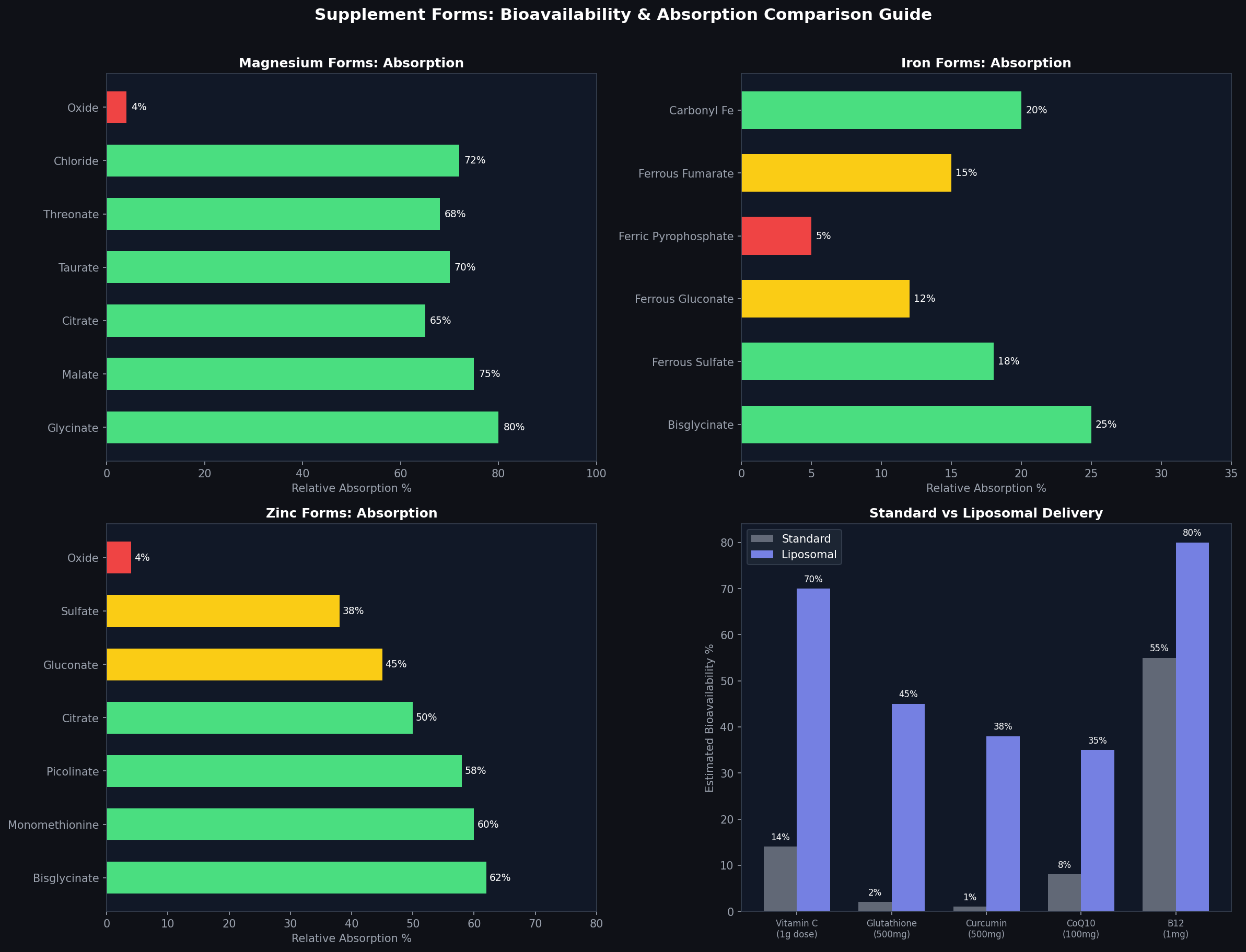
For PMS, cramps, and hormonal support: Magnesium glycinate (well-absorbed, gentle, no laxative effect) or magnesium citrate.
For sleep and anxiety: Magnesium glycinate is the top choice; some prefer magnesium threonate for its putative brain-specific delivery.
For bone health: Any well-absorbed form alongside adequate calcium and vitamin D. Glycinate or malate.
For pregnancy: Magnesium glycinate is preferred for its tolerability — pregnancy already tends toward constipation and GI sensitivity, making the laxative effect of citrate or oxide less welcome.
For bowel regularity: Magnesium citrate (gentle) or magnesium oxide (stronger laxative).
For athletic recovery and muscle cramps: Magnesium malate or glycinate.
What to avoid for systemic benefits: magnesium oxide (see our Magnesium Oxide guide for the full absorption story).
Topical Magnesium: Can You Absorb It Through Skin?
Magnesium oil, sprays, and lotions have become popular among women who experience GI sensitivity with oral supplements. The claim is that magnesium absorbs transdermally (through the skin), bypassing the digestive tract entirely. The evidence is mixed but suggests modest transdermal absorption is possible. For more detail on this, see our dedicated Magnesium Spray Benefits guide.
FAQ
How do I know if I’m magnesium deficient?
Standard serum magnesium tests are unreliable for detecting cellular deficiency. Better markers include RBC (red blood cell) magnesium or a serum ionized magnesium test. Symptoms of insufficiency include muscle cramps, poor sleep, anxiety, fatigue, and PMS worsening — but these are nonspecific. Given how common deficiency is, many practitioners recommend simply trialing supplementation and assessing symptom response.
How much magnesium should a woman take daily?
The RDA is 310–320 mg/day for adult women. Most women benefit from 200–400 mg of supplemental magnesium (in addition to dietary sources), particularly from a well-absorbed form like glycinate or citrate. During pregnancy, requirements rise to 350–360 mg/day.
When is the best time to take magnesium for women?
For sleep and relaxation: 30–60 minutes before bed. For general supplementation and PMS: with dinner or before bed. For athletic performance: post-workout. Consistency matters more than timing.
Can magnesium help with hormonal acne?
Magnesium may help indirectly by supporting insulin sensitivity (which influences androgen levels in PCOS), reducing cortisol (which drives sebum production), and supporting progesterone synthesis. The direct evidence for magnesium and acne is limited, but addressing magnesium deficiency is a reasonable component of a hormonal acne management approach.
Is it safe to take magnesium long-term?
Yes, for people with normal kidney function. The kidneys efficiently excrete excess magnesium. Long-term supplementation at appropriate doses (200–400 mg/day) is considered safe and may provide ongoing benefits for sleep, bone health, and hormonal balance.
Can magnesium interact with my birth control?
Oral contraceptives may lower magnesium levels, which makes maintaining adequate intake more important — not a reason to avoid supplementing. No clinically significant interaction reduces contraceptive effectiveness.
Key Takeaways
Approximately 48% of Americans — with women disproportionately represented — consume less magnesium than the recommended daily amount.
Magnesium directly supports PMS and menstrual cramp relief, sleep quality, anxiety reduction, bone density, blood sugar regulation, and pregnancy health.
The menstrual cycle itself creates cyclical fluctuations in magnesium levels, with levels lowest in the luteal phase (when PMS symptoms peak).
Magnesium glycinate is generally the best all-purpose form for women: well-absorbed, GI-gentle, and supports both sleep and hormonal balance.
Standard serum magnesium blood tests underestimate cellular deficiency — symptoms and dietary assessment matter.
Pregnancy increases magnesium requirements significantly; most prenatal vitamins don’t fully cover the gap.
Menopause and perimenopause accelerate magnesium loss; supplementation becomes even more important through this transition.
Sources
Rosanoff, A., et al., “Suboptimal magnesium status in the United States: Are the health consequences underestimated?” Nutrition Reviews, 2012.
Facchinetti, F., et al., “Oral magnesium successfully relieves premenstrual mood changes,” Obstetrics and Gynecology, 1991.
De Souza, M.C., et al., “A synergistic effect of a daily supplement for 1 month of 200 mg magnesium plus 50 mg vitamin B6 for the relief of anxiety-related premenstrual symptoms,” Journal of Women’s Health & Gender-Based Medicine, 2000.
Benassi, L., et al., “Effectiveness of magnesium pidolate in the prophylactic treatment of primary dysmenorrhea,” Gynecologic and Obstetric Investigation, 1992.
Abbasi, B., et al., “The effect of magnesium supplementation on primary insomnia in elderly: a double-blind placebo-controlled clinical trial,” Journal of Research in Medical Sciences, 2012.
Boyle, N.B., et al., “The Effects of Magnesium Supplementation on Subjective Anxiety and Stress — A Systematic Review,” Nutrients, 2017.
Ryder, K.M., et al., “Magnesium intake from food and supplements is associated with bone mineral density in healthy older white subjects,” Journal of the American Geriatrics Society, 2005.
Makrides, M., et al., “Magnesium supplementation in pregnancy,” Cochrane Database of Systematic Reviews, 2014.
Asbaghi, O., et al., “The effects of magnesium supplementation on obesity measures in adults: A systematic review and dose-response meta-analysis,” Diabetes & Metabolic Syndrome, 2019.
Park, H., and Goldberg, R., “Magnesium reduces hot flashes in breast cancer survivors,” Gynecologic Oncology, 2011.
Pickering, G., et al., “Magnesium Status and Stress: The Vicious Circle Concept Revisited,” Nutrients, 2020.
Office of Dietary Supplements, NIH, “Magnesium — Health Professional Fact Sheet,” updated 2022.