Anxiety Supplements: What the Research Actually Shows About Natural Relief
Quick Answer: Several supplements have meaningful clinical evidence for reducing anxiety symptoms: ashwagandha (adaptogen, lowers cortisol and perceived stress), magnesium (GABA receptor modulation), L-theanine (calm-without-sedation amino acid), GABA, and lavender extract (silexan). These are not replacements for professional treatment of anxiety disorders, but as lifestyle adjuncts — or for people with subclinical anxiety and stress — they can provide real, measurable benefits with excellent safety profiles compared to pharmaceutical anxiolytics.
Ashwagandha (Withania somnifera) is an Ayurvedic herb with the strongest clinical evidence among adaptogenic plants for reducing anxiety and cortisol. It contains withanolides — steroidal lactones that appear to modulate the HPA axis by reducing the cortisol response to stressors.
The clinical evidence is substantial. A 2019 RCT by Choudhary et al. published in Medicine enrolled 58 participants with perceived stress and self-reported anxiety, randomizing them to 240 mg/day of ashwagandha root extract (KSM-66 standardized extract) or placebo. After 60 days, the ashwagandha group showed significantly reduced scores on the Perceived Stress Scale (PSS), State-Trait Anxiety Inventory (STAI), and serum cortisol — with no significant adverse effects.
An earlier 2012 high-quality RCT by Chandrasekhar et al. in the Indian Journal of Psychological Medicine used 300 mg twice daily of standardized ashwagandha root extract in 64 adults with chronic stress. After 60 days, the treatment group showed significant improvements in stress scores, cortisol levels, serum C-reactive protein, pulse rate, and blood pressure.
A 2021 systematic review by Pratte et al. in Advances in Mind-Body Medicine examined 12 RCTs on ashwagandha and stress/anxiety, finding consistent evidence of benefit across different standardized preparations and populations.
Practical details:
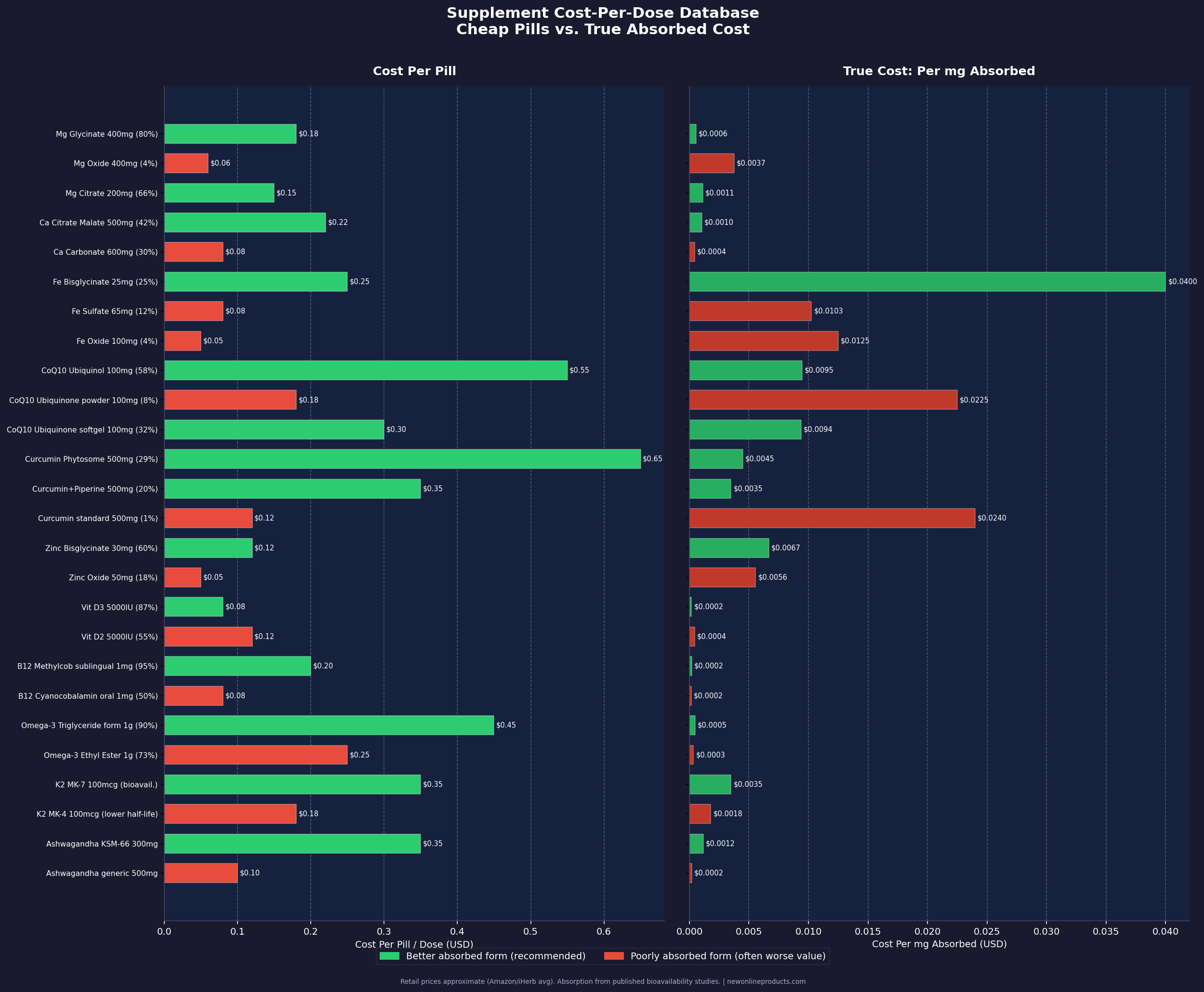
Extract standardization: Look for KSM-66 or Sensoril branded extracts, both of which have proprietary clinical trial data. Generic “ashwagandha root extract” with no standardization disclosure has more variable quality.
Dose: 300–600 mg/day of a standardized root extract (KSM-66 at 5% withanolides, or Sensoril at 10% withanolides). 240 mg/day also showed efficacy in recent trials.
Timing: Can be taken morning or evening. Some people experience slight sedation and prefer evening dosing; others take it in the morning as part of their stress management routine.
Safety: Generally well-tolerated. Rare cases of liver injury have been reported with very high doses; stick to recommended amounts. May potentiate thyroid hormones — people with thyroid conditions should monitor and discuss with their physician.
Magnesium: The Anxiety-Sleep-Stress Triple Threat
Magnesium’s role in anxiety is covered extensively in our Magnesium Benefits for Women guide and is relevant to the broader anxiety picture. Here’s the anxiety-specific summary:
Magnesium is a cofactor for GABA receptor activity and a blocker of NMDA glutamate receptors. When magnesium is depleted — which is common in chronic stress (because cortisol increases urinary magnesium excretion, creating a vicious cycle where stress depletes magnesium, which makes you more stress-reactive) — GABAergic tone decreases and NMDA receptor hyperactivity increases, raising the brain’s excitation-inhibition ratio toward anxiety and hyperreactivity.
A 2017 systematic review by Boyle et al. in Nutrients examined 18 studies and found that magnesium supplementation “significantly reduces current measures of subjective anxiety” and that the effects were most pronounced in subjects with mild-to-moderate anxiety, and in subjects who were magnesium-deficient at baseline.
The magnesium-anxiety connection is supported by epidemiological data as well: NHANES data has repeatedly shown that lower dietary magnesium intake is associated with higher rates of anxiety and depression in the general population.
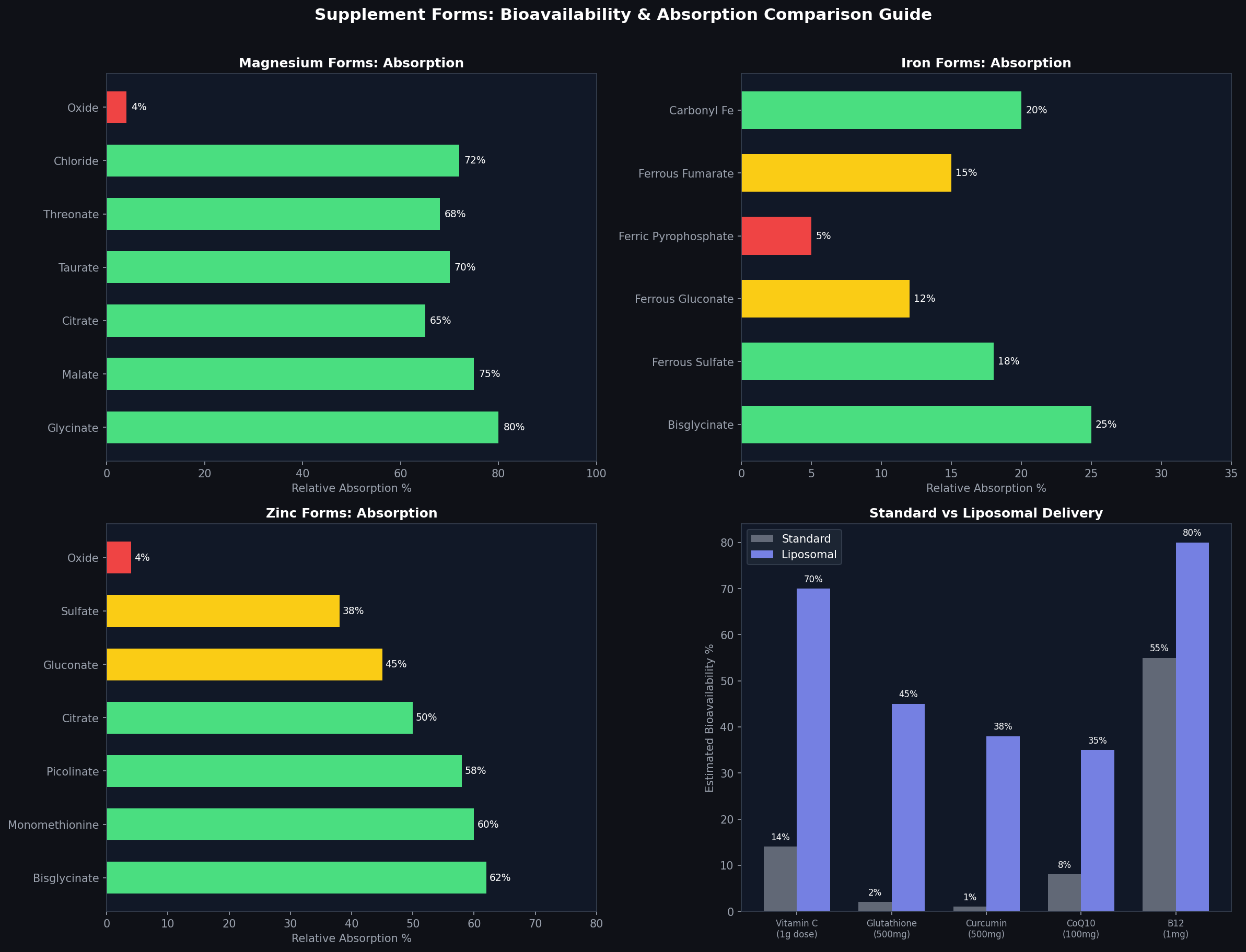
Best forms for anxiety: Magnesium glycinate (the glycine component has calming properties independent of magnesium via glycine receptors in the brainstem) or magnesium threonate (may have superior brain penetration). 200–400 mg elemental magnesium daily.
L-Theanine: Calm Without Sedation
L-theanine is a non-proteinogenic amino acid found almost exclusively in tea leaves (Camellia sinensis), responsible for much of tea’s distinctive calming effect that distinguishes it from coffee despite comparable caffeine levels. L-theanine promotes alpha brainwave activity — a state associated with relaxed alertness (the mental state of meditation) — without causing drowsiness.
The mechanism involves multiple pathways: L-theanine crosses the blood-brain barrier and modulates GABA receptors directly; it also reduces glutamate activity and may enhance dopamine and serotonin synthesis.
A landmark 2004 double-blind crossover study by Nobre et al. in Asia Pacific Journal of Clinical Nutrition demonstrated that L-theanine (50–200 mg) increased alpha band activity in EEG recordings, consistent with a relaxed but alert mental state.
Multiple RCTs have confirmed anxiety-reducing effects:
A 2019 RCT by Hidese et al. in Nutrients found that 200 mg/day of L-theanine for 4 weeks significantly reduced stress-related symptoms, sleep difficulties, and cognitive dysfunction in adults with subclinical anxiety.
A 2016 study by Ritsner et al. found L-theanine (400 mg/day) improved quality of life scores and reduced anxiety in patients with schizophrenia when added to antipsychotic treatment.
L-theanine and caffeine stacking: One of the most well-researched supplement combinations is L-theanine + caffeine (100 mg theanine: 100 mg caffeine ratio). Multiple RCTs have shown this combination improves attention and cognitive performance while reducing the jitteriness and anxiety that caffeine alone can cause. This mirrors what naturally occurs when drinking green or black tea.
Dose: 100–400 mg/day. Safe and non-sedating even at higher doses. Can be taken multiple times daily. Generally well-tolerated with no significant drug interactions at standard doses.
GABA Supplements: Does Supplemental GABA Work?
GABA supplements present a theoretical paradox: GABA is a large, polar molecule with poor penetration of the blood-brain barrier. For years, the consensus was that oral GABA supplementation couldn’t produce central nervous system effects because it couldn’t cross into the brain where it would need to act.
More recent evidence has complicated this picture. A 2006 study by Abdou et al. in Biomedical Research found that oral GABA (100 mg) produced measurable increases in alpha waves and reductions in beta waves within 60 minutes — suggesting some central effect despite the barrier limitation. A 2019 review by Yamatsu et al. proposed that GABA may act on enteric (gut-based) GABA receptors that relay calming signals to the brain via the vagal nerve, bypassing the blood-brain barrier issue.
The evidence for oral GABA is less robust than for ashwagandha or L-theanine, but the practical reports of calming effects — and the emerging gut-brain axis research — suggest it’s not purely a placebo either.
For sleep-adjacent anxiety: GABA combined with L-theanine (available as combination products) is a popular nighttime formula. The combination appears to have synergistic effects on sleep quality in at least one small RCT (Kim et al., 2019).
Dose: 100–500 mg/day. Most products designed for sleep or relaxation use 100–300 mg doses.
Lavender Extract (Silexan): The Psychiatric Herbal With Drug-Level Evidence
Lavender has a long traditional use for calming and sleep, and a specific oral lavender preparation called Silexan (80 mg/day of lavender oil, sold as Lasea in Europe) has been studied in multiple high-quality RCTs with results that have impressed even skeptical researchers.
A 2014 double-blind RCT by Woelk and Schläfke in Phytomedicine directly compared Silexan 80 mg/day to lorazepam (benzodiazepine) 0.5 mg/day in 77 adults with generalized anxiety disorder. After 6 weeks, Silexan reduced anxiety scores on the Hamilton Anxiety Scale (HAM-A) as effectively as lorazepam — without the sedation, withdrawal risk, or addiction potential of the benzodiazepine.
A 2015 RCT by Kasper et al. in International Journal of Neuropsychopharmacology compared Silexan to paroxetine (SSRI) in 539 adults with mixed anxiety disorders, finding Silexan non-inferior to the antidepressant for anxiety relief.
A comprehensive 2020 meta-analysis by Kasper et al. in International Journal of Psychiatry in Clinical Practice analyzed 15 studies on Silexan and confirmed consistent anxiolytic effects across generalized anxiety, mixed anxiety-depression, and restlessness/agitation.
The mechanism involves modulation of VGCC (voltage-gated calcium channels) and serotonin receptor activity — distinct from benzodiazepines and thus not addictive.
Important: Silexan is oral lavender oil, not lavender aromatherapy. Aromatherapy lavender has a different evidence base (helpful but less potent). Seek products specifically standardized as oral lavender oil (silexan).
Dose: 80 mg/day of Silexan oral lavender oil. Available in the U.S. as dietary supplement products (e.g., CalmAid, Serenaid).
Rhodiola Rosea: The Fatigue-Anxiety Adaptogen
Rhodiola rosea is a cold-climate adaptogen with evidence for both physical fatigue reduction and anxiety relief, making it particularly useful for stress driven by burnout, overwork, or physical exhaustion.
A 2015 systematic review by Hung et al. identified 6 RCTs showing beneficial effects of rhodiola on physical performance, mental fatigue, and stress response. The evidence for pure anxiety reduction (vs. stress/fatigue) is less robust than ashwagandha, but rhodiola’s strong fatigue-reducing effects may make it the better choice when anxiety presents alongside burnout or adrenal depletion patterns.
Rhodiola appears to work through inhibition of monoamine oxidase (MAO), enhancing serotonin and dopamine metabolism, and modulating the HPA axis.
Dose: 200–400 mg/day of standardized extract (3% rosavins, 1% salidroside). Take in the morning — rhodiola can be mildly stimulating and may disrupt sleep if taken at night.
Valerian Root: Sleep-Linked Anxiety Support
Valerian (Valeriana officinalis) has been used for anxiety and sleep for millennia. Its active compounds (valerenic acid and related iridoids) appear to inhibit GABA transaminase (the enzyme that breaks down GABA) and modulate GABA-A receptors — mechanistically similar to benzodiazepines but with a much weaker and gentler effect.
Evidence for valerian as a pure anxiolytic is moderate; its stronger evidence base is for sleep improvement (multiple meta-analyses show sleep quality improvements at doses of 300–600 mg before bed). For people whose anxiety primarily manifests at night or as sleep-disrupting worry, valerian is a practical option.
Dose: 300–600 mg of standardized root extract before bed. The odor is distinctive (sulfurous compounds, famously unpleasant to some) — look for odor-reduced formulations.
5-HTP: The Serotonin Precursor
5-hydroxytryptophan (5-HTP) is a direct precursor to serotonin — more proximate to serotonin synthesis than tryptophan. Some evidence supports 5-HTP for anxiety, particularly anxiety with concurrent depressive features, at doses of 100–300 mg/day.
Important caution: 5-HTP should not be combined with SSRIs, MAOIs, or other serotonergic drugs without medical supervision due to serotonin syndrome risk. This is a meaningful contraindication for a large population of anxiety sufferers who are already on antidepressant medication.
Building an Anxiety Supplement Stack
Different supplements address different aspects of anxiety, and thoughtful combination can cover multiple mechanisms:
For generalized anxiety and chronic stress: Ashwagandha (300–600 mg/day) + Magnesium glycinate (300–400 mg/day, evening)
For acute situational anxiety (presentations, flights, social events): L-theanine (200 mg, 30–60 min before) — fast-acting, non-sedating, pairs well with caffeine if alertness is also needed
For sleep-disrupting anxiety: Magnesium glycinate (200–400 mg before bed) + GABA + L-theanine (combination product) or Valerian (300–600 mg)
For burnout-driven anxiety: Rhodiola rosea (morning) + Magnesium (evening)
For anxiety with drug-level evidence for GAD: Silexan oral lavender (80 mg/day)
Lifestyle Foundation (Non-Negotiable)
Supplements work best as adjuncts to, not replacements for, foundational lifestyle practices:
Regular aerobic exercise: One of the most potent natural anxiolytics available — 30 minutes 5 days/week reduces anxiety scores comparably to medication in some RCTs.
Sleep: Anxiety and sleep disruption are bidirectional. Prioritizing sleep duration and quality is essential.
Dietary patterns: Mediterranean and anti-inflammatory diets are associated with lower anxiety burden in epidemiological research.
Mindfulness and CBT: Cognitive behavioral therapy remains the gold standard psychological treatment for anxiety disorders; mindfulness practice has robust evidence for stress and anxiety reduction.
Limiting stimulants: Caffeine amplifies the physiological anxiety response; reducing intake can meaningfully reduce baseline anxiety for caffeine-sensitive individuals.
When to Seek Professional Help
Supplements are appropriate for mild-to-moderate stress and subclinical anxiety. If anxiety is:
Interfering significantly with work, relationships, or daily function
Accompanied by panic attacks
Associated with specific phobias, OCD, or PTSD
Present in children or adolescents
Accompanied by depression or suicidal thoughts
— professional evaluation (psychiatry, psychology, or your primary care physician) is necessary. Supplements are not replacements for evidence-based clinical treatment of anxiety disorders.
FAQ
What is the best natural supplement for anxiety?
Ashwagandha (standardized extract, 300–600 mg/day) has the strongest overall evidence for anxiety and stress reduction, with multiple high-quality RCTs showing meaningful cortisol and anxiety score reductions. L-theanine is the best option for acute, situational anxiety. Oral lavender (Silexan 80 mg) has drug-comparison-level evidence for GAD.
Do anxiety supplements work as well as medication?
For subclinical anxiety and stress, they can be comparably effective to low-dose anxiolytics with far better safety profiles. For clinical anxiety disorders (GAD, panic disorder, social anxiety disorder), medication and/or CBT remain significantly more effective for most people; supplements work best as adjuncts.
Are anxiety supplements safe to take with antidepressants?
Many are (magnesium, L-theanine, lavender, ashwagandha). 5-HTP should not be combined with SSRIs/MAOIs. St. John’s Wort (not covered here but commonly attempted) significantly interacts with numerous medications including antidepressants, contraceptives, and anticoagulants. Always disclose supplements to your prescribing physician.
How long does ashwagandha take to work for anxiety?
Most clinical trials show measurable effects on stress and anxiety scores within 4–8 weeks of consistent supplementation. Some people report noticeable effects sooner; the cortisol-lowering effects accumulate with consistent use.
Can I take L-theanine daily?
Yes — it’s non-addictive, non-sedating at standard doses, and safe for daily use. Many people take it as part of their morning coffee routine (blunts caffeine jitteriness) and again in the evening for sleep preparation.
Key Takeaways
Anxiety supplements work through distinct neurochemical mechanisms: GABA support (magnesium, lavender, GABA, valerian), HPA axis modulation (ashwagandha, rhodiola), and sympathetic nervous system calming (L-theanine).
Ashwagandha has the strongest clinical evidence for chronic stress and generalized anxiety among natural supplements, with multiple RCTs showing significant cortisol and PSS/STAI score reductions.
Oral lavender extract (Silexan 80 mg/day) has been directly compared to benzodiazepines and SSRIs in RCTs, showing non-inferior anxiety reduction without addiction risk.
L-theanine is the best option for acute situational anxiety — fast-acting, non-sedating, pairs synergistically with caffeine.
Magnesium addresses anxiety through GABA support and NMDA receptor blockade; chronic stress depletes magnesium, creating a vicious cycle.
Stack supplements targeting different mechanisms for comprehensive coverage; lifestyle interventions (exercise, sleep, CBT) remain foundational.
Professional evaluation is warranted for clinical anxiety disorders — supplements are adjuncts, not primary treatments for moderate-to-severe anxiety.
Sources
Choudhary, D., et al., “Body Weight Management in Adults Under Chronic Stress Through Treatment With Ashwagandha Root Extract,” Medicine, 2019.
Chandrasekhar, K., et al., “A prospective, randomized double-blind, placebo-controlled study of safety and efficacy of a high-concentration full-spectrum extract of ashwagandha root in reducing stress and anxiety in adults,” Indian Journal of Psychological Medicine, 2012.
Boyle, N.B., et al., “The Effects of Magnesium Supplementation on Subjective Anxiety and Stress — A Systematic Review,” Nutrients, 2017.
Nobre, A.C., et al., “L-theanine, a natural constituent in tea, and its effect on mental state,” Asia Pacific Journal of Clinical Nutrition, 2008.
Hidese, S., et al., “Effects of L-Theanine Administration on Stress-Related Symptoms and Cognitive Functions in Healthy Adults: A Randomized Controlled Trial,” Nutrients, 2019.
Woelk, H., and Schläfke, S., “A multi-center, double-blind, randomised study of the lavender oil preparation Silexan in comparison to lorazepam for generalized anxiety disorder,” Phytomedicine, 2010.
Kasper, S., et al., “An orally administered lavandula oil preparation (Silexan) for anxiety disorder and related conditions,” International Journal of Psychiatry in Clinical Practice, 2013.
Abdou, A.M., et al., “Relaxation and immunity enhancement effects of gamma-aminobutyric acid (GABA) administration in humans,” Biomedical Research, 2006.
Hung, S.K., et al., “The effectiveness and efficacy of Rhodiola rosea L.: A systematic review of randomized clinical trials,” Phytomedicine, 2011.
Pratte, M.A., et al., “An Alternative Treatment for Anxiety: A Systematic Review of Human Trial Results Reported for the Ayurvedic Herb Ashwagandha (Withania somnifera),” The Journal of Alternative and Complementary Medicine, 2014.