
Natural Vitality Calm Magnesium Review: Does It Actually Work?
Quick Answer: Natural Vitality Calm is a magnesium citrate powder supplement that mixes into water and is one of the top-selling magnesium products in the U.S. It uses a reasonably well-absorbed form of magnesium, offers flexible dosing, and works well for sleep, constipation, and relaxation. The main downsides are the relatively high cost per serving, added sugars in some flavors, and the fact that magnesium citrate has a mild laxative effect at higher doses that may not suit everyone. Overall, it’s a legitimate product — but not necessarily the best magnesium option for every use case.
Magnesium citrate is one of the better-absorbed oral magnesium forms available. Studies comparing bioavailability across magnesium salts — including the frequently cited Walker et al. (2003) paper in Magnesium Research — consistently rank magnesium citrate significantly higher than magnesium oxide in absorption, and generally comparable to magnesium chloride. Relative to magnesium glycinate, the picture is more nuanced: glycinate tends to be gentler on the GI tract at high doses (because the glycine amino acid carries the magnesium across the intestinal wall via an amino acid transport mechanism, rather than the osmotic mechanism of citrate), while citrate has a mild laxative effect at higher doses.
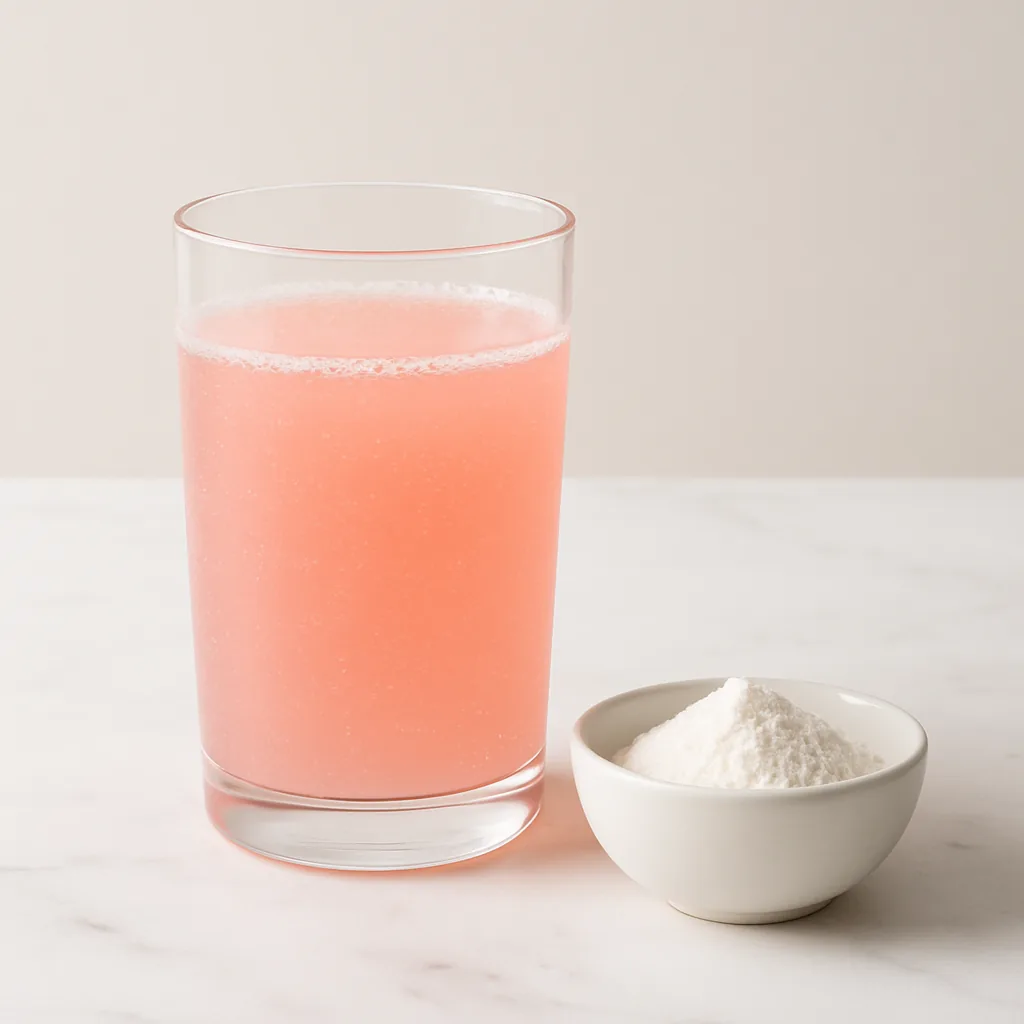
For Natural Vitality Calm specifically, the magnesium is being created in solution through the acid-carbonate reaction. This means by the time you drink it, the magnesium is already in ionized, dissolved form — potentially providing a slight absorption advantage over swallowing a solid tablet that must first dissolve in stomach acid.
The citrate form and dissolved state mean Calm is one of the better-absorbed commercial magnesium products on the market, even if it’s not quite at the top tier of glycinate for people prone to GI sensitivity.
Does Natural Vitality Calm Work?
The evidence for magnesium supplementation for the claims Natural Vitality Calm makes (stress, sleep, relaxation) is strong — but the evidence is for magnesium in general, not specifically for this product. Since Calm uses a reasonably well-absorbed form at a clinically relevant dose (325 mg per serving), it should deliver most of the benefits documented for magnesium in the literature.
For sleep: Research supports magnesium supplementation improving sleep quality, particularly for people who are deficient. A 2012 RCT (Abbasi et al.) found significant improvements in sleep parameters with magnesium supplementation. Calm’s citrate form should deliver similar results. Many users report improved sleep onset and reduced nighttime waking with consistent use.
For stress and anxiety: Magnesium’s role in GABA receptor modulation and HPA axis regulation underpins its anxiety-reducing effects. Boyle et al.’s 2017 systematic review confirmed meaningful effects of magnesium supplementation on subjective anxiety, particularly in magnesium-insufficient individuals. At 325 mg/serving, Calm covers the typical therapeutic range (200–400 mg supplemental magnesium) studied in anxiety research.
For constipation: The mild laxative effect of magnesium citrate is one of Calm’s most consistent reported benefits — and also its most common complaint. At full doses (325 mg), many users experience loosening of stools, which can be welcome or unwelcome depending on your situation.
For PMS and menstrual cramps: As reviewed in our magnesium benefits for women guide, magnesium at 300–400 mg/day reduces PMS symptoms and menstrual cramp severity. Calm’s dose range is appropriate.
For muscle cramps and recovery: Magnesium’s role in neuromuscular function supports its use for cramp prevention. Citrate form at the doses in Calm should support this use case.
How to Use Natural Vitality Calm
The standard protocol from Natural Vitality is:
- Start with ½ teaspoon (about 160 mg elemental magnesium) to assess tolerance.
- Gradually increase to 1–2 teaspoons (325–650 mg) per day as needed.
- Mix in hot water for the best reaction; the fizzing stops when the reaction completes, then add cold water if desired.
Start low: The “start low, go slow” advice is genuinely important with Calm. At full or double doses, GI side effects (loose stools, diarrhea) are common — particularly in people not accustomed to magnesium supplementation. Many new users who take two teaspoons on the first day and spend the next morning in the bathroom swear off the product when they just needed to start smaller.
Timing: Most users take Calm in the evening, 30–60 minutes before bed, for sleep and relaxation benefits. Others use it with breakfast for general magnesium supplementation. There’s no definitive evidence on optimal timing — consistency matters more.
Hot vs. cold water: The acid-carbonate reaction completes most efficiently with hot water. You can then add ice or cold water to taste without reducing efficacy.
The fizzing is normal: New users sometimes mistake the CO₂ release for product spoilage. It’s intentional and indicates the citrate-forming reaction is proceeding correctly.
Pros and Cons of Natural Vitality Calm
Pros
Magnesium citrate form: Better absorbed than oxide; creates an already-dissolved, ionized solution. A solid choice for general supplementation.
Flexible dosing: The powder format allows you to titrate your dose more precisely than capsules. This is genuinely useful for managing the laxative effect.
Pleasant ritual: Making a warm magnesium drink in the evening can become a valuable sleep-routine signal. The ritual aspect shouldn’t be dismissed — behavioral cues matter for sleep hygiene.
Wide availability: Sold at Whole Foods, Costco, Amazon, Sprouts, and most health food stores. Easy to find and price-compete.
Flavor options: The Raspberry Lemon flavor has strong consumer approval ratings and makes the supplementation routine more enjoyable.
No capsule swallowing: For people who struggle with large capsules, the powder form removes a common barrier.
Cons
Cost per serving: At typical retail prices, Natural Vitality Calm costs approximately $0.60–$0.80 per serving (1 tsp) at full dose. Comparable elemental magnesium from magnesium glycinate capsules (which have better GI tolerance at similar doses) can be purchased for $0.20–$0.40 per serving.
Laxative effect at higher doses: Magnesium citrate’s osmotic laxative mechanism means that at doses needed for full magnesium repletion (325–650 mg), many users experience loose stools. People who are GI-sensitive may find glycinate more appropriate.
Added ingredients in flavored versions: The flavored varieties include citric acid, natural flavors, and stevia, which are generally well-tolerated but may be a concern for people avoiding certain additives.
Not ideal for all use cases: For cognitive/brain benefits (emerging for magnesium threonate), for deeply GI-sensitive individuals (glycinate is better), or for pure bone health support as part of a calcium protocol, other forms may be preferable.
Sugar content varies: Some formulations have included cane sugar; check the current label of the specific version you’re considering.
How Natural Vitality Calm Compares to Alternatives
vs. Magnesium glycinate capsules: Glycinate is better absorbed by some measures, significantly gentler on the GI tract, and typically less expensive per mg of elemental magnesium. The downside: no ritual, no warm drink, and capsule swallowing required. For people who specifically want sleep-ritual benefits or have trouble with capsules, Calm wins on experience despite losing on cost and GI tolerance.
vs. Magnesium oxide: Calm wins handily — magnesium citrate is substantially better absorbed than oxide. Don’t choose oxide for the same goals you’d use Calm for.
vs. Magnesium threonate (Magtein): Threonate has premium positioning for cognitive benefits and blood-brain barrier penetration. Significantly more expensive ($1.50–$2.00 per serving). For people primarily seeking sleep and stress benefits rather than cognitive optimization, Calm provides similar results at lower cost.
vs. Generic magnesium citrate capsules: Very similar chemistry, typically lower cost. Calm’s value-add is the powder format, flavor, and ritual aspect. If you don’t care about those things, generic magnesium citrate capsules will do the same job for less money.
Who Should Choose Natural Vitality Calm?
Best candidates:
- People who enjoy a warm evening drink ritual and want to build a consistent sleep-supplement habit.
- Those who struggle to swallow capsules.
- People who want flexible dosing they can adjust daily based on how they feel.
- Anyone who’s had success with Calm in the past and prefers to stay with what works.
- People tolerating the GI effect fine and who value wide retail availability.
Should consider alternatives:
- Anyone with GI sensitivity who needs higher magnesium doses (glycinate is better tolerated).
- People on a tight supplement budget (generic glycinate or citrate capsules are less expensive).
- Those seeking specifically cognitive or brain-related magnesium benefits (threonate).
- People who need a clean formula without any added flavors or stevia.
What Users Actually Say
Consumer reviews consistently note:
- Positive: Better sleep, feeling calmer, improved constipation, easy to incorporate into routine.
- Negative: Loose stools at full doses (most common complaint), high price relative to capsule alternatives, stevia aftertaste in flavored versions.
The pattern in reviews is telling: the people who have the best experience are those who started low and built up slowly, and who took it in the evening. The people who had bad experiences typically took too much too fast or took it in the morning before a day of errands.
The Brand Trust Question
Natural Vitality was founded in 1982 and was acquired by Nestlé Health Science in 2019. Some natural/clean-product consumers have mixed feelings about the acquisition; formulations have remained largely the same. The product has NSF certification on some versions and has been third-party tested. It’s not the most rigorous testing program available (NSF for Sport or USP certification would be higher bars), but it’s better than no third-party verification.
FAQ
Is Natural Vitality Calm worth it?
If you want a premium magnesium drink experience and can tolerate the higher price point, yes — the form is good and the ritual has real value for sleep routines. If cost is a concern, generic magnesium glycinate capsules offer equivalent or better systemic magnesium delivery at lower cost.
Why does Calm make me go to the bathroom?
Magnesium citrate has an osmotic laxative effect — unabsorbed magnesium draws water into the intestine. At higher doses this produces loose stools or diarrhea. Start with ½ tsp and increase gradually to find your tolerance threshold.
Can I take Natural Vitality Calm every day?
Yes, for healthy adults with normal kidney function. Daily use at 1–2 tsp is within standard magnesium supplementation ranges. Those with kidney disease should consult a physician.
What’s the best flavor of Natural Vitality Calm?
Raspberry Lemon is the consistent consumer favorite and has the best reviews. The unflavored version is better for people sensitive to stevia or natural flavors.
Can I mix Natural Vitality Calm with other supplements?
Generally yes — magnesium doesn’t negatively interact with most supplements. Space it 2+ hours from antibiotics, thyroid medications, and bisphosphonates, which can have their absorption reduced by magnesium.
Is Natural Vitality Calm the same as magnesium citrate powder?
Functionally similar but not identical. Calm uses a magnesium carbonate + citric acid system that creates magnesium citrate in solution. Pre-made magnesium citrate powder dissolved in water achieves a similar end result.
Key Takeaways
- Natural Vitality Calm uses a magnesium carbonate + citric acid formula that creates magnesium citrate in solution — a well-absorbed form of magnesium.
- At 325 mg elemental magnesium per serving, it delivers doses in the clinical range for sleep, stress, PMS, and muscle support.
- The biggest downside is loose stools/laxative effect at higher doses — start at ½ tsp and titrate up.
- The powder format and evening drink ritual add real behavioral value for building sleep habits, even beyond the supplement itself.
- Cost per serving is higher than generic magnesium glycinate or citrate capsules.
- For GI-sensitive individuals or those on tight budgets, magnesium glycinate capsules offer better GI tolerance and lower cost.
- The product is legitimate — not the “best” magnesium supplement by every metric, but a solid choice with good user experience.
Sources
- Walker, A.F., et al., “Mg citrate found more bioavailable than other Mg preparations in a randomised, double-blind study,” Magnesium Research, 2003.
- Abbasi, B., et al., “The effect of magnesium supplementation on primary insomnia in elderly: A double-blind placebo-controlled clinical trial,” Journal of Research in Medical Sciences, 2012.
- Boyle, N.B., et al., “The Effects of Magnesium Supplementation on Subjective Anxiety and Stress,” Nutrients, 2017.
- Facchinetti, F., et al., “Oral magnesium successfully relieves premenstrual mood changes,” Obstetrics and Gynecology, 1991.
- Schuchardt, J.P., and Hahn, A., “Intestinal Absorption and Factors Influencing Bioavailability of Magnesium — An Update,” Current Nutrition & Food Science, 2017.
- Office of Dietary Supplements, NIH, “Magnesium — Health Professional Fact Sheet,” updated 2022.
- Natural Vitality Calm product label and company information, accessed 2026.
Related Articles




Leave a Reply