Lion’s Mane for ADHD and Focus: What the Research Actually Shows
Quick Answer: Lion’s mane (Hericium erinaceus) is a medicinal mushroom that stimulates nerve growth factor (NGF) production, supporting neuronal health and potentially cognitive function. While it’s increasingly marketed for ADHD, the direct clinical evidence for ADHD specifically is very limited — no large RCTs in ADHD populations exist. However, lion’s mane does have meaningful human clinical evidence for cognitive function, anxiety reduction, and mild cognitive impairment — effects that are relevant to some ADHD-related cognitive challenges. It’s a reasonable complementary nootropic for ADHD but not a proven ADHD treatment.
Attention deficit hyperactivity disorder affects approximately 5–8% of children and 2–5% of adults worldwide, making it one of the most prevalent neurodevelopmental conditions. For many individuals and parents, the standard pharmaceutical approach (stimulant medications — methylphenidate, amphetamines) raises concerns: dependency potential, cardiovascular effects, appetite suppression, sleep disruption, and in some, the simple desire for a non-pharmaceutical approach.
The supplement world has rushed to fill this demand, and lion’s mane has emerged as one of the most talked-about “natural ADHD supplements.” The biology is genuinely interesting — lion’s mane’s mechanisms are neurologically relevant — but the translation from mechanism to ADHD-specific clinical evidence requires careful examination.
Understanding ADHD Neurobiology: Where Lion’s Mane Fits
ADHD is primarily characterized by dysregulation of the dopaminergic and noradrenergic systems in the prefrontal cortex — the brain region responsible for executive function, impulse control, working memory, and attention regulation. Stimulant medications work by increasing dopamine and norepinephrine availability in these circuits.
Lion’s mane’s mechanisms don’t directly target dopamine or norepinephrine. Instead, its primary effects involve:
Nerve growth factor (NGF) stimulation: This is lion’s mane’s signature mechanism. Hericenones (from the fruiting body) and erinacines (from mycelium) stimulate the synthesis and secretion of NGF. NGF is a neurotrophin — it supports the survival, maintenance, and differentiation of neurons, particularly cholinergic neurons (acetylcholine-producing), and promotes synaptogenesis (formation of new synaptic connections).
BDNF (brain-derived neurotrophic factor) support: Some evidence suggests lion’s mane may also increase BDNF, another neurotrophin critical for neuroplasticity, learning, and memory. BDNF is chronically low in many neurodevelopmental and mood conditions.
Anti-neuroinflammatory effects: Lion’s mane reduces inflammatory cytokines in neural tissue, with particular relevance to conditions where chronic neuroinflammation may impair cognitive function.
Acetylcholine system support: Because NGF specifically supports cholinergic neurons (which use acetylcholine as their neurotransmitter), lion’s mane may improve cholinergic signaling. The cholinergic system is relevant to attention — acetylcholine in the prefrontal cortex modulates signal-to-noise ratio in attention circuits.
The connection to ADHD is indirect: lion’s mane improves neuroplasticity, supports neuronal health, and enhances cholinergic function — mechanisms that could support cognitive improvement broadly but that don’t directly address the dopaminergic dysregulation at the core of ADHD.
The Human Clinical Evidence for Lion’s Mane
While ADHD-specific trials are limited, lion’s mane has been studied in several human populations with cognitive implications:
Mild Cognitive Impairment (MCI)
The most rigorous human RCT is a 2009 Japanese double-blind study by Mori et al. published in Phytotherapy Research. 50 adults over 50 with mild cognitive impairment were randomized to lion’s mane tablets (1 g dried fruiting body equivalent, 3 times/day — approximately 3 g/day total) or placebo for 16 weeks. The lion’s mane group showed significant improvements on the Hasegawa Dementia Scale (a cognitive function assessment) compared to placebo. Importantly, cognitive scores returned toward baseline when supplementation was discontinued, suggesting the effect was dependent on ongoing use.
A 2019 pilot study by Saitsu et al. in Biomedical Research enrolled 31 adults over 50 with self-reported cognitive concerns and found 3 g/day lion’s mane for 12 weeks significantly improved Mini-Mental State Examination (MMSE) scores. Additionally, participants reported improvements in short-term memory, sleep quality, and mood.
Anxiety and Depression
A 2010 double-blind RCT by Nagano et al. in Biomedical Research studied lion’s mane (amycenone preparation) in 30 menopausal women with various depression and anxiety symptoms. The lion’s mane group showed significantly reduced depression and anxiety scores compared to placebo after 4 weeks. The authors proposed that lion’s mane’s NGF-stimulating effects on cholinergic function contributed to these mood effects.
A 2019 study by Ratto et al. examined lion’s mane supplementation for anxiety and sleep quality in young adults, finding improvements in anxiety scores over 4 weeks.
Cognitive Performance in Young Adults
A 2023 study by Docherty et al. in Nutrients is notable for studying lion’s mane in a young healthy population (participants aged 18–45). In this double-blind crossover RCT, participants received a single dose of lion’s mane extract (1.8 g) or placebo, then were assessed on cognitive tests. The lion’s mane condition showed significantly faster information processing speed and better executive function scores compared to placebo — a surprising acute effect for a compound typically associated with longer-term neurotrophin support.
ADHD-Specific Evidence
Here is the honest picture: there are no large, published RCTs examining lion’s mane specifically for ADHD, inattentive symptoms, or executive function in ADHD-diagnosed populations. The ADHD marketing is ahead of the ADHD-specific clinical evidence.
What exists:
Case reports and practitioner observations (not clinical trials) of lion’s mane benefit in ADHD patients.
Mechanistic plausibility through NGF support of prefrontal cholinergic function.
One small unpublished pilot study (cited in some supplement marketing) suggesting benefit.
The cognitive-improvement evidence from MCI and general population studies, which may extrapolate to ADHD-related cognitive challenges.
This is genuinely different from the established evidence base for methylphenidate or amphetamine in ADHD — where hundreds of RCTs document robust, consistent effects on attention, hyperactivity, and executive function.
What Makes Lion’s Mane Mechanistically Plausible for ADHD Support
Despite the limited direct evidence, several considerations support lion’s mane as a reasonable adjunct supplement for ADHD:
The cholinergic-attention connection: Acetylcholine is not typically highlighted in ADHD neuroscience discussions (which focus on dopamine and norepinephrine), but it plays an important modulatory role in attentional systems. NGF-supported cholinergic neuron health may improve attention “signal quality” even without directly targeting dopamine.
Neuroplasticity as a foundation: ADHD brains often show differences in cortical development timing and prefrontal maturation. NGF-promoted neuroplasticity may support the ongoing development and maintenance of prefrontal circuits relevant to attention and executive function — particularly in adults where neuroplasticity is important for sustained cognitive function.
Comorbid anxiety and depression: ADHD frequently co-occurs with anxiety and depression, and lion’s mane has the most direct evidence in these areas. If lion’s mane reduces comorbid anxiety (which is well-studied), it may improve the overall cognitive performance of someone with ADHD who is also struggling with anxiety-driven cognitive load.
Neuroprotection: ADHD brains may be more vulnerable to stress-related neuroinflammation. Lion’s mane’s anti-neuroinflammatory effects could provide a protective background.
Lion’s Mane vs. Other Nootropics for ADHD
Several nootropic compounds are more directly mechanistically connected to ADHD’s dopaminergic/noradrenergic pathways than lion’s mane:
L-tyrosine: Precursor to dopamine and norepinephrine. Provides substrate for catecholamine synthesis. More directly relevant to ADHD neurobiology.
L-theanine + caffeine: Improves attention and focus in multiple RCTs; L-theanine blunts caffeine’s anxiety-producing effects. A practical, well-studied option for ADHD-adjacent cognitive support.
Ginkgo biloba: Has a few ADHD-specific RCTs (with modest results) and improves cerebral blood flow and antioxidant activity in frontal regions.
Phosphatidylserine: A phospholipid with some direct ADHD evidence — a 2010 RCT in children with ADHD by Hirayama et al. in European Psychiatry found phosphatidylserine significantly improved ADHD symptoms scores.
Omega-3 (DHA+EPA): Multiple RCTs in ADHD populations, including a 2019 meta-analysis by Chang et al. in Neuropsychopharmacology, found omega-3 supplementation modestly reduced ADHD symptom severity, particularly in children with lower baseline omega-3 levels.
Lion’s mane complements rather than replaces these approaches. A comprehensive nootropic stack for ADHD cognitive support might include omega-3s (most direct evidence), L-theanine (for focus without anxiety), and lion’s mane (for long-term neuroplasticity and cholinergic support).
Product Forms and Bioavailability
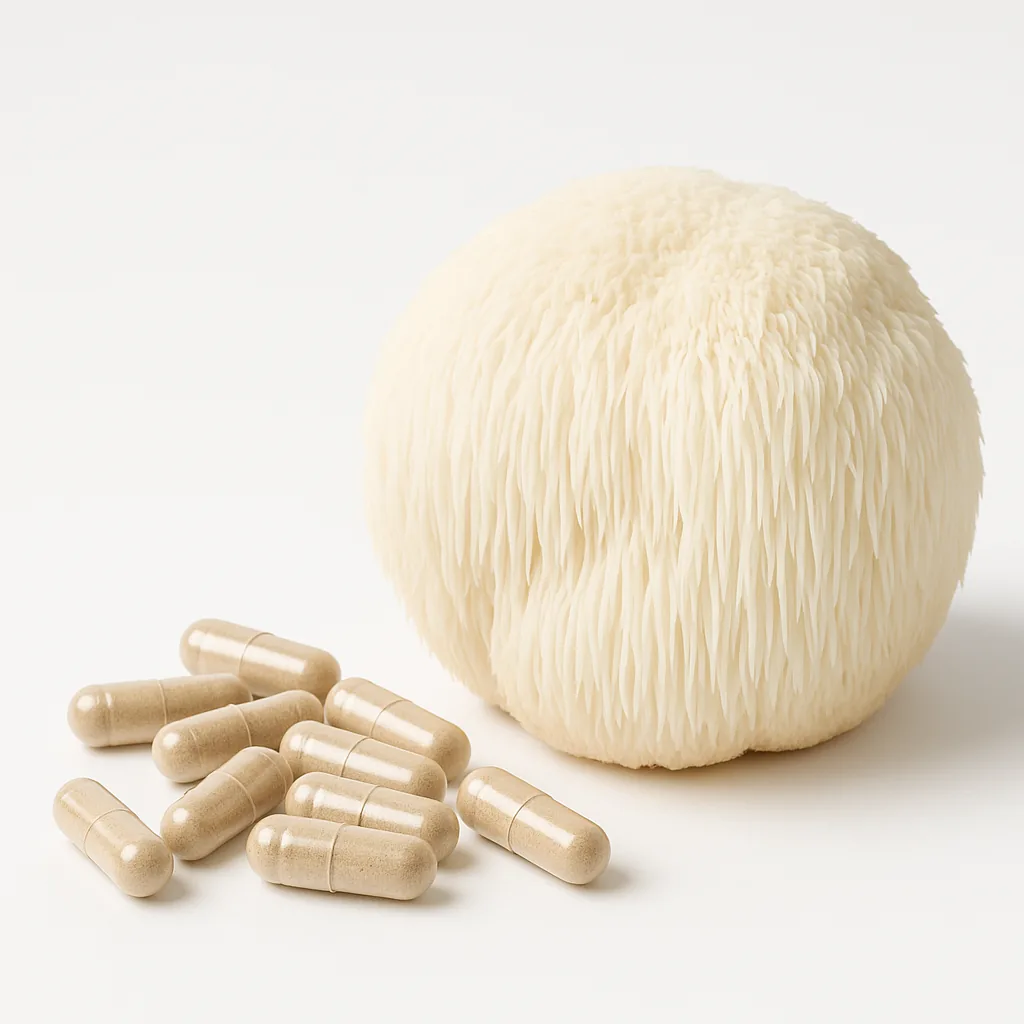
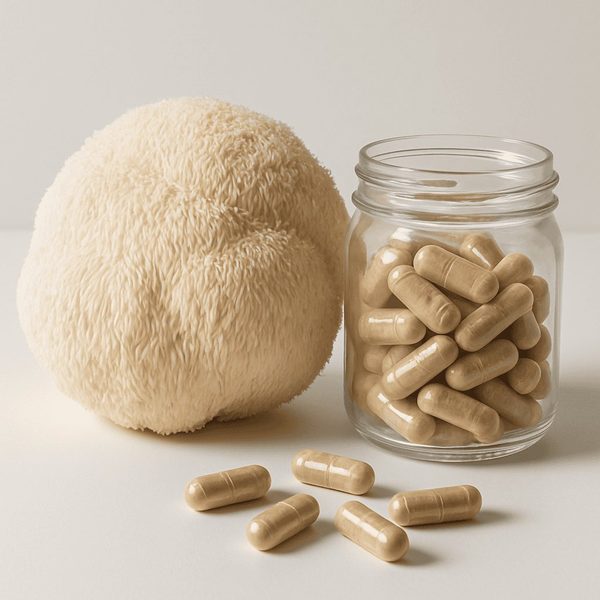
Fruiting body vs. mycelium: This is an important distinction in lion’s mane products. Hericenones — the primary NGF-stimulating compounds in clinical research — are found predominantly in the fruiting body. Erinacines, which also stimulate NGF and may cross the blood-brain barrier more readily, are found in the mycelium. Quality products use either fruiting body extract, mycelium extract, or both.
Dual-extract products: Some brands offer dual hot water + alcohol extraction to capture both water-soluble polysaccharides (beta-glucans, important for immune effects) and alcohol-soluble hericenones.
Grain filler concern: Many lion’s mane mycelium products are grown on grain (often oats or rice). If the grain is not removed, the product contains primarily starch with minimal mushroom compounds. Look for products that specify “grain-free” mycelium or that test for beta-glucan content (not just total polysaccharides).
Standardized extract vs. whole dried mushroom: Standardized extracts (typically 30–50% polysaccharides) provide more predictable active compound content. Whole dried mushroom powder provides more varied concentrations depending on growth conditions and batch.
Dosing Recommendations
Based on human clinical trials:
For cognitive support and neuroprotection:
1–3 g/day of fruiting body extract (as used in Mori et al. RCT)
Or 500–1000 mg of a standardized extract (30%+ polysaccharides/beta-glucans)
For potential ADHD cognitive support:
500–1000 mg twice daily of a standardized fruiting body extract
Start lower (500 mg/day) and titrate up based on response
With or without food: Lion’s mane can be taken with or without food. Some practitioners suggest morning dosing for focus support; others spread doses throughout the day.
Duration: The Mori et al. RCT used 16 weeks before significant cognitive improvement was documented. Short-term trials (4–8 weeks) also show benefits. Expect to use it consistently for at least 4–8 weeks before assessing response.
Children with ADHD: There are no pediatric dosing guidelines established in clinical trials. Use of lion’s mane in children should involve discussion with their pediatrician.
Side Effects and Safety
Lion’s mane is generally well-tolerated. In clinical trials, adverse events were rare and mild (primarily GI upset in a small minority of participants). No significant drug interactions have been identified in published research.
Allergic reactions: Rare but documented. People with mushroom allergies should exercise caution with lion’s mane.
Theoretical drug interactions: Lion’s mane may have mild blood-thinning effects (seen in some in vitro studies). Use caution with anticoagulants. Theoretical concerns about interaction with immune-modulating medications have not been documented in clinical settings.
Pregnancy and breastfeeding: Insufficient safety data; not recommended during pregnancy without physician guidance.
FAQ
Does lion’s mane help ADHD?
There is no direct large-scale RCT evidence specifically for ADHD. The mechanisms (NGF stimulation, cholinergic support, neuroplasticity) are biologically relevant but the ADHD-specific marketing outpaces the ADHD-specific clinical evidence. It may provide meaningful cognitive support as an adjunct but should not be considered a primary ADHD treatment.
How long does lion’s mane take to work for focus?
The most robust human trials used 12–16 week interventions. However, a 2023 study found acute (single-dose) improvements in processing speed and executive function. Expect gradual improvement over 4–12 weeks for sustained cognitive effects.
Is lion’s mane better than Adderall for ADHD?
No — there’s no comparison evidence, and stimulant medications have an overwhelming evidence base for ADHD treatment that lion’s mane doesn’t match. Lion’s mane is a potential adjunct or option for people who cannot or choose not to use stimulants, not a replacement for proven pharmaceutical options.
What is the best form of lion’s mane?
Standardized fruiting body extract with disclosed beta-glucan content, verified as grain-free, and third-party tested. Dual-extract products (hot water + alcohol) capture the full spectrum of active compounds.
Can lion’s mane be combined with ADHD medication?
No significant interactions have been identified, but anyone adding supplements to ADHD medication should disclose this to their prescribing physician. Monitoring attention and any cardiovascular effects is appropriate.
Key Takeaways
Lion’s mane stimulates NGF production through hericenones and erinacines, supporting neuroplasticity, cholinergic neuron health, and anti-neuroinflammatory effects.
Human RCT evidence shows significant cognitive improvements in MCI populations, anxiety reduction, and faster information processing in healthy adults — but no large ADHD-specific trials exist.
The ADHD mechanism is indirect: NGF support of cholinergic function and prefrontal neuroplasticity, not direct dopamine/norepinephrine modulation.
Most compelling as an adjunct for ADHD-related cognitive challenges (particularly working memory, focus, and anxiety comorbidity) rather than as a primary ADHD treatment.
Fruiting body extract (standardized, grain-free) is preferred over mycelium grown on grain. Dual-extract products offer the broadest active compound coverage.
Pairs well with omega-3s (most direct ADHD evidence), L-theanine + caffeine (focus without anxiety), and phosphatidylserine for a comprehensive nootropic ADHD support stack.
Sources
Mori, K., et al., “Improving effects of the mushroom Yamabushitake (Hericium erinaceus) on mild cognitive impairment: a double-blind placebo-controlled clinical trial,” Phytotherapy Research, 2009.
Saitsu, Y., et al., “Improvement of cognitive functions by oral intake of Hericium erinaceus,” Biomedical Research, 2019.
Nagano, M., et al., “Reduction of depression and anxiety by 4 weeks Hericium erinaceus intake,” Biomedical Research, 2010.
Docherty, S., et al., “The Acute and Chronic Effects of Lion’s Mane Mushroom Supplementation on Cognitive Function, Stress and Mood in Young Adults,” Nutrients, 2023.
Hirayama, S., et al., “The effect of phosphatidylserine administration on memory and symptoms of attention-deficit hyperactivity disorder: a randomised, double-blind, placebo-controlled clinical trial,” Journal of Human Nutrition and Dietetics, 2014.
Chang, J.P., et al., “Omega-3 polyunsaturated fatty acids in youths with attention deficit hyperactivity disorder (ADHD): a systematic review and meta-analysis of clinical trials and biological studies,” Neuropsychopharmacology, 2018.
Lai, P.L., et al., “Neurotrophic properties of the Lion’s mane medicinal mushroom, Hericium erinaceus (Higher Basidiomycetes) from Malaysia,” International Journal of Medicinal Mushrooms, 2013.
Lion’s Mane and Sleep: The Surprising Connection
Beyond focus and cognition, lion’s mane has an interesting relationship with sleep quality that’s particularly relevant to ADHD, where sleep problems are remarkably common. Estimates suggest that 50–80% of children and adults with ADHD have significant sleep difficulties, including delayed sleep onset, poor sleep quality, and early morning awakening.
The 2019 Saitsu et al. study that found cognitive improvements with lion’s mane also documented significant improvements in sleep quality scores — measured on the Pittsburgh Sleep Quality Index — in the treatment group compared to baseline. The proposed mechanism involves NGF support of cholinergic neurons in the brainstem nuclei that regulate REM sleep.
Additionally, lion’s mane’s anxiety-reducing effects (documented in the Nagano et al. RCT) may contribute to improved sleep by reducing the anxious rumination and hyperarousal that keeps many people with ADHD awake. Given that poor sleep dramatically worsens ADHD symptoms — creating a feedback loop of fatigue, inattention, and emotional dysregulation — any intervention that improves sleep quality is genuinely relevant to ADHD management.
For people using lion’s mane specifically for sleep support alongside cognitive goals, evening dosing (1–2 hours before bed) may be more appropriate than morning dosing. This contrasts with the focus-centric use case where morning dosing aligns better with cognitive demands.
[…] Quality matters enormously for lion’s mane. The bioactive hericenones are primarily found in the fruiting body; mycelium-on-grain products contain mostly starch and have minimal hericenone content. Look for whole fruiting body extracts with standardized beta-glucan content. See our dedicated article on lion’s mane mushroom benefits and extracts and our coverage of lion’s mane for ADHD. […]






Leave a Reply