How to Lower Blood Pressure Naturally: The Complete Supplement Guide
Quick Answer: Several natural supplements have meaningful clinical evidence for reducing blood pressure, including magnesium, potassium, omega-3 fatty acids, CoQ10, berberine, and hibiscus extract. None of these replace prescribed antihypertensive medications for people with diagnosed hypertension, but as lifestyle adjuncts — alongside dietary changes, exercise, and stress reduction — they can provide clinically relevant reductions of 3–10 mmHg systolic in appropriate populations. Approach them with the same seriousness as drugs: tell your doctor, monitor your pressure, and don’t self-treat severe hypertension.
Blood pressure management sits at the center of cardiovascular health in a way few other metrics match. High blood pressure — defined as consistently above 130/80 mmHg under the current American Heart Association guidelines — is the single largest modifiable risk factor for heart attack and stroke, affecting nearly half of all American adults. It’s a condition that usually produces no symptoms until damage has already occurred, which is why it earned the nickname “the silent killer.”
The standard medical response to hypertension involves lifestyle modification — the DASH diet, regular aerobic exercise, sodium restriction, weight management — and when lifestyle isn’t sufficient, antihypertensive medications. What sits between aggressive lifestyle change and pharmaceutical intervention is an evidence-based supplement layer that many physicians don’t discuss and many patients don’t know exists.
This guide covers the supplements with the best clinical evidence for blood pressure support, how they work, what doses the research actually used, and how to integrate them responsibly into a comprehensive cardiovascular health strategy. This is a hub article — each supplement mentioned links to deeper dives where available.
Understanding Blood Pressure: What You’re Actually Managing
Blood pressure is expressed as two numbers: systolic (the pressure when your heart contracts) over diastolic (the pressure when it relaxes). Normal is below 120/80; elevated is 120–129/under 80; Stage 1 hypertension is 130–139/80–89; Stage 2 hypertension is 140+/90+.
The mechanisms driving elevated blood pressure include:
Vascular resistance: The diameter of blood vessels determines how hard the heart must work to push blood through. Stiffened or constricted arteries mean higher pressure required — this is where magnesium, nitric oxide-boosting compounds (like beet extract), and ACE-inhibiting peptides do their work.
Blood volume: Higher fluid volume in the circulation raises pressure. Sodium draws water into the bloodstream, increasing volume. Potassium counters this by promoting urinary sodium excretion. Low potassium is a major and underappreciated driver of hypertension in Western diets.
Cardiac output: Heart rate and stroke volume together determine how much blood is pumped per minute. CoQ10 and omega-3 fatty acids influence cardiac function directly.
Renin-angiotensin-aldosterone system (RAAS): This hormonal cascade is the target of some of the most commonly prescribed blood pressure medications (ACE inhibitors, ARBs). Compounds like berberine and fermented extract peptides (lactotripeptides) appear to modulate RAAS activity.
Sympathetic nervous system activation: Chronic stress activates the fight-or-flight response, raising heart rate and constricting vessels. Adaptogens, magnesium, and L-theanine act partly through this pathway.
Understanding which mechanism your blood pressure pattern primarily involves can help target supplements more precisely.
Magnesium: The Foundation of Blood Pressure Support
Magnesium is arguably the most important mineral for blood pressure regulation, and magnesium deficiency is one of the most common nutritional inadequacies in Western populations. Magnesium’s blood pressure effects operate through multiple mechanisms: it acts as a physiological calcium channel blocker in vascular smooth muscle, promotes endothelial nitric oxide production (which relaxes vessel walls), and modulates the sympathetic nervous system.
A 2016 meta-analysis by Zhang et al. in Hypertension analyzed 34 randomized controlled trials involving 2,028 participants and found that magnesium supplementation produced a mean reduction of 2.0 mmHg systolic and 1.78 mmHg diastolic — with larger effects in participants who were deficient at baseline and at higher doses (>370 mg/day). The dose-response effect was clear: higher magnesium → greater blood pressure reduction.
A 2021 comprehensive meta-analysis by Rosique-Esteban et al. confirmed these findings and highlighted that effects were most pronounced in people with type 2 diabetes (who have high rates of magnesium deficiency) and those with elevated baseline blood pressure.
Optimal form and dose for blood pressure: Magnesium glycinate or taurate at 300–400 mg elemental magnesium per day. Magnesium taurate has additional cardiovascular rationale due to taurine’s direct cardiac effects. See our Magnesium Benefits for Women article and Magnesium Complex guide for form comparisons.
Potassium: The Sodium Counterbalance
If sodium raises blood pressure by increasing blood volume, potassium is sodium’s physiological counterweight. Potassium promotes renal sodium excretion through a well-understood tubular transport mechanism, reduces vascular reactivity, and supports arterial elasticity.
A landmark 1997 meta-analysis by Whelton et al. in JAMA examined 33 randomized trials and found potassium supplementation produced average reductions of 3.11 mmHg systolic and 1.97 mmHg diastolic — with larger effects in participants with hypertension.
The modern Western diet is dramatically potassium-deficient and sodium-excessive. The historical human diet had a potassium-to-sodium ratio of roughly 16:1; the typical American diet has a ratio near 1:3 or worse. The DASH diet’s efficacy for blood pressure is partially explained by its emphasis on potassium-rich vegetables, fruits, and legumes.
Supplemental potassium is tricky due to FDA limits on the dose allowed in supplement form (99 mg per tablet — far below the 4,700 mg daily AI) and the danger of hyperkalemia in people with kidney disease or taking certain medications (ACE inhibitors, potassium-sparing diuretics, ARBs). Dietary potassium — from spinach, bananas, sweet potatoes, avocados, and legumes — is the safer and more effective route for most people.
Marine omega-3 fatty acids (EPA and DHA, from fish or algae) support blood pressure through several mechanisms: reducing inflammatory cytokines that damage arterial walls, improving arterial compliance (elasticity), decreasing platelet aggregation (reducing clotting tendency), and potentially modulating the RAAS.
A comprehensive 2018 dose-response meta-analysis by Miller et al. in the Journal of the American Heart Association, examining 70 randomized trials, found that omega-3 supplementation reduced systolic blood pressure by a mean of 1.52 mmHg and diastolic by 0.99 mmHg — with markedly larger effects (5+ mmHg systolic) at higher doses (3+ g/day EPA+DHA combined) in people with diagnosed hypertension.
The cardiovascular benefits of omega-3s extend well beyond blood pressure — including reduced triglycerides, anti-inflammatory effects, and outcomes data from large trials like REDUCE-IT (icosapentaenoic acid 4g/day reduced cardiovascular events by 25% in high-risk patients with elevated triglycerides). For a plant-based source, see our Algae Omega-3 guide.
Dose for blood pressure: 2–4 g combined EPA+DHA daily. Blood pressure effects are dose-dependent. Choose products with verified EPA/DHA content (look for IFOS certification or similar third-party testing).
CoQ10: Mitochondrial Heart Support
Coenzyme Q10 (ubiquinol or ubiquinone) is an antioxidant found in every cell membrane, with the highest concentrations in the heart and other high-energy tissues. Its role in the mitochondrial electron transport chain makes it central to cardiac energy production.
CoQ10 supplementation has been studied for hypertension in multiple RCTs. A 2007 meta-analysis by Rosenfeldt et al. in the Journal of Human Hypertension analyzed 12 clinical trials and found mean blood pressure reductions of 16.6 mmHg systolic and 8.2 mmHg diastolic in hypertensive patients — among the most impressive reductions reported for any non-pharmaceutical supplement.
It’s worth noting that these older trials had methodological limitations, and more recent rigorous trials have sometimes shown more modest effects (2–4 mmHg range). Still, CoQ10’s cardiovascular safety profile is excellent, it depleted by commonly prescribed statins (which inhibit the same pathway CoQ10 uses), and there’s a strong rationale for its use in anyone on statin therapy.
Dose: 100–200 mg/day of ubiquinol (the more bioavailable reduced form, particularly important for people over 40). Take with a fatty meal for best absorption.
Beet Root and Dietary Nitrates: The Nitric Oxide Pathway
Dietary nitrates, found in highest concentrations in beet root, spinach, arugula, and celery, follow a fascinating metabolic pathway. Oral bacteria convert dietary nitrate to nitrite; stomach acid further converts nitrite to nitric oxide (NO). Nitric oxide is a potent endothelial vasodilator — the same pathway targeted by nitroglycerin (for angina) and sildenafil (Viagra) for erectile dysfunction.
Clinical studies on beet root juice and concentrated beet root extracts have shown meaningful blood pressure reductions. A 2013 clinical trial by Kapil et al. in Hypertension found that daily consumption of 250 mL beet root juice (containing 5.5 mmol dietary nitrate) reduced systolic blood pressure by 10.4 mmHg and diastolic by 8.1 mmHg over 4 weeks in hypertensive patients. A 2015 meta-analysis by Siervo et al. confirmed mean reductions of 4.4 mmHg systolic and 1.1 mmHg diastolic.
Beet root extract in supplement form (standardized to nitrate content) can deliver similar effects to fresh juice in a more convenient format. Note: beet root juice can cause harmless red/pink coloration of urine and stool — don’t be alarmed.
Caution: Beet root can interact with sildenafil and other PDE5 inhibitors due to additive NO effects; also use caution with already-low blood pressure.
Hibiscus Extract: The Herbal Option with the Strongest Evidence
Among herbal blood pressure supplements, hibiscus (Hibiscus sabdariffa) has the strongest clinical evidence. Hibiscus contains anthocyanins and other phenolic compounds that inhibit ACE (angiotensin-converting enzyme — the same target as lisinopril and other prescription ACE inhibitors) and produce direct vasodilatory effects.
A 2010 RCT by McKay et al. in the Journal of Nutrition compared hibiscus tea (3 cups/day) against placebo in 65 pre-hypertensive adults and found significant reductions: 7.2 mmHg systolic vs. 1.3 mmHg with placebo. The treatment was well-tolerated with no significant adverse effects.
A 2015 systematic review and meta-analysis by Serban et al. in the Journal of Hypertension analyzed 5 trials and confirmed meaningful reductions in systolic (7.58 mmHg) and diastolic (3.53 mmHg) blood pressure.
Dose: Standardized hibiscus extract products typically provide the equivalent of 2–3 cups of hibiscus tea per day. Look for products standardized to anthocyanin content. Hibiscus is generally well-tolerated; it may interact with chloroquine and possibly with some antihypertensive medications due to additive effects.
Berberine: The Metabolic-Cardiac Crossover
Berberine is a plant alkaloid (found in barberry, Oregon grape, and goldenseal) with broad metabolic effects including blood glucose reduction, lipid improvement, and — relevant here — modest blood pressure reduction through RAAS modulation and endothelial nitric oxide enhancement.
While berberine’s primary evidence base is in blood glucose control (it’s often compared to metformin in research), a 2015 meta-analysis by Dong et al. found that berberine supplementation reduced systolic blood pressure by an average of 5.7 mmHg and diastolic by 2.4 mmHg in participants with type 2 diabetes or metabolic syndrome. The blood pressure effects appear secondary to improved insulin sensitivity (which reduces sympathetic nervous system tone and sodium retention).
For people with concurrent blood sugar and blood pressure concerns — a very common combination in metabolic syndrome — berberine addresses both simultaneously. Standard dose is 500 mg two to three times daily with meals. Berberine has significant drug interactions (similar enzymatic pathways as many medications via CYP3A4 inhibition) — always discuss with a physician before combining with prescription medications.
L-Theanine and Adaptogenic Support
L-theanine, the amino acid responsible for tea’s calming effect without sedation, reduces the cardiovascular response to acute stress. A 2012 study by Kimura et al. in Biological Psychology found that L-theanine attenuated heart rate and salivary IgA response to a mental stress task, suggesting sympathetic nervous system modulation.
For stress-driven blood pressure elevation — where readings spike during work hours and normalize at home or during relaxation — adaptogenic herbs (ashwagandha, rhodiola) and L-theanine may provide meaningful support by reducing baseline sympathetic tone.
Ashwagandha specifically has a 2019 RCT (Choudhary et al.) showing that 300 mg twice daily of a standardized ashwagandha root extract significantly reduced both systolic and diastolic blood pressure in stressed adults over 8 weeks. More in our Anxiety Supplements Hub.
Garlic: Allicin and the Sulfur Compounds
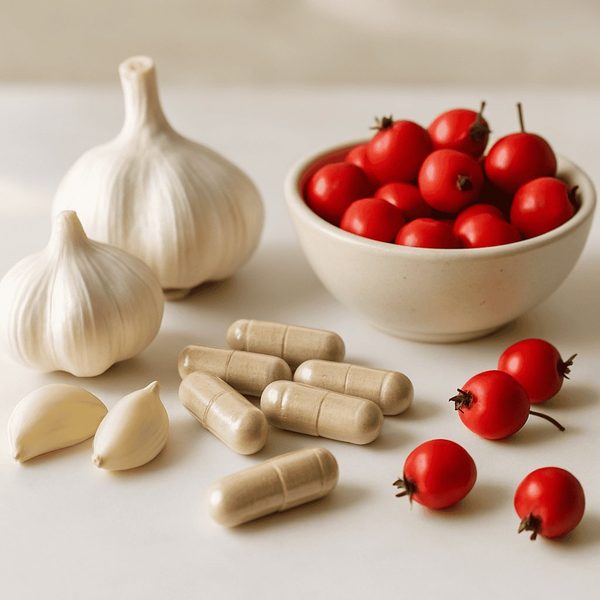
Garlic has millennia of traditional use for cardiovascular health, and modern research provides supporting evidence. Garlic supplementation produces mild but consistent blood pressure reductions through multiple mechanisms: allicin-derived compounds inhibit ACE, produce hydrogen sulfide (a gasotransmitter that dilates blood vessels), and reduce platelet aggregation.
A 2016 Cochrane meta-analysis by Ried et al. found that garlic preparations reduced systolic blood pressure by a mean of 5 mmHg and diastolic by 2.5 mmHg compared to placebo in hypertensive patients. The effect was most pronounced with aged garlic extract formulations, which may have higher biological activity than raw garlic or standard supplements.
Dose: Aged garlic extract at 600–1500 mg/day (standardized preparations). Raw garlic consumption (2–4 cloves/day) also provides benefit, though the strong odor makes supplementation more practical for most people.
Building a Comprehensive Natural Blood Pressure Protocol
Rather than choosing a single supplement and hoping for a 20-mmHg reduction, evidence-based natural blood pressure management combines multiple modest-effect interventions for cumulative impact:
Lifestyle foundations (non-negotiable):
DASH or Mediterranean diet (2–11 mmHg reduction)
Regular aerobic exercise 30 min × 5 days/week (4–9 mmHg)
Sodium restriction to <2,300 mg/day (2–8 mmHg)
Alcohol limitation (<1 drink/day for women, <2 for men)
Weight loss if overweight (~1 mmHg per kg lost)
Supplement layer (complementary, not primary):
Magnesium glycinate or taurate: 300–400 mg/day
Omega-3 EPA+DHA: 2–4 g/day
Beet root extract (standardized to nitrate): per product labeling
CoQ10 (especially if on statins): 100–200 mg ubiquinol daily
Aged garlic extract: 600–1200 mg/day
Combined realistic systemic reduction from the above: 8–15 mmHg systolic if consistent across all interventions. This is enough to move someone from Stage 1 to normal range, or to reduce medication dependence under medical supervision.
Important: Never stop or reduce blood pressure medications without physician guidance. Natural approaches work best as adjuncts or for prevention; they are not replacements for medication in moderate-to-severe hypertension.
FAQ
What supplement lowers blood pressure the fastest?
Beet root juice and nitric oxide precursors can produce measurable acute blood pressure reductions within 2–3 hours of ingestion. For sustained reduction, magnesium and omega-3s show effects within 4–12 weeks of consistent use.
Can I lower blood pressure with supplements instead of medication?
For pre-hypertension (120–129 systolic) or very mild Stage 1, a comprehensive lifestyle + supplement approach may be sufficient. For Stage 1 with risk factors and Stage 2 hypertension (140+/90+), medication is generally recommended and supplements work as adjuncts. Never discontinue prescribed medication without physician supervision.
Is CoQ10 safe to take with blood pressure medication?
CoQ10 is generally safe and well-tolerated alongside antihypertensive medications. Because it may have additive blood pressure-lowering effects, monitor blood pressure when starting. Those on anticoagulants (warfarin) should note that CoQ10 has vitamin K-like activity and may affect INR — discuss with your physician.
How long does it take for magnesium to lower blood pressure?
Clinical trials typically show measurable blood pressure reductions within 3–12 weeks of consistent supplementation. The effect is modest (1–3 mmHg on average) but meaningful over time.
Which diet is best for lowering blood pressure naturally?
The DASH diet (Dietary Approaches to Stop Hypertension) has the strongest evidence base, with trials showing reductions of 8–14 mmHg systolic. The Mediterranean diet has similar benefits. Both emphasize vegetables, fruits, whole grains, legumes, nuts, and limited sodium and processed foods.
Key Takeaways
High blood pressure affects nearly half of American adults and is the leading modifiable cardiovascular risk factor.
Supplements work through different mechanisms — calcium channel blockade, nitric oxide enhancement, ACE inhibition, RAAS modulation — making a multi-pronged approach more effective than any single compound.
The foundation must be lifestyle: diet quality, exercise, sodium restriction, weight management, stress reduction.
Supplements complement but do not replace antihypertensive medications in diagnosed hypertension.
Monitor blood pressure regularly when using any natural approach; adjustments should involve your physician.
Sources
Zhang, X., et al., “Effects of Magnesium Supplementation on Blood Pressure: A Meta-Analysis of Randomized Double-Blind Placebo-Controlled Trials,” Hypertension, 2016.
Whelton, P.K., et al., “Effects of oral potassium on blood pressure: meta-analysis of randomized controlled clinical trials,” JAMA, 1997.
Miller, P.E., et al., “Long-Chain Omega-3 Fatty Acids Eicosapentaenoic Acid and Docosahexaenoic Acid and Blood Pressure: A Meta-Analysis of Randomized Controlled Trials,” Journal of the American Heart Association, 2014.
Rosenfeldt, F.L., et al., “Coenzyme Q10 in the treatment of hypertension: a meta-analysis of the clinical trials,” Journal of Human Hypertension, 2007.
Kapil, V., et al., “Dietary Nitrate Provides Sustained Blood Pressure Lowering in Hypertensive Patients,” Hypertension, 2015.
McKay, D.L., et al., “Hibiscus sabdariffa L. tea (tisane) lowers blood pressure in prehypertensive and mildly hypertensive adults,” Journal of Nutrition, 2010.
Dong, H., et al., “Berberine in the treatment of type 2 diabetes mellitus: a systemic review and meta-analysis,” Evidence-Based Complementary and Alternative Medicine, 2012.
Ried, K., et al., “Effect of garlic on blood pressure: a systematic review and meta-analysis,” BMC Cardiovascular Disorders, 2008.
Siervo, M., et al., “Inorganic Nitrate and Beetroot Juice Supplementation Reduces Blood Pressure in Adults: A Systematic Review and Meta-Analysis,” Journal of Nutrition, 2013.
Serban, C., et al., “Effect of sour tea (Hibiscus sabdariffa L.) on arterial hypertension: a systematic review and meta-analysis of randomized controlled trials,” Journal of Hypertension, 2015.





Leave a Reply