Best Collagen Supplements for Skin in 2026: Types, Evidence, and Picks
Quick Answer: For skin specifically, hydrolyzed collagen peptides — particularly branded extracts like Verisol (2.5 g/day) and Peptan — have the best clinical evidence. Type I collagen from marine sources or bovine hide is most relevant for skin. Look for hydrolyzed collagen peptides (not raw gelatin), a daily dose of 2.5–10 g, and third-party testing. Results typically require 8–12 weeks of consistent use.
Collagen is the most abundant protein in the human body, making up roughly 75% of your skin’s dry weight. It’s the scaffolding that keeps skin firm, plump, and elastic. So it makes intuitive sense that supplementing with collagen — especially as your own production declines with age — might support skin health.
But the collagen market is enormous and confusing. Do types matter? Marine versus bovine — does it make a difference? Is there a meaningful difference between a $15 bag of generic collagen powder and a $60 targeted skin formula? This guide cuts through the noise.
Why Collagen Declines — and Why It Matters for Skin
Your body’s collagen production peaks in your mid-20s and declines steadily thereafter, at roughly 1–1.5% per year. By your 40s and 50s, this loss is visible: skin becomes thinner, less elastic, more prone to wrinkles, and slower to heal. Sun exposure, smoking, high sugar intake, and cortisol all accelerate this process.
Collagen degradation happens from two directions: reduced synthesis (your fibroblasts produce less) and increased breakdown (matrix metalloproteinases, stimulated by UV and inflammation, degrade existing collagen). The theoretical case for supplemental collagen addresses the first problem — supplying the amino acid building blocks and, in the case of certain peptides, directly stimulating fibroblast activity.
The Collagen Types That Matter for Skin
Collagen is typically discussed with reference to “types,” numbered by structure. For skin purposes, three types are most relevant:
Type I: The most abundant collagen in skin, tendons, bone, and dermis. The primary structural collagen that gives skin its tensile strength and firmness.
Type III: Often found alongside Type I in skin and plays a key role in skin elasticity and wound healing. More abundant in younger skin; ratio of I:III shifts with aging.
Type II: Predominantly found in cartilage. Less relevant for skin, primarily targeted in joint supplements.
Most skin-focused collagen supplements contain Type I and III, which aligns with the tissue types where skin support is most needed.
Hydrolyzed vs. Gelatin: Why the Form Matters
Raw collagen protein has poor bioavailability because the molecule is too large to be absorbed intact. When you eat a gelatin-rich food like bone broth or gummies, you’re consuming partially denatured collagen — better than nothing, but still not optimally absorbed.
Hydrolyzed collagen (also called collagen peptides) has been enzymatically broken down into short-chain peptides, primarily dipeptides and tripeptides, with molecular weights around 3,000–5,000 Daltons. These smaller fragments:
Are more readily absorbed across the intestinal wall
Appear in circulation as collagen-specific peptides (particularly hydroxyproline-containing sequences)
Have been shown to directly stimulate fibroblasts to produce new collagen and hyaluronic acid
The key insight from research by Postlethwaite and colleagues (1978) and later mechanistic work is that specific collagen-derived dipeptides — like Pro-Hyp (proline-hydroxyproline) — act as signaling molecules in skin fibroblasts, stimulating collagen production that exceeds what you’d expect from simply supplying amino acids. This receptor-level activity is what distinguishes collagen peptides from generic protein.
The Clinical Evidence: What Studies Actually Show
Verisol (Bioactive Collagen Peptides by GELITA)
The most rigorously studied branded collagen ingredient for skin is GELITA’s Verisol. Multiple randomized controlled trials have been published specifically on this product:
Proksch et al. (2014) — Published in Skin Pharmacology and Physiology: 69 women aged 35–55 took 2.5 g Verisol or placebo daily for 8 weeks. The Verisol group showed a 20.1% reduction in eye wrinkle volume and significantly improved skin elasticity. Notably, the 2.5 g dose is relatively modest.
Schunck et al. (2015) — Also in Skin Pharmacology and Physiology: Verisol supplementation reduced cellulite score by 9% in normal-weight women over 6 months, with measurable improvements in skin surface texture.
These are peer-reviewed RCTs, not industry testimonials. The effect sizes are real, if not dramatic.
Peptan (Rousselot)
Peptan, another branded hydrolyzed collagen, has a robust clinical dossier:
A 2021 randomized trial in Journal of Cosmetic Dermatology by Matsumoto and colleagues found that 10 g/day of Peptan over 12 weeks significantly improved skin hydration, elasticity, and reduced wrinkle depth compared to placebo.
Marine vs. Bovine Collagen
Both marine and bovine sources produce Type I and III collagen. The primary differences:
Marine collagen (typically from fish skin or scales) is predominantly Type I with high glycine and hydroxyproline content. Some research suggests slightly better absorption due to smaller peptide size. Suitable for pescatarians.
Bovine collagen (from cattle hide, tendons, or bone) contains both Type I and Type III, making it a more complete option for combined skin and gut benefits. Most widely available and generally lower cost.
For skin specifically, either source is appropriate. Marine is sometimes preferred by those avoiding beef for dietary or religious reasons. The clinical trials showing skin benefits use both sources.
Collagen Type
Source
Types Provided
Best For
Marine (fish skin)
Fish scales/skin
Primarily Type I
Skin, collagen purity
Bovine (hide)
Cattle hide
Type I + III
Skin, gut, versatility
Bovine (bone broth)
Bone marrow
Type I, II, III
Gut, joints, broad use
Chicken (sternum)
Chicken cartilage
Primarily Type II
Joints, cartilage
Eggshell membrane
Eggshell
Types I, V, X
Joints, connective tissue
What Dose Do You Actually Need?
Clinical trials have produced results at doses ranging from 2.5 g/day (Verisol trials) to 15 g/day (some sports recovery studies). For skin specifically:
2.5 g/day: Effective for wrinkle and elasticity improvements (Verisol RCT)
5–10 g/day: The most common dosing in broader skin trials, showing hydration and elasticity benefits
10–15 g/day: Used in studies combining skin and joint outcomes
The minimum effective dose appears to be around 2.5 g/day for skin-specific benefits when using research-backed hydrolyzed peptides. Higher doses may produce greater effects but the dose-response curve likely plateaus before 15 g.
Timing: Collagen peptides can be taken at any time. Morning is popular for convenience; some research suggests post-exercise collagen plus vitamin C may support connective tissue synthesis by timing the amino acid delivery during the period of increased collagen synthesis that follows exercise (Shaw et al., 2017).
What to Look For on a Collagen Label
With hundreds of products on the market, here’s a clear filter:
Must-haves:
“Hydrolyzed collagen” or “collagen peptides” (not just “collagen”)
Named source (marine or bovine) with clear indication of Type I or I+III
Listed dose per serving (minimum 2.5 g for skin effects)
Third-party testing (NSF, Informed Sport, or independent COA)
Nice to have:
Named branded ingredient (Verisol, Peptan, Naticol, or similar with published studies)
Added vitamin C (cofactor for collagen synthesis)
Low sugar, no artificial flavors
Red flags:
“Proprietary blend” with no per-ingredient dosing
Claims of Type V or VII collagen for skin (these are less studied and often marketing)
Absurd dose claims (most studies top out around 15 g; “40 g serving!” doesn’t mean better results)
Supporting Collagen with Diet and Lifestyle
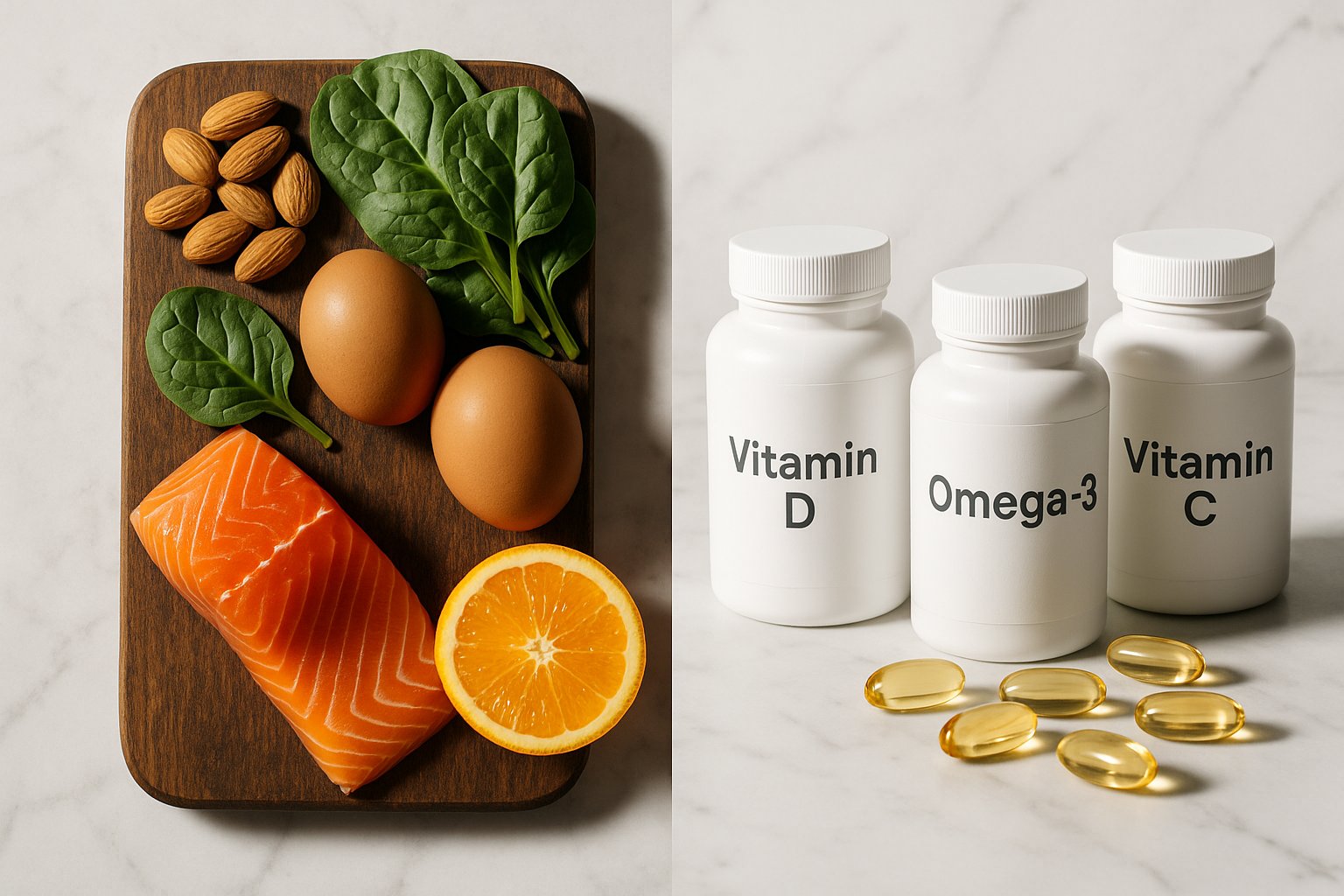
No supplement works in isolation. For collagen to be synthesized, your body also needs:
Vitamin C (required for prolyl and lysyl hydroxylase enzymes in collagen production)
Zinc (cofactor for collagen synthesis enzymes)
Copper (required for lysyl oxidase, which cross-links collagen fibers)
Adequate dietary protein (collagen synthesis is a protein-expensive process)
On the avoidance side: chronic sun exposure, smoking, excessive alcohol, and high-glycemic diets all accelerate collagen degradation. No collagen supplement can outrun a lifestyle that actively destroys collagen faster than you’re building it.
FAQ
How long does collagen take to work for skin?
Most RCTs show measurable improvements at 8–12 weeks of consistent daily supplementation. Some people notice skin feel changes earlier (4–6 weeks), but the structural changes visible in wrinkle volume studies typically require closer to 12 weeks. Don’t evaluate before 3 months.
Is marine collagen better than bovine for skin?
Both produce results in clinical trials. Marine collagen is predominantly Type I and may have slightly better absorption; bovine collagen adds Type III (relevant for elasticity). Neither is dramatically superior for skin. Your choice may reasonably come down to dietary preference, ethical considerations, or cost.
Does drinking bone broth provide the same collagen benefits?
Bone broth contains collagen, but it’s not hydrolyzed — it’s mostly gelatin. The peptide fragments from properly hydrolyzed collagen are smaller and better absorbed. Bone broth is a nutritious food with other benefits (glycosaminoglycans, minerals), but standardized collagen peptide supplements have more consistent and better-documented effects on skin.
Can collagen supplements cause breakouts?
Some people report breakouts when starting collagen, possibly due to increased amino acid availability or the proline content affecting sebum. This is anecdotal and rare. If you experience breakouts, try a lower starting dose and ensure you’re drinking adequate water.
What’s the difference between collagen and retinol for skin?
They work through different mechanisms. Collagen supplements provide building blocks and signaling peptides that support new collagen synthesis from within. Topical retinol (or tretinoin) directly stimulates fibroblast activity and collagen gene expression at the skin level. Both have strong evidence — they’re complementary, not competitors.
[…] mixing tips. For skin-specific recommendations grounded in cosmetic dermatology research, visit our best collagen for skin guide. Women navigating hormonal changes, where estrogen decline accelerates collagen degradation, […]





Leave a Reply