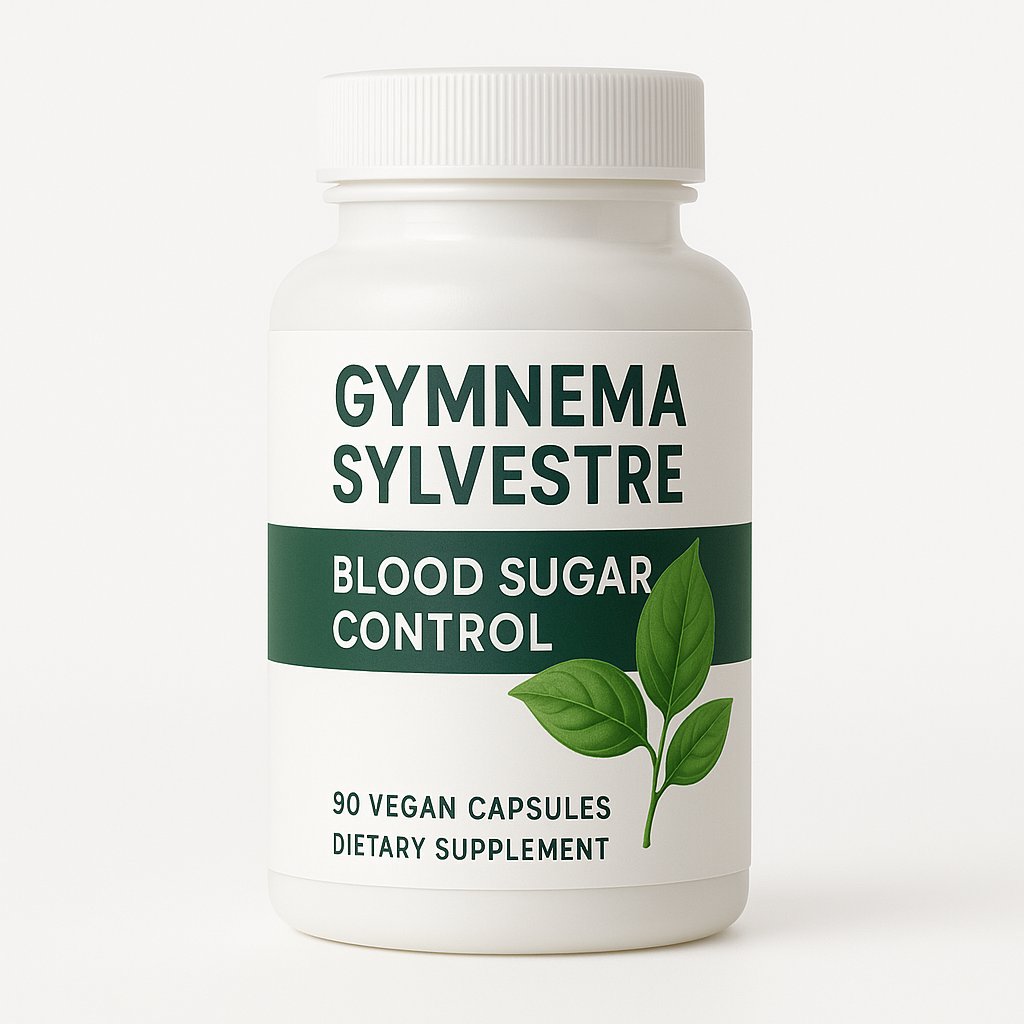
Quick Answer: Gymnema sylvestre has promising but still limited human evidence for blood sugar support. It may help reduce post-meal glucose spikes and cravings in some people, but it should be treated as a secondary adjunct, not a primary therapy.
Key Takeaways
- Gymnema’s traditional name “gurmar” (“sugar destroyer”) comes from its ability to blunt sweet taste perception.
- Early human studies suggest possible improvements in fasting glucose and A1c, but sample sizes are small.
- The strongest practical use may be appetite/craving support plus mild metabolic benefit.
- Typical supplement ranges are 400–800 mg/day of standardized extract.
- Product quality matters: standardization to gymnemic acids is important.
- People on glucose-lowering medication should monitor carefully to avoid hypoglycemia.
Why Gymnema Became Popular in Blood Sugar Formulas
Gymnema sits at the intersection of traditional use and modern metabolic interest. In Ayurveda, it has long been used in contexts related to sugar handling and appetite control. In modern supplement stacks, it is often paired with chromium, cinnamon, berberine, or bitter melon.
Its appeal is understandable: it has a distinctive acute effect (sweet taste suppression), plus early signals for insulin and glucose support. But as with many botanicals, marketing has outrun evidence quality.
For foundational context, see:
What the Clinical Data Actually Shows
The positive signal
Small studies in type 2 diabetes and prediabetes populations have shown improvements in fasting glucose and sometimes HbA1c. Some trials also report reduced sweet cravings or reduced appetite for sugary foods.
Those outcomes are directionally encouraging because they combine behavior-level benefit (less sugar-seeking) with physiology-level benefit (better glucose handling).
The evidence limitations
- Many studies are small and underpowered
- Standardization and extract quality vary by trial
- Some older studies have weak controls by modern standards
- Replication in large, multicenter populations is missing
So the honest interpretation is not “proven cure,” but “plausible, promising adjunct with moderate uncertainty.”
Where it may fit best
Gymnema is most interesting for people who have both metabolic risk and habitual sugar overconsumption. If a supplement helps reduce the reward pull of sweets while modestly helping glucose control, that can be a useful combination.
Mechanisms: What Is Plausible vs Speculative
1) Sweet receptor interference (well supported)
Gymnemic acids can temporarily reduce sweet taste intensity. This effect is one reason people feel less pulled toward sugary snacks after use.
2) Carbohydrate absorption effects (plausible)
Some data suggests gymnema may interfere with intestinal sugar transport or digestive processing, potentially blunting post-meal spikes.
3) Insulin pathway support (promising, less definitive)
Cell and animal work suggests potential effects on insulin secretion and pancreatic function. Human confirmation exists but is not yet high-certainty.
4) Craving and intake behavior (practical relevance)
Even if direct glucose effects are modest, reduced sugar intake can create meaningful downstream benefits. In real-world use, this may be one of gymnema’s most valuable contributions.
Dosing and Practical Use
Common supplement range
- 400–800 mg/day standardized extract
- Often split into 1–2 doses
- Some users take a dose before meals with high carb load
Standardization matters
Look for products that specify gymnemic acid content. Without standardization, two products with identical label milligrams can perform very differently.
Trial length expectations
For blood sugar markers, give it 8–12 weeks with consistent routines. For sweet-craving effects, some users notice changes within days.
Safety, Interactions, and Who Should Be Cautious
Gymnema is generally tolerated well at typical doses, but caution is appropriate.
Potential issues:
- Low blood sugar when stacked with medication
- Mild GI upset in some users
- Rare dizziness or appetite changes
Use extra caution if you:
- Take insulin, sulfonylureas, or other glucose-lowering medication
- Have unstable glucose patterns
- Are pregnant/breastfeeding (limited data)
- Use multiple blood sugar supplements simultaneously
Good practice: introduce one variable at a time, then monitor fasting/post-meal values.
How Gymnema Compares to Other Blood Sugar Options
Gymnema can be useful, but it is usually not the strongest single agent in evidence hierarchy.
- Stronger overall evidence: berberine
- Moderate support: ALA, some cinnamon protocols
- Behavioral support angle: gymnema (craving suppression is a practical differentiator)
Useful cross-links:
- Alpha-Lipoic Acid for Blood Sugar and Neuropathy
- Cinnamon Supplements for Blood Sugar
- Fenugreek and Bitter Melon for Blood Sugar
FAQ
Does gymnema really “destroy sugar”?
Not literally. It can reduce perceived sweetness temporarily and may support glucose control, but it does not eliminate sugar metabolism issues by itself.
Is gymnema good for prediabetes?
It may be helpful as an adjunct, especially when paired with nutrition and exercise changes. Evidence is promising but not definitive.
Can gymnema reduce sugar cravings?
Yes, that is one of its most noticeable effects for many users due to sweet taste modulation.
How long should I trial gymnema?
A fair blood sugar trial is usually 8–12 weeks with consistent habits and objective tracking.
Can I combine gymnema with other supplements?
Often yes, but stacking multiple glucose-lowering ingredients can increase hypoglycemia risk. Add gradually and monitor.
Practical Shopping and Label Audit Checklist
If you are buying gymnema, quality control has a bigger impact than most buyers realize. Two products can both say “gymnema” but perform very differently due to extract standardization, harvest source, and manufacturing quality.
Before purchase, check:
- Does the label state the extract ratio and gymnemic acid percentage?
- Is there third-party testing for contaminants?
- Is the serving size realistic for daily adherence?
- Is the formula overloaded with many “pixie dust” ingredients?
- Does the brand provide a certificate of analysis on request?
A practical dosing approach is to start lower, monitor response, and only increase if needed. Taking the highest possible amount on day one is rarely necessary.
What to Track During a 12-Week Trial
If you want to evaluate gymnema honestly, track outcomes instead of going by feeling alone.
Suggested markers:
- Fasting glucose trend (2–4 checks/week)
- Post-meal glucose response after your most carb-heavy meal
- Sweet-craving intensity (0–10 daily scale)
- Evening snacking frequency
- Energy crashes between meals
If numbers and behavior both improve, gymnema may be a good fit. If nothing changes, move on without guilt. Supplements are tools, not identity choices.
Bottom Line
Gymnema sylvestre is a credible “maybe-helpful” botanical with practical upside, especially for sweet-craving management and mild metabolic support. The science is encouraging but not yet robust enough to treat it as front-line therapy. If used with realistic expectations and monitoring, it can be a useful part of a broader blood sugar strategy.
Related Articles
- Gymnema Sylvestre for Blood Sugar
- Berberine Benefits in 2026: Blood Sugar, Weight Loss, and How to Choose a Good Supplement
- Best Supplements for Blood Sugar in 2026
- Best Supplements for Metabolic Health and Blood Sugar
- Best Metabolic Health Stacks: Blood Sugar & More
Sources
- The effect of cinnamon supplementation on glycemic control in patients with type 2 diabetes mellitus: An updated systematic review and dose-response meta-analysis of randomized controlled trials. Phytotherapy research : PTR. 2024. PMID: 37818728.
- The effect of Gymnema sylvestre supplementation on glycemic control in type 2 diabetes patients: A systematic review and meta-analysis. Phytotherapy research : PTR. 2021. PMID: 34467577.
- Diabetes and the associated complications: The role of antioxidants in diabetes therapy and care. Biomedicine & pharmacotherapy = Biomedecine & pharmacotherapie. 2024. PMID: 39541789.
- National Institutes of Health Office of Dietary Supplements. Dietary supplement fact sheets.
- Wallace TC, Cowan-Pyle AE, Klatt KC, Bailey RL (2025). Relationship of Choline Intake with Biomarkers of Liver Health by Genotype-A Cross-Sectional Analysis. The Journal of nutrition. PMID: 40306555.