
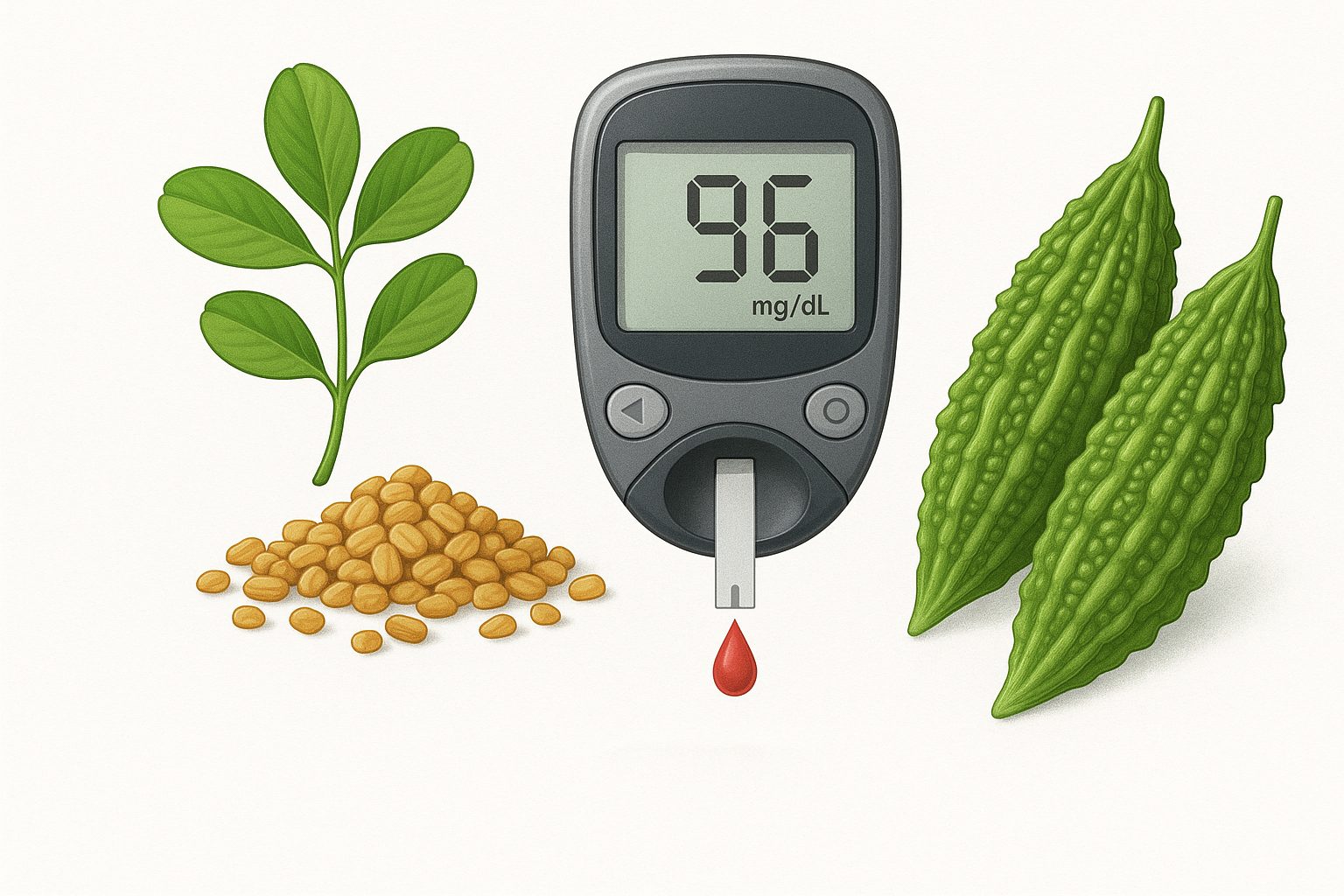
- Neelakantan et al. (2014): Meta-analysis of 10 RCTs. Fenugreek seed powder reduced fasting glucose by ~17 mg/dL and HbA1c by ~0.85% in people with diabetes.
- Gupta et al. (2001): 25 type 2 diabetics given 1 g/day of fenugreek seed extract for 2 months showed improved fasting glucose and insulin.
Mechanism: The high soluble fiber content slows carbohydrate digestion and glucose absorption – this is well-established and similar to how psyllium works. 4-hydroxyisoleucine may also directly stimulate insulin secretion (shown in rat islet cells).
The catch: Most positive studies used 5-50 g/day of raw fenugreek seed powder. That’s a lot of fenugreek. Side effects at those doses include bloating, gas, diarrhea, and a distinctive maple-syrup smell in sweat and urine. Concentrated extracts exist but may not contain the fiber that drives the glucose effect.
Dosing
- Seed powder: 5-30 g/day (split with meals) – effective but impractical
- Standardized extract: 500-1,000 mg/day – more practical, less evidence
Safety
- GI effects at high doses (very common)
- Can cause uterine contractions – avoid during pregnancy
- May interact with blood thinners (coumarin content)
- Allergic reactions in people sensitive to peanuts/chickpeas (same family)
Honest Take
Fenugreek has a real mechanism (fiber + insulin stimulus) and real data. The practical problem is that effective doses are unpleasant, and concentrated extracts haven’t been adequately tested. It’s not unreasonable – it’s just inconvenient.
Bitter Melon (Momordica charantia)
What It Is
A tropical fruit used as both food and medicine in Asian, African, and South American traditions. Contains charantin, polypeptide-p (plant insulin), and vicine – all proposed to have glucose-lowering properties.
Evidence
What reviews say:
- Ooi et al. (2012): Cochrane review of 4 RCTs (479 participants). Concluded “insufficient evidence” to recommend for type 2 diabetes. Quality of included trials was low.
- Peter et al. (2019): Systematic review of 14 trials. Found a modest fasting glucose reduction in some studies but “high heterogeneity and inconsistent results.”
- A 2020 meta-analysis of 12 trials found a pooled fasting glucose reduction of ~15 mg/dL, but with significant variation between studies.
The biggest problem: Product standardization. Bitter melon trials use different preparations (fresh juice, dried fruit powder, aqueous extract, ethanol extract) with wildly different active compound profiles. Comparing studies is almost impossible because the “bitter melon” in one trial may be chemically very different from another.
Dosing
- No established standard dose – trials use 2-6 g/day of dried fruit or 500-2,000 mg of extract
- Product label claims vary enormously
Safety
- GI side effects common (abdominal pain, diarrhea)
- Hypoglycemia risk with diabetes medications (significant – several case reports)
- Seeds contain vicine, which can cause favism in people with G6PD deficiency
- Animal studies suggest uterotonic effects – avoid during pregnancy
- May affect fertility (animal data; not confirmed in humans)
Honest Take
Bitter melon is one of those supplements where the traditional use is extensive, the mechanism is plausible, but the clinical trial landscape is a mess. If you’re from a cultural tradition that uses it and you tolerate it well, continuing seems reasonable. Starting it as a supplement strategy based on current evidence? Hard to recommend over better-studied options.
Combining Traditional Remedies
Both fenugreek and bitter melon appear in multi-ingredient blood sugar blends. The problem: when you combine ingredients with individually modest effects and individually thin evidence, you get… something with no evidence at all, because the combination hasn’t been tested.
Stacking caution: Multiple glucose-lowering ingredients + diabetes medication = compounding hypoglycemia risk. Less is often safer.
For evidence-ranked blood sugar supplement options, see our full guide.
Frequently Asked Questions
Does fenugreek lower blood sugar?
Some clinical trials show meaningful fasting glucose reductions with fenugreek seed powder (5-100 g/day). The effect appears to be primarily through slowing carbohydrate digestion via soluble fiber. Evidence is promising but comes from small trials; larger well-designed RCTs are limited.
What is the best form of fenugreek for blood sugar?
Fenugreek seed powder (not the leaf) in doses of 5-25 g per day has the most trial evidence for blood sugar effects. Standardized extracts are also available at lower doses. The high-fiber seed form taken before meals has the strongest rationale.
Does bitter melon work for diabetes?
Preclinical (cell and animal) evidence for bitter melon is encouraging, but human RCTs have been disappointing overall. Results are inconsistent across trials of different preparations. It cannot be confidently recommended as an effective glucose-lowering supplement based on current human evidence.
Are fenugreek or bitter melon safe with diabetes medication?
Both may add to the glucose-lowering effect of diabetes medications, raising hypoglycemia risk. People on insulin or oral hypoglycemics should monitor blood sugar closely and inform their physician before adding these supplements.
References
- Neelakantan N et al. (2014) Fenugreek seed and blood glucose. Nutr J.
- Gupta A et al. (2001) Fenugreek seed extract and type 2 diabetes. J Assoc Physicians India.
- Ooi CP et al. (2012) Bitter melon for type 2 diabetes mellitus. Cochrane Database Syst Rev.
- Peter EL et al. (2019) Bitter melon systematic review. J Ethnopharmacol.
Related Articles
- Alpha-Lipoic Acid for Blood Sugar and Diabetic Neuropathy: What the Evidence Supports
- Berberine vs Metformin: What the Evidence Actually Shows for Blood Sugar Support
- Best Supplements for Blood Sugar Balance: A Cautious, Evidence-Based Guide
- Berberine and Blood Sugar: What the Clinical Evidence Actually Shows

Leave a Reply