Quick Answer
Biotin can help hair, skin, and nails if you are deficient or at high risk of low biotin status. If you already get enough biotin from food, extra-high-dose supplements usually do not create dramatic cosmetic results. The strongest practical use case is correcting deficiency or supporting people with known risk factors, not mega-dosing for beauty gains.

Key Takeaways
- Biotin is essential for normal keratin-related tissues, but “more” is not automatically “better.”
- Research support is strongest in deficiency states, inherited biotin metabolism disorders, and brittle nail syndromes.
- For healthy adults with adequate intake, evidence for major hair growth or skin improvement is weak.
- Many “hair skin nails” products combine multiple actives, so improvements cannot be credited to biotin alone.
- High-dose biotin can interfere with thyroid, hormone, and cardiac lab tests; pause before bloodwork and tell your clinician.
- Start with root-cause troubleshooting (iron, thyroid, protein intake, stress, hormones, scalp disease) before assuming you need high-dose biotin.
Biotin is one of the most purchased beauty supplements online. It sits in a unique category: biologically important, widely marketed, generally safe, and often misunderstood.
The most useful way to think about biotin is simple: it is a required micronutrient, not a cosmetic drug. Your body needs enough biotin to run several carboxylase enzymes involved in fat, carbohydrate, and amino acid metabolism. If levels are too low, skin and hair-related problems can appear. But once basic requirements are met, pushing intake to very high levels does not necessarily improve results.
Why Biotin Became a Beauty Staple
Hair, skin, and nails are visible and emotionally loaded. When hair sheds, nails split, or skin looks irritated, people want quick, low-risk interventions. Biotin seems to promise exactly that.
Marketing language reinforces this:
- “Supports keratin production”
- “Nourishes hair follicles”
- “Promotes stronger nails”
Those claims are partly grounded in biology. Biotin deficiency can cause alopecia-like hair thinning and dermatitis. But a true statement (“biotin deficiency harms hair”) often gets stretched into a different claim (“everyone should mega-dose biotin for thicker hair”). That leap is where evidence becomes much thinner.
What the Evidence Actually Shows
1) Deficiency correction works
In documented or strongly suspected biotin deficiency, replacement can improve symptoms, including brittle nails, rash patterns, and hair thinning. This is clinically plausible and repeatedly observed.
2) Brittle nails may improve in select users
Older small studies and case-based literature suggest some people with brittle nails see better nail thickness and reduced splitting over months. The data quality is not ideal, but this is one of the few cosmetic use cases with at least modest supportive signal.
3) Healthy, non-deficient adults: unclear benefits
For people with normal intake and no deficiency indicators, robust randomized evidence showing major improvements in hair growth or skin quality is lacking. A lot of positive anecdotes exist, but anecdotes cannot separate placebo, natural recovery, seasonal shedding cycles, and simultaneous routine changes.
Hair: Where Biotin Fits in Real Life
If your main concern is hair shedding or slower growth, biotin is rarely the whole story.
Common non-biotin causes include:
- Iron deficiency (low ferritin)
- Thyroid dysfunction
- Post-illness telogen effluvium
- Rapid weight loss or low-protein dieting
- Postpartum hormonal shifts
- Androgenetic alopecia
- Scalp inflammatory disease (seborrheic dermatitis, psoriasis, etc.)
Biotin can still be part of a plan, especially if your diet is narrow or risk factors exist, but it should not replace proper evaluation. If shedding is significant, ask for a broader workup rather than simply increasing supplement dose.
For broader context, see the parent guide: Best Biotin Supplements in 2026.
Skin: Important in Deficiency, Overstated in Marketing
Severe deficiency can produce periorificial or seborrheic-like rash patterns. In those cases, replacing biotin is appropriate. But for common cosmetic concerns such as acne, post-inflammatory marks, fine lines, or photoaging, direct evidence for biotin as a stand-alone solution is very limited.
People often report “better skin” when taking beauty formulas with biotin, but these products usually also include vitamin C, zinc, selenium, collagen peptides, or antioxidants. Improvement may come from the blend, routine consistency, or unrelated skin-care changes.
Nails: A Practical Middle Ground
Nail fragility is where biotin gets the most practical support. Results, when they occur, are usually gradual:
- Less splitting/peeling
- Slightly stronger nail plate feel
- Better tolerance to daily wear
Timeline expectations matter. Nails grow slowly, so meaningful change can take 3–6 months. If no improvement appears after a reasonable trial and you have optimized hydration/protein/mineral intake, continuing high-dose biotin indefinitely usually has low upside.
Who Is More Likely to Benefit
You are more likely to benefit from biotin if you have one or more of the following:
- Pregnancy or postpartum nutritional strain
- Restricted intake patterns with low nutrient diversity
- Prolonged antibiotic exposure and GI disruption
- Chronic alcohol overuse
- Malabsorption disorders
- Certain medications that affect B-vitamin metabolism
- Known inherited biotin metabolism disorders (e.g., biotinidase deficiency)
If none of these apply and your diet is balanced, dramatic gains from large doses are less likely.
Dose Reality Check for Cosmetic Use
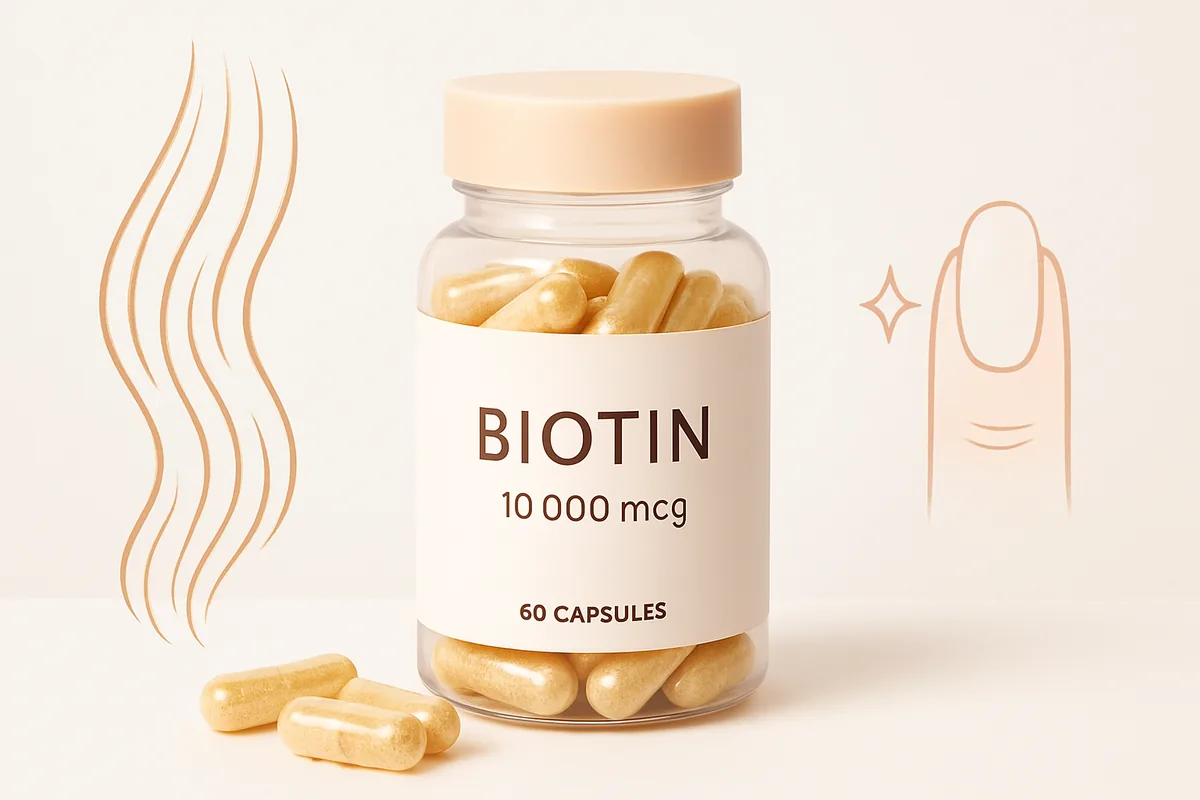
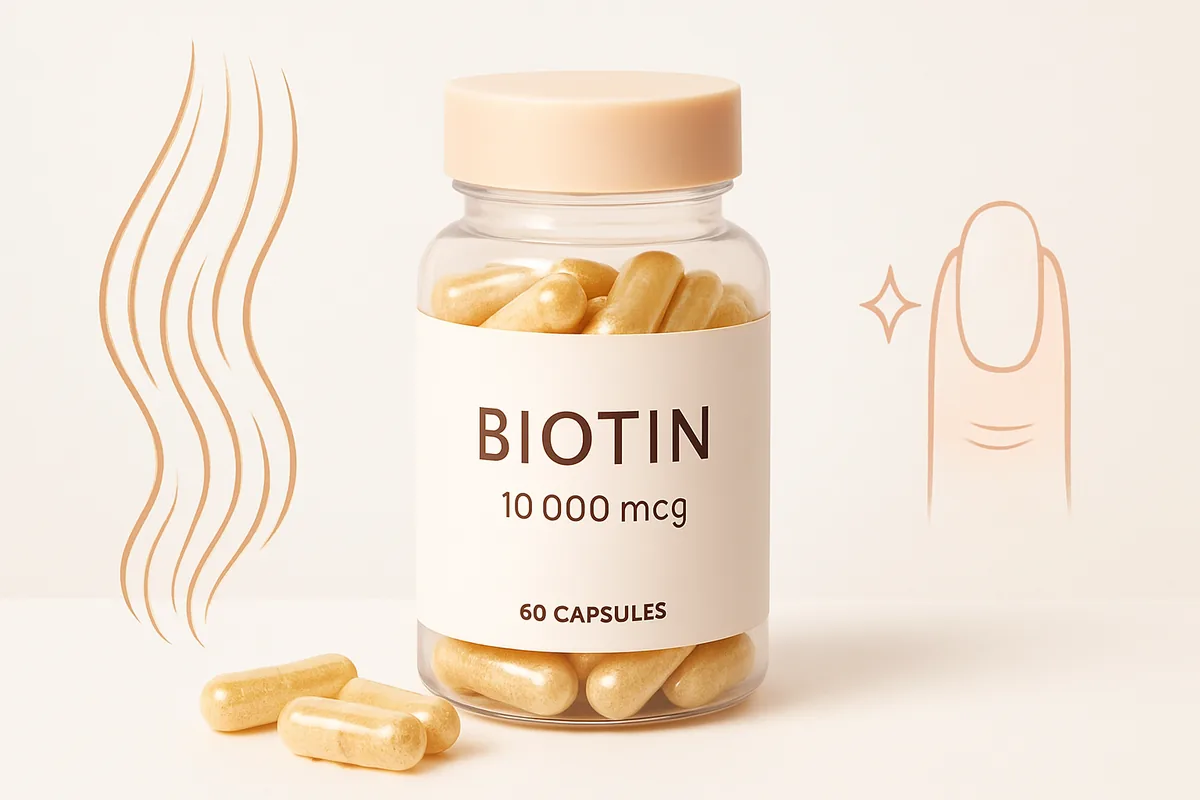
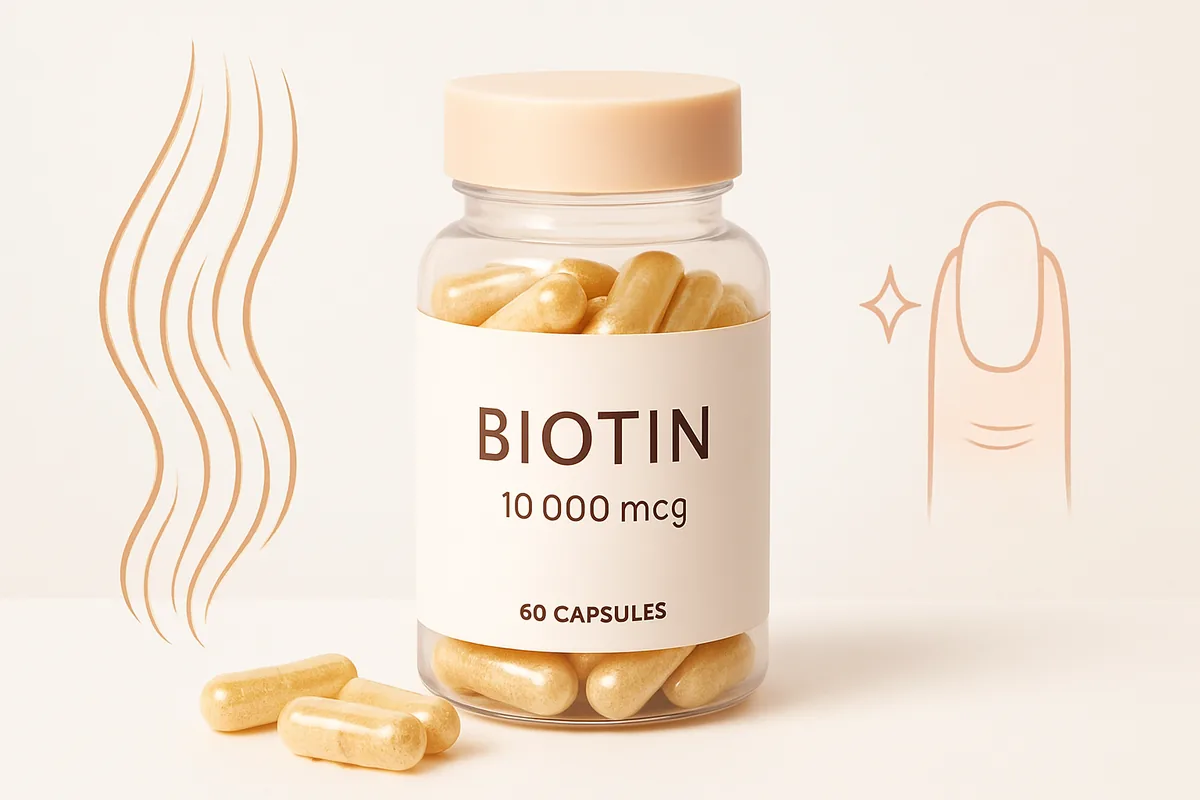
Many beauty supplements contain 2,500–10,000 mcg. The adult adequate intake is much lower. More is not automatically dangerous, but more is often unnecessary.
A practical approach:
- Start with food-first adequacy and a modest supplemental range if desired.
- Reassess at 8–12 weeks for hair shedding trends and at 3–6 months for nails.
- Stop escalating dose if no clear benefit appears.
- Avoid taking high-dose biotin right before labs (see safety section).
For detailed dosing strategy, see: Biotin Dosage: How Much Do You Need?.
The Most Overlooked Safety Issue: Lab Interference
Biotin’s biggest practical risk is not toxicity; it is false lab results on certain immunoassays. High-dose biotin can skew thyroid panels and other labs. That can trigger unnecessary worry, misdiagnosis, or wrong medication changes.
Read the full safety breakdown here: Biotin Safety and Lab Test Interference.
How to Build a Smarter “Hair Skin Nails” Plan
If your goal is visible results, think in layers:
Layer 1: Foundations
- Protein adequacy
- Iron and zinc status
- Sleep quality
- Stress regulation
- Scalp and skin barrier care
Layer 2: Root-cause testing (if symptoms persist)
- Thyroid panel
- Ferritin and CBC
- Medication review
- Hormonal context as indicated
Layer 3: Targeted supplementation
Use biotin as one tool, not the only tool. Consider whether your pattern suggests deficiency or simply broad lifestyle/nutritional support needs.
Layer 4: Reassessment
Track outcomes objectively: shedding counts, breakage frequency, nail splitting frequency, photos under consistent lighting.
Common Mistakes to Avoid
- Assuming every hair issue is a biotin issue
- Taking 10,000+ mcg indefinitely without checkpoints
- Ignoring potential lab interference before bloodwork
- Expecting dramatic changes in 2–3 weeks
- Overlooking thyroid, iron, and stress contributors
Related Biotin Topics
- Deficiency patterns and risk factors: Biotin Deficiency Signs and Causes
- Weight management claims: Biotin and Weight Loss
FAQ
Does biotin make hair grow faster if I’m already healthy?
Usually not by a large margin. If your intake is already sufficient, extra biotin often provides little measurable hair-growth benefit.
How long should I try biotin before deciding?
For hair shedding trends, reassess around 8–12 weeks. For nails, 3–6 months is a fair trial because nail growth is slow.
Is 10,000 mcg better than 2,500 mcg?
Not necessarily. Higher doses do not guarantee better outcomes and can increase risk of lab test interference.
Can biotin clear acne?
There is no strong evidence that biotin alone treats acne. Focus on proven acne strategies and evaluate hormonal/inflammatory drivers.
Should I stop biotin before labs?
Yes—especially if taking high doses. Tell your clinician and follow local lab guidance on washout timing.
Sources
- National Institutes of Health Office of Dietary Supplements. Biotin fact sheet for health professionals.
- Systematic reviews on biotin and hair loss. PubMed search.
- Reviews on biotin and nail strength. PubMed search.
- Reviews on biotin deficiency and skin manifestations. PubMed search.
- FDA Safety Communication: Biotin may interfere with lab tests.
Related Articles
- Biotin Dosage
- Biotin and Lab Test Interference
- Zinc and Acne Supplements: Complete Guide
- Skin Supplement Stack for Women Over 40
- Best Skincare for Menopausal Dry Skin
📚 Part of our Best Biotin Supplements in 2026 hub. Explore all our biotin evidence reviews.