Butyrate is one of the most important short-chain fatty acids in gut biology. It is produced when gut microbes ferment certain fibers, and it serves as a key fuel source for colon cells. Because of that, butyrate supplements are often marketed for gut lining support, intestinal barrier health, and digestive calm.
Not all butyrate supplements deliver the compound equally. Our comparison of tributyrin compared to sodium butyrate explains the absorption differences and which form may work better.
Key Takeaways
- Butyrate accounts for roughly 60-70% of colonocyte energy demand — when production falls (low fiber intake, dysbiosis), the intestinal lining literally starves, losing tight-junction integrity and allowing microbial antigens to leak into circulation.
- Tributyrin (a butyrate triglyceride ester) is more stable and better absorbed than sodium butyrate — it resists gastric acid and reaches the colon intact, whereas sodium butyrate may be largely absorbed in the proximal gut.
- In clinical and animal models, butyrate supplementation consistently upregulates MUC2 mucin expression and increases tight-junction protein (occludin, claudin-1) expression — both key structural components of the gut barrier.
- Butyrate also acts as a histone deacetylase (HDAC) inhibitor, modulating gene expression in immune cells lining the gut toward anti-inflammatory Treg and tolerogenic profiles, not just structural repair.
- Dietary fiber is always preferable to butyrate supplementation when the gut can tolerate it — one gram of fermentable fiber (psyllium, inulin, resistant starch) produces roughly 10-15 mg of butyrate endogenously from the microbiome.
There is a real scientific basis for that interest. But there is also a lot of overstatement. The cautious, evidence-based view is this: butyrate plays a meaningful role in colon health and barrier function, but supplements are not a magic fix for “leaky gut.”
Quick answer: can butyrate support the gut lining?
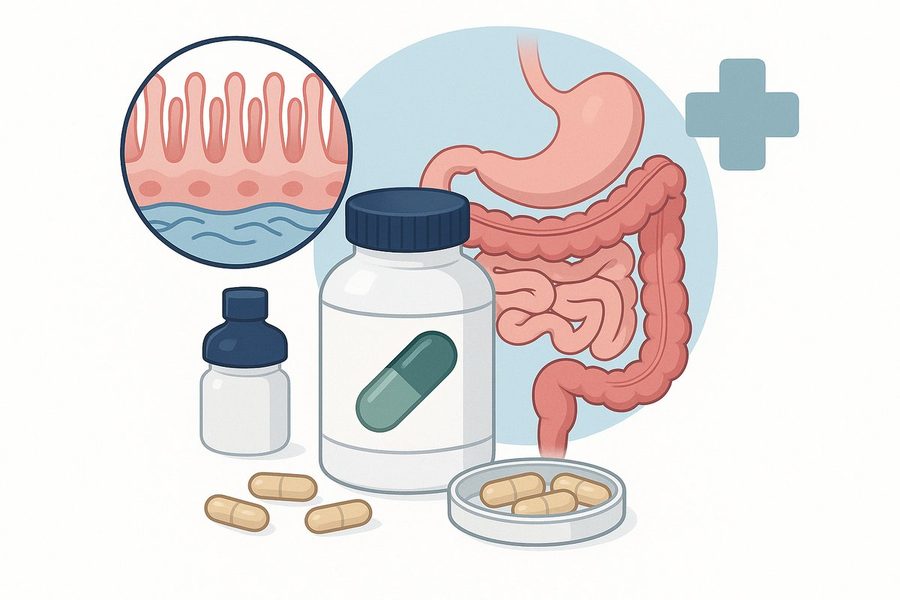
Potentially yes. Butyrate is linked in the literature to:
- nourishment of colonocytes
- regulation of intestinal barrier function
- anti-inflammatory signaling
- support for mucus and tight-junction related processes
That is why it is one of the most plausible gut-support ingredients in the supplement world. Still, outcomes depend on the person, dose, formulation, and the underlying reason their gut is irritated in the first place.
What butyrate does in the gut
1) Feeds colon cells
Colonocytes use butyrate as a major energy source. This is one reason butyrate is often described as foundational for colonic health.
2) Supports barrier function
Research suggests butyrate can help regulate tight junctions, mucus production, and other processes involved in intestinal barrier integrity. In other words, it may help the gut lining do its job more effectively.
3) Influences inflammation and sensitivity
Butyrate has been studied for effects on inflammation, oxidative stress, and visceral sensitivity. That is relevant for people with IBS-type discomfort or inflammatory gut stress.
Is butyrate a postbiotic?
This is where supplement marketing often gets sloppy. Under the formal ISAPP definition, a purified metabolite such as butyrate by itself is not automatically a postbiotic. It is absolutely important in gut health, but that does not make every butyrate capsule a postbiotic product.
That said, it is still closely related to the broader postbiotic conversation because it is one of the main beneficial compounds generated by gut microbes.
Who might consider butyrate supplements?
Butyrate supplements may be worth discussing with a clinician if you have:

- IBS-type symptoms with bowel discomfort
- ongoing gut irritation
- interest in barrier-focused support
- poor tolerance to high-fermentation fibers
They may be especially interesting for people who want gut support without depending on live probiotic viability.
What the evidence says
The mechanistic case for butyrate is strong. Human clinical evidence is promising in some settings, but it is not equally strong for every marketed claim. Reviews of the literature point to plausible benefits for intestinal barrier support and symptom improvement in certain digestive conditions, while also noting that dose, delivery method, and disease context matter.
That is the right way to frame it: promising, biologically credible, but not a cure-all.
How butyrate compares with fiber and postbiotics
Butyrate vs fiber
Fiber aims to help your own microbiome produce more butyrate naturally. That can be excellent when tolerated. The downside is that some people become more bloated on fermentable fiber.
Butyrate vs postbiotics
Butyrate is a single metabolite. A true postbiotic is a defined preparation of inanimate microorganisms and/or their components shown to help the host. They overlap conceptually, but they are not identical.
What to look for in a butyrate supplement
Choose a product that lists:
- the exact form, such as sodium butyrate or tributyrin
- the dose per serving
- the delivery format, especially if it is designed for intestinal release
- realistic claims, not sweeping promises about curing disease
Possible downsides
Butyrate supplements are not perfect. Some people dislike the smell, some do not notice much, and some may experience digestive discomfort. Also, supporting the gut lining may require more than one lever: diet, sleep, stress, medications, infections, and underlying GI conditions still matter.
FAQ
Do butyrate supplements heal the gut lining?
They may support barrier health, but “heal” is too strong and too broad for the current evidence.
Is butyrate good for IBS?
Some people with IBS may benefit, especially when barrier function and visceral sensitivity are part of the picture, but it is not a guaranteed solution.
Is butyrate better than probiotics?
Not necessarily. It depends on your goal. Butyrate is often more about barrier and colon support, while probiotics are strain-specific live interventions.
Sources
- Beyond the Gut: Unveiling Butyrate’s Global Health Impact Through Gut Health and Dysbiosis-Related Conditions: A Narrative Review. Nutrients. 2025. PMID: 40284169.
- Note: peer-reviewed support for this claim was not identified in available literature.
- Mas B (2022). Publisher note. Gastroenterologia y hepatologia. PMID: 36334934.
- He Y, et al. Gut Microbial Metabolite Butyrate and Its Therapeutic Role in Inflammatory Bowel Disease: A Literature Review. Nutrients. 2023. https://www.mdpi.com/2072-6643/15/10/2275
Related Articles
- Best Butyrate and Tributyrin Supplements in 2026
- Tributyrin vs Sodium Butyrate
- Postbiotics for Leaky Gut Support
- Best Postbiotic Supplements 2026
- Best Supplements for Stomach Lining Support in 2026
📚 Part of our Best Gut Health Supplements in 2026 hub. Explore all our probiotic, prebiotic, and postbiotic guides.