

Chelation Therapy: Medical Uses vs Supplement Hype
Quick Answer: Chelation therapy has legitimate medical uses — EDTA infusions for lead and heavy metal toxicity are well-established. The supplement industry has co-opted the ‘chelation’ label for oral products claiming to remove ‘toxins’ from the body, clear arterial plaque, or reverse cardiovascular disease. These claims are not supported by the evidence. If you have genuine heavy metal toxicity, work with a physician. Oral chelation supplements for general detox are not a credible intervention.
Key Takeaways
- Medical IV chelation (EDTA) is legitimate for diagnosed heavy metal poisoning — this is not the same as supplement chelation
- The TACT trial found modest benefit for post-heart-attack patients with diabetes, but results remain controversial
- Oral chelation supplements for ‘toxin removal’ or arterial plaque have no credible evidence
- Chelation can deplete minerals (zinc, calcium, selenium) — improper use carries real risks
- If you suspect heavy metal toxicity, get a physician-ordered blood or urine metal panel — not a supplement protocol
Frequently Asked Questions
Does chelation therapy remove arterial plaque?
There is no credible evidence that chelation therapy (oral or IV) removes established arterial plaque. The TACT trial found benefit in a narrow subgroup (diabetics post-MI), but mainstream cardiology does not endorse chelation for plaque reduction.
`r`n`r`n
What is the difference between medical chelation and supplement chelation?
Medical chelation uses prescription EDTA or DMSA administered by clinicians, with monitoring, for diagnosed metal toxicity. Supplement chelation products are oral formulas with ingredients like chlorella, cilantro, or EDTA that make vague detox claims without the clinical oversight or evidence of medical protocols.
`r`n`r`n
Is oral EDTA effective?
Oral EDTA has very poor bioavailability — roughly 5% is absorbed. IV EDTA is used in medical chelation for a reason. Oral EDTA supplements do not replicate the effects of IV medical chelation.
Chelation therapy occupies a strange space in health and wellness. It’s a legitimate, life-saving medical treatment for heavy metal poisoning — and simultaneously one of the most oversold “detox” concepts in the supplement industry.
The gap between what chelation actually does under medical supervision and what online supplement marketers claim it does is enormous. This guide walks through both sides honestly.
`r`n`r`n
What Chelation Therapy Actually Is
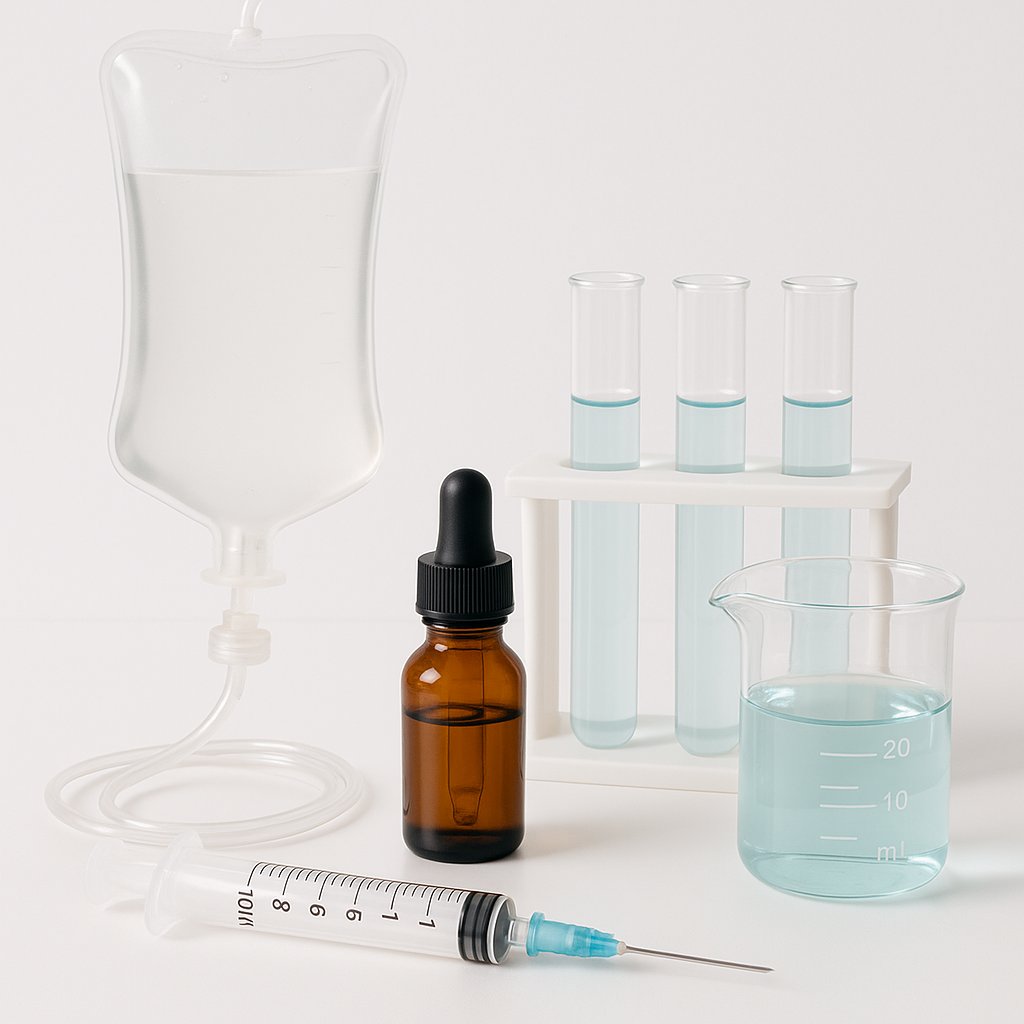
Chelation therapy uses chemical agents that bind to metal ions in the bloodstream, forming stable complexes that the body can excrete through urine. The word “chelation” comes from the Greek chele (claw) — the chelating agent grabs the metal ion like a claw.
The major FDA-approved chelating agents include:
- CaNa₂EDTA (calcium disodium EDTA) — approved for lead poisoning
- DMSA (succimer/Chemet) — oral chelator approved for lead poisoning in children
- DMPS (unithiol) — used for mercury and arsenic poisoning (not FDA-approved but used under IND protocols)
- Deferoxamine (Desferal) — approved for iron overload
- Penicillamine (Cuprimine) — approved for copper overload (Wilson’s disease) and sometimes used for lead
- BAL (dimercaprol) — the original heavy metal chelator, used for arsenic, mercury, lead, and gold poisoning
These are prescription medications administered under medical supervision, typically in emergency or clinical settings. They have well-characterized pharmacokinetics, known side effects, and specific dosing protocols [1][2].
`r`n`r`n
Where Chelation Therapy Is Medically Legitimate
Acute heavy metal poisoning
This is chelation’s home territory — and the evidence here is not in dispute. Chelation therapy is the standard of care for:
- Lead poisoning (blood lead levels ≥45 µg/dL in children, lower thresholds in symptomatic adults)
- Acute mercury poisoning (especially inorganic or elemental mercury exposure)
- Arsenic poisoning
- Iron overload (transfusion-dependent anemias like thalassemia major)
- Wilson’s disease (genetic copper accumulation)
In these contexts, chelation can be life-saving. Lead encephalopathy has a mortality rate that drops dramatically with appropriate chelation. Iron overload from chronic transfusions causes organ failure without chelation. This is not controversial medicine — it’s standard toxicology [3].
`r`n`r`n
What’s important to understand
Medical chelation works because there’s a verified, measured excess of a specific metal, confirmed by blood or urine testing. The chelating agent is chosen specifically for that metal. Dosing is calculated based on body weight and metal levels. Patients are monitored for electrolyte depletion, kidney function, and other adverse effects.
This is nothing like taking an oral supplement and hoping it “detoxes” unspecified metals.
`r`n`r`n
Chelation for Heart Disease: The TACT Trial Controversy
The most scientifically interesting — and contentious — use of chelation outside of poisoning is for cardiovascular disease.
`r`n`r`n
The TACT trial
The Trial to Assess Chelation Therapy (TACT) was an NIH-funded, double-blind, placebo-controlled trial of 1,708 post-myocardial infarction patients aged 50+. Participants received 40 IV infusions of disodium EDTA or placebo over approximately 30 weeks [4].
Results: The chelation group showed an 18% relative reduction in the composite primary endpoint (death, MI, stroke, coronary revascularization, or hospitalization for angina). This was statistically significant (p = 0.035), but just barely.
The diabetes subgroup: Among the 633 participants with diabetes, the results were much more striking — a 41% relative reduction in the primary endpoint and a 43% reduction in mortality. These results drove much of the overall trial’s significance [5].
`r`n`r`n
Why this hasn’t changed standard practice
Despite being a well-designed trial, TACT hasn’t led to widespread adoption for several reasons:
- The overall effect was modest and borderline significant
- The diabetes subgroup drove most of the benefit, raising questions about generalizability
- The proposed mechanism (removal of toxic metals that catalyze oxidative stress in atherosclerotic plaques) is plausible but unproven
- TACT2, the follow-up trial specifically in diabetic patients, is ongoing but results are not yet definitive
- Major cardiology societies (AHA, ACC) have not incorporated chelation into treatment guidelines
- The cost and time burden (40+ IV infusions) is substantial
The honest assessment
TACT is the single most interesting piece of chelation research outside of poisoning. It’s a real trial, published in JAMA, with a real signal. But one borderline-significant trial — even a well-designed one — is not sufficient to change standard of care for cardiovascular disease. The diabetes subgroup finding is hypothesis-generating, not practice-changing, until TACT2 confirms it [6].
If a cardiologist told you they were cautiously optimistic about chelation for post-MI diabetic patients, that would be a reasonable reading of the evidence. If a supplement company told you EDTA capsules prevent heart attacks, that would be a massive leap beyond what the data supports.
`r`n`r`n
Oral Chelation Supplements: The Detox Market
This is where things go sideways.
A thriving market exists for oral chelation and “heavy metal detox” supplements. Common ingredients include:
- EDTA (in oral capsule or liquid form)
- Chlorella (marketed as a natural chelator)
- Cilantro extract (claimed to mobilize mercury)
- Modified citrus pectin (claimed to bind metals in the gut)
- Zeolite (a volcanic mineral claimed to trap metals)
- Activated charcoal (general “binder”)
- Alpha-lipoic acid (claimed to cross the blood-brain barrier and chelate mercury)
The problems with oral chelation supplements
1. Bioavailability. Oral EDTA has roughly 5% bioavailability compared to IV administration. The TACT trial used IV EDTA specifically because oral delivery doesn’t achieve therapeutically relevant blood levels for systemic metal chelation [7].
2. No confirmed metal burden. The fundamental premise of most detox supplements is that you have accumulated heavy metals that need removing. In the vast majority of healthy people eating a normal diet, this isn’t true. Without testing showing elevated levels of a specific metal, chelation is a solution looking for a problem.
3. Provoked urine testing is misleading. Many alternative practitioners use “provoked” or “challenge” urine tests — giving a chelating agent and then measuring metals in urine. This will always show elevated metals because chelators pull metals from bone and tissue stores that everyone has. Comparing provoked urine to unprovoked reference ranges is diagnostically meaningless and has been widely criticized by toxicology professionals [8].
4. Chlorella and cilantro evidence is essentially nonexistent. The claim that cilantro chelates mercury traces back to a single poorly controlled study. Chlorella has some in-vitro metal binding properties but no convincing human clinical trials showing it removes clinically meaningful amounts of heavy metals from the body [9].
5. Risk of mineral depletion. Chelators are not perfectly selective. They can bind essential minerals (calcium, zinc, iron, magnesium) along with toxic ones. This is why medical chelation includes careful monitoring and often mineral supplementation — oral supplement chelation does not.
`r`n`r`n
Who is actually at risk for heavy metal exposure?
Genuine heavy metal exposure concerns exist for specific populations:
- Workers in mining, smelting, battery manufacturing, or certain industrial settings
- People living in older housing with lead paint or lead plumbing
- Communities with contaminated water supplies
- People consuming large amounts of certain fish species (mercury)
- People using traditional remedies or cosmetics containing heavy metals (Ayurvedic preparations, kohl, certain herbal imports)
For these groups, the answer is medical evaluation and testing — not oral supplements.
`r`n`r`n
IV Chelation at Naturopathic/Alternative Clinics
A middle ground exists between legitimate medical chelation and oral supplement detoxing: IV chelation administered at integrative, naturopathic, or alternative medicine clinics.
These clinics typically offer IV EDTA or IV DMPS infusions for conditions including:
- Cardiovascular disease prevention
- Autism
- Chronic fatigue syndrome
- “General detoxification”
- Anti-aging
The evidence for these uses
For cardiovascular disease, the TACT data exists (see above) but is insufficient to recommend routine treatment. For autism, multiple systematic reviews have found no evidence of benefit, and the FDA specifically warns against chelation products marketed for autism [10]. For the other conditions, there is no meaningful clinical trial evidence.
`r`n`r`n
Cost and practical reality
A typical IV chelation course involves 20–40 infusions at $100–$150 each, totaling $2,000–$6,000+. This is almost never covered by insurance for non-poisoning indications. Patients should weigh this against the evidence base, which for most marketed indications ranges from “one suggestive trial” to “nothing.”
`r`n`r`n
Risks of Chelation Therapy
All chelation carries risks, which is why medical chelation involves monitoring:
- Hypocalcemia — EDTA can bind calcium aggressively. Disodium EDTA (as opposed to calcium disodium EDTA) has caused fatal hypocalcemia in several documented cases [11]
- Nephrotoxicity — chelation complexes are excreted through the kidneys; pre-existing kidney disease increases risk
- Essential mineral depletion — zinc, iron, copper, and manganese can all be depleted
- GI distress — nausea, vomiting, diarrhea (especially oral chelation)
- Redistribution risk — poorly managed chelation can mobilize metals from storage sites and redistribute them to more sensitive organs (including the brain)
- Allergic reactions — rare but documented with IV administration
- Headache, fatigue, fever — common with IV infusions
The redistribution risk is particularly concerning with unsupervised oral chelation. Taking a chelator that mobilizes mercury from tissues without ensuring excretion can theoretically worsen toxicity rather than improve it [12].
`r`n`r`n
The Bottom Line
Chelation therapy is a real medical treatment for real conditions. Heavy metal poisoning, iron overload, and Wilson’s disease are serious medical situations where chelation is life-saving and evidence-based.
Beyond those established uses, the evidence thins dramatically:
- Heart disease: One promising but not definitive trial (TACT). Potentially interesting for diabetic post-MI patients pending TACT2 results. Not currently guideline-recommended.
- Oral detox supplements: No evidence that healthy people need heavy metal “detoxing.” Oral EDTA has poor bioavailability. Chlorella and cilantro chelation claims lack human trial support. Provoked urine testing is misleading.
- Other conditions (autism, chronic fatigue, anti-aging): No credible evidence of benefit.
If you believe you have heavy metal exposure, get proper medical testing (unprovoked blood and urine levels). If levels are elevated, work with a toxicologist or physician experienced in chelation. If levels are normal, you don’t need chelation — oral or otherwise.
The supplement industry has turned a legitimate medical procedure into a marketing concept. Don’t buy the concept when what you need is either nothing or actual medicine.
`r`n`r`n
References
[1] Flora SJ, Pachauri V. Chelation in metal intoxication. Int J Environ Res Public Health. 2010;7(7):2745-2788.
[2] Bjørklund G, et al. Metal chelators and neurotoxicity. Arch Toxicol. 2017;91(12):3787-3797.
[3] Lowry JA. Oral and IV chelation therapies for heavy metal poisoning. In: Nelson’s Textbook of Pediatrics, 21st ed.
[4] Lamas GA, et al. Effect of disodium EDTA chelation regimen on cardiovascular events in patients with previous myocardial infarction: the TACT randomized trial. JAMA. 2013;309(12):1241-1250.
[5] Escolar E, et al. The effect of an EDTA-based chelation regimen on patients with diabetes mellitus and prior myocardial infarction in the Trial to Assess Chelation Therapy (TACT). Circ Cardiovasc Qual Outcomes. 2014;7(1):15-24.
[6] Lamas GA, Issa OM. Chelation therapy in cardiovascular disease: review of the TACT data and future directions. Expert Rev Cardiovasc Ther. 2020;18(1):29-36.
[7] Foreman H, et al. The metabolism of C14-labeled EDTA in the human being. J Lab Clin Med. 1953;42(4):572-583.
[8] Ruha AM, et al. Urine metal testing and chelation in practice: a survey of US toxicologists. J Med Toxicol. 2017;13(2):158-164.
[9] Queiroz ML, et al. Chlorella vulgaris restores bone marrow cellularity and cytokine production in lead-exposed mice. Food Chem Toxicol. 2003;41(12):1607-1613.
[10] James S, et al. Chelation for autism spectrum disorder (ASD). Cochrane Database Syst Rev. 2015;(5):CD010766.
[11] Centers for Disease Control and Prevention (CDC). Deaths associated with hypocalcemia from chelation therapy — Texas, Pennsylvania, and Oregon, 2003-2005. MMWR. 2006;55(08):204-207.
[12] Sears ME. Chelation: harnessing and enhancing heavy metal detoxification — a review. ScientificWorldJournal. 2013;2013:219840.
Related Articles
- Lymphatic Cleanse Supplements
- Best Gut Health Supplements for Bloating
- Prebiotics vs Probiotics
- Butyrate Supplements for Gut Lining Support
- Best Postbiotics for Bloating
Sources
- Reviews on chelation therapy evidence and clinical indications. PubMed search.
- The TACT trial and EDTA chelation evidence. PubMed search.
- Reviews on heavy metal detox supplement claims. PubMed search.
- FDA Consumer Updates: Dangers of products sold for chelation therapy.
- Reviews on chelation safety and adverse effects. PubMed search.



Leave a Reply