
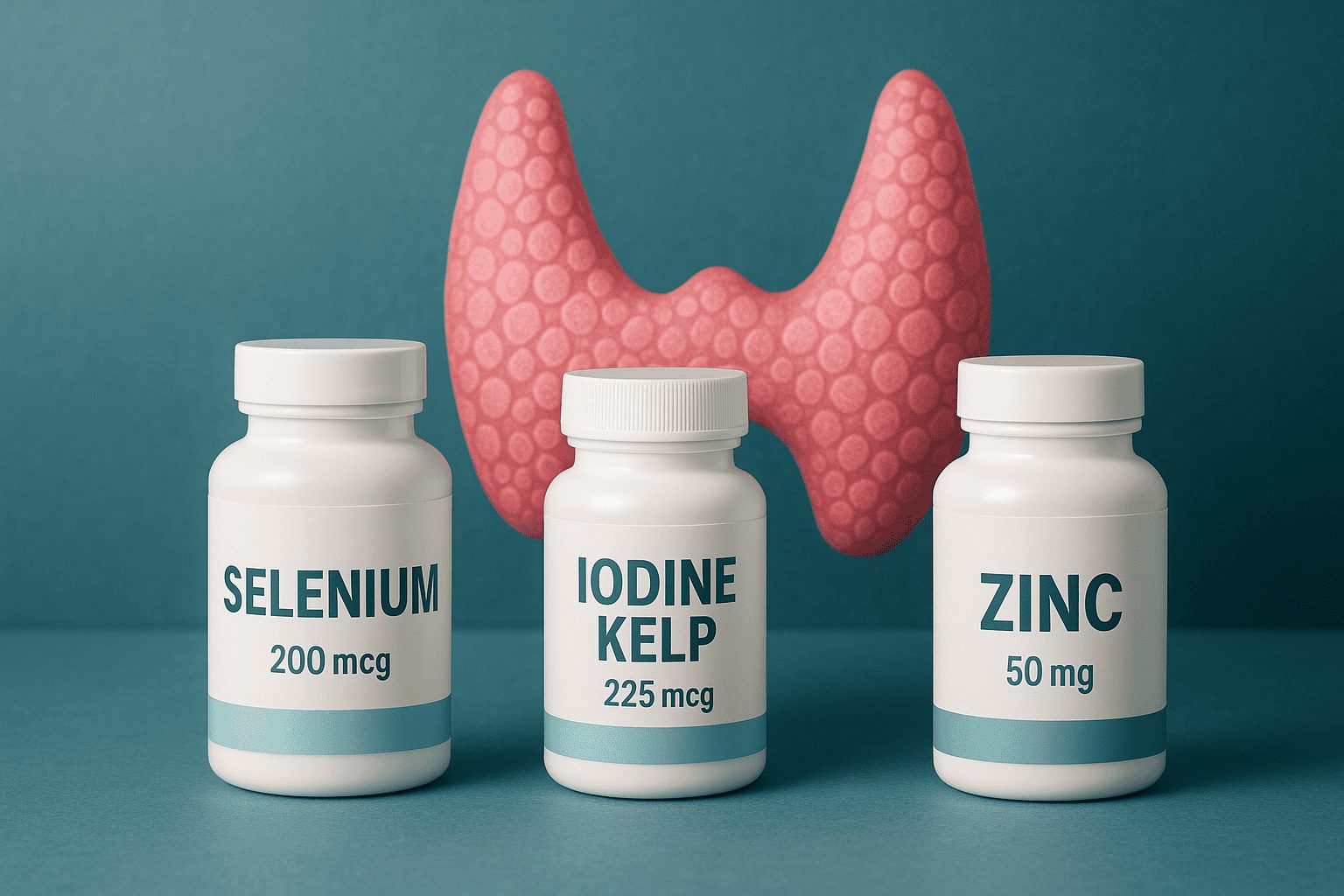
Best Supplements for Thyroid Health (2026)
Quick Answer: The thyroid depends on selenium (hormone conversion), iodine (hormone synthesis), zinc (T3 production), and vitamin D (immune regulation). For Hashimoto’s, selenium has the strongest RCT evidence. Most supplements don’t treat thyroid disease — but correcting nutritional deficiencies that impair thyroid function can make a meaningful difference.
Thyroid disorders affect an estimated 200 million people globally, making the thyroid gland one of the most clinically significant endocrine organs and thyroid health supplements one of the most searched supplement categories. The reality is nuanced: the thyroid depends on specific nutrients in ways that are well-understood biochemically, and deficiencies in selenium, iodine, zinc, and other nutrients can genuinely impair thyroid function. At the same time, most supplements marketed for “thyroid support” make claims that vastly outrun their evidence.
This guide cuts through the noise, covering the nutrients with real thyroid relevance, the evidence for each, and how to build a rational supplement approach for thyroid health.
How the Thyroid Works: The Nutritional Foundation
The thyroid synthesizes and secretes thyroid hormones through a process that is nutritionally dependent:
Step 1 — Thyroglobulin synthesis: Thyroid cells produce thyroglobulin, a large glycoprotein that serves as the scaffold for hormone synthesis. This requires adequate protein and amino acids.
Step 2 — Iodination: Thyroid peroxidase (TPO) enzyme uses hydrogen peroxide and iodide to iodinate tyrosine residues on thyroglobulin, creating MIT (monoiodotyrosine) and DIT (diiodotyrosine).
Step 3 — Coupling: MIT + DIT → T3 (triiodothyronine); DIT + DIT → T4 (thyroxine). This step produces the stored thyroid hormones.
Step 4 — Secretion: Thyroglobulin is cleaved and T4 (mostly) and T3 are released into the bloodstream.
Step 5 — Peripheral conversion: T4 is largely inactive. In peripheral tissues (liver, kidneys, brain), deiodinase enzymes convert T4 to active T3. These deiodinases require selenium as a cofactor.
Each step has nutritional requirements: iodine for iodination, selenium for conversion, zinc for T3 production and receptor sensitivity, and iron for thyroid peroxidase activity.
Selenium: The Most Evidence-Backed Thyroid Supplement
Selenium plays two critical roles in thyroid physiology:
- Deiodinase enzymes (T4→T3 conversion) — selenium is structurally required
- Glutathione peroxidase — neutralizes hydrogen peroxide generated during hormone synthesis, protecting thyroid cells from oxidative damage
For Hashimoto’s thyroiditis:
The evidence is compelling and replicated. Multiple RCTs (most notably Gärtner et al. 2002, and subsequent trials) show that selenium supplementation (200 mcg/day of selenomethionine) significantly reduces anti-TPO antibodies — the immune markers of Hashimoto’s disease — by 40-50% in some trials. A 2016 meta-analysis confirmed this finding.
Additionally, selenium supplementation improves quality of life and mood in Hashimoto’s patients — effects that may occur independently of the antibody reduction.
Form and dose: Selenomethionine 200 mcg/day. Test baseline selenium levels first (target 100-130 mcg/L plasma selenium).
For Graves’ orbitopathy:
The EUGOGO trial found selenium 200 mcg/day improved mild thyroid eye disease compared to placebo — now incorporated into some clinical guidelines.
See our dedicated article Best Selenium Supplements in 2026 for comprehensive selenium coverage.
Iodine: Essential but Easily Misused
What iodine does: Required for thyroid hormone synthesis — T4 contains 4 iodine atoms, T3 contains 3.
Who needs it: Pregnant women, people on dairy-free diets, those not using iodized salt. Deficiency causes goiter, hypothyroidism, and developmental problems in children of deficient mothers.
The important caution: Iodine supplementation in people with Hashimoto’s can worsen autoimmune thyroid disease. Excess iodine increases hydrogen peroxide production in thyroid cells; without adequate selenium to neutralize it, this increases oxidative damage and potentially immune activation. High-dose iodine protocols (popularized in some wellness circles) have caused thyrotoxicosis and worsened autoimmunity in documented cases.
Practical guidance:
- For iodine-sufficient individuals: No supplementation needed; dietary iodine from iodized salt and dairy is adequate
- For documented deficiency: Potassium iodide 150-200 mcg/day
- For Hashimoto’s patients: Ensure selenium adequacy before any iodine supplementation; stick to RDA-level amounts; avoid high-dose iodine protocols
- For pregnant women: 220-250 mcg/day total intake (supplement if diet doesn’t provide this)
For complete iodine coverage, see Iodine Supplements in 2026.
Zinc: Supporting T3 Conversion and Receptor Function
Zinc is involved in thyroid function through multiple pathways:
- Required for the conversion of T4 to T3 (in addition to selenium, deiodinase activity is zinc-dependent)
- Zinc finger proteins are required for thyroid hormone receptor function — even adequate T3 is less effective if zinc is low
- Zinc is needed for TRH (thyrotropin-releasing hormone) synthesis in the hypothalamus
Evidence: Studies in zinc-deficient populations consistently show impaired thyroid hormone levels and metabolism. Zinc supplementation in deficient hypothyroid patients has improved T3 levels and reduced TSH in some trials.
Who may benefit: Those with low zinc status (vegetarians, those with malabsorption, diabetics), those with hypothyroid symptoms despite “normal” thyroid labs, and anyone with low serum zinc (<70 mcg/dL).
Form and dose: Zinc picolinate or bisglycinate, 15-30 mg/day. Don’t exceed 40 mg/day without monitoring copper levels (zinc depletes copper). Specialized Mineral Forms Explained covers zinc forms in detail.
Vitamin D: Immune Regulation in Autoimmune Thyroid Disease
The thyroid-vitamin D connection is primarily immunological rather than directly hormonal:
- Vitamin D receptors are expressed on immune cells including T-regulatory cells
- Vitamin D promotes immune tolerance and may reduce autoimmune activity
- Low vitamin D is significantly associated with Hashimoto’s and Graves’ disease
- Some trials show vitamin D supplementation reduces thyroid antibodies (anti-TPO and anti-TG) in Hashimoto’s
Evidence: A 2018 RCT found vitamin D3 (1,200 IU/day for 4 months) significantly reduced anti-TPO and anti-TG antibodies in Hashimoto’s patients who were vitamin D deficient.
Practical: Test 25(OH)D levels. If below 30 ng/mL, supplement to reach 40-60 ng/mL. Standard doses: 2,000-4,000 IU/day D3 with K2 (see Best Vitamin D3 + K2 Supplements).
Ashwagandha: The Adaptogen with Thyroid Evidence
Ashwagandha (Withania somnifera) has emerging evidence specifically for thyroid function:
A 2018 RCT in Journal of Alternative and Complementary Medicine found ashwagandha root extract (600 mg KSM-66/day) in subclinical hypothyroid patients significantly improved T3, T4, and TSH levels compared to placebo over 8 weeks. TSH normalized in more treatment patients.
The proposed mechanism involves ashwagandha’s effect on hypothalamic-pituitary signaling — it may modulate TSH secretion and improve thyroid responsiveness.
For Hashimoto’s, ashwagandha’s cortisol-reducing and immune-modulating properties may benefit the stress-autoimmune connection. However, there is theoretical concern about immune-stimulating adaptogens in autoimmune conditions — consult your endocrinologist.
See Best Ashwagandha Supplements for Cortisol in 2026 for dosing and form details.
Magnesium
Magnesium is required for TSH synthesis and thyroid hormone binding to carrier proteins. Magnesium deficiency (which is common) can impair thyroid axis function and is associated with hypothyroid symptoms even with normal TSH.
See Best Magnesium Supplements in 2026 for form recommendations.
Iron
Iron is a cofactor for thyroid peroxidase (TPO) — the enzyme that iodinate thyroglobulin. Iron deficiency (very common in premenopausal women) impairs TPO activity and can contribute to hypothyroid symptoms and elevated TSH. Treating iron deficiency can meaningfully improve thyroid function in iron-deficient hypothyroid patients — sometimes allowing reduction in levothyroxine dose under physician guidance.
Check ferritin in any thyroid patient with fatigue — ferritin below 50 ng/mL may be contributing to suboptimal thyroid function.
What Doesn’t Have Strong Evidence
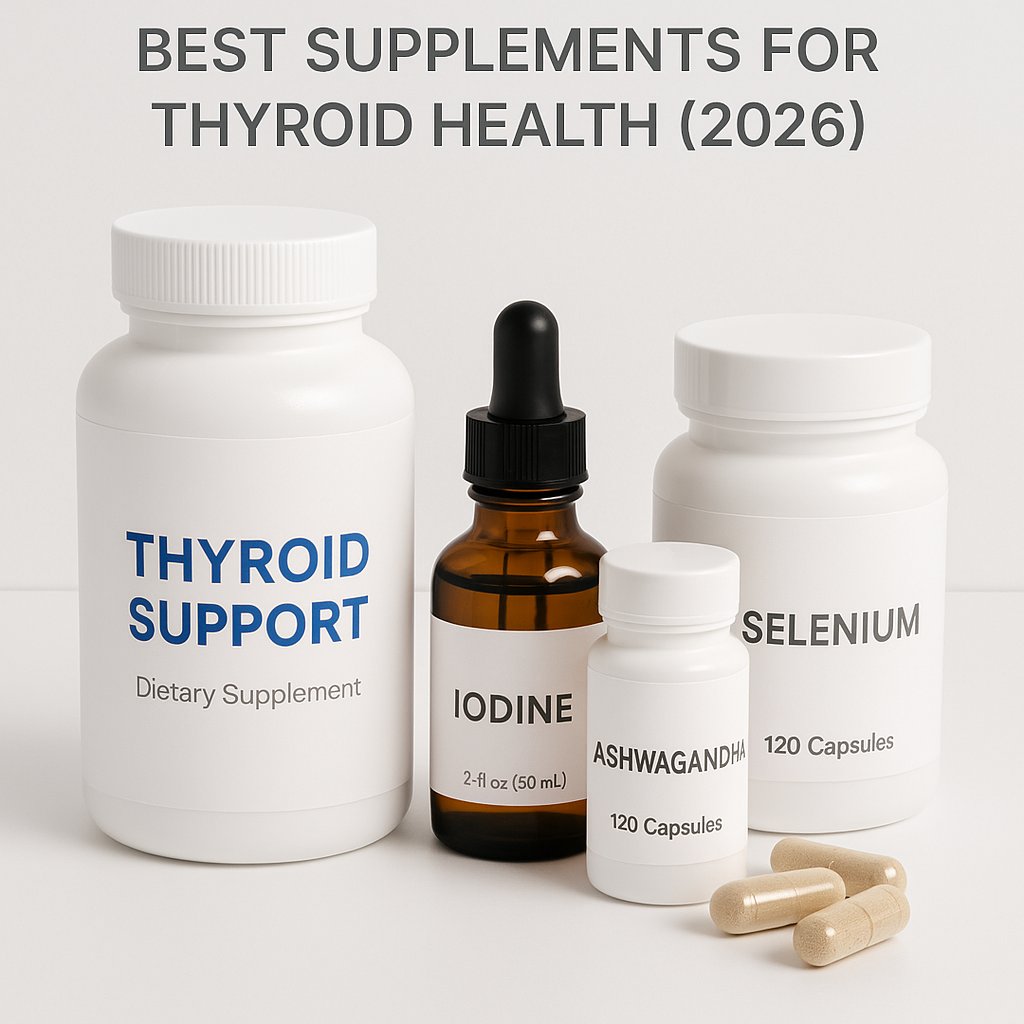
“Thyroid support” proprietary blends: Most contain various herbs, minerals, and glandular extracts at undisclosed doses. Without clinical evidence at specified doses, these are largely unproven.
Desiccated thyroid supplements (OTC): OTC “thyroid support” products that use desiccated animal thyroid gland are concerning — they may contain actual thyroid hormones (T3/T4) at variable doses. The FDA has warned about these. They are not supplements; they’re hormones in unregulated form.
Kelp for thyroid support: Variable iodine content makes kelp an unreliable and potentially dangerous source of iodine for thyroid management. Stick to potassium iodide.
Key Takeaways
- Selenium (200 mcg/day selenomethionine) has the strongest RCT evidence for Hashimoto’s — reduces anti-TPO antibodies by 40-50%
- Iodine is essential but must be approached cautiously in autoimmune thyroid disease — ensure selenium adequacy first
- Zinc supports T3 conversion and thyroid receptor function — supplement if levels are low
- Vitamin D reduces thyroid antibodies in deficient patients and supports immune regulation
- Ashwagandha has emerging RCT evidence for improving thyroid hormone levels in subclinical hypothyroidism
- Iron and magnesium are frequently overlooked but meaningfully impact thyroid function
- Avoid high-dose iodine protocols, proprietary “thyroid support” blends without evidence, and OTC desiccated thyroid products
Frequently Asked Questions
Can supplements cure hypothyroidism?
No. Established hypothyroidism (particularly due to Hashimoto’s with significant thyroid tissue destruction) requires thyroid hormone replacement (levothyroxine). Supplements can address nutritional deficiencies that impair residual thyroid function, reduce autoimmune activity in early-stage disease, and support overall thyroid health — but they cannot replace a non-functioning thyroid.
Ashwagandha and zinc support more than just thyroid function. Both play key roles in testosterone and male hormone health. See our guide on ashwagandha and zinc for hormone support beyond thyroid health.
Is it safe to take selenium while on levothyroxine?
Yes — selenium supplementation is generally compatible with levothyroxine. It may improve T4-to-T3 conversion (since deiodinases require selenium), potentially affecting your T3/T4 balance. Inform your physician so they can monitor your thyroid function appropriately.
How long does it take for supplements to improve thyroid function?
Nutrient repletion effects (correcting deficiency) typically show within 6–12 weeks. Hashimoto’s antibody reduction with selenium: 3–6 months. Vitamin D effects on antibodies: 3–6 months. Be patient and track labs over time.
Can I take ashwagandha with thyroid medication?
Use caution. Ashwagandha may affect TSH and thyroid hormone levels. This can alter your medication requirements. Disclose ashwagandha use to your prescribing physician and monitor thyroid levels more frequently when starting or adjusting ashwagandha use.
Do I need to test my nutrient levels before supplementing for thyroid health?
Ideally, yes. At minimum, test: selenium (serum), vitamin D (25-OH), zinc, ferritin, and a full thyroid panel (TSH, free T3, free T4, anti-TPO, anti-TG). This allows targeted supplementation rather than guessing. Many functional medicine practitioners offer thyroid-focused nutrient panels.
Sources
- Reviews on thyroid health supplements. PubMed search.
- National Institutes of Health Office of Dietary Supplements. Iodine fact sheet.
- National Institutes of Health Office of Dietary Supplements. Selenium fact sheet.
- Reviews on selenium and thyroid function. PubMed search.
- Reviews on iodine and thyroid supplementation. PubMed search.


Leave a Reply