

Iodine Supplements: Thyroid, Kelp vs Potassium Iodide
Quick Answer: Iodine is essential for thyroid hormone production. Most Americans are marginally sufficient, but certain populations (pregnant women, dairy-free dieters, those avoiding iodized salt) may be deficient. Potassium iodide is more reliable than kelp. High-dose iodine supplementation carries real risks and should be approached cautiously.
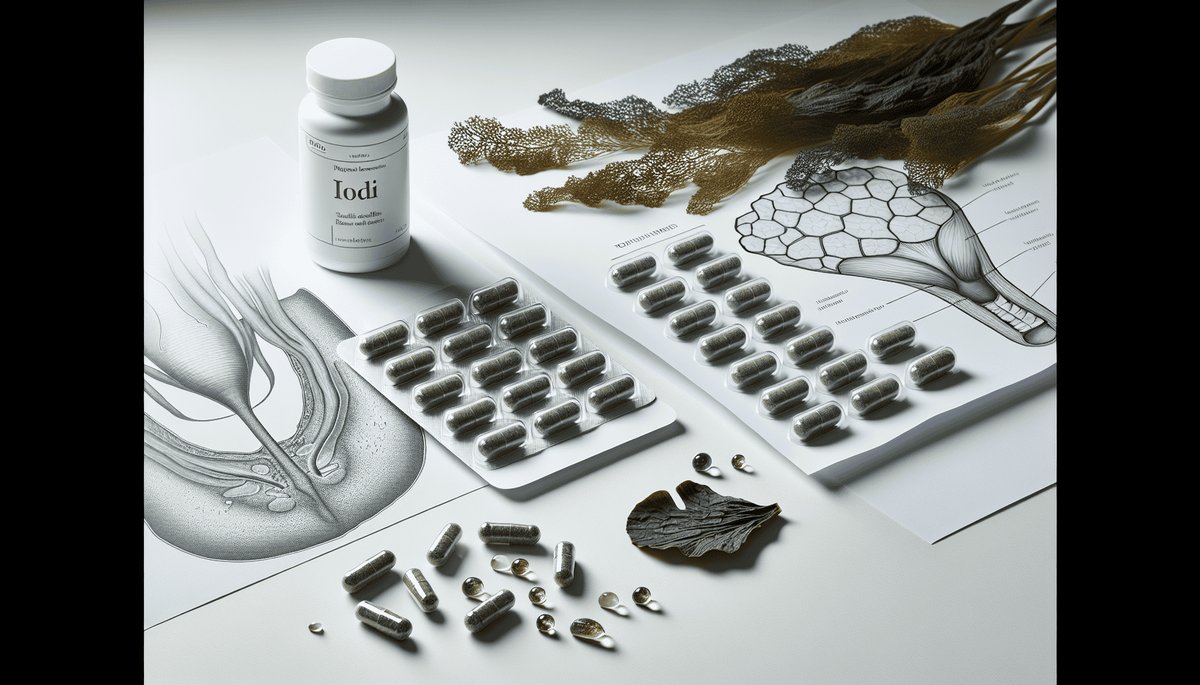
Iodine is one of the most essential trace minerals for human health, and one of the most frequently misused as a supplement. It’s required to synthesize thyroid hormones T3 and T4 — without it, the thyroid cannot function. Yet the difference between adequate iodine and excessive iodine is surprisingly small, and high-dose iodine supplementation has triggered thyroid dysfunction (both hypo- and hyperthyroidism) in people who believed they were doing something beneficial.
This guide cuts through the confusion: who needs iodine, what forms work, how much is enough, and why the popular “high-dose iodine” protocols circulating in wellness communities require serious scrutiny.
Why Iodine Is Essential
Thyroid hormones (T3 and T4) contain iodine atoms as core structural components — T4 contains 4 iodine atoms, T3 contains 3. The thyroid gland actively concentrates iodide from the blood to synthesize these hormones, and the process requires adequate dietary iodine.
What thyroid hormones control:
- Basal metabolic rate
- Heart rate and cardiac output
- Body temperature regulation
- Neurological development (especially fetal brain development)
- Protein synthesis and carbohydrate metabolism
- Normal growth in children
Consequences of deficiency:
- Goiter (enlargement of the thyroid gland)
- Hypothyroidism (in severe deficiency)
- Cretinism — severe intellectual disability — in children born to iodine-deficient mothers (now rare in developed countries due to salt iodization)
- Increased risk of miscarriage, preterm birth, impaired fetal brain development
Iodine Deficiency: Is It Really a Problem in 2026?
The history of iodine deficiency is a public health success story. Universal salt iodization programs beginning in the 1920s largely eliminated goiter and cretinism in the United States and most developed countries.
However, marginal deficiency is re-emerging in some populations:
- Reduced iodized salt use: Low-sodium diets, specialty salts (sea salt, Himalayan salt — not iodized unless stated), and reduced processed food consumption can lower iodine intake
- Dairy-free diets: Dairy products are a major iodine source in the US (from iodine-containing compounds used in dairy sanitation)
- Pregnancy: Iodine needs increase significantly; many prenatal vitamins contain inadequate iodine (or none)
- Vegan/plant-based diets without seaweed: Plant foods generally have low, variable iodine content
- NHANES data: Several surveys show median urinary iodine excretion in the US declining since the 1970s, with some subpopulations — particularly women of reproductive age and pregnant women — showing marginal or insufficient status
Testing: Spot urine iodine-to-creatinine ratio or 24-hour urinary iodine is the standard assessment. Serum thyroid tests (TSH, T3, T4) don’t reliably detect early deficiency.
Iodine Sources: Food First
Before supplementing, understanding dietary iodine helps:
| Source | Iodine Content |
|---|---|
| Seaweed (nori, 1 sheet) | 16–2,984 mcg (highly variable) |
| Cod, 3 oz | 99 mcg |
| Milk, 1 cup | 56 mcg |
| Yogurt, 1 cup | 75 mcg |
| Eggs, 1 large | 24 mcg |
| Iodized salt, ¼ tsp | ~71 mcg |
| Shrimp, 3 oz | 35 mcg |
The RDA: 150 mcg/day for adults; 220 mcg/day for pregnant women; 290 mcg/day for breastfeeding women.
Most people in the US consuming dairy, seafood, and iodized salt regularly reach adequate intake. Those avoiding these food categories are genuinely at risk.
Kelp vs. Potassium Iodide vs. Lugol’s: Supplement Forms Compared
Potassium Iodide (KI)
The most reliable supplement form. Provides a known, consistent dose of iodide. Used in FDA-approved thyroid protection protocols (emergency radiation exposure). Well-characterized pharmacokinetics.
Typical supplement doses: 150–500 mcg/day (some prenatal vitamins include 150–250 mcg KI).
Best for: Reliable, controlled iodine supplementation. Appropriate for pregnancy, vegan diets, or documented deficiency.
Kelp and Seaweed-Based Supplements
Iodine from kelp is highly variable — some kelp species concentrate iodine to extraordinary levels (1,000–10,000+ mcg per gram of dried kelp). This makes dosing unpredictable.
The FDA has issued warnings about kelp supplements causing thyroid dysfunction due to variable and potentially excessive iodine content. Consumer Lab testing has found iodine content in kelp supplements varying from claimed amounts by 100x in some cases.
Bottom line: Kelp is not appropriate for controlled iodine supplementation due to highly variable iodine content. Use KI if you need a supplement.
Iodate (Sodium Iodate or Calcium Iodate)
Used in some food fortification. Converted to iodide in the gut. Less commonly used in supplements but functional.
Lugol’s Iodine (Potassium Iodide + Molecular Iodine)
A liquid solution traditionally used medicinally (e.g., pre-surgical thyroid preparation, emergency radiation exposure). Available OTC in various concentrations (2%, 5%, 7%).
The concern: Lugol’s 5% provides approximately 6.5 mg (6,500 mcg) of iodine per DROP. Online protocols recommending daily “high-dose iodine” using Lugol’s doses of 12.5 mg to 50 mg/day are circulating in wellness communities — these doses are 80-300x the RDA.
The High-Dose Iodine Controversy
A significant online and naturopathic community promotes high-dose iodine (12.5–50+ mg/day) based on the work of Guy Abraham and David Brownstein. The claims include:
- The thyroid isn’t the only organ needing iodine; breast, ovary, prostate, and other tissues need it too
- Iodine deficiency is widespread and conventional RDAs are too low
- High-dose iodine treats thyroid disease, fibrocystic breast tissue, and more
What mainstream endocrinology says: This is not supported by current evidence and carries significant risks:
- Wolff-Chaikoff effect: High iodine intake acutely inhibits thyroid hormone synthesis. Most people escape this effect (adaptation), but some — particularly those with underlying thyroid autoimmunity — do not, developing hypothyroidism.
- Jod-Basedow phenomenon: In people with autonomous thyroid nodules or iodine deficiency, sudden high iodine intake can trigger hyperthyroidism.
- Triggering/worsening Hashimoto’s: High iodine intake is associated with increased autoimmune thyroid disease in populations with iodine sufficiency.
- Case reports of thyrotoxicosis and other thyroid crises from high-dose supplementation are documented.
The evidence for high-dose iodine treating the conditions claimed is not established in controlled trials. The risks are real. Until more evidence accumulates, high-dose iodine protocols are not appropriate without specialist medical supervision.
Iodine and Pregnancy: The Most Important Indication
Pregnancy is the clearest indication for iodine supplementation:
- The WHO recommends 250 mcg/day during pregnancy and lactation
- Many prenatal vitamins contain only 150 mcg (or zero iodine) — check the label
- Fetal brain development depends on adequate maternal thyroid hormones through the first trimester, before the fetal thyroid is functional
- Even mild iodine insufficiency during pregnancy can have lasting effects on child cognitive development (multiple studies document IQ effects)
Recommendation for pregnant women: Supplement with 150–200 mcg potassium iodide daily (in addition to a prenatal containing some iodine, to reach ~220–250 mcg total), unless you consume regular dairy and use iodized salt.
Selenium and Iodine: The Important Interaction
Selenium and iodine supplementation interact significantly. Iodine-mediated thyroid hormone synthesis generates hydrogen peroxide as a byproduct. Selenium (via glutathione peroxidase) neutralizes this oxidative stress. This is why:
- Selenium deficiency worsens the thyroid damage that can occur with iodine supplementation
- High-dose iodine supplementation in selenium-deficient populations has caused more thyroid pathology than in selenium-replete populations
- When considering iodine supplementation, ensuring selenium adequacy is prudent
See the companion article Best Selenium Supplements in 2026 for selenium status guidance.
Key Takeaways
- Iodine is required for thyroid hormone synthesis (T3 and T4); deficiency causes goiter and hypothyroidism
- Marginal deficiency is re-emerging in populations avoiding dairy, using non-iodized salt, or following plant-based diets
- Potassium iodide is the most reliable supplement form; kelp is too variable for controlled dosing
- Pregnant and breastfeeding women have the highest iodine needs (220–290 mcg/day) and most benefit clearly from supplementation
- The safe supplementation range is 150–500 mcg/day for most adults; doses above 1,000 mcg/day should only be used under medical supervision
- High-dose iodine protocols (12.5–50 mg/day) carry real risks of triggering or worsening thyroid dysfunction and are not evidence-based for general use
- Ensure selenium adequacy before and during iodine supplementation
Frequently Asked Questions
How do I know if I’m iodine deficient?
Spot urine iodine testing is the most practical approach. Values below 100 mcg/L indicate deficiency; 100–199 mcg/L is adequate; 200–299 mcg/L is optimal for pregnancy. TSH alone doesn’t detect early iodine insufficiency.
Can I get enough iodine without dairy or seafood?
It’s challenging. Iodized salt is the main non-animal source — ¼ tsp/day provides ~70 mcg. If you consistently use iodized salt in cooking and eat some eggs, you may be borderline adequate. Seaweed eaten regularly (nori in sushi, for example) provides iodine but with variable amounts. A potassium iodide supplement is the most practical solution for strict vegans.
Is Himalayan pink salt a good iodine source?
No. Himalayan salt, sea salt, kosher salt, and most gourmet salts are not iodized. Only specifically labeled “iodized salt” provides consistent dietary iodine.
Does iodine help with thyroid nodules or goiter?
Iodine deficiency is the primary cause of endemic goiter globally. Correcting deficiency resolves iodine-deficiency goiter. However, in iodine-sufficient regions, goiter and nodules have other causes (autoimmune, genetic, etc.) that iodine supplementation doesn’t treat. High-dose iodine can actually worsen thyroid disease in autoimmune contexts.
Is taking high-dose iodine safe for breast health?
This is one of the main claims in high-dose iodine protocols. Some practitioners claim iodine treats fibrocystic breast disease. While breast tissue does express sodium-iodide symporter (the iodine uptake mechanism), the evidence for high-dose iodine treating fibrocystic breast changes is preliminary and limited to a few small trials. The thyroid risks of high-dose iodine supplementation need to be weighed seriously against uncertain breast benefits.
What’s the tolerable upper limit for iodine?
The NIH sets the Tolerable Upper Limit (UL) at 1,100 mcg/day for adults. Above this, adverse thyroid effects become increasingly likely in susceptible individuals. Most healthy adults with normal thyroids can handle somewhat higher intakes transiently, but chronic intake above the UL is not recommended.
Sources
- The assessment of iodine sufficiency in women in the first trimester of pregnancy living in areas of the Voronezh region with varying levels of iodine consumption. Problemy endokrinologii. 2025. PMID: 41640142.
- WHO. “Assessment of iodine deficiency disorders and monitoring their elimination.” 3rd ed. 2007. https://www.who.int/publications/i/item/9789241595827
- Sacks D, Baxter B, Campbell BCV, Carpenter JS, Cognard C, et al (2018). Multisociety Consensus Quality Improvement Revised Consensus Statement for Endovascular Therapy of Acute Ischemic Stroke. International journal of stroke : official journal of the International Stroke Society. PMID: 29786478.
- Stagnaro-Green A et al. “Guidelines of the American Thyroid Association for the Diagnosis and Management of Thyroid Disease During Pregnancy.” Thyroid. 2011. https://doi.org/10.1089/thy.2011.0087
- Zimmermann MB. “Iodine Deficiency.” Endocrine Reviews. 2009. https://doi.org/10.1210/er.2009-0011
Related Articles
- Best Supplements for Thyroid Health
- Best Selenium Supplements
- Supplements by Life Stage
- Supplement Stacking Guide
- How to Buy Supplements

Leave a Reply