Digestive Enzyme vs Probiotic: Which Should You Try First?
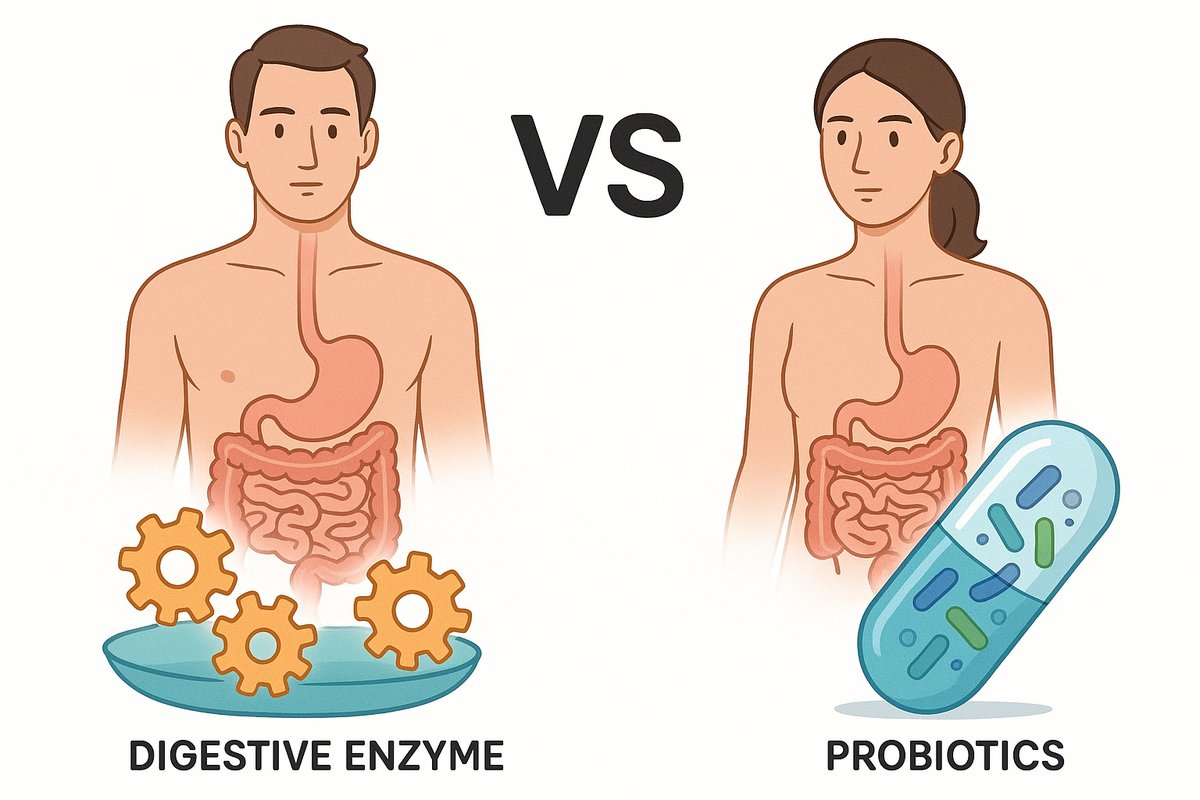
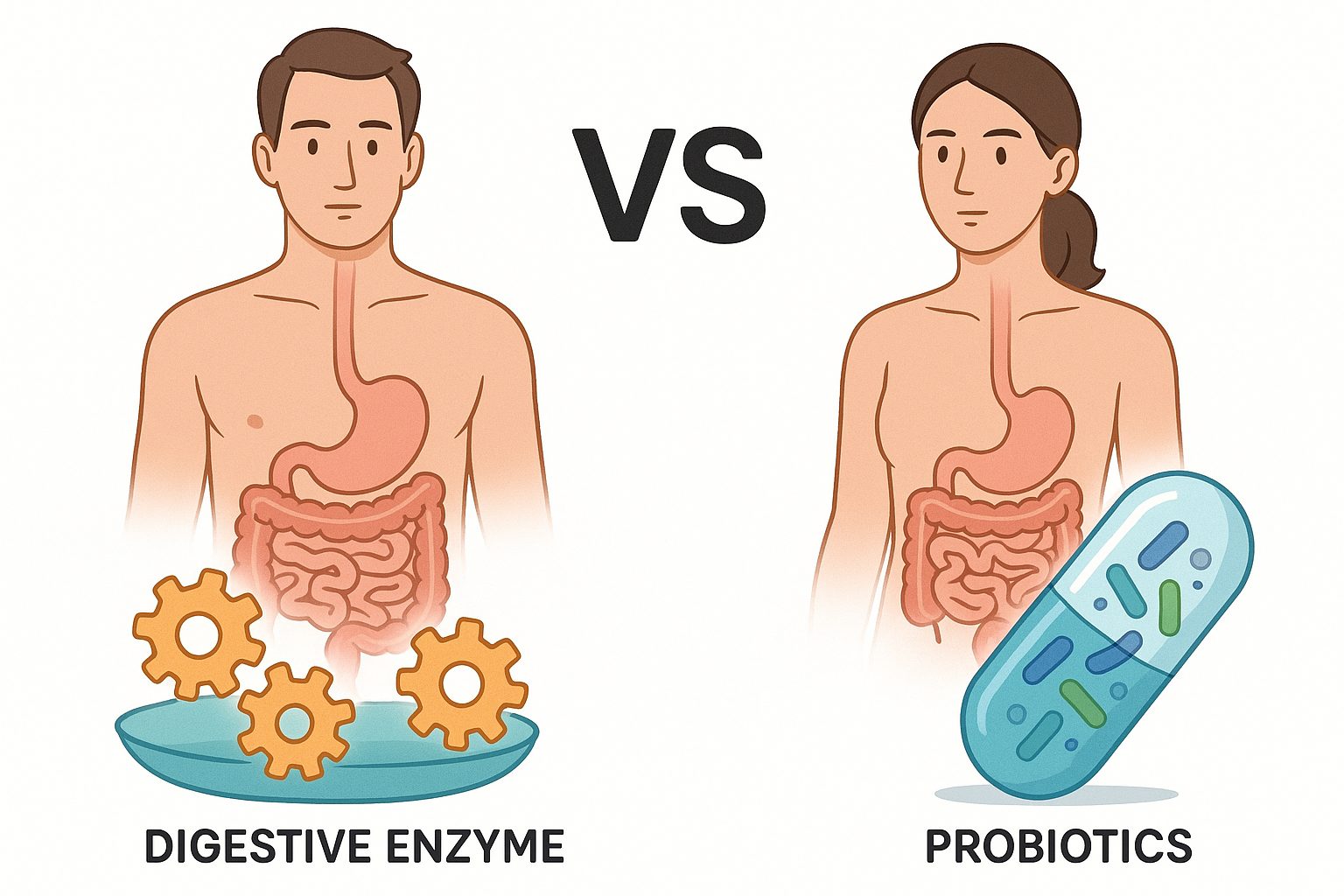
When digestion feels off, many people end up choosing between a digestive enzyme and a probiotic. They get grouped together on store shelves, but they do very different jobs. Enzymes help you break down food in the moment. Probiotics aim to influence the gut microbiome over time. That difference matters, because the better first choice usually depends on when your symptoms happen and what seems to trigger them.
If your discomfort shows up right after eating, enzymes often make more sense as the first experiment. If symptoms are broader and more chronic, especially after antibiotics or alongside irregular bowel habits, a probiotic may be more logical.
What digestive enzymes do
Quick Answer: Try a probiotic first if you have IBS symptoms, antibiotic-related disruption, or irregular bowel habits. Try a digestive enzyme first if your issue is specific—like bloating after dairy, beans, or high-fat meals. Both can be used together safely. Digestive enzymes work in real time during digestion; probiotics change your gut environment over weeks.
Digestive enzymes are proteins that break food into smaller molecules your body can absorb. Common examples include:
- lactase for lactose in dairy
- alpha-galactosidase for gas-producing carbohydrates in beans and vegetables
- lipase for fats
- proteases for protein digestion
Enzymes work fast. If they help, you often notice it with the specific meals that usually trigger symptoms.
What probiotics do

Probiotics are live microorganisms that may provide a health benefit when taken in adequate amounts. Their goal is not to digest one meal better. Instead, they may:
- support microbiome balance
- modulate immune signaling
- influence bowel regularity
- reduce some IBS symptoms in certain people
Unlike enzymes, probiotics are usually a trial over weeks, not a same-day fix.
Digestive enzyme vs probiotic: when enzymes should come first
1. Your symptoms are tightly linked to certain foods
If dairy always causes trouble, lactase is a cleaner first step than a probiotic. If beans, lentils, onions, or cruciferous vegetables cause gas, alpha-galactosidase may help more than changing your microbiome.
2. Bloating is mostly post-meal
Feeling overfull, gassy, or distended within an hour or two of eating points toward food breakdown and tolerance issues more than a probiotic deficiency.
3. You want a short, simple experiment
Enzymes are easier to test because the feedback loop is quick. Take them with the trigger meal and watch the result.
When a probiotic should come first
1. Symptoms are chronic, not just meal-specific
If you deal with daily bloating, irregular stools, or post-antibiotic digestive disruption, a probiotic may be more relevant than meal-based enzyme support.
2. IBS seems likely
Some probiotic strains have evidence for improving global IBS symptoms, including bloating and stool irregularity. The catch is that benefits are strain-specific, so random blends are not ideal.
3. Constipation is part of the picture
Some strains, such as Bifidobacterium lactis HN019, have evidence for helping transit time or stool frequency in some people.
When neither should be your first move
If symptoms are severe, progressive, or accompanied by alarm signs, self-treating with supplements is the wrong starting point.
Get medical help first if you have
- unintentional weight loss
- blood in stool
- anemia
- persistent vomiting
- nighttime symptoms that wake you
- new digestive symptoms starting later in life
A practical decision tree
Try a digestive enzyme first if:
- symptoms happen predictably with certain foods
- the problem is worst after meals
- you suspect lactose or legume intolerance
Try a probiotic first if:
- symptoms are ongoing day to day
- bowel habits are irregular
- you recently took antibiotics
- IBS-style symptoms are part of the pattern
Consider both only after testing one at a time
Stacking them immediately makes it impossible to know what is helping or hurting.
What to expect from each option
Digestive enzymes
- timing: with meals
- expected response: same day to several meals
- best for: food-triggered bloating and gas
Probiotics
- timing: daily for 2 to 4 weeks minimum
- expected response: gradual
- best for: microbiome disruption, IBS-type symptoms, regularity support
Common mistakes
- using broad enzyme blends without matching them to actual triggers
- buying probiotics with no named strains
- expecting probiotics to fix symptoms after one capsule
- ignoring diet patterns, constipation, and stress
Supplements are often most effective when combined with simple basics: slowing down meals, chewing thoroughly, avoiding personal triggers, and supporting bowel regularity.
Key Takeaways
- Digestive enzymes help immediately during a meal; probiotics work over time by changing gut microbiome composition.
- Lactase (a digestive enzyme) is one of the most evidence-backed supplements for lactose intolerance.
- Probiotics are more useful for IBS, post-antibiotic recovery, and irregular bowel patterns.
- Both are safe to use together—there is no meaningful interaction or collision.
- Digestive enzyme blends are most useful for mixed meals; single-enzyme products are best for specific intolerances.
- Probiotics need at least 4–8 weeks of consistent use before meaningful improvements should be expected.
How Digestive Enzymes Work
Digestive enzymes break food molecules into smaller units your intestines can absorb. They are active during the digestive process and finish their job within hours. This is why they work immediately for meals that trigger symptoms—lactase taken before dairy prevents the bloating that would otherwise occur. Digestive enzyme supplements do not change your underlying gut environment; they are a meal-by-meal solution.
How Probiotics Work
Probiotics are live beneficial bacteria that temporarily alter the composition and activity of your gut microbiome when consumed consistently. They compete with harmful bacteria for attachment sites, produce short-chain fatty acids that support gut barrier integrity, modulate immune signaling in the gut-associated lymphoid tissue, and reduce gut inflammation. These changes take weeks to manifest in meaningful symptom improvement.
Choosing by Symptom Pattern
Use a digestive enzyme when you have specific food intolerances, symptoms predictably follow certain meals, you need fast relief, or you are traveling with unfamiliar foods. Use a probiotic when you have just finished antibiotics, have IBS with alternating bowel habits, have irregular bowel patterns without clear food triggers, or when bloating is diffuse and not tied to specific meals.
Combining Both Safely
There is no evidence that digestive enzymes harm probiotic bacteria. Enzymes primarily act in the stomach and small intestine, while most probiotic activity is in the large intestine. Timing them differently is not necessary, though some prefer to take probiotics away from meals.
What the Research Supports
Lactase is among the most reliably effective dietary supplements. Alpha-galactosidase (Beano) similarly has solid trial data for gas reduction from high-FODMAP vegetables. Probiotic evidence depends heavily on strain, dose, and indication. Saccharomyces boulardii has the strongest evidence for antibiotic-associated diarrhea. Lactobacillus plantarum 299v has the strongest IBS evidence. Generic multi-strain products with arbitrary blends tend to have weaker evidence bases.
Frequently Asked Questions
Are digestive enzymes better than probiotics for bloating?
They can be if bloating is triggered by specific meals or foods. Probiotics may fit better when symptoms are chronic or IBS-related.
Can I take digestive enzymes and probiotics together?
Yes, but it is smarter to test one first so you can tell what is working.
How long should I try a probiotic before deciding?
Usually 2 to 4 weeks. If symptoms clearly worsen, stop sooner.
Do digestive enzymes heal the gut?
Not usually. They mainly help with food breakdown and symptom control around meals.
References
- Misselwitz B, Pohl D, Frühauf H, et al. Lactose malabsorption and intolerance: pathogenesis, diagnosis and treatment. United European Gastroenterol J. 2013.
- Ford AC, et al. Efficacy of prebiotics, probiotics, synbiotics and antibiotics in irritable bowel syndrome. Am J Gastroenterol. 2018.
- Khanna R, et al. AGA technical review on probiotics in gastrointestinal disorders. Gastroenterology. 2020.
- Lacy BE, et al. ACG clinical guideline: management of irritable bowel syndrome. Am J Gastroenterol. 2021.
- National Institute of Diabetes and Digestive and Kidney Diseases. Symptoms & causes of gas in the digestive tract.
This article is informational only and is not medical advice. Ongoing digestive symptoms may need evaluation for IBS, celiac disease, IBD, gallbladder disease, pancreatic insufficiency, or food intolerance.
Related Articles
- Gut Supplement Stack for Beginners
- Best Probiotic Strains for Constipation
- Best Gut Health Supplements for Bloating
- Prebiotics vs Probiotics: What’s the Difference?
- Heat-Stable Gut Supplements That Actually Work
Sources
- National Institutes of Health Office of Dietary Supplements. Probiotics fact sheet for health professionals.
- Systematic reviews on probiotics and bloating. PubMed search.
- Reviews on digestive enzyme supplementation. PubMed search.
- Reviews on postbiotics and gut barrier function. PubMed search.
- Reviews on butyrate and gut health. PubMed search.