AHA vs BHA Exfoliants: Glycolic, Salicylic & Lactic
Quick Answer: AHAs (glycolic, lactic acid) exfoliate the surface and treat dullness, fine lines, and dry skin. BHAs (salicylic acid) penetrate pores and treat acne and oiliness. Use 1-3x/week max, never with retinol on the same night, and always follow with SPF the next day.
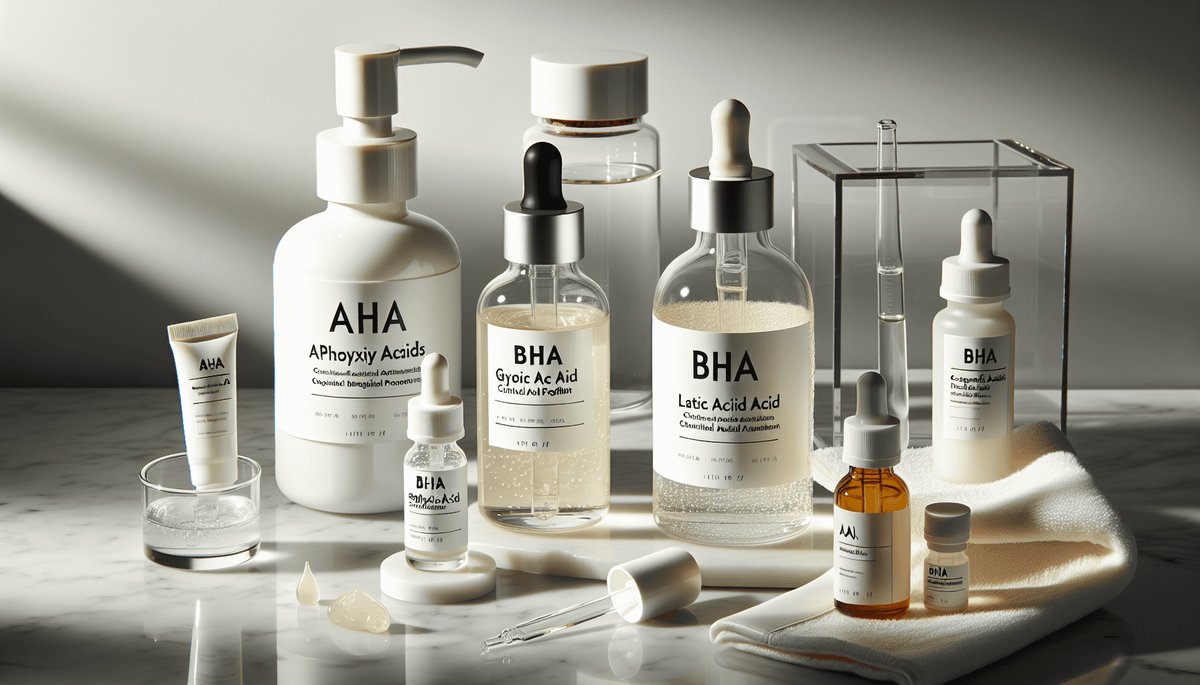
Chemical exfoliants are among the most transformative skincare tools available — capable of dramatically improving texture, tone, pore appearance, and acne when used correctly. But they’re also among the most misused, with overexfoliation affecting a significant proportion of skincare enthusiasts. This guide covers the science, the differences, the right choices for your skin type, and crucially, how to know when you’ve crossed the line.
What Are Chemical Exfoliants?
Unlike physical exfoliants (scrubs, brushes), chemical exfoliants dissolve the bonds holding dead skin cells together at the surface, allowing them to shed more evenly. This process — called desquamation — happens naturally in healthy skin, but slows with age and can be disrupted by UV damage, dry skin, and excess sebum.
The two main categories are alpha hydroxy acids (AHAs) and beta hydroxy acids (BHAs). A third category, polyhydroxy acids (PHAs), is worth knowing as a gentler alternative.
AHAs: Alpha Hydroxy Acids
AHAs are water-soluble acids derived from natural sources. They exfoliate the skin surface by cleaving the desmosomes (cell-to-cell bonds) in the outermost layer of the epidermis. They work on the skin surface and don’t penetrate sebaceous follicles.
Primary effects: Surface texture, fine lines, pigmentation, dry skin, dullness
Best for: Normal to dry skin, texture concerns, hyperpigmentation, anti-aging
Glycolic Acid
The most studied AHA, derived from sugarcane. Smallest molecular weight of the AHAs, meaning it penetrates skin most deeply. This makes it the most potent — and the most potentially irritating. Concentrations in skincare range from 5% (mild) to 30%+ (professional-grade).
At the right concentration and consistent use, glycolic acid is exceptional for:
- Reducing fine lines and surface wrinkles
- Evening skin tone and fading dark spots
- Improving texture and radiance
- Stimulating collagen production (at higher concentrations)
Best for: Normal, combination, or oily skin that can tolerate more potent exfoliation
Lactic Acid
Derived from fermented milk (now synthetically produced for cosmetics). Larger molecule than glycolic acid, so it penetrates less deeply and is gentler. Also acts as a humectant (attracts water) in addition to exfoliating, making it more tolerable for dry and sensitive skin.
Lactic acid is excellent for:
- Gentle exfoliation with simultaneous hydration
- Sensitive skin or those new to chemical exfoliants
- Dry, flaky skin that needs both exfoliation and moisture
- Hyperpigmentation (effective, if slower than glycolic)
Best for: Dry, sensitive, or mature skin
Mandelic Acid
Derived from bitter almonds. The largest AHA molecule, providing the gentlest surface exfoliation. Also has antibacterial properties. Particularly well-tolerated by darker skin tones (lower risk of PIH). A good entry point for sensitive or reactive skin that wants AHA benefits.
Malic, Tartaric, and Citric Acids
Less commonly used as standalone exfoliants; more often used to adjust pH in formulations or support other actives. Citric acid has some exfoliating and brightening properties but is primarily a pH adjuster in skincare.
BHAs: Beta Hydroxy Acids
BHAs are oil-soluble, allowing them to penetrate into the sebaceous follicle and dissolve the lipid-based sebum and dead cells that clog pores. This is their defining advantage over AHAs.
Primary effects: Pore decongestion, acne, oiliness, blackheads
Best for: Oily, acne-prone skin; congested pores; those prone to blackheads
Salicylic Acid
The primary BHA used in skincare, derived from willow bark. Oil-soluble, it dissolves in sebum and penetrates deep into pores to:
- Dissolve sebum plugs (blackheads and whiteheads)
- Reduce inflammation in active acne
- Normalize follicular keratinization (preventing pores from clogging)
- Provide mild antibacterial action
Concentrations in OTC products range from 0.5% to 2% (the FDA maximum for OTC acne treatment). Professional-grade peels use higher concentrations.
Best for: Acne-prone, oily, congested skin; blackheads; back acne; KP (keratosis pilaris)
Beta Hydroxybutanoic Acid
A newer BHA gaining traction in Korean formulations. Milder than salicylic acid, appropriate for sensitive oily skin.
PHAs: The Gentlest Option
Polyhydroxy acids include gluconolactone and lactobionic acid. They are the largest molecules in the acid exfoliant family, meaning very superficial exfoliation and minimal irritation. PHAs also have antioxidant properties and are compatible with sensitive skin, rosacea, and those who can’t tolerate AHAs or BHAs.
PHAs don’t produce the same dramatic texture results as AHAs, but they are excellent for maintenance exfoliation and improving barrier function while gently resurfacing.
AHA vs BHA: Which Do You Need?
| Concern | Best Choice |
|---|---|
| Dull, rough texture | AHA (glycolic or lactic) |
| Dry, flaky skin | Lactic acid AHA |
| Blackheads | BHA (salicylic acid) |
| Active acne | BHA (salicylic acid) |
| Enlarged pores | BHA (salicylic acid) |
| Hyperpigmentation | AHA (glycolic or mandelic) |
| Fine lines | AHA (glycolic) |
| Combination skin | AHA + BHA (alternating or combo product) |
| Sensitive skin | PHA or mandelic acid |
| Darker skin tones | Mandelic acid or lactic acid (lower PIH risk) |
Can you use both? Yes, but not necessarily simultaneously. Many people use AHAs and BHAs in an alternating rotation (AHA tonight, BHA tomorrow night), or use a combination product. Start with one and add the second once you’ve established tolerance.
How to Incorporate Chemical Exfoliants Into Your Routine
Starting out
- Begin once per week
- Apply to clean, dry skin after cleansing
- Follow with moisturizer — don’t skip this step
- Always use SPF the following morning (acids increase photosensitivity)
Working up
- Week 1–2: Once per week
- Week 3–4: Twice per week
- Months 2–3: 3–4 times per week if tolerated
- Maximum for most people: Every other night. Daily exfoliation is too much for most skin types.
Concentration guidelines
- Beginners (AHA): Start at 5–8% glycolic or 5–10% lactic acid
- Intermediate (AHA): 10–12% glycolic or 10–15% lactic acid
- Advanced (AHA): 15–20% glycolic (dermatologist-supervised for higher)
- Beginners (BHA): Start at 0.5–1% salicylic acid
- Standard (BHA): 2% salicylic acid (maximum OTC)
Leave-on vs rinse-off
Leave-on toners, serums, and pads provide more consistent results than rinse-off cleansers, which don’t have sufficient contact time. Rinse-off acidic cleansers can help prep the skin’s pH but aren’t true exfoliant treatments.
Overexfoliation: Signs, Causes, and Recovery
This is critical. In the enthusiasm for smooth skin, overexfoliation is extremely common and sets skin back significantly.
Signs you’re overexfoliating
- Skin feels tight, raw, or “sandpapery” despite moisturizing
- Increased sensitivity — products that used to be fine now sting or burn
- Redness and diffuse pinkness that doesn’t resolve
- Unusual breakouts (compromised barrier leads to increased bacteria sensitivity)
- Shiny, almost “waxy” skin appearance (barrier is stripped)
- Worse dryness and flakiness despite hydrating
- Stinging from water, cleanser, or previously-tolerated products
What happens physiologically
Overexfoliation strips the stratum corneum faster than it can regenerate, compromising the skin barrier. The barrier’s primary function is to prevent TEWL and block environmental irritants. When it’s disrupted, moisture floods out and irritants flood in — causing the feedback loop of dryness, sensitivity, and inflammation that characterizes overexfoliated skin.
Recovery protocol
- Stop all exfoliants immediately
- Use only gentle, fragrance-free cleanser
- Apply barrier-restoring moisturizer with ceramides (CeraVe Moisturizing Cream is the gold standard)
- Add a facial oil or petrolatum layer at night if very compromised
- Continue SPF daily
- Wait 2–4 weeks before reintroducing any exfoliant, starting at lower frequency than before
- Do not add multiple new products during recovery — you won’t be able to identify causes
Frequently Asked Questions
Q: Can I use AHA and retinol in the same routine?
A: Using both on the same night significantly increases irritation potential. The safest approach is AHA one night, retinol the next. Advanced users sometimes layer them but this requires well-adapted skin.
Q: Why does salicylic acid make my skin dry?
A: BHAs dissolve sebum, which is part of the skin’s natural moisture barrier. Overuse can strip this protective lipid layer. Keep usage to 2–3 times per week and follow with moisturizer.
Q: Are chemical exfoliants safe for darker skin tones?
A: Yes, with careful product selection. AHAs, especially glycolic acid at higher concentrations, can trigger PIH if they cause irritation. Lactic acid, mandelic acid, and BHAs are gentler options. Always introduce slowly and keep concentrations conservative.
Q: Do I need to wait for the acid to “work” before applying other products?
A: For most leave-on AHAs/BHAs, waiting 10–15 minutes after application allows the pH-dependent action to complete before applying higher-pH products. This is optional for many users but recommended for AHAs above 10%.
Q: Can I use chemical exfoliants if I’m using retinol?
A: Yes, but on alternate nights. Combine: Monday/Wednesday/Friday = retinol; Tuesday/Thursday = AHA or BHA. Saturday = rest. This is a common and effective routine for those targeting both cell turnover and exfoliation.
Q: What’s the best exfoliant for back acne?
A: Salicylic acid (BHA) is the gold standard for body acne. Body washes with 2% salicylic acid (like PanOxyl or Neutrogena Body Clear) used several times per week are effective. For stubborn body acne, glycolic acid body lotions also help normalize follicular keratinization.
Key Takeaways
- AHAs (glycolic, lactic) exfoliate the skin surface by loosening dead cell bonds – best for dullness, hyperpigmentation, and dry/mature skin.
- BHA (salicylic acid) is oil-soluble, penetrates pores, and is the go-to exfoliant for acne-prone, oily, or blackhead-prone skin.
- PHAs (polyhydroxy acids) are the gentlest option – similar to AHAs but with larger molecules that do not penetrate as deeply, ideal for sensitive skin.
- Never combine chemical exfoliants with retinol or high-dose vitamin C on the same evening – this dramatically increases irritation risk.
- Overexfoliation is a real risk: damaged, chronically irritated skin loses its barrier function. Limit to 2-3x/week maximum.
Conclusion
Chemical exfoliants are powerful tools that, when used with intention and restraint, deliver real, visible improvements. AHAs address the surface — texture, tone, fine lines — while BHAs go deeper into pores for acne and congestion. PHAs offer a gentle bridge for sensitive skin. The key principles: start low and slow, always pair with SPF, never overdo it, and give your barrier periodic rest. The skin that results from disciplined, thoughtful exfoliation — smooth, even, clear — is worth the patience.
Sources
- Kornhauser A, et al. (2010). The effects of topically applied glycolic acid and salicylic acid on UV-induced erythema. J Dermatol Sci, 57(3):196-203.
- Kligman D, Kligman AM. (1998). Salicylic acid peels for the treatment of photoaging. Dermatol Surg, 24(3):325-328.
- Briden ME. (2004). Alpha-hydroxyacid chemical peeling agents. Cutis, 73(2 Suppl):25-29.
- Becker LC, et al. (2012). Safety assessment of glycolic acid and related compounds. Int J Toxicol, 31(1 Suppl):44S-102S.
- Rawlings AV, et al. (1996). Effect of lactic acid isomers on skin ceramides and water loss. Int J Cosmet Sci, 18(5):199-210.
Related Articles
- Retinol Guide 2026: Forms, Strengths, Purging, and Routine Building
- How to Build a Skincare Routine: AM/PM Guide by Skin Type
- Best Skincare for Eczema and Atopic Dermatitis in 2026
- Best Skincare for Hyperpigmentation in 2026
📚 Part of our How to Build a Skincare Routine hub. Explore all our skincare routine guides.