
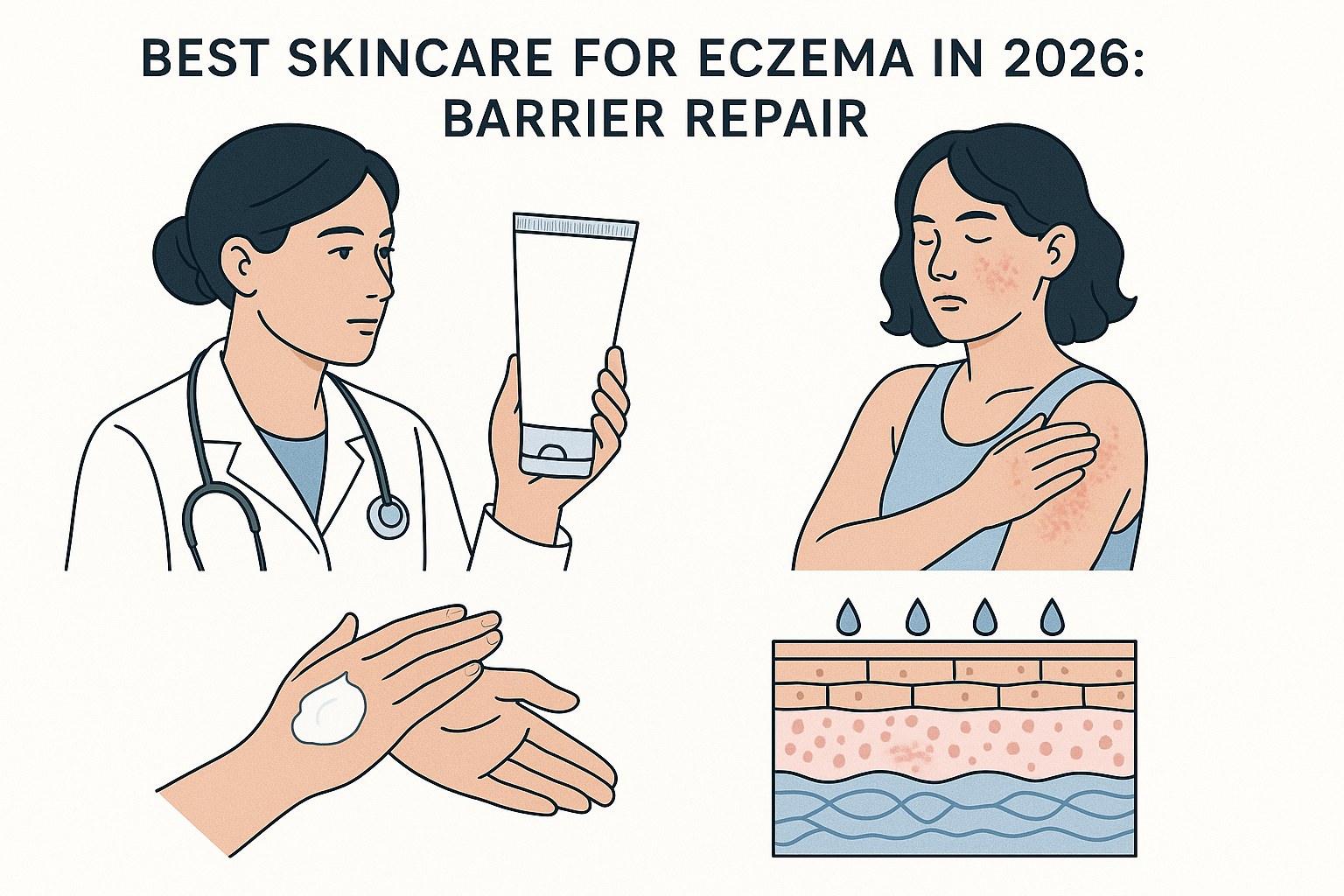
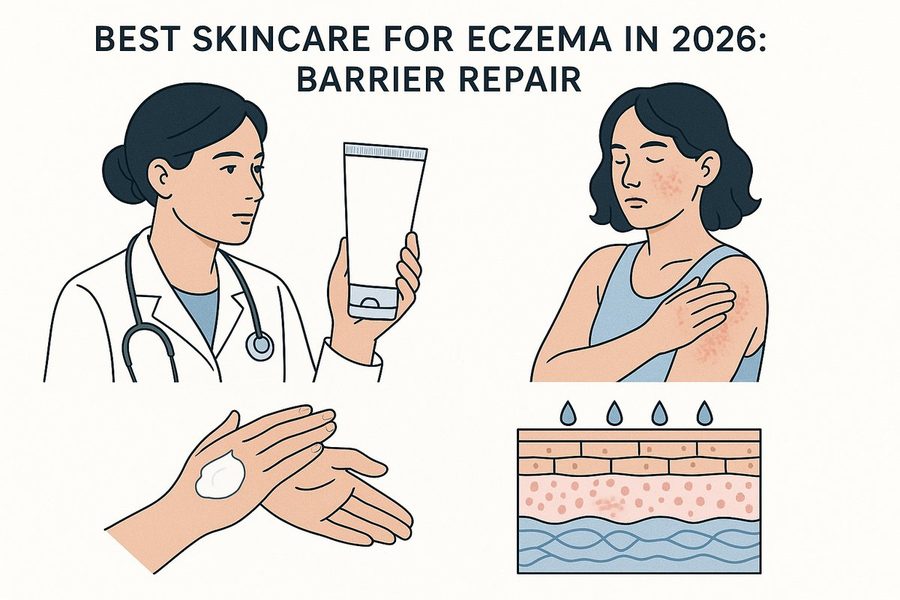
Best Skincare for Eczema in 2026: Barrier Repair
Quick Answer: Eczema is a barrier dysfunction disease – the priority is aggressive daily moisturization with ceramide-containing emollients, avoiding irritant ingredients (fragrance, SLS, alcohol), and identifying triggers. Prescription treatments address flares when OTC management is insufficient.
Eczema — particularly atopic dermatitis (AD), the most common type — affects an estimated 31 million Americans and is among the most disruptive skin conditions in terms of quality of life. In 2026, our understanding of eczema has shifted significantly: it’s now understood primarily as a barrier dysfunction disease, not just an inflammatory or allergic one. This shift has transformed how skincare professionals and patients approach management, placing barrier repair at the center of treatment.
Understanding Eczema as a Barrier Disease
The defining feature of atopic dermatitis is a compromised skin barrier, often involving mutations or reduced expression of filaggrin — a protein essential for forming the “mortar” between skin cells in the stratum corneum. Without functional filaggrin:
- The skin loses water faster (increased TEWL — transepidermal water loss)
- Environmental allergens and irritants penetrate more easily
- The immune system mounts heightened inflammatory responses to things healthy skin would ignore
- A cycle of dryness → inflammation → itching → scratching → more barrier damage ensues
This is why moisturization is not merely comfort care for eczema — it is foundational medical treatment. Multiple randomized controlled trials have shown that aggressive daily moisturization reduces flare frequency, severity, and the need for topical steroids.
The Non-Negotiables: Daily Moisturization
What Makes an Eczema Moisturizer Effective
The three components of an ideal eczema moisturizer:
- Humectants — draw water into the skin (hyaluronic acid, glycerin, urea, sodium PCA)
- Emollients — fill in gaps between skin cells, softening and smoothing (fatty acids, squalane, ceramide precursors)
- Occlusives — create a physical barrier to trap moisture and prevent TEWL (petrolatum, dimethicone, shea butter, beeswax)
Ceramides deserve special emphasis. Ceramides are the dominant lipid in the stratum corneum and are specifically deficient in eczema skin. Topical ceramides (1, 3, and 6-II are the most skin-relevant) help restore the barrier architecture directly.
Best OTC moisturizer categories for eczema:
- CeraVe Moisturizing Cream: Ceramides + hyaluronic acid + petrolatum in a fragrance-free formula. The gold standard recommendation from most dermatologists for AD maintenance.
- Vanicream Thick Moisturizer: Free of common irritants (no dyes, fragrance, formaldehyde releasers, lanolin, parabens). Excellent for highly sensitive skin.
- Eucerin Original Healing Cream: Urea + humectants. Good for very rough, lichenified skin.
- Aveeno Eczema Therapy: Colloidal oatmeal + ceramides. Colloidal oatmeal is FDA-approved as a skin protectant and provides anti-itch benefits.
How Much and How Often
Dermatologists call it “soak and smear”:
- Bathe or shower with lukewarm (not hot) water for 5–10 minutes
- Pat skin gently dry — don’t rub
- Apply moisturizer within 3 minutes of bathing while skin is still slightly damp
- Apply liberally — don’t be stingy
- Repeat at least twice daily; ideally 3–4 times for active or severe eczema
Ingredients That Help Eczema
Colloidal Oatmeal
FDA-approved skin protectant. Contains avenanthramides — polyphenols with potent anti-inflammatory and anti-itch properties. Also forms a protective film on the skin. Clinical studies consistently show reduction in itch, redness, and eczema severity scores.
Ceramides
As above — directly replenishing the lipid components of the stratum corneum that are deficient in AD. Look for: ceramide NP, ceramide AP, ceramide EOP, ceramide NS.
Urea
A component of the skin’s natural moisturizing factor (NMF). At low concentrations (2–5%), acts as a humectant. At higher concentrations (10%+), has keratolytic effects that help with thickened, lichenified skin. Urea-containing creams are particularly useful for dry, rough eczema skin between flares.
Niacinamide
Stimulates ceramide synthesis and has anti-inflammatory properties. Clinically shown to reduce TEWL and itch in eczema. Well-tolerated and suitable for daily use.
Petrolatum (Vaseline)
The most effective occlusive in skincare. Reduces TEWL by up to 98% when applied as a pure occlusive. The “wet wrap” therapy for severe AD uses wet bandages over petrolatum-coated skin. Cosmetically heavy for daily use but unmatched for overnight barrier repair.
Sunflower Seed Oil
Contains linoleic acid — an omega-6 fatty acid that is a direct precursor to ceramides in the skin. Studies show topical sunflower seed oil improves barrier function in AD patients. Mineral oil and coconut oil (despite its popularity) perform less well for eczema barrier repair in clinical comparisons.
Ingredients to Avoid
Fragrance
The single most common sensitizer in skincare and a major eczema trigger. This includes “natural” fragrance and essential oils. Even fragrant plant extracts (lavender, eucalyptus, rose) can trigger flares. When shopping for eczema products, “fragrance-free” (not just “unscented”) is the requirement.
Sodium Lauryl Sulfate (SLS)
A cleansing surfactant found in many foaming cleansers and body washes. SLS is a known irritant that strips skin lipids and disrupts the barrier. Switch to SLS-free cleansers (look for sodium laureth sulfate, cocamidopropyl betaine, or gentle amphoteric surfactants).
Alcohol Denat
Found in many toners and some serums. Denaturing alcohols are extremely drying and irritating for compromised skin barriers.
Preservatives: MIT/CMIT
Methylisothiazolinone (MIT) and chloromethylisothiazolinone (CMIT) are common preservatives and significant allergens for eczema-prone skin. Check ingredient labels.
Lanolin
An emollient derived from sheep wool. Many eczema patients have lanolin sensitivity. If you’re not sure, patch test carefully.
High-Concentration Active Acids
AHAs, BHAs, and retinoids at standard concentrations can further disrupt an already compromised barrier during flares. These may be used carefully during remission for skin maintenance but should be paused during active flares.
Skincare Routine for Eczema-Prone Skin
Morning
- Rinse with cool water (or gentle cream cleanser if needed)
- Moisturize within 3 minutes — ceramide cream or prescribed emollient
- SPF — mineral (zinc oxide) is best tolerated for eczema-prone skin
Evening
- Cleanse with gentle, SLS-free, fragrance-free body wash or cleanser
- Treat — prescription topical if in a flare (corticosteroid, calcineurin inhibitor, PDE4 inhibitor); prescription barrier treatment (Epsolay, Eucrisa) if prescribed
- Moisturize — ceramide cream + optional petrolatum layer on very dry areas
- Wet wrap if severe — damp cotton layer over medicated skin, dry layer over that, sleep in it
Prescription Treatments (Context for OTC Pairing)
OTC skincare works alongside medical treatment, not instead of it for moderate-to-severe AD:
- Topical corticosteroids: First-line for flares. Important to use correctly (right potency for body location, limited duration) to avoid skin thinning.
- Tacrolimus/Pimecrolimus (calcineurin inhibitors): Non-steroidal anti-inflammatory. Good for face and sensitive areas; no skin thinning risk.
- Crisaborole (Eucrisa): PDE4 inhibitor, anti-inflammatory, gentle.
- Dupilumab (Dupixent): Biologic injectable for moderate-to-severe AD. Highly effective — often life-changing for severe cases.
- JAK inhibitors (Rinvoq, Cibinqo, Opzelura): Newer systemic and topical options for severe AD.
Frequently Asked Questions
Can diet affect eczema?
For some patients, yes. Food allergies (especially in children) can trigger AD flares. Common triggers: dairy, eggs, peanuts, wheat, soy, tree nuts, fish. Elimination diets should be done under medical supervision. Gut microbiome research is showing connections to AD severity, but translating this into specific dietary protocols is still developing.
Is eczema the same as dry skin?
No. Dry skin (xerosis) is a symptom and a contributing factor, but eczema involves immune dysregulation, genetic barrier dysfunction, and a complex inflammatory cascade. Dry skin can be managed by moisturizing; eczema requires a more comprehensive approach.
Can children use the same products as adults?
The safest OTC options — petrolatum, colloidal oatmeal, ceramide creams — are appropriate for infants and children. Prescription treatments require pediatric dosing and dermatologist guidance. Avoid anything with fragrance or essential oils in children with eczema.
Why does my eczema get worse in winter?
Low humidity (both outdoor cold air and indoor heating remove moisture from the air), reduced sun exposure, and more indoor time with allergens all contribute. Increase moisturizer frequency and consider a humidifier in the bedroom.
Can I shower every day with eczema?
Yes, with modifications. Lukewarm (not hot) water, gentle cleanser, brief duration (5–10 minutes), gentle patting dry, and immediate moisturizer within 3 minutes. Following this protocol, daily bathing actually helps AD.
Are natural or organic products safer for eczema?
Not necessarily. “Natural” does not mean non-irritating. Many natural ingredients (essential oils, botanical extracts, lanolin) are common eczema triggers. Fragrance-free, preservative-free, and tested products are more reliable markers than “natural.”
My eczema cleared up but my skin is still rough — what now?
Between flares, focus on barrier maintenance: twice-daily ceramide moisturizer, gentle cleansing, and SPF. Once fully clear for 4+ weeks, you may cautiously introduce very gentle exfoliants (2% urea or very low-concentration lactic acid) to address texture — but always continue moisturizer and watch for signs of flare.
Key Takeaways
- Eczema is caused by a defective skin barrier (often related to filaggrin gene mutations) that allows allergens and irritants in and moisture out.
- The most important OTC intervention is twice-daily moisturization with ceramide-rich, fragrance-free emollients – apply within 3 minutes of bathing.
- Key ingredients to look for: ceramides, niacinamide, colloidal oatmeal, shea butter. Key ingredients to avoid: fragrance, SLS, alcohol, MI/MCI preservatives.
- Wet wrap therapy (moisturizer plus wet cotton layer plus dry cotton layer overnight) is highly effective for severe flares.
- Bleach baths (0.005% sodium hypochlorite, 2x/week) reduce S. aureus colonization – a major driver of eczema severity.
Conclusion
Eczema management in 2026 is more sophisticated and more effective than ever, but the foundation remains the same: aggressive barrier repair through daily, generous moisturization with the right ingredients. Ceramides, colloidal oatmeal, petrolatum, and niacinamide are your key ingredients. Fragrance, SLS, and harsh actives are your enemies. The goal is fewer flares, shorter flares, and a maintained baseline of skin comfort — achieved through consistency, the right products, and working with your dermatologist when OTC care isn’t enough.
Sources
- The provision of zinc sulphate in water for dairy cattle to prevent facial eczema: can it work?. New Zealand veterinary journal. 2026. PMID: 41968064.
- Hengge UR, et al. (2006). Adverse effects of topical glucocorticosteroids. J Am Acad Dermatol, 54(1):1-15.
- Simpson EL, Michaels LC, Ramsey K, Fagnan LJ, Nease DE, Henningfield M, et al (2025). Emollients to Prevent Pediatric Eczema: A Randomized Clinical Trial. JAMA dermatology. PMID: 40699587.
- Williams HC, et al. (2012). Emollient therapy for eczema. Cochrane Database Syst Rev, 2:CD001404.
- Simpson EL, et al. (2014). Emollient enhancement of the skin barrier from birth offers effective atopic dermatitis prevention. J Allergy Clin Immunol, 134(4):818-823.
Related Articles
- How to Build a Skincare Routine: AM/PM Guide by Skin Type
- Niacinamide Skincare Guide 2026: Barrier Repair and Combinations
- Hyaluronic Acid in Skincare: Molecular Weight and Layering Guide
- Body Skincare Guide 2026: Dry Skin, KP, and Back Acne



Leave a Reply